Product Compliance Metrics: The KPIs That Actually Matter

THIS BLOG WAS WRITTEN BY THE ADHERENT MARKETING TEAM TO INFORM AND ENGAGE. HOWEVER, COMPLEX REGULATORY QUESTIONS REQUIRE SPECIALIST KNOWLEDGE. TO GET ACCURATE, EXPERT ANSWERS, PLEASE CLICK ASK AN EXPERT.
Key Insight
Most product compliance reporting measures activity: regulations monitored, alerts reviewed, reviews completed. None of it tells the business anything useful. Adherent’s research with nearly 500 senior leaders found that financial and market outcomes dominate compliance investment decisions, while time to compliance ranks last. The metrics that matter come in two tiers: four value levers your leadership actually weighs, and the operating metrics that prove those levers are moving.
Table of Contents
- Why Most Compliance Reporting Measures the Wrong Things
- Five Questions That Replace Activity Metrics
- What Actually Drives the Investment Decision
- The Four Value Levers Your Business Case Has to Prove
- The Operating Metrics That Get You There
- Choosing Two or Three Metrics to Start With
- FAQ
Compliance teams are measured on more activity than ever. More regulations tracked, more alerts triaged, more reviews completed, more markets covered. Yet when the investment conversation reaches the executive team, almost none of that reporting answers the question being asked.
This article is adapted from Adherent’s new playbook, The Ultimate Product Compliance Playbook, which sets out the operating model behind the world’s leading product companies. A companion article covers the five practices high-performing compliance teams use. This piece focuses on measurement: how to tell whether a compliance operating model is actually working, and which numbers a business case has to move.
Why Most Compliance Reporting Measures the Wrong Things
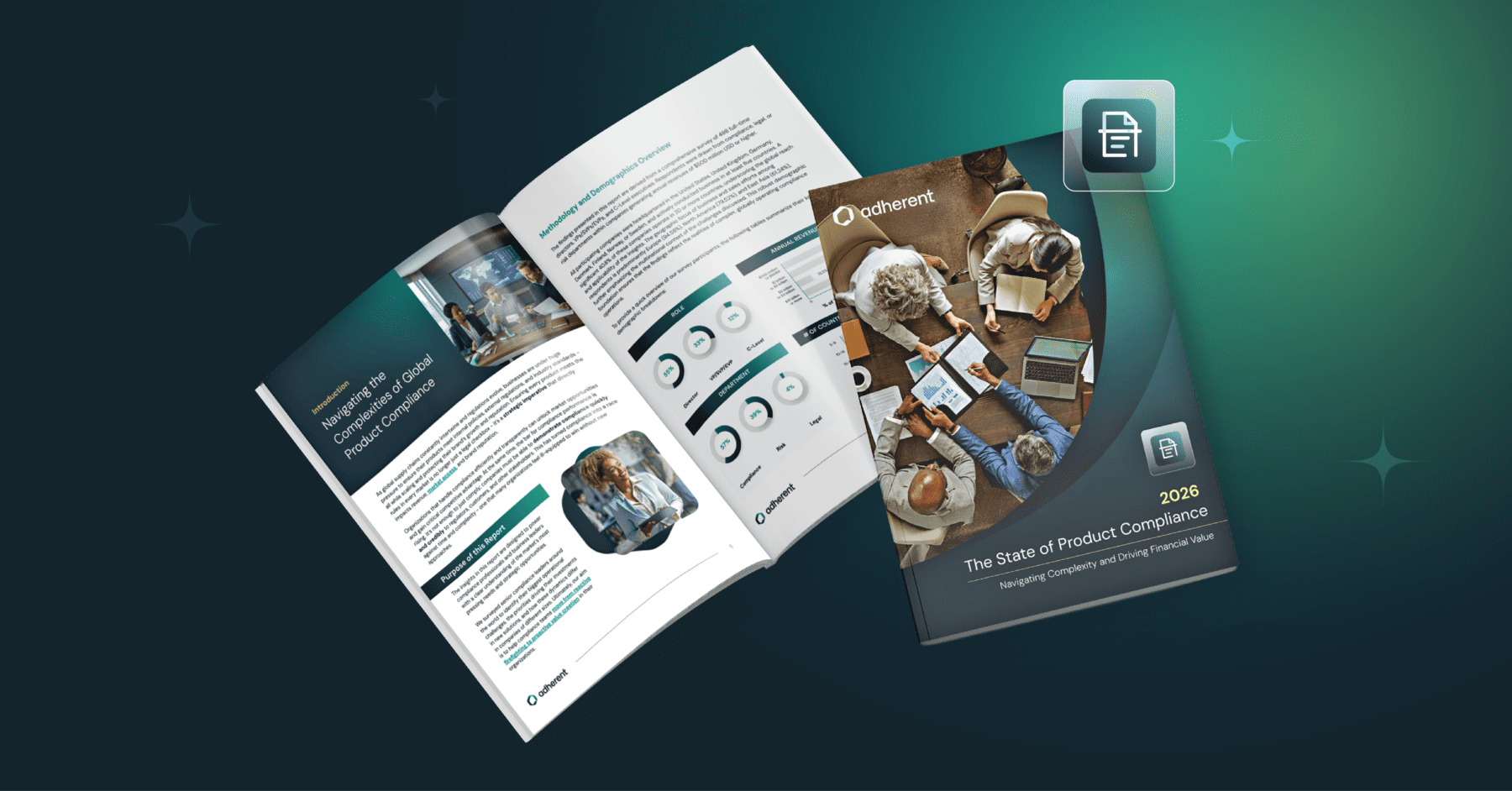
Adherent’s State of Product Compliance 2026 research surveyed nearly 500 senior product, compliance, legal, and regulatory leaders, and found the hardest parts of product compliance to be operational rather than technical.
69% of leaders say remediating compliance issues after they occur is their hardest challenge. Among companies with more than $10 billion in annual revenue, that climbs to 77%.
None of that difficulty shows up in a report that counts regulations monitored. Activity metrics describe how much work a team absorbed. They say nothing about whether the work arrived early enough to change a product decision, whether the alerts that consumed a week actually applied to anything the company sells, or whether evidence could be produced the day a customer asked for it.
The result is a reporting gap that works against compliance teams. Leadership sees volume and infers cost. What it cannot see is risk removed or revenue protected.
Five Questions That Replace Activity Metrics
The playbook sets out five paired questions. In each case, the first version measures effort and the second measures outcome.
- Instead of asking how many regulations did we monitor, ask how quickly did we assess business impact
- Instead of asking how many alerts did we review, ask how many of those alerts actually mattered
- Instead of asking how many compliance reviews did we complete, ask how many launches stayed on schedule because compliance happened early
- Instead of asking how many audit findings did we have, ask how quickly can we produce evidence when it is requested
- Instead of asking how much compliance work did we complete, ask how much expert time is spent on strategic work versus repetitive tasks
The first version of each question proves your team is busy. The second proves your team is working.
Each answer is also a diagnostic. If assessing business impact takes weeks, the constraint is applicability, which is what assessing regulatory applicability against a specific product portfolio is designed to compress. If most alerts turn out not to matter, the constraint is filtering rather than coverage. If evidence takes days to assemble, the problem is that evidence is being reconstructed rather than captured as work happens.
What Actually Drives the Investment Decision
Compliance leaders and executive teams are often measuring different things without realising it. When Adherent asked nearly 500 senior leaders what drives their product compliance investment decisions, financial and market outcomes came out on top and operational measures ranked far lower.
Time to compliance coming last is the finding worth sitting with, because speed is what most compliance teams lead with. It ranks lowest not because speed has stopped mattering, but because it is now understood as the means to a business outcome rather than the outcome itself. Faster assessment matters because of what it protects and unlocks.
Behind each of those drivers is a question an executive is really asking. Cost of compliance means: what are we spending to stay compliant, and how much of it is avoidable? Revenue at risk means: which markets could we lose access to, and what revenue sits behind them? Revenue opportunity means: which markets could we enter faster if regulatory work weren’t the bottleneck?
Compliance teams tend to build the case on effort saved. Executives fund risk removed and revenue protected.
The Four Value Levers Your Business Case Has to Prove
A credible business case does not require a full cost model. According to the playbook, it requires four defensible numbers about your own organization, and a realistic view of the improvement your leadership will expect to see.
Cost of compliance. Establish what you spend annually on remediation, duplicate research, and evidence assembly across your product lines.
Cost of compliance violations. Establish what your last significant violation, recall, or enforcement action cost the business.
Revenue at risk. Establish the revenue tied to markets where you could not demonstrate compliance on demand today.
Revenue opportunity. Establish the revenue in markets you have delayed or deprioritized because of regulatory effort.
Adherent also asked those same leaders what minimum improvement they would need from a new compliance solution before it justified the investment. Their average responses give you a benchmark for the bar your own executives are likely to set:
It is worth being precise about what those figures represent. They are the minimum improvement senior leaders said they would require to approve investment, not outcomes any particular solution delivers. Used correctly, they tell you how ambitious your business case needs to be before you present it.
The Operating Metrics That Get You There
The four value levers are what leadership funds. The operating metrics below are the leading indicators that demonstrate those levers are actually moving. They will not win a funding conversation on their own, which is precisely why they belong underneath the business case rather than at the front of it.
Leaders in the same research said they would expect a new compliance solution to deliver:
Two further measures are worth tracking even though they did not feature in the survey, because they expose where an operating model breaks down. The first is time to evidence: how long it takes to produce complete, traceable evidence when a customer, auditor, or regulator asks. The second is the proportion of expert time spent on judgment rather than information gathering, which tells you whether monitoring and first-pass assessment are genuinely being handled elsewhere.
The playbook also reports a wide spread in how quickly companies respond to regulatory change, with most taking four to twelve weeks to assess and respond, and high-performing companies often doing so within one to two. If you measure nothing else, measure this, because the gap between those two figures is where most of the cost sits.
Choosing Two or Three Metrics to Start With
A common failure is attempting to instrument everything at once. The playbook’s 90-day roadmap recommends the opposite: pick one priority product family, and identify two or three success metrics to track from the outset.
In the first thirty days, define the compliance workflow for that product family and choose your metrics before you change anything, so you have a baseline to measure against. In days 31 to 60, measure baseline cycle time and time to evidence. In days 61 to 90, begin reporting progress through a simple dashboard shared with product and business leadership, which is what turns measurement into influence.
Choosing well matters more than choosing many. A good starting pair is one operating metric that reflects your biggest constraint, and one value lever it feeds. If evidence is your weak point, track time to evidence alongside revenue at risk in markets where you cannot currently demonstrate compliance on demand. If late requirements are the problem, track how many launches stayed on schedule alongside the cost of remediation.
This is also the point where measurement changes what compliance is for. In the playbook’s five-stage maturity model, the final stage is not defined by automation but by measurement: compliance informing product strategy and executive decision-making, with the focus shifting to continuous improvement of operating performance. You cannot reach that stage without numbers the business recognises.
Every product company faces the same regulations. What separates the leaders isn’t what they know. It’s how they operate.
FAQ
- What are the most important product compliance KPIs?
The playbook separates them into two tiers. Four value levers decide investment: cost of compliance, cost of compliance violations, revenue at risk in key markets, and revenue opportunity in key markets. Four operating metrics demonstrate those levers are moving: time to compliance, significant external audit or quality incidents, risk identification timeframe, and compliance violations prevented. - Why does time to compliance rank last among investment drivers?
Because speed is now understood as a mechanism rather than an outcome. In Adherent’s research, cost of compliance (49%) and revenue at risk (42%) drive investment decisions, while time to compliance sits at 23%. Faster assessment still matters, but it earns funding when it is presented as the route to lower cost and protected revenue rather than as the goal itself. - What improvement should we expect from a new compliance solution?
Senior leaders in the State of Product Compliance 2026 research named the minimum improvements they would require before approving investment, averaging 13.6% on cost of compliance and 16.5% on time to compliance. These represent the bar executives set, not a guaranteed result, and your own baseline will determine what is realistic. - How many metrics should we track when starting out?
Two or three. The playbook’s 90-day roadmap recommends identifying a small number of success metrics at the outset for a single product family, establishing a baseline before making changes, and reporting progress to product and business leadership from day 61 onward. - How do we measure whether evidence management is working?
Time to evidence is the practical measure: how long it takes to produce complete, traceable evidence when a customer, auditor, or regulator requests it. In highly regulated categories, the question is rarely whether the evidence exists, but whether it can be produced quickly and with full traceability.
This article is adapted from Adherent’s guide, The Ultimate Product Compliance Playbook (published August 17, 2026). Further developments may have occurred after publication. Download the full playbook for the maturity model, the full 20-statement scorecard, and the 90-day roadmap, or speak to Adherent about applying these metrics to your own compliance operations.
See Adherent in Action
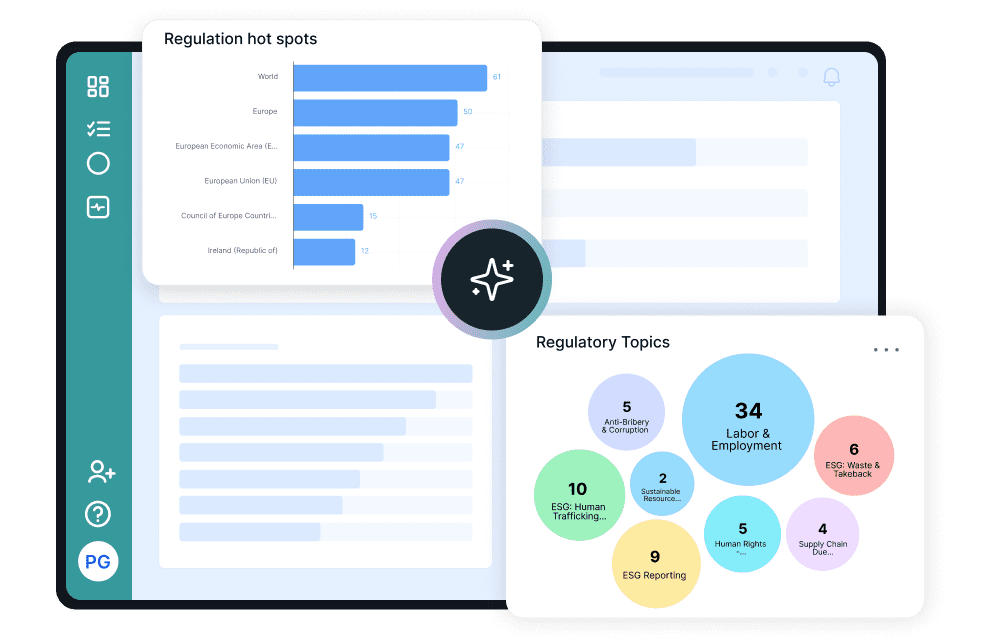
Discover how agentic AI is reshaping product compliance for global enterprises.


The Ultimate Product Compliance Playbook
What the World’s Leading Product Organizations Have Figured Out About Product Compliance