

Regulatory Focus
Sustainable Resource Use

Sustainable Resource Use
195
Countries Covered
28
Languages
533
Regulatory Sources
Global coverage spans mandatory and voluntary disclosure requirements addressing sustainable resource use and circular economy practices across business activities. It includes proposed, enacted, and amended laws, regulations, guidance documents, and factsheets, focusing on transparency around material use, waste reduction, reuse, and lifecycle management.
Sustainable Resource Use refers to how a company manages resource consumption, reduces non-renewable depletion, and promotes circular economy practices as part of its business strategy. It covers impact assessment processes and policy implementation to manage material resource and circular economy-related impacts, as well as measurable targets on circular design, material efficiency, and waste management and reduction.
Companies are typically expected to assess and manage how their activities affect resource use across operations and value chains, including material sourcing, production, use, and end-of-life. Requirements often focus on setting policies and targets, implementing circular economy measures, tracking resource and waste flows, and disclosing risks, impacts, and progress through mandatory sustainability reporting frameworks.
This includes:
- Their actions and plans to prevent material negative impacts from resource use;
- Their plans and capacity to adapt their strategy and business model in line with circular economy principles (including in production, use phase and at end of functional life) For example, plans to minimising waste, maintaining the value of products, materials and other resources at their highest value and enhancing their efficient use in production and consumption;
- The nature, type and extent of the company’s material risks and opportunities related to their impacts and dependencies, arising from resource use and circular economy, and how the undertaking manages them;
- The financial effects over the short-, medium- and long-term time horizons of material risks and opportunities arising from their impacts and dependencies on resource use and circular economy.
We track a broad range of sustainability reporting, circular economy, waste, ecodesign, and critical raw materials regulations that shape how companies manage and disclose resource use. Our coverage spans binding EU and national legislation, strategic policy frameworks, and supporting guidance that set expectations for circular design, material efficiency, waste prevention, and transparent sustainability reporting across value chains.
- EU Corporate Sustainability Reporting Directive(EU) 2022/2464 (CSRD)
- EU: Sustainability Reporting Standards, Regulation 2023/2772 (specifically Annex 1 on ESRS E5 – Resource use and circular economy)
- EU Taxonomy Regulation 2020/852
- EU: Omnibus Package, Q&A Document, February 2025
- EU: Waste Directive, 2008/98/EC – Amendment – (on EPR schemes, database of SVHC uses in products, etc.) Directive (EU) 2018/851
- EU: Framework for Setting Ecodesign Requirements for Sustainable Products (ESPR), Regulation (EU) 2024/1781
- EU: Batteries and Waste Batteries, Regulation (EU) 2023/1542
- EU: Net Zero Industry Act, Regulation (EU) 2024/1735
- EU: Critical Raw Materials Act, Regulation (EU) 2024/1252




Intelligent Resources

Automate the work of managing regulatory change.
Let AI agents do the heavy lifting of monitoring regulations, mapping requirements to products, extracting obligations, and surfacing the risks that need attention first.
Monitor Product Compliance
Stay Ahead of Regulatory Change
Get early visibility into changes that could affect your products, supply chain, or market access—so you can act proactively, not reactively.
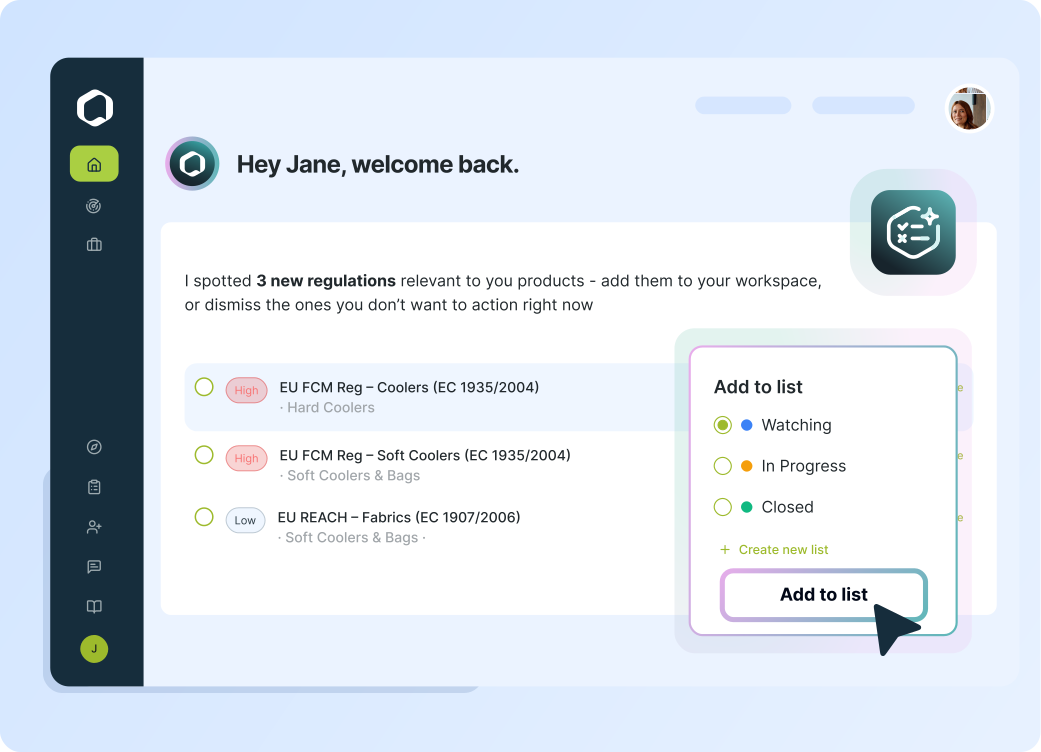
Assess Regulatory Applicability
Map Regulations to Your Products
Eliminate manual research and cut through regulatory noise by surfacing only the requirements relevant to your business, markets, and product categories.
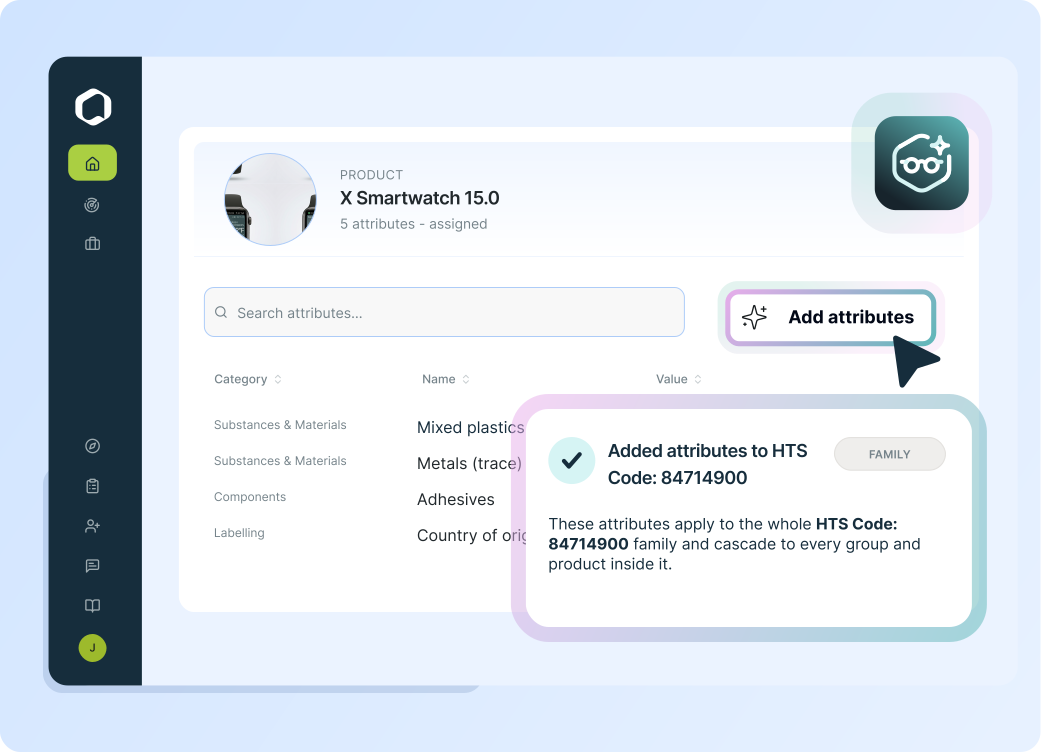
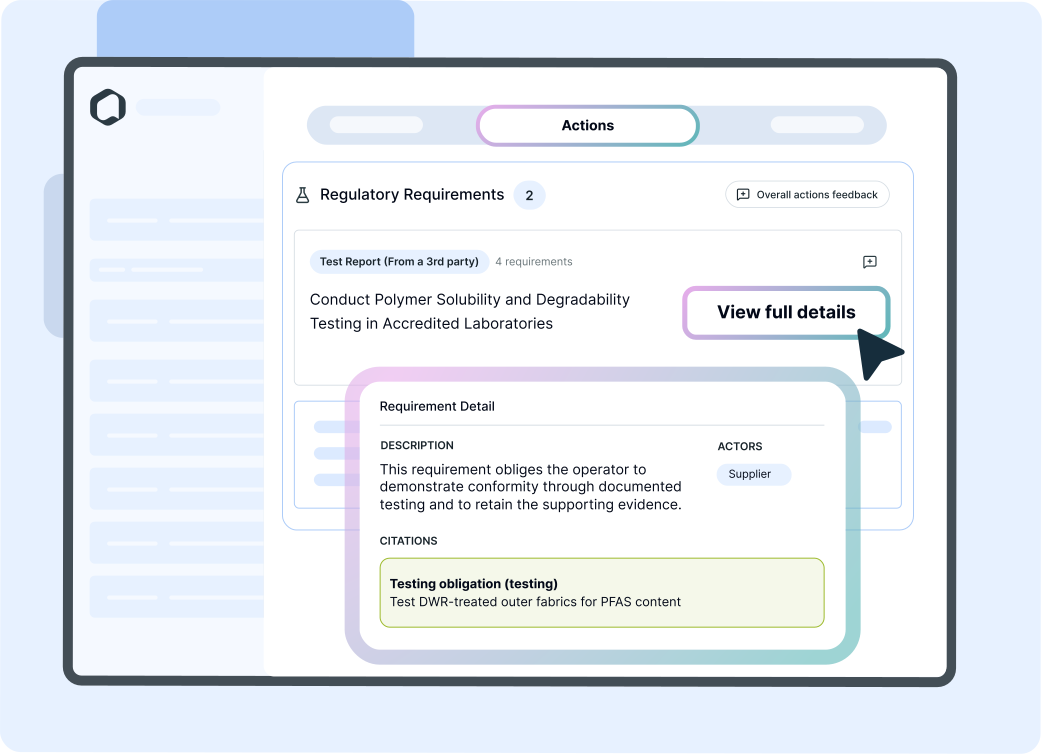
Identify Compliance Requirements
Turn complex regulations into clear, actionable tasks.
Give your teams instant clarity as AI agents transform dense legal and regulatory text into structured, easy-to-understand requirements.
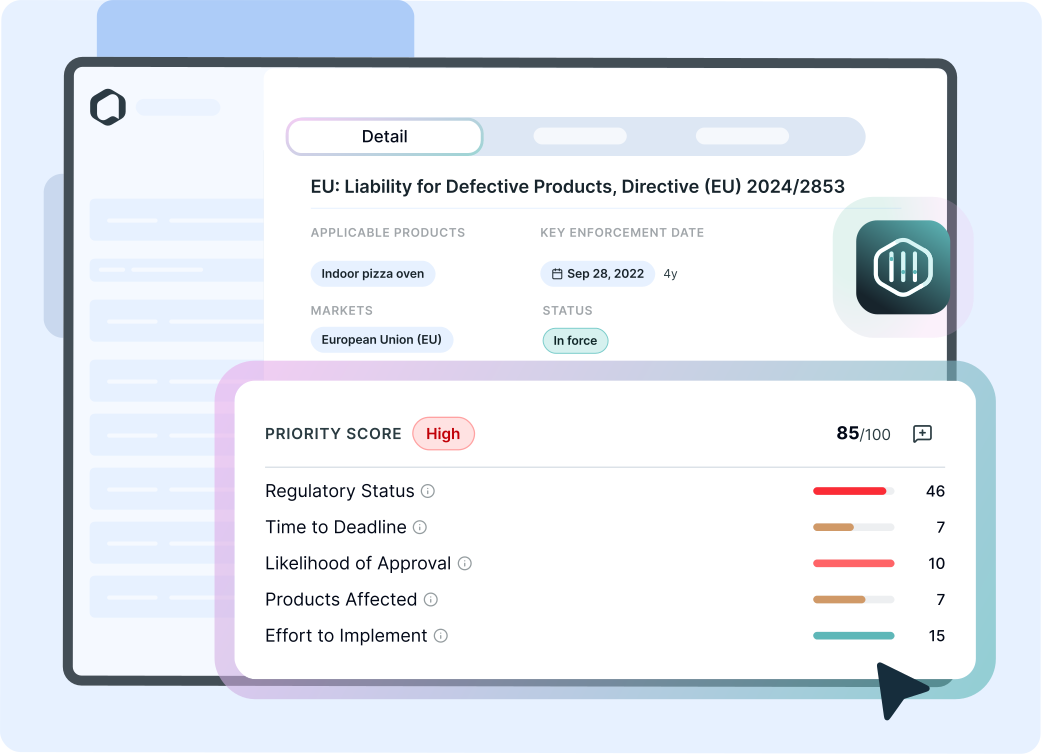
Prioritize Business Risk
Focus Where Risk Is Highest
Make faster, risk-informed decisions with confidence as AI agents automatically rank regulatory changes based on urgency, business impact, compliance deadlines, and product exposure.
Spotlight
Turning Compliance into Value


The State of Product
Compliance 2026
Discover how 500+ global leaders are shifting product compliance from a cost-centre into a strategic driver of growth, with key benchmarks like 69% of teams calling remediation their biggest challenge.
Frequently Asked Questions
-
Companies in scope of the EU Corporate Sustainability Reporting Directive (CSRD) must disclose information aligned with ESRS E5 on resource use and circular economy.
This includes large EU undertakings, listed SMEs (with transitional relief), and certain non-EU companies with significant EU activity, covering material inflows, outflows, waste, risks, policies, targets, and impacts.
-
EU measures such as the Ecodesign for Sustainable Products Regulation (ESPR) and Waste Framework Directive amendments drive requirements on durability, reparability, recyclability, and material efficiency.
Companies must integrate circular design principles, address extended producer responsibility obligations, and prepare for product-specific information and performance requirements linked to resource efficiency and waste reduction.
-
ESRS E5 aims to ensure that companies disclose how their activities affect resource use and the transition toward a circular economy.
This includes reporting on:
- Resource inflows (materials used)
- Resource outflows (waste and emissions)
- Circular design, reuse, and recycling measures
- Risks and opportunities linked to resource scarcity
-
Companies falling under the EU Corporate Sustainability Reporting Directive (CSRD) must report on ESRS E5 if resource use and circular economy topics are material to their business.
-
“Resources Inflow” may include reporting on:
- the overall total weight of products and materials used during a certain reporting period;
- the weight of renewable input materials from regenerative sources used;
- the weight of reused or recycled products and materials (non-virgin) used).
-
“Resources Outflow” discloses how the company contributes to circular economy by:
- designing products and materials in line with circular principles;
- the extent to which products, materials and waste processing are recirculated in practice after first use; and
- the company’s waste management strategy and the extent to which the company understands how its waste is managed in its own activities.
More
Regulatory
Topics
Supply Chain Due Diligence
Regulatory Focus ESG: SUPPLY CHAIN DUE DILIGENCE 28 Languages Supported 28 Languages 600 R…
Anti Bribery & Corruption
Regulatory Focus ESG: Anti Bribery & Corruption in C2P 195 Countries Covered…
Labor & Employment
Regulatory Focus Labor & Employment 195 Countries Covered 28 Languages 5166 Regulatory…
Human Rights – Affected Communities
Regulatory Focus Human Rights – Affected Communities 195 Countries Covered 28 Languages 26…
Climate Disclosures
Regulatory Focus Climate Disclosures 195 Countries Covered 28 Languages 670 Regulatory Sou…
Human Trafficking & Modern Slavery Compliance
Regulatory Focus Human Trafficking and Slavery (HTS) 195 Countries Covered 28 Languages 40…
Environmental, Social and Governance (ESG) Reporting
Regulatory Focus ESG Reporting 195 Countries Covered 28 Languages 729 Regulatory Sources W…
Circular Economy Solutions
Regulatory Focus Circular Economy 195 Countries Covered 28 Languages 2748 Regulatory Sourc…