

Regulatory Focus
Ecolabeling

Ecolabeling
195
Countries Covered
28
Languages
1115
Regulatory Sources
Ecolabeling covers voluntary schemes that certify products meeting higher environmental performance criteria than typically set by legislation. It addresses lifecycle impacts such as resource use, energy efficiency, emissions, and waste, helping companies demonstrate environmental credibility and support informed, sustainable purchasing decisions.
It guides companies to meet voluntary environmental criteria, manage certification and labeling risks, and support market access, green procurement eligibility, and credible sustainability claims.
Common requirement types include:
- Declaring/Certifying Conformity
- Marking/Labelling,
- Payments of Fees
- Registration
- Reporting
- Testing
- Energy Limits
- Chemical Limits
We cover a broad range of voluntary ecolabeling regulations, standards, and program criteria that define environmental performance, certification conditions, and rules for the use of ecolabel logos across global markets. Our coverage includes regional, national, and program-specific requirements governing product eligibility, conformity assessment, labeling, and ongoing compliance for recognized ecolabel schemes.
- Nordic Region: Ecolabelling of Rechargeable Batteries and Portable Chargers, Standard Version 5.5, 2026
- Nordic Region: Ecolabelling for Cleaning of Liquid Damaged Electronic Equipment, Standard Version 2.1, 2025
- China: Use of Environmental Labelling Logo, Notice No. 48, 2008
- China: Green Product Certification of Textile Products, Implementation Rules No. CNCA-CGP-10:2025
- EU: Ecolabel Regulation (EC) No 66/2010
- RAL: Basic Criteria for Blue Angel Eco-Label for Server and Data Storage Products, Standard, DE-UZ 213, 2025
- Philippines: Ecolabelling Criteria for Polyethylene and Polypropylene Packaging, Standard, NELP-GCP-2003004
- SuMPO EPD: Product Category Rule (PCR) for Electrical and Electronic Products and Their Components for SuMPO EPD Labeling, Standard No. PA-SuMPO-PCR-02000-1-0-0, April 2025
- EU: Establishing EU Ecolabel Criteria for Wood, Cork and Bamboo Based Floor Coverings, Decision (EU) 2017/176
- USA: Energy Star Program Requirements for Luminaires, Specification, Version 2.2, July 2019
- United Arab Emirates: Modalities and Procedure for the Use of the Environmental Label, Decision No. 18, June 2019
Experts in this Area

Intelligent Resources



Automate the work of managing regulatory change.
Let AI agents do the heavy lifting of monitoring regulations, mapping requirements to products, extracting obligations, and surfacing the risks that need attention first.
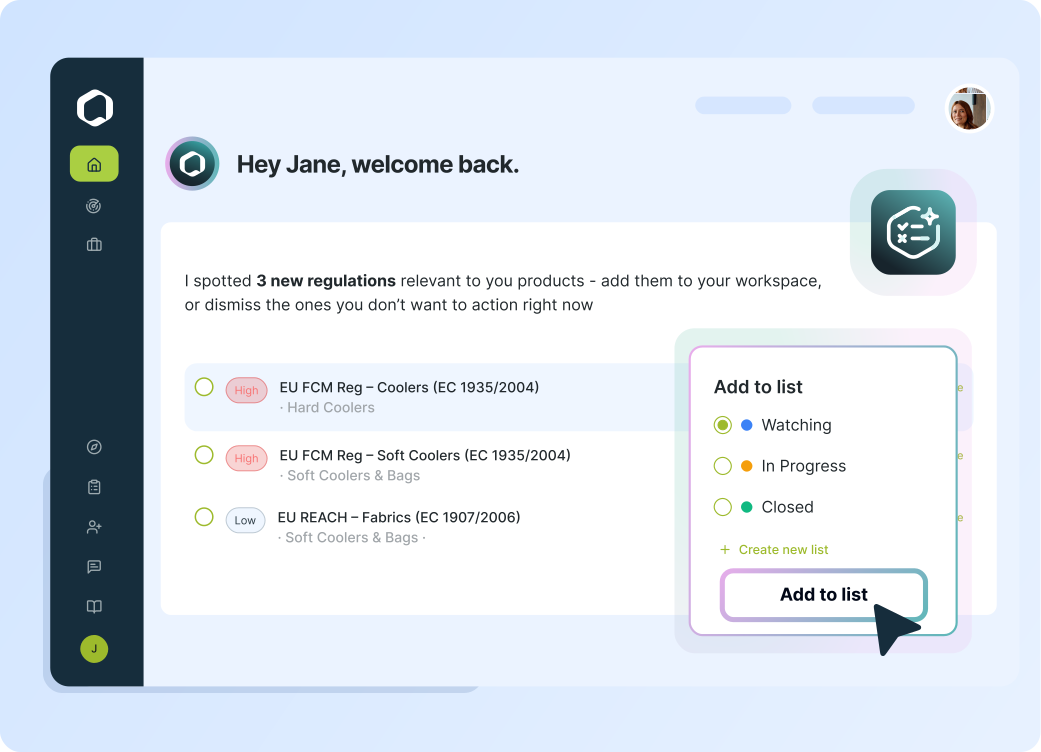
Monitor Product Compliance
Stay Ahead of Regulatory Change
Get early visibility into changes that could affect your products, supply chain, or market access—so you can act proactively, not reactively.
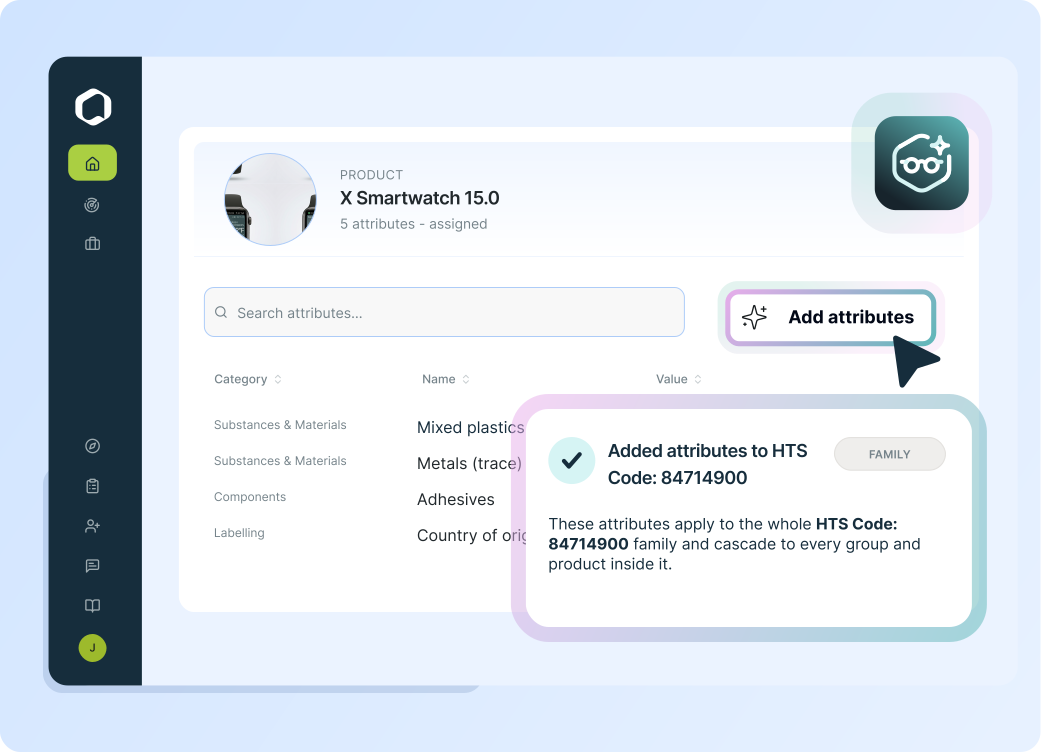
Assess Regulatory Applicability
Map Regulations to Your Products
Eliminate manual research and cut through regulatory noise by surfacing only the requirements relevant to your business, markets, and product categories.
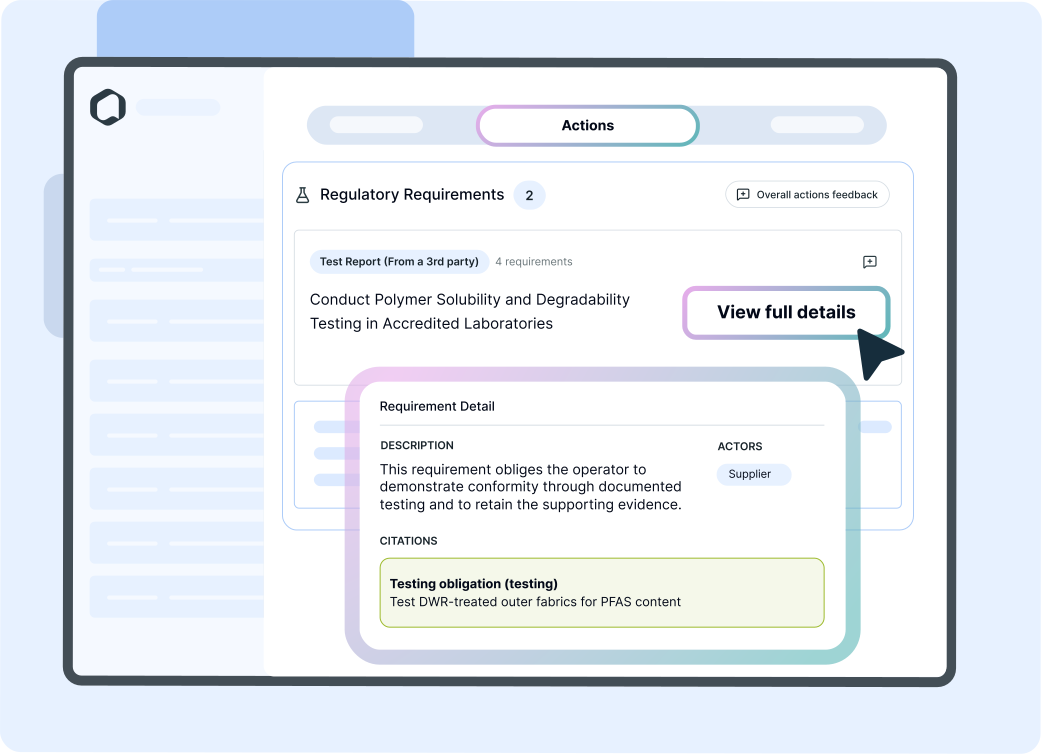
Identify Compliance Requirements
Turn complex regulations into clear, actionable tasks.
Give your teams instant clarity as AI agents transform dense legal and regulatory text into structured, easy-to-understand requirements.
Prioritize Business Risk
Focus Where Risk Is Highest
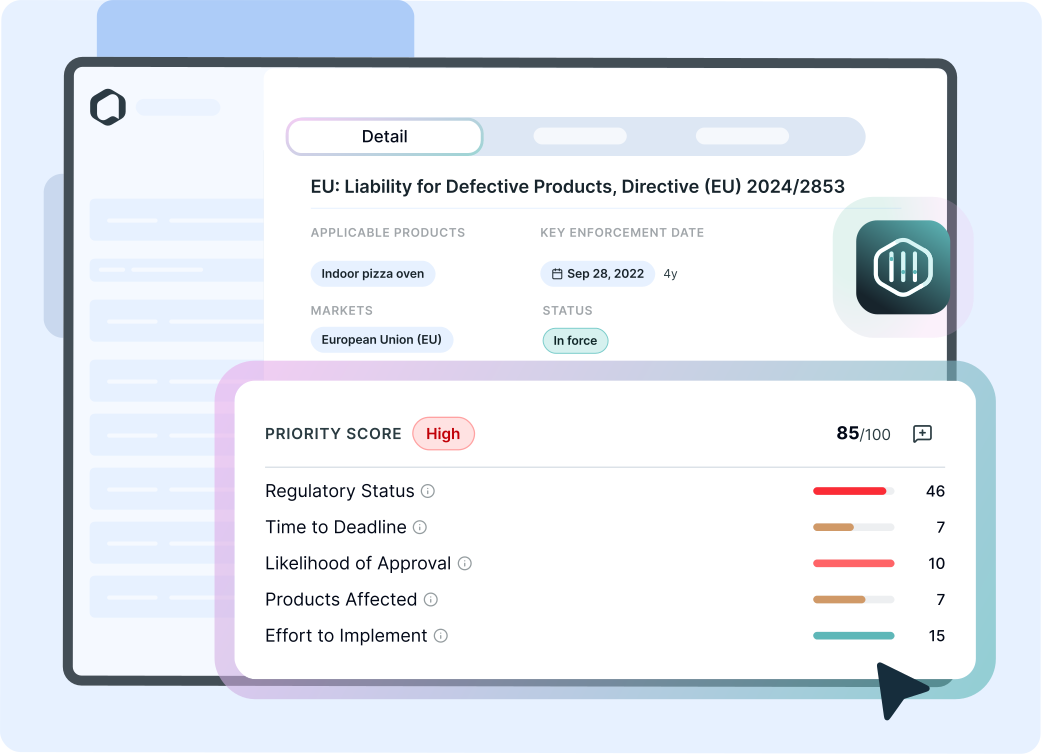
Make faster, risk-informed decisions with confidence as AI agents automatically rank regulatory changes based on urgency, business impact, compliance deadlines, and product exposure.
Spotlight
Turning Compliance into Value


The State of Product
Compliance 2026
Discover how 500+ global leaders are shifting product compliance from a cost-centre into a strategic driver of growth, with key benchmarks like 69% of teams calling remediation their biggest challenge.
Frequently Asked Questions
-
Ecolabels are voluntary schemes. However, when a company opts to use an ecolabel, it must fully meet the applicable criteria, verification procedures, and label-use rules to ensure compliance and avoid misleading claims or regulatory scrutiny.
-
Ecolabel programs typically set environmental performance criteria, require conformity assessment or third-party verification, and impose obligations on documentation, labeling use, and ongoing compliance, with criteria regularly updated to reflect scientific and technical progress.
-
Not necessarily. Most ecolabels look at the “Big Picture.” While carbon footprint is important, a true ecolabel also checks for toxic chemicals, water waste, and how easily the product can be recycled. It’s about being better for the planet in every way, not just one.
-
Yes! Governments are getting strict. If a company makes a “green” claim without proof, they can face massive fines. Using a recognized, verified ecolabel is the best way for a brand to prove they are telling the truth and stay on the right side of the law.
More
Regulatory
Topics
PFAS
Regulatory Focus Chemicals In Products 195 Countries Covered 28 Languages 1259 Regulatory …
Supply Chain Due Diligence
Regulatory Focus ESG: SUPPLY CHAIN DUE DILIGENCE 28 Languages Supported 28 Languages 600 R…
Sustainable Resource Use
Regulatory Focus Sustainable Resource Use 195 Countries Covered 28 Languages 533 Regulator…
Anti Bribery & Corruption
Regulatory Focus ESG: Anti Bribery & Corruption in C2P 195 Countries Covered…
Labor & Employment
Regulatory Focus Labor & Employment 195 Countries Covered 28 Languages 5166 Regulatory…
Human Rights – Affected Communities
Regulatory Focus Human Rights – Affected Communities 195 Countries Covered 28 Languages 26…
Climate Disclosures
Regulatory Focus Climate Disclosures 195 Countries Covered 28 Languages 670 Regulatory Sou…
Human Trafficking & Modern Slavery Compliance
Regulatory Focus Human Trafficking and Slavery (HTS) 195 Countries Covered 28 Languages 40…
Environmental, Social and Governance (ESG) Reporting
Regulatory Focus ESG Reporting 195 Countries Covered 28 Languages 729 Regulatory Sources W…
Comply with Chemical Safety Requirements
Regulatory Focus Chemicals and EH&S: Occupational Health & Safety 195 Countries Co…
Circular Economy Solutions
Regulatory Focus Circular Economy 195 Countries Covered 28 Languages 2748 Regulatory Sourc…
Climate Change
Regulatory Focus Climate change 195 Countries Covered 28 Languages 5653 Regulatory Sources…
Conflict Minerals Regulatory Compliance
Regulatory Focus Conflict Minerals 195 Countries Covered 28 Languages 348 Regulatory Sourc…
Cybersecurity
Regulatory Focus Cybersecurity 195 Countries Covered 28 Languages 1062 Regulatory Sources …
Data Protection
Regulatory Focus Data Protection 195 Countries Covered 28 Languages 2367 Regulatory Source…
Drinking Water
Regulatory Focus Drinking Water 195 Countries Covered 28 Languages 458 Regulatory Sources …
EH&S: Environment
Regulatory Focus EH&S: Environment 195 Countries Covered 28 Languages 19838 Regulatory…
EH&S: Occupational Health & Safety
Regulatory Focus EH&S: Occupational Health & Safety 195 Countries Covered 28 Langu…
California Proposition 65 Compliance
Regulatory Focus California Proposition 65 195 Countries Covered 28 Languages 117 Regulato…
Carbon Footprint
Regulatory Focus Carbon Footprint 195 Countries Covered 28 Languages 393 Regulatory Source…
Energy Efficiency Requirements
Regulatory Focus Energy Efficiency 195 Countries Covered 28 Languages 5690 Regulatory Sour…
Explosive Atmospheres / ATEX Compliance
Regulatory Focus Explosive Atmospheres (ATEX) 195 Countries Covered 28 Languages 251 Regul…
EU REACH
Regulatory Focus REACH Compliance Solutions 195 Countries Covered 28 Languages 2006 Regula…
Food Contact Materials & Articles Compliance Solution
Regulatory Focus Food Contact Materials & Articles 195 Countries Covered 28 Languages …
Comply with the Globally Harmonized System (GHS)
Regulatory Focus Globally Harmonized System (GHS) 195 Countries Covered 28 Languages 1130 …
Illegal Logging Requirements
Regulatory Focus Illegal Logging 195 Countries Covered 28 Languages 313 Regulatory Sources…
Nanotechnology
Regulatory Focus Nanotechnology 195 Countries Covered 28 Languages 384 Regulatory Sources …
Textiles
Regulatory Focus Textiles 195 Countries Covered 28 Languages 3333 Regulatory Sources Adher…
Transboundary Movement of Hazardous Waste
Regulatory Focus Transboundary Movement of Hazardous Waste 195 Countries Covered 28 Langua…
Transport of Dangerous Goods
Regulatory Focus Transport of Dangerous Goods 195 Countries Covered 28 Languages 1457 Regu…
Global Water Efficiency Requirements
Regulatory Focus Water Efficiency 195 Countries Covered 28 Languages 243 Regulatory Source…
Wireless Devices Regulatory Compliance
Regulatory Focus Wireless 195 Countries Covered 28 Languages 3353 Regulatory Sources Wirel…
Artificial Intelligence (AI)
Regulatory Focus Artificial intelligence (AI) 195 Countries Covered 28 Languages 792 Regul…
Consumer Protection
Regulatory Focus Consumer Protection 195 Countries Covered 28 Languages 4804 Regulatory So…
Chemicals & EH&S: Environment
Regulatory Focus Chemicals & EH&S: Environment 195 Countries Covered 28 Languages …
Ecodesign
Regulatory Focus Ecodesign 195 Countries Covered 28 Languages 1406 Regulatory Sources Ecod…
Electromagnetic Compatibility (EMC) Compliance
Regulatory Focus Electromagnetic Compatibility (EMC) 195 Countries Covered 28 Languages 14…
Chemicals Management Regulatory Compliance
Regulatory Focus Chemicals Management 195 Countries Covered 28 Languages 5979 Regulatory S…
Product Safety Compliance Solutions
Regulatory Focus Product Safety 195 Countries Covered 28 Languages 10398 Regulatory Source…
Battery Regulatory Compliance
Regulatory Focus Batteries 195 Countries Covered 28 Languages 3216 Regulatory Sources Batt…
Packaging
Regulatory Focus Packaging 195 Countries Covered 28 Languages 3888 Regulatory Sources Pack…
Electronic Waste / E-Waste / WEEE Compliance
Regulatory Focus Electronic Waste / E-Waste / WEEE 195 Countries Covered 28 Languages 3727…
Chemicals In Products
Regulatory Focus Chemicals In Products 195 Countries Covered 10144 Regulatory …