

Regulatory Focus
Labor & Employment

Labor & Employment
195
Countries Covered
28
Languages
5166
Regulatory Sources
Covers global laws, regulations, and mandatory standards – proposed, enacted, and amended – alongside guidance and fact sheets that require companies to identify, prevent, and manage risks and impacts affecting their own workforce and workers across the value chain.
It addresses companies’ obligations to ensure fair working conditions, equal treatment, and worker rights for their own workforce. Requirements commonly focus on adopting clear policies, engaging with affected workers, implementing remediation mechanisms, taking effective risk mitigation actions, and disclosing targets, actions, and outcomes related to material impacts, risks, and opportunities.
Companies are also required to identify, assess, and manage impacts on workers in their value chain across working conditions, equal treatment, and other fundamental labor rights. Requirements commonly focus on adopting clear policies, engaging with affected workers, implementing remediation mechanisms, taking effective risk mitigation actions, and disclosing targets, actions, and outcomes related to material impacts, risks, and opportunities.
- Pay a fair wage (at least minimum wage)
- Pay overtime (for those qualified)
- Provide leave & benefits
- Follow anti-discrimination rules
- Disclose use of AI
- Use of the right employee classification
We cover a broad range of international frameworks, regional instruments, and national laws that address labor rights, working conditions, equality, and workforce-related disclosures. Our coverage spans binding legislation and authoritative guidance shaping employer obligations, due diligence expectations, and transparency requirements across employment practices and workforce management.
- UN: Guiding Principles on Business and Human Rights, Guidance Document, March 2011
- OECD: Multinational Enterprises on Responsible Business Conduct in a Global Context, Guidance Document, June 2023
- ILO: Forced Labour Convention No. 29, 1930
- ILO: Child Labour, Forced Labour and Youth Employment, Declaration, November 2017
- Council of Europe: Protection of Human Rights and Fundamental Freedoms, Convention, 1950
- EU: Transparent and Predictable Working Conditions, Directive (EU) 2019/1152
- EU: European Sustainability Reporting Standard (ESRS) S1 Own Workforce, Standard, July 2023
- EU: European Sustainability Reporting Standard (ESRS) S2 Workers in the Value Chain, July 2023
- EU: Establishing a General Framework for Equal Treatment in Employment and Occupation, Directive 2000/78/EC
- Australia: Fair Work Act, 2009
- Brazil: Labour and Employment, Decree-Law No. 5452, 1943
- California (USA): Fair Employment and Housing Act (FEHA), 1980
- China: Labor Law, 1994
- India: Child Labour Act, 1986
- Japan: Labor Standards Act, No. 49, 1947
- Poland: Labour Code, Act 141/1974
- Russian Federation: Labour Code, Federal Law No. 197-FZ, 2001
- USA: Fair Labor Standards Act, 29 USC Ch. 8, 1938
- USA: Family and Medical Leave Act, 29 USC Ch. 28, 1993
- Ukraine: Calculating and implementing the standard of jobs for the employment of persons with disabilities, Resolution No. 490, 2026


Intelligent Resources



Automate the work of managing regulatory change.
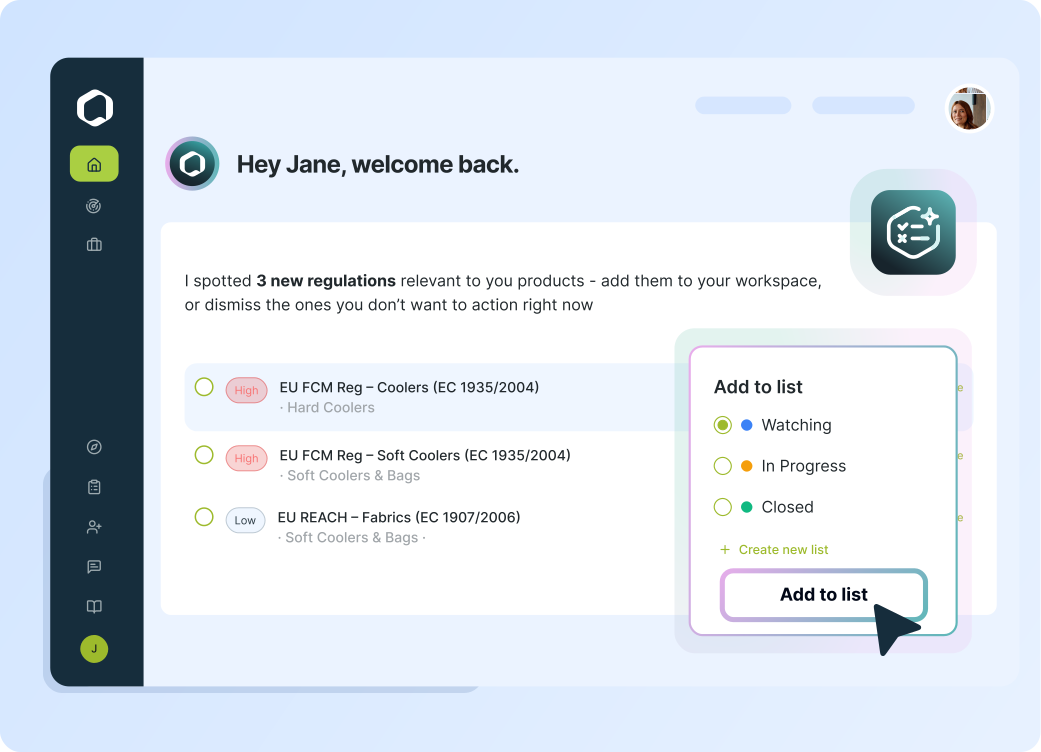
Let AI agents do the heavy lifting of monitoring regulations, mapping requirements to products, extracting obligations, and surfacing the risks that need attention first.
Monitor Product Compliance
Stay Ahead of Regulatory Change
Get early visibility into changes that could affect your products, supply chain, or market access—so you can act proactively, not reactively.
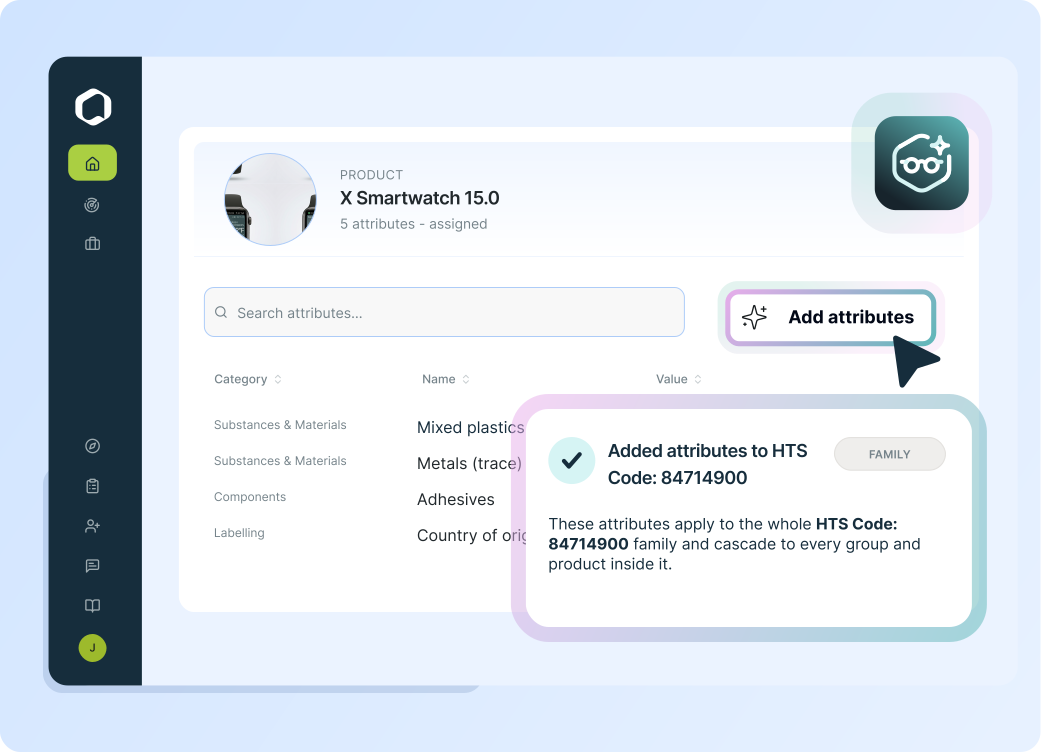
Assess Regulatory Applicability
Map Regulations to Your Products
Eliminate manual research and cut through regulatory noise by surfacing only the requirements relevant to your business, markets, and product categories.
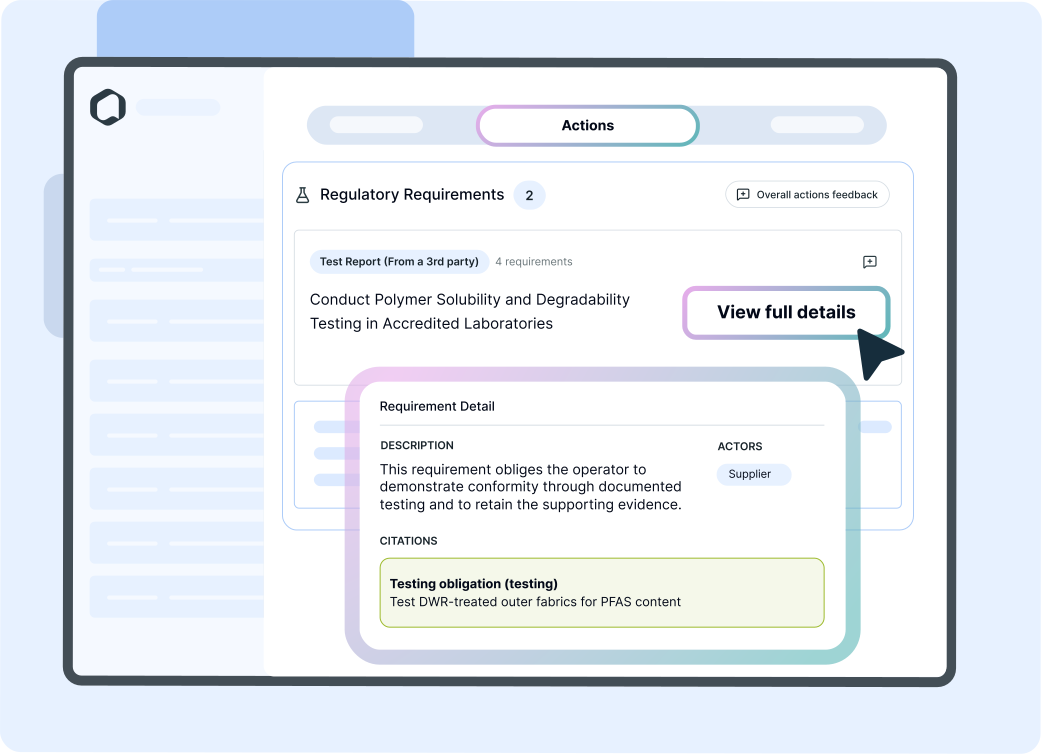
Identify Compliance Requirements
Turn complex regulations into clear, actionable tasks.
Give your teams instant clarity as AI agents transform dense legal and regulatory text into structured, easy-to-understand requirements.
Prioritize Business Risk
Focus Where Risk Is Highest
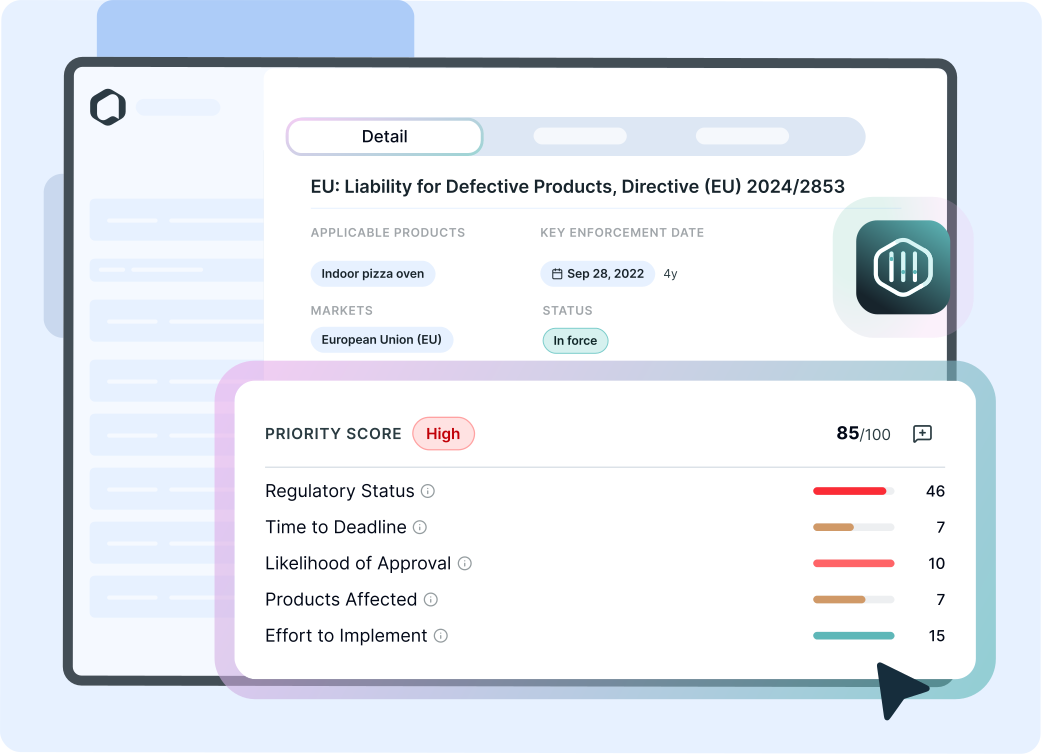
Make faster, risk-informed decisions with confidence as AI agents automatically rank regulatory changes based on urgency, business impact, compliance deadlines, and product exposure.
Spotlight
Turning Compliance into Value


The State of Product
Compliance 2026
Discover how 500+ global leaders are shifting product compliance from a cost-centre into a strategic driver of growth, with key benchmarks like 69% of teams calling remediation their biggest challenge.
Frequently Asked Questions
-
Labor and employment requirements typically apply to a company’s own workforce, including employees and certain non-employees under its control, and may extend to workers in the value chain where regulations or standards require risk-based due diligence and disclosures. Coverage commonly includes working conditions, equal treatment, fundamental labor rights, and mechanisms for engagement and remediation.
-
Companies are generally required to disclose policies, processes, and actions used to identify, prevent, mitigate, and remediate material impacts on workers. This often includes information on engagement with workers and representatives, grievance mechanisms, effectiveness of actions taken, and quantitative or qualitative metrics on topics such as wages, working time, diversity, and training.
-
Yes, but with significant new guardrails. As of 2026, many regions (including the EU and several US states) have enacted laws requiring human oversight and transparency:
- The Rule – An algorithm cannot be the “judge, jury, and executioner.” If an AI screens a resume or flags someone for termination, they typically have the right to be notified and, in many cases, request a human review.
- Discrimination – Employers are legally liable if their AI tools develop “algorithmic bias” (e.g., unintentionally filtering out candidates of a certain age or gender).
-
In 2026, the answer is increasingly yes. Following the EU Pay Transparency Directive and similar laws in US states like California and New York:
- Employers are often required to include a “good faith” salary range in every job posting.
- It is now illegal in many jurisdictions for an employer to ask an applicant about your salary history. The focus has shifted from what you used to make to what the job is worth.
- Large companies are now required to report their gender pay gaps publicly. If a gap exceeds 5%, they may be forced to conduct a “pay assessment” to fix it.
-
No, but it is becoming a “protected request.”
- Most labor laws do not grant an absolute right to work remotely. However, many jurisdictions now require employers to formally consider written requests for flexible work and provide a “serious business reason” if they deny them.
- In some countries, if employees work from home, employers are now mandated to provide a daily tax-free allowance (e.g., approximately €2.45 per day in the Netherlands) to cover home office costs like heating and internet.
More
Regulatory
Topics
Artificial Intelligence (AI)
Regulatory Focus Artificial intelligence (AI) 195 Countries Covered 28 Languages 792 Regul…
EH&S: Occupational Health & Safety
Regulatory Focus EH&S: Occupational Health & Safety 195 Countries Covered 28 Langu…
Human Trafficking & Modern Slavery Compliance
Regulatory Focus Human Trafficking and Slavery (HTS) 195 Countries Covered 28 Languages 40…
Human Rights – Affected Communities
Regulatory Focus Human Rights – Affected Communities 195 Countries Covered 28 Languages 26…
Data Protection
Regulatory Focus Data Protection 195 Countries Covered 28 Languages 2367 Regulatory Source…
Environmental, Social and Governance (ESG) Reporting
Regulatory Focus ESG Reporting 195 Countries Covered 28 Languages 729 Regulatory Sources W…
Supply Chain Due Diligence
Regulatory Focus ESG: SUPPLY CHAIN DUE DILIGENCE 28 Languages Supported 28 Languages 600 R…