

Regulatory Focus
Circular Economy Solutions

Circular Economy
195
Countries Covered
28
Languages
2748
Regulatory Sources
This topic covers key documents and regulatory actions related to the circular economy, including action plans, strategies, roadmaps, consultation documents, position papers, and reports, as well as proposed and enacted legislation. It focuses on measures across the entire product lifecycle, from design and manufacturing to the end of life, designed to reduce waste and increase resource efficiency.
Circular economy promotes keeping resources in use for as long as possible by requiring companies to rethink product design, extend product lifespan and take responsibility for their end of life to meet evolving regulations and compliance expectations.
Circular economy legislation generally requires companies to take measures across the entire product lifecycle, from design and manufacturing to end-of-life management.
Accordingly, companies may be required to:
- Improve product durability, repairability, reuse, and refurbishment potential;
- Comply with extended producer responsibility and waste management obligations (e.g., recycling and take-back schemes); and
- Provide consumers with information regarding product sustainability, durability, and environmental performance (e.g., labelling, Digital Product Passports (DPPs), and end-of-life instructions).
Our circular economy coverage includes regulations, guidance documents and standards focused on product design, waste reduction, and resource recovery across the product lifecycle. This typically includes eco-design rules, extended producer responsibility obligations, waste management frameworks, and national circular-economy action plans that support reuse, repair, and recycling.
Below is a high-level summary of our coverage for this topic:
- EU: Framework for Setting Ecodesign Requirements for Sustainable Products (ESPR), Regulation (EU) 2024/1781
- Mexico: General Law on Circular Economy, Decree, January 2026
- EU: Packaging and Packaging Waste, Regulation (EU) 2025/40
- EU: Batteries and Waste Batteries, Regulation (EU) 2023/1542
- EU: Critical Raw Materials Act, Regulation (EU) 2024/1252
- Ecuador: Approval of the Regulation Implementing the Inclusive Circular Economy Law, Decree No. 844, 2023
- France: Anti-waste and Promotion of Circular Economy, Law 2020-105
- Brazil: Implementing the National Circular Economy Strategy, Decree No. 12082, 2024
- Kenya: Sustainable Waste Management (Extended Producer Responsibility) Regulations, October 2024





Intelligent Resources


Automate the work of managing regulatory change.
Let AI agents do the heavy lifting of monitoring regulations, mapping requirements to products, extracting obligations, and surfacing the risks that need attention first.
Monitor Product Compliance
Stay Ahead of Regulatory Change
Get early visibility into changes that could affect your products, supply chain, or market access—so you can act proactively, not reactively.
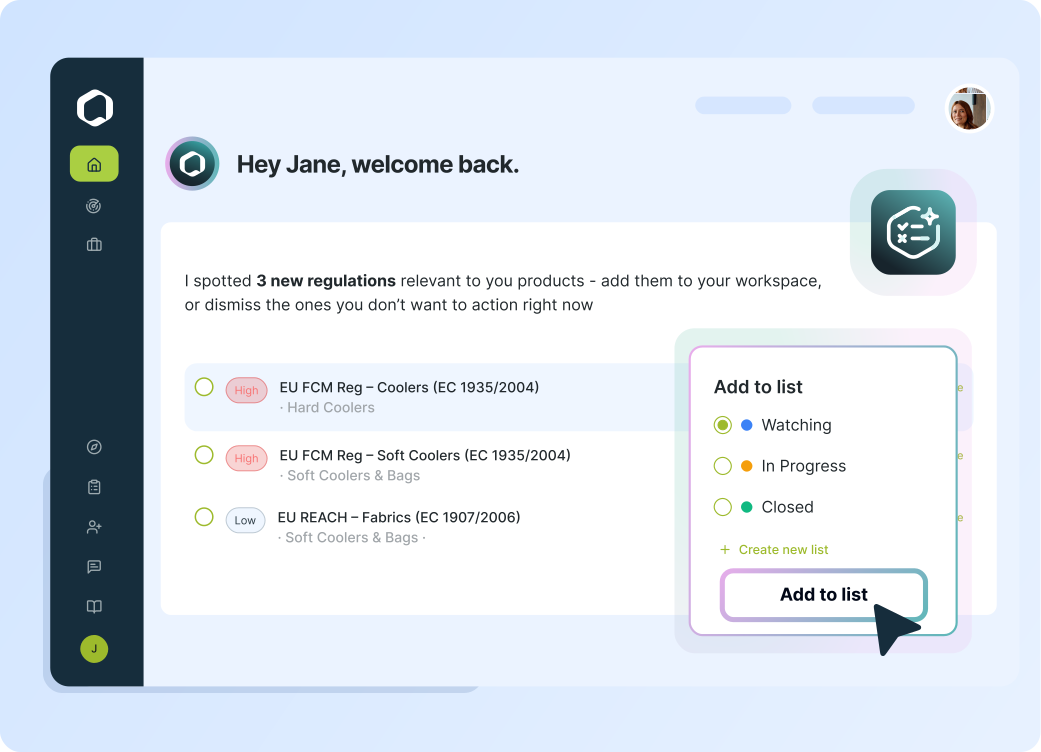
Assess Regulatory Applicability
Map Regulations to Your Products
Eliminate manual research and cut through regulatory noise by surfacing only the requirements relevant to your business, markets, and product categories.
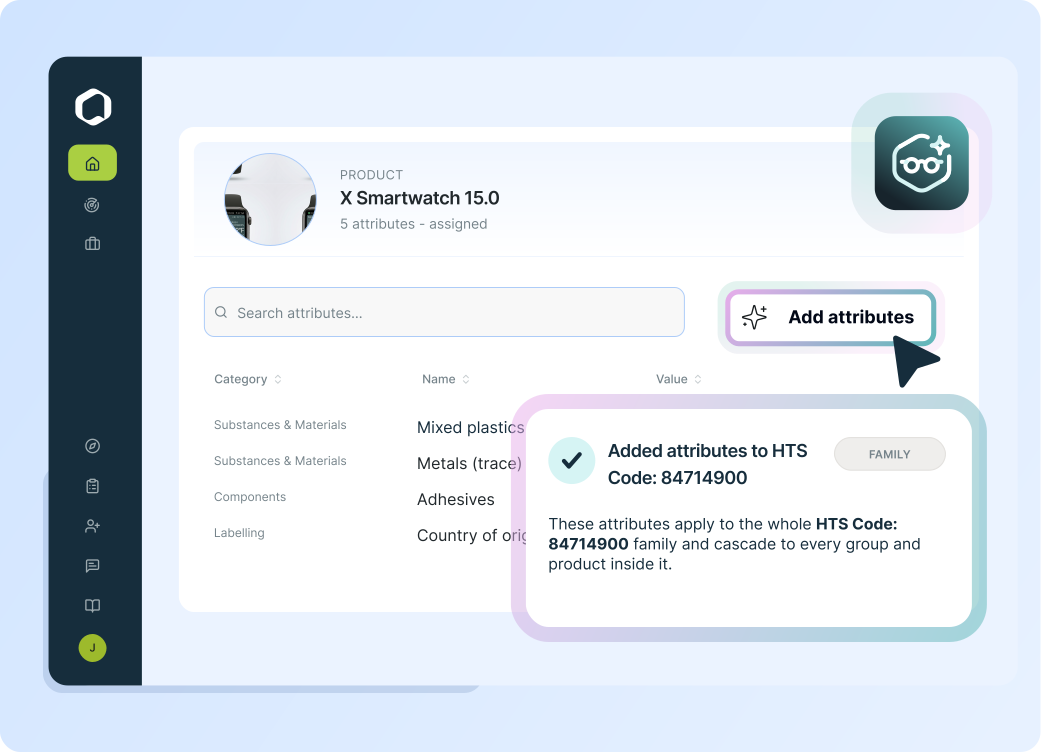
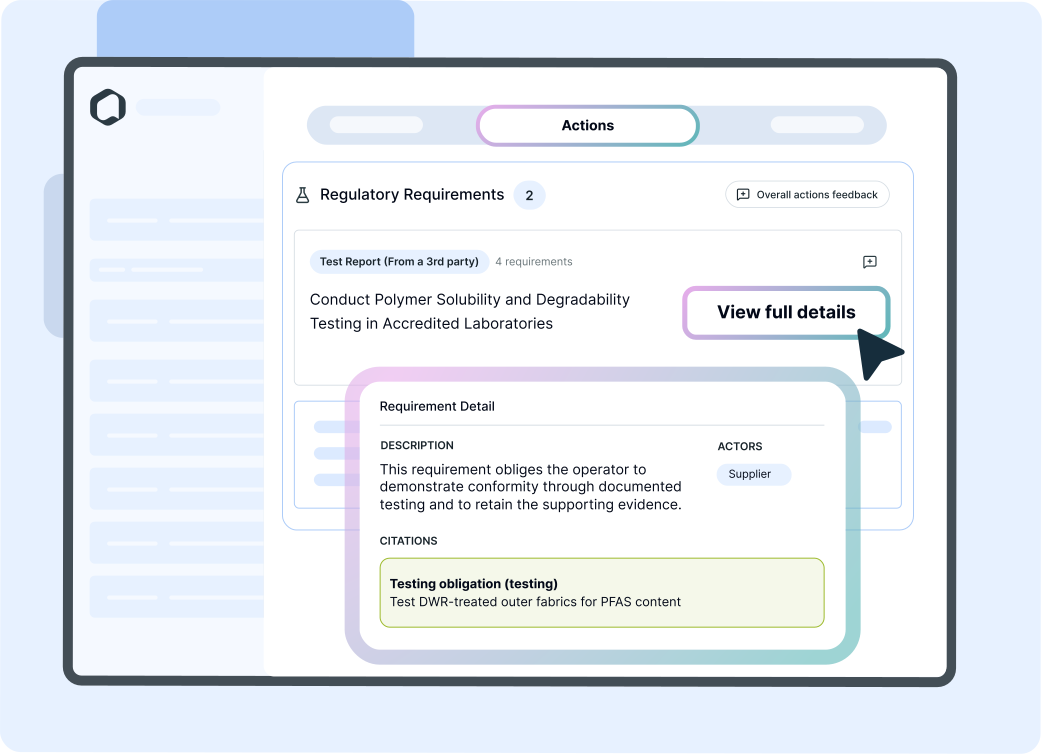
Identify Compliance Requirements
Turn complex regulations into clear, actionable tasks.
Give your teams instant clarity as AI agents transform dense legal and regulatory text into structured, easy-to-understand requirements.
Prioritize Business Risk
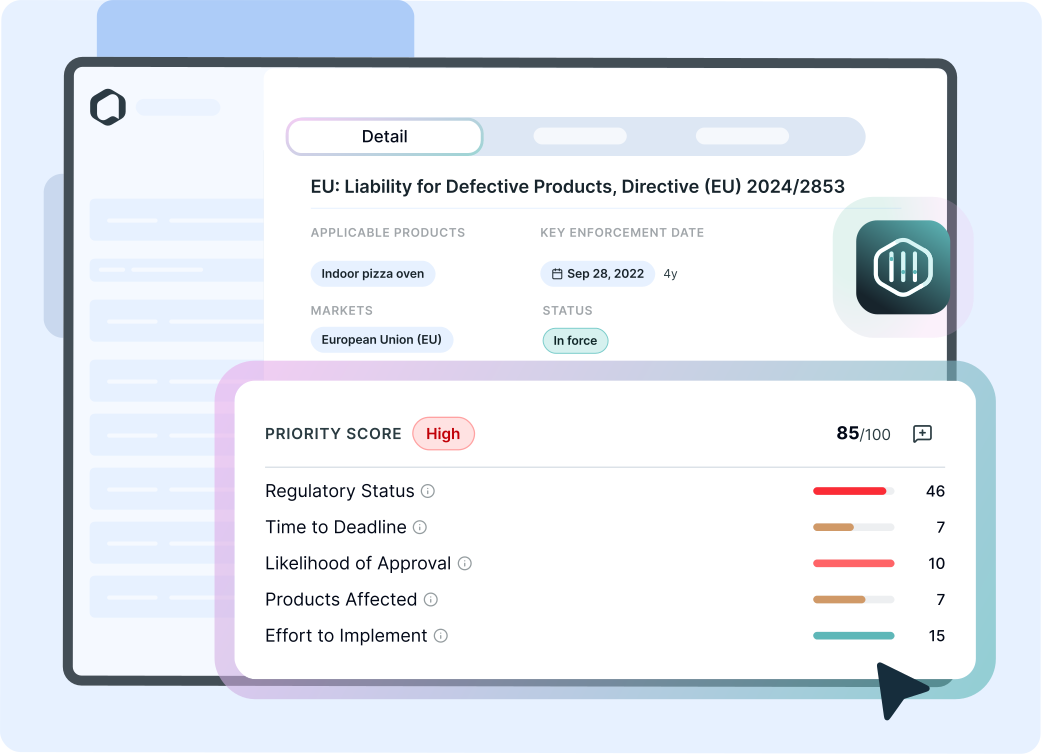
Focus Where Risk Is Highest
Make faster, risk-informed decisions with confidence as AI agents automatically rank regulatory changes based on urgency, business impact, compliance deadlines, and product exposure.
Spotlight
Turning Compliance into Value


The State of Product
Compliance 2026
Discover how 500+ global leaders are shifting product compliance from a cost-centre into a strategic driver of growth, with key benchmarks like 69% of teams calling remediation their biggest challenge.
Frequently Asked Questions
-
Circular economy regulations typically address product design requirements—such as durability, reparability, and recyclability—throughout the product lifecycle. They also establish extended producer responsibility (EPR) frameworks, regulate waste management and recycling systems, and adopt national action plans that promote reuse, repair, and resource recovery.
-
Regulation (EU) 2024/1781 (ESPR) applies to a broad range of products marketed in the European market, including components and intermediate products. Only limited categories are excluded, such as food; feed; medicinal and veterinary products, living plants, animals, and micro-organisms; products of human origin; products of plants and animals directly related to their future reproduction and vehicles.
-
What are the transparency obligations for discarded unsold consumer products under the Ecodesign for Sustainable Products Regulation (EU) 2024/1781?
Pursuant to Article 24(1) of ESPR regulation (EU) 2024/1781, economic operators that discard unsold consumer products, or have such products discarded on their behalf, are required to publish information annually on: the number and weight of products discarded; the reasons for their destruction; and the measures taken to prevent the destruction of unsold consumer products.
The first disclosure by large companies must cover products discarded during the first full financial year in which the regulation is in force.
-
Reparability requirements are technical requirements that products must meet in order to be sold on the EU market. In practice, these requirements relate to the availability of spare parts, disassembly, and software and firmware updates. These requirements are set out in the product-specific legislation listed in Annex II of the Directive.
More
Regulatory
Topics
Sustainable Resource Use
Regulatory Focus Sustainable Resource Use 195 Countries Covered 28 Languages 533 Regulator…
Textiles
Regulatory Focus Textiles 195 Countries Covered 28 Languages 3333 Regulatory Sources Adher…
Packaging
Regulatory Focus Packaging 195 Countries Covered 28 Languages 3888 Regulatory Sources Pack…
Electronic Waste / E-Waste / WEEE Compliance
Regulatory Focus Electronic Waste / E-Waste / WEEE 195 Countries Covered 28 Languages 3727…
Ecodesign
Regulatory Focus Ecodesign 195 Countries Covered 28 Languages 1406 Regulatory Sources Ecod…
Battery Regulatory Compliance
Regulatory Focus Batteries 195 Countries Covered 28 Languages 3216 Regulatory Sources Batt…