Product Safety in Motion: Key Takeaways from International Product Safety Week 2026

This blog was originally posted on 18th September, 2026. Further regulatory developments may have occurred after publication. To keep up-to-date with the latest compliance news, sign up to our newsletter.
AUTHORED BY MICHELLE WALSH, TEAM MANAGER – GLOBAL REGULATORY COMPLIANCE TEAM, ADHERENT
Key Insight
International Product Safety Week 2026 highlighted how globalisation, digitalisation, e-commerce, and AI are creating new challenges for product safety and enforcement. Increased international collaboration, cooperation, and data sharing are necessary, but with emerging and unknown risks created by new technology, safety by design is not enough, what we really need is Safety by Default.
Table of Contents
- Introduction
- Key Trends
- Legislation, Reforms, Handbook and Pledges
- E-Commerce & Market Surveillance Challenges
- New Technology and AI Tools
- Conclusion
- Frequently Asked Questions
Introduction
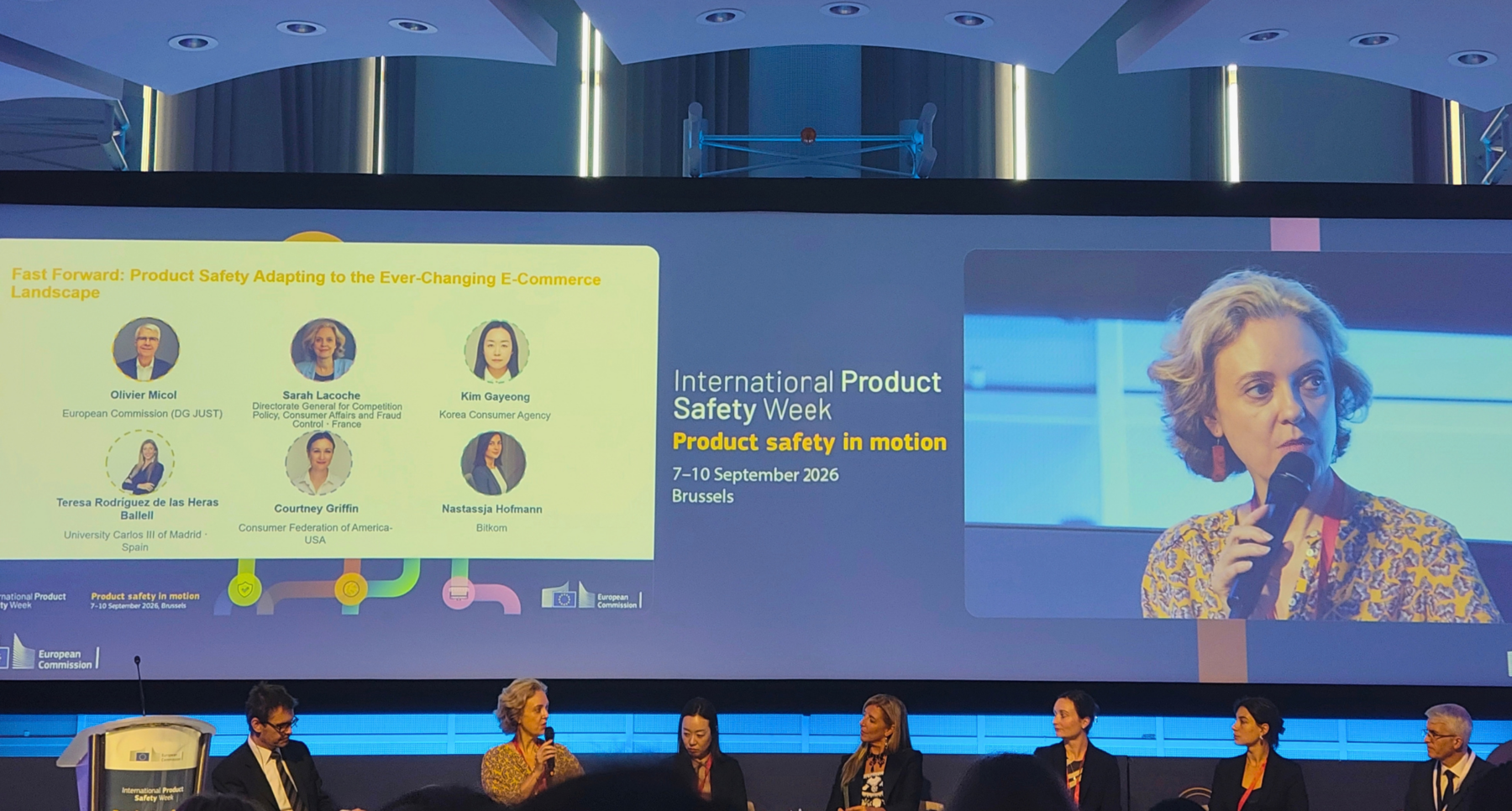
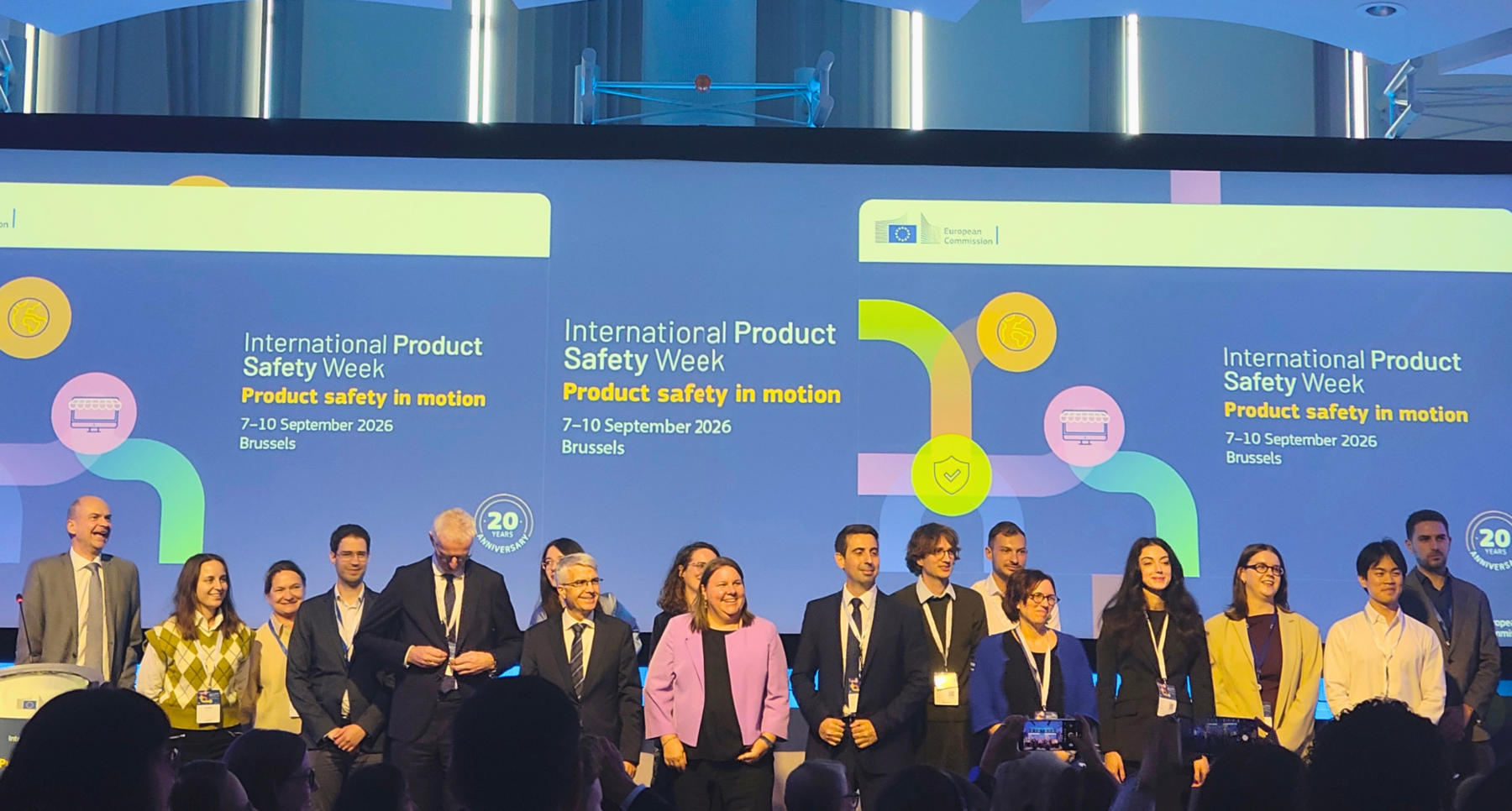
The International Product Safety Week 2026 took place in Brussels, Belgium, from 7th to 9th September 2026 at the European Commission.
This event marked 20 years of celebrating international product safety week where global regulators, industry leaders, consumer authorities, and legal experts gathered under the theme “Product Safety in Motion.”
Here are the key takeaways and upcoming regulatory developments shaping the future of product safety under discussion at the EU Commission.
1. Key Trends
The conference kicked off with a look back at the achievements and how far the EU has come in regards to being a leader in product safety and what are the future challenges.
Some of the main themes were how emerging technology, online sales, new technology, and e-commerce, has transformed how products reach consumers.
Globalisation and digitalisation were identified as some of the main challenges to regulating product safety. The top priority is to increase international collaboration, cooperation, and data sharing through safety alert recall systems worldwide.
One country’s warning is another country’s prevention to protect consumers and prevent the same harm happening elsewhere.
2. Legislation, Reforms, Handbook and Pledges
- EU General Product Safety Regulation (GPSR): is seen as a major achievement for product safety in the EU. This regulation introduced risk assessment, documentation, and addresses safety of products sold online. Businesses must now indicate who is Responsible Person (RP) for the product to allow traceability and better enforcement.
- European Product Act (Expected Q4 2026): This was one of the main talking points. This new regulation promises to focus on enforcement and modernize market surveillance. It will replace the existing EU Marketing Surveillance Act, and amend the GPSR. It aims to deliver a unified enforcement framework with consequences for non-compliance.
- EU Digital Fairness Act (DFA) (Expected Q4, 2026): This aims to address gaps identified in consumer protection in digital environments. This will target unfair commercial practices in the digital environment, specifically outlawing “dark patterns,” which manipulate users into making choices they would not otherwise make. It will also tackle manipulative social media design, hidden subscriptions, misleading marketing by influencers, and addictive design of digital products.
- Customs Reform: Recent reform of EU Customs rules has led to tackling the surge of products sold through online platforms that simply do not comply with EU rules. In 2025, there were nearly 5.9 billion low-value packages imported into the EU. However, the sheer volume of products means customs and enforcement authorities have to move towards using AI tools to assist them.
- UN Principles for Consumer Product Safety: Adopted by the General Assembly under Resolution 80/119 on 15 December 2025, establishes the first global comprehensive framework to ensure products sold online and offline are safe.
- United Nations Trade and Development (UNCTAD) Handbook on Consumer Product Safety: (Draft still under development). This Handbook will provide a practical guide to help policymakers and regulators strengthen national systems and harmonize approaches with international best practices. This really is a tool for regulators particularly in counties that do not already have a safety gate system in place for example.
- Voluntary Industry Pledges: EU Commission is working with companies through the Product Safety Pledge and Consumer Safety Pledge
3. E-Commerce & Market Surveillance Challenges
Online marketplaces and emerging sales channels have revolutionized access to consumer goods, but they have also introduced major enforcement challenges:
- 2026 Product Safety Sweep Results: Findings revealed alarming compliance gaps, particularly regarding the requirements for a “Responsible Person” under the EU GPSR. In only 22% of checked cases were the EU GPSR RP requirements fully satisfied out of 1,681 online goods checked.
- AI Agentic Commerce Risks: Introduction of AI Agentic Commerce is empowering consumers to make informed decisions about the products they purchase, however there is a risk for manipulative patterns for AI agents, AI biases, concentration of the market, creation of new types of vulnerabilities so the EU Commission must regulate appropriately.
- AI Toys & Generative AI: Generative AI tools and connected toys designed to mimic human emotion present unprecedented challenges. Key concerns include child trust manipulation, emotional dependency, exposure to developmentally inappropriate interactions, and privacy risks. Under the EU AI Act, AI-enabled toys are categorized as high-risk products.
- New Risks to Mental Health by Digital Products: Historically product safety focused on physical aspects, chemical exposure, or mechanical defects, whereas regulators are now expanding their scope to encompass psychological and mental health risks associated with modern technology and digital products.
Despite the emergence of mental health issues associated with digital products, and the fact the EU GPSR covers mental health, consumer protection agencies have not received many complaints due to the difficulty in proving the damage or harm caused to mental health of the user was actually caused by the digital product.
More guidance and support is needed to help authorities deal with this new aspect of product safety as well as more information to make consumers aware that they can make complaints of this nature.
- Social Media is being used to promote unsafe products that target vulnerable people. Examples given were with a baby sleep pillow, and a baby feeding chair that are being promoted online which go against health and safety advice but are targeting new and sleep-deprived vulnerable parents.
4. New Technology and AI Tools
- EU Safety Gate: Rapid Alert System Introduced by the EU GPSR is the data sharing platform which allows identification of dangerous products with EU National authorities.
- E-surveillance web crawler Also Introduced by the EU GPSR, the EU Commission is extremely proud of their web crawler tool that detects products that have been notified in Safety Gate and are still sold or reappear in web shops and online market places.
- International Cooperation and Data Sharing between Rapid Safety Alert Systems globally is essential to identification and removal of dangerous products worldwide (examples EU Rapid Alert System, Health Canada Recall system, China Rapid Risk Early Warning system, ASEAN product alert and recall portal, OECD Global Recall Portal etc). Example given was the Australian ACCC authority issued a recall of children’s play sand that was found to contain asbestos and informed the EU Safety Gate System which informed EU Member States to remove it from the market.
- AI technology is seen as an opportunity to make enforcement more effective but final decisions particularly around enforcement decisions should always be made by humans.
5. Conclusion
The mission of delivering safe products to consumers remains the same. However, what has changed are the challenges facing products through new technology, e-commerce, online marketplace, as well as opportunities and risks created by the use of AI.
Enforcement remains an issue, however the new European Product Act is promising to tackle this problem.
Increased international collaboration, cooperation and data sharing are all necessary tools to improve consumer product safety. However, with the heavy focus on enforcement, I felt the approach was a little reactionary rather than preventative as these products have already been placed on the market.
One clear takeaway is that with all these new emerging technologies and unknown risks created by AI that safety by design is not enough, what we really need is Safety by Default.
Frequently Asked Questions
- What were the main product safety challenges discussed at International Product Safety Week 2026?
Globalisation and digitalisation were identified as some of the main challenges to regulating product safety. Emerging technology, online sales, new technology, and e-commerce have transformed how products reach consumers. - What is the European Product Act expected to address?
This new regulation promises to focus on enforcement and modernize market surveillance. It will replace the existing EU Marketing Surveillance Act, and amend the GPSR. It aims to deliver a unified enforcement framework with consequences for non-compliance. - What product safety risks are associated with AI and digital products?
There is a risk for manipulative patterns for AI agents, AI biases, concentration of the market, and the creation of new types of vulnerabilities. Generative AI tools and connected toys also present concerns including child trust manipulation, emotional dependency, exposure to developmentally inappropriate interactions, and privacy risks. - How is technology being used to improve product safety enforcement?
The EU Safety Gate allows identification of dangerous products between national authorities,, while the E-surveillance web crawler detects products that have been notified in Safety Gate and are still sold or reappear in web shops and online market places. AI technology is seen as an opportunity to make enforcement more effective. - What was one clear takeaway from International Product Safety Week 2026?
One clear takeaway is that with all these new emerging and unknown risks created by new technology, Safety by Design is not enough, what we really need is Safety by Default.
See Adherent in Action
Discover how agentic AI is reshaping product compliance for global enterprises.
Authors


Michelle Walsh
Manager – Global Regulatory Compliance
Leading global regulatory compliance with expertise in circular economy, ecodesign, energy efficiency, ESG reporting on sustainable resource use, WEEE, and the transboundary movement of hazardous waste.


The Ultimate Product Compliance Playbook
What the World’s Leading Product Organizations Have Figured Out About Product Compliance