What Does D2D Mean for Device Manufacturers?

This blog was originally posted on 17th August, 2026. Further regulatory developments may have occurred after publication. To keep up-to-date with the latest compliance news, sign up to our newsletter.
AUTHORED BY AARON GREEN, SENIOR REGULATORY COMPLIANCE CONSULTANT, ADHERENT
What’s up with D2D Satellite Connectivity?
2026 has been a busy year for the implementation of direct-to-device (D2D) satellite communication services, so device manufacturers may be curious to know how it will affect radio equipment certifications and functionality.
Satellite D2D allows unmodified cellular mobile phones and even short range devices to connect to the network through satellite links to eliminate “dead zones” in wireless coverage. Because this technology leverages existing spectrum and equipment licenses and authorisations, the current approach to D2D does not require new certifications for equipment manufacturers. However, the additional coverage provided by satellite connectivity depends on the user having a contract with a service provider with access to a satellite network. Fortunately, there are initiatives from both regulators and incumbent network operators to expand user access to satellite connectivity.
The second quarter of 2026 has been a busy period for global radio regulations – read more on Short Range Device Radio Regulations: Q2 2026 Regulatory Roundup.
Cellular “Dead Zones”
In May of 2026, the EU Commission adopted a proposal for the selection of mobile satellite services, MSS, providers who will be authorised to use the harmonised 2 GHz frequency band beyond 2027, when the current licenses expire. The rationale for an EU level authorisation is to ensure regulatory consistency across the EU and allow operators to develop and provide services across borders.
Existing network operators have already launched D2D offerings using existing frequency allocations, as RCR Wireless reports that over 40 mobile operators are currently implementing D2D services, and many more are considering partnerships or licenses. Meanwhile STL Partners’ Skywatch Tracker lists 214 telco-satco partnerships, primarily based on the existing satellite networks of Starlink, Skylo or one of the Chinese operators.
Geographically, Australia has a relatively large share of users connecting to D2D networks and spending meaningful time on those connections. The UK has grown quickly from a low base following O2’s launch with Starlink, while Japan shows comparatively low usage despite early access to the technology. In the U.S. and Canada, usage levelled off over the winter due to reduced travel and the end of summer promotions. Perhaps more significantly, the commercial upsides from D2D services remain uncertain. An Opensignal poll found that most respondents would use D2D if it were available, but only 47% were willing to pay more.
D2D for Short Range Devices
Surprisingly, short range devices can also connect via satellite, at least in isolated locations with minimal interference. The European Conference of Postal and Telecommunications Administrators (CEPT) has finalised ECC Decision (25)02 to help CEPT administrations intending to regulate the 862-870 MHz frequency band for low power devices communicating with satellites (LPD-S) while ECC Report 376 proposes using small IoT transmit-only satellite terminals in the 5850-5875 MHz and 14.0-14.5 GHz bands. Based on these technical studies, PT FM44 is currently defining suitable characteristics for such terminals to allow their exemption from individual licencing.
With regard to short-range devices, in July of 2026 the US FCC announced plans to assess more than 225 megahertz of unlicensed spectrum to potentially support the capacity requirements and complement other bands for D2D services. Permitting satellite communications in the bands available for part 15 unlicensed devices could mitigate any spectrum shortfall in licensed bands. The Proposed Rulemaking would do the following:
- Propose to add frequency allocations for Earth-to-space operations in the 902-928 MHz, 2400- 2483.5 MHz and 5725-5850 MHz bands that are currently available for use by unlicensed devices under Part 15 of the rules.
- Propose to permit Earth-to-space transmissions in these bands at levels that comply with the part 15 technical rules, generally up to 36 dBm (4 watts) EIRP.
- Seek comment on whether the Commission should allow space-to-Earth operations in the 5725- 5850 MHz band or other bands, and if so, what allocation changes, technical rules and other requirements would be necessary to enable efficient sharing of spectrum among users and prevent harmful interference to authorized services.
Future Trends
The FCC’s SRD proposal illustrates the broader trend in D2D regulation, which is to integrate satellite connectivity into the existing approval frameworks. D2D will provide coverage in dead zones, not replace terrestrial base stations in well-serviced areas. New regulations should have minimal impact on user equipment for the foreseeable future, but it is important for device manufacturers to consider the technical demands of space-based transmission systems if consumers come to expect D2D functionality.
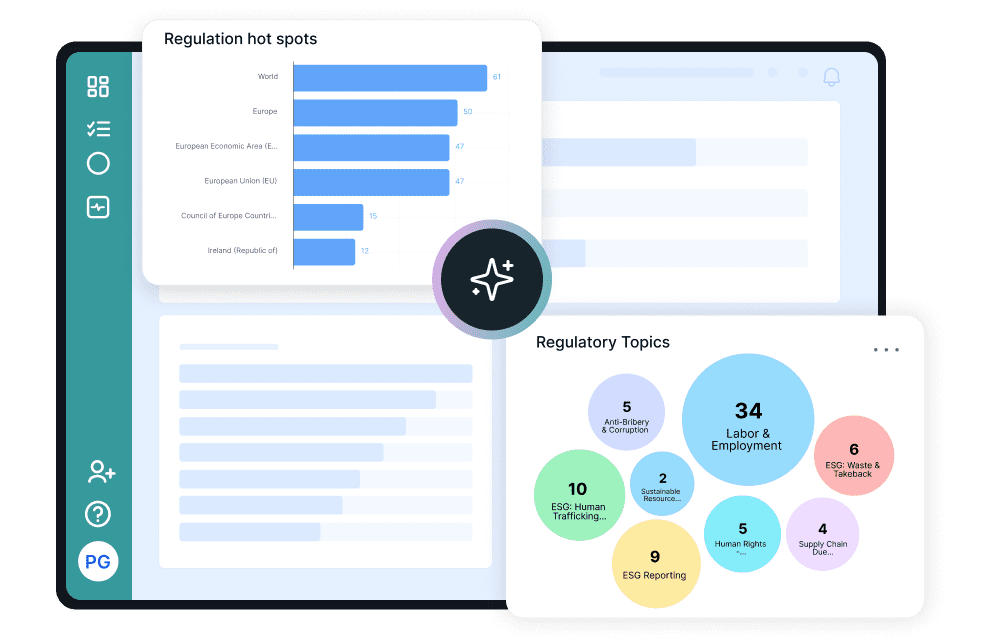
See Adherent in Action
Discover how agentic AI is reshaping product compliance for global enterprises.
Authors


Aaron Green
Senior Regulatory Compliance Consultant
Global regulatory compliance professional with expertise in wireless, IoT, electromagnetic compatibility, and automotive regulation.

The Ultimate Product Compliance Playbook
What the World’s Leading Product Organizations Have Figured Out About Product Compliance