How to Quantify Compliance Risk When You’ve Never Had a Fine

THIS BLOG WAS WRITTEN BY THE ADHERENT MARKETING TEAM TO INFORM AND ENGAGE. HOWEVER, COMPLEX REGULATORY QUESTIONS REQUIRE SPECIALIST KNOWLEDGE. TO GET ACCURATE, EXPERT ANSWERS, PLEASE CLICK ASK AN EXPERT.
Quick Answer
- A clean record is not proof of low risk. It may simply mean the company has not yet faced the combination of exposure, detection, and failure that creates a visible incident.
- Quantify each failure mode with a range: annual probability multiplied by direct and operational cost, plus bounded reputational exposure.
- Use company data first. Freight invoices, shipment values, distributor contracts, staff time, gross margin, and launch calendars are more defensible than generic averages.
- Model three views: expected annual loss, a plausible bad year, and one severe event.
- Keep fines separate from customs holds, rejected deliveries, recalls, corrective work, and lost market access. A fine is only one possible cost.
- Recalculate the model when shipment volume, product scope, or market count changes.
Table of Contents
- How can you quantify compliance risk without prior incidents?
- What does a compliance failure look like operationally?
- How should you calculate the cost of a customs hold or distributor rejection?
- How do enforcement paths differ in the EU and Gulf markets?
- How should reputational exposure be valued?
- How do you present the result to a board or CFO?
- FAQ: Frequently Asked Questions
A clean record does not prove that product compliance risk is low. For a scaling exporter, exposure changes as shipment count, product range, supplier base, and market coverage grow. Model the business you operate now, not only the incidents you avoided in the past.
How can you quantify compliance risk without prior incidents?
Quantify product compliance risk as a range for each failure mode: annual probability multiplied by direct and operational cost, then add a bounded estimate of reputational exposure. Sum the failure modes, show the assumptions, and report expected, bad-year, and severe-event views rather than one precise number.
Use this structure:
Annual risk exposure = probability of failure × cost if it occurs + reputational exposure
Do not begin with a benchmark fine. Begin with events that can happen to your products and shipments:
- Documentation request that consumes staff time but does not stop a shipment
- Customs hold caused by missing, inconsistent, or unavailable evidence
- Distributor rejection or cancelled purchase order
- Corrective labeling, testing, rework, withdrawal, or recall
- Regulatory penalty where the applicable law provides one
When your own incident history is thin, estimate probability through observable exposure drivers. These include annual shipment count, number of destination markets, number of product families, regulatory risk of each category, supplier changes, and frequency of documentation exceptions.
Adherent’s State of Product Compliance 2026 draws on primary research from 500 senior compliance leaders. It reports that 69% identify remediation as their hardest task. That does not provide a probability for your company, but it does support including remediation effort as a distinct cost rather than treating compliance failure as a fine-only event.
What does a compliance failure look like operationally?
A compliance failure usually starts with a routine business interruption, not a dramatic penalty. A shipment is flagged, a distributor asks for evidence, or an authority requests documentation. The cost grows when the company cannot answer quickly, identify affected products, or coordinate corrective work.
For a mid-sized exporter, the sequence often looks like this:
- A customs authority, market surveillance body, customer, or distributor questions a product or document.
- Operations pauses release or delivery while legal, compliance, quality, sales, and logistics gather evidence.
- The team checks declarations of conformity, test reports, labels, restricted-substance data, product files, and supplier records.
- Missing or conflicting evidence triggers retesting, relabeling, rework, shipment return, or further review.
- The distributor or authority decides whether the product can enter, remain on sale, or needs corrective action.
The visible invoice may be storage or rework. The larger cost can sit elsewhere: delayed revenue recognition, a missed retail window, management time, or a distributor that no longer trusts the launch plan.
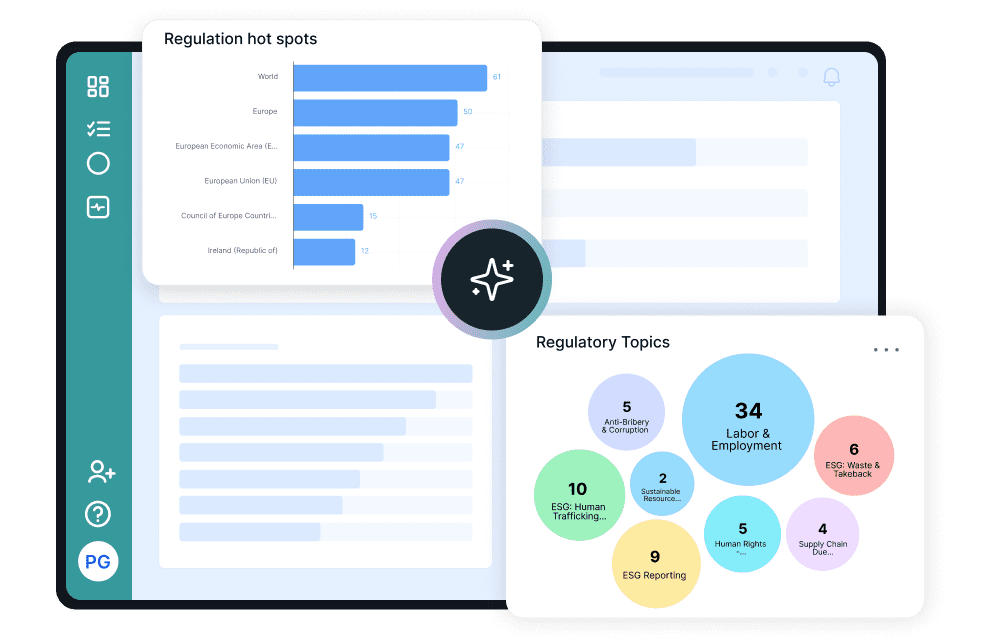
The Adherent platform is designed to connect regulatory change to products and markets, monitor & assess this regulatory applicability, identify compliance requirements and prioritize business risk. Human experts still own judgment and accountability. The operating goal is faster, traceable answers when a product or shipment is questioned.
How should you calculate the cost of a customs hold or distributor rejection?
Build the cost from your own freight, margin, contract, and labor data. Do not use a generic claim that a hold costs a fixed amount. The same delay can be modest for a low-value replenishment shipment and material for a seasonal launch or a purchase order tied to a new distributor.
Customs hold cost worksheet
| Cost component | Company input | Calculation |
| Demurrage, detention, or storage | Carrier and port terms | Daily charge multiplied by delay days |
| Testing, labeling, or document correction | Vendor quote or prior invoice | External fee plus materials |
| Expedited or replacement freight | Current freight quote | Incremental cost above planned freight |
| Internal response time | Loaded hourly cost by role | Hours multiplied by loaded rate |
| Delayed cash or margin | Shipment value, margin, timing | Margin or financing effect for the delay period |
| Missed selling window | Approved commercial forecast | At-risk contribution margin, not gross revenue |
Calculate distributor rejection separately. Review the purchase order, distribution agreement, and launch plan for cancellation rights, chargebacks, return freight, destruction, replacement, payment changes, and exclusivity terms.
A defensible model might use variables rather than unsupported averages:
- Hold cost = daily logistics charges × delay days + corrective work + incremental freight + internal response time + documented commercial impact
- Rejection cost = cancelled contribution margin + contract charges + return or disposal cost + replacement cost + bounded account exposure
How do enforcement paths differ in the EU and Gulf markets?
EU and Gulf conformity systems use different procedures, but both can turn missing evidence into delayed market entry or corrective action. Treat enforcement as a path with multiple cost points, not as a leap from compliance to a fine.
| Stage | European Union | Saudi Arabia and UAE examples | Cost input to capture |
| Pre-market evidence | Technical documentation, applicable conformity assessment, labeling, and declarations where required | Product and shipment conformity requirements vary by regulated category | Testing, certification, labeling, and review time |
| Question or check | Customs or a market surveillance authority may request evidence | Authorities or conformity systems may require certificates and supporting documents | Staff time and response delay |
| Nonconformity response | Corrective action may include bringing the product into conformity, withdrawal, or recall | Missing required conformity evidence can prevent product entry or circulation | Hold, rework, return, and replacement costs |
| Public or commercial escalation | Dangerous-product measures can be shared through Safety Gate | Local authority action and distributor response depend on product and market rules | Recall, communications, channel, and account exposure |
Under the EU General Product Safety Regulation, a manufacturer that has reason to believe a product is dangerous must take effective corrective measures, which can include withdrawal or recall, inform consumers, and notify authorities through the Safety Business Gateway. The EU Safety Gate circulates information on dangerous non-food products and measures taken by authorities or economic operators.
For Saudi Arabia, the Saudi Standards, Metrology and Quality Organization states that products must obtain the required conformity certificate before entering the Saudi market. In the UAE, the Ministry of Industry and Advanced Technology provides a service to issue conformity certificates for regulated products, supported by documents such as accredited test reports and a declaration of conformity continuity.
How should reputational exposure be valued?
Value reputational exposure through named commercial consequences, not a vague brand-damage multiplier. For an exporter entering a new market, the most useful unit is often the affected distributor relationship or launch opportunity.
Build a bounded scenario around:
- Contribution margin from the affected account during the contract or planning period
- Probability that a rejection changes payment terms, launch timing, shelf space, or renewal
- Cost of replacement inventory, distributor support, and executive recovery work
- Delay before another distributor or channel could replace the lost route to market
- Any evidence that the issue could become public through a recall or authority notice
Do not count the same loss twice. If a cancelled order is already included in direct rejection cost, do not add it again as reputational exposure.
Do not claim that one rejected shipment will end a relationship. Use scenarios tied to contractual and commercial evidence: limited remediation, impaired account, and lost account.
This framing supports Adherent’s current position that compliance protects market access and growth. It does not reduce compliance to a cost center.
How do you present the result to a board or CFO?
Present a transparent range with three views: expected annual loss, a plausible bad year, and one severe event. Show the few assumptions that drive the range, the evidence behind them, and the controls that change either probability or impact.
A board-ready page should contain:
- Annual exposure count by shipment, product family, and market
- Three to five defined failure modes
- Low, central, and high probability assumptions
- Direct, operational, and reputational cost ranges
- One severe-event scenario without claiming it is expected
- Current controls and documented gaps
- The owner and date for each assumption
- A schedule for recalculating the model
Run a sensitivity check. If one assumption causes most of the result, leadership should see it. That may be the value of one distributor account, the number of regulated product launches, or the time needed to assemble evidence.
The strongest message is not, “A fine is coming.” It is, “Here is what can interrupt market access, what that interruption would cost under stated assumptions, and which controls reduce the exposure.“
Adherent’s critical compliance statistics for executives can help frame the wider business context. Your risk number, however, should come from your products, contracts, shipments, and operating data.
FAQ: Frequently Asked Questions
Can a company have compliance risk if it has never been fined?
Yes. A fine is only one outcome. Documentation delays, shipment holds, rejected deliveries, corrective work, withdrawals, recalls, and lost market access can create cost before any monetary penalty.
What probability should we use without incident history?
Use a low, central, and high range based on exposure drivers such as shipment volume, market count, product risk, supplier changes, and documentation exceptions. Document the basis and have legal, compliance, operations, and finance review it.
Should a customs hold be modeled as a fine?
No. Model the hold as an operational event with logistics charges, corrective work, staff time, freight changes, and documented commercial impact. Add a fine only if counsel identifies an applicable penalty scenario.
How do we avoid overstating reputational risk?
Tie it to a named account, contract, launch, or channel. Use bounded scenarios, avoid universal percentages, and remove any costs already counted elsewhere.
How often should the model be updated?
Review it at least when shipment volume, product categories, suppliers, destination markets, or regulatory obligations change. Also update assumptions after any documentation request, hold, rejection, corrective action, or recall.
What data should finance provide?
Finance should provide approved contribution margins, loaded labor rates, working-capital assumptions, and the method for valuing delayed or cancelled revenue. Logistics and sales should provide carrier terms, contract exposure, and launch timing.
Can software calculate the number automatically?
A platform can improve monitoring, applicability assessment, prioritization, workflow, and evidence traceability. Management still needs to approve probability assumptions, financial inputs, risk appetite, and final decisions.
See Adherent in Action
Discover how agentic AI is reshaping product compliance for global enterprises.

Sign up to our

Monthly Market Insights
Our Connect Newsletter delivers the latest regulatory developments, trends and expert insights straight to your inbox.