How to Get CEO and CFO Buy-In for a Compliance Platform Before a Crisis Forces It

THIS BLOG WAS WRITTEN BY THE ADHERENT MARKETING TEAM TO INFORM AND ENGAGE. HOWEVER, COMPLEX REGULATORY QUESTIONS REQUIRE SPECIALIST KNOWLEDGE. TO GET ACCURATE, EXPERT ANSWERS, PLEASE CLICK ASK AN EXPERT.
A CEO or CFO will approve a compliance platform before a crisis when the proposal connects the investment to revenue already at stake. Name the markets, launches, distributor approvals, and product lines that depend on reliable compliance decisions. Build support one stakeholder at a time, bring Sales in as a co-sponsor, and ask for a defined first phase with measurable business outcomes.
Quick Answer
Do not lead with hypothetical fines. Show how regulatory uncertainty can delay a launch, block a shipment, weaken a distributor response, or keep the company out of a target market. Then present the Adherent platform as an agentic product compliance platform that handles high-volume monitoring and assessment while people retain judgment, accountability, and final decisions.
Table of Contents
- Which stakeholders need to align before the purchase can move forward?
- How do you make the case when the company has never faced a fine?
- How should you answer objections from Sales?
- How do you frame the platform as a growth tool?
- What approval sequence works with a CEO or CFO?
- What should be in the final executive brief?
- FAQ
Which stakeholders need to align before the purchase can move forward?
Align Sales, Finance, Operations, IT or Security, and the executive sponsor before the formal decision meeting. Each group sees a different risk in the purchase. Do not use the group meeting to discover those objections. Meet people separately, listen, and revise the case before asking for a decision.
Start with Sales. Revenue leaders can connect compliance gaps to real deals, distributor requests, and market-entry plans. Their support changes the proposal from a Legal expense into a shared growth initiative.
| Stakeholder | What they need to see | Likely concern | Role in the decision |
|---|---|---|---|
| Sales leadership | Faster answers for customers, distributors, and new markets | Another approval gate will slow deals | Co-sponsor and source of revenue evidence |
| CFO or Finance | Defined cost, credible scope, and measurable outcomes | Unclear payback or an open-ended commitment | Budget owner and economic reviewer |
| Operations | Clear ownership and a workable operating model | Implementation will disrupt existing work | Process owner |
| IT or Security | Data boundaries, integration needs, access controls, and vendor review | Hidden technical work or security exposure | Technical approver |
| CEO or business-unit leader | Connection to growth strategy and accountable ownership | A narrow compliance project without business backing | Executive sponsor and final decision maker |
The initiative should have one accountable business owner, but it should not look like a solo Legal purchase. A simple responsibility map can name who recommends, who approves, who must be consulted, and who needs updates. Outside counsel may advise on difficult interpretations, but counsel should not own the operating system for daily product compliance.
How do you make the case when the company has never faced a fine?
If the company has never faced a regulatory fine, stop making the fine the center of the pitch. Executives can dismiss a penalty that has never happened. They are less likely to dismiss a launch date, distributor review, or revenue plan already in the operating forecast.
Start with three company-specific questions:
- Which product launches depend on entering a new jurisdiction in the next 12 to 24 months?
- Which distributors, retailers, or customers require compliance evidence before they will approve a product?
- Where does the team lack a dependable view of which rules apply to each product and market?
Turn those answers into bounded scenarios. For each market or launch, show the revenue tied to the plan, the compliance decision that must be made, the evidence required, and the business effect of a delay. Do not invent a probability or a dollar return. Finance should own the assumptions, with Compliance providing the operational evidence behind them.
This approach also reflects current enforcement activity. The European Commission reported 4,671 Safety Gate alerts for dangerous non-food products in 2025, up 13 percent from the prior year. Reported follow-up actions also rose, including recalls, border stops, withdrawals, and removal of online listings. That does not predict what will happen to one company, but it shows why market access depends on current product and regulatory information.
Adherent’s State of Product Compliance report adds the operating context. Based on research with more than 500 compliance leaders, 69 percent said remediation is difficult or very difficult. The executive case is better when it funds readiness before remediation consumes launch time and management attention.
How should you answer objections from Sales?
Sales objections usually come from a reasonable fear that compliance will add another gate. Take that concern seriously. Show how the platform can remove late-stage uncertainty by making product applicability, requirements, and evidence easier to find before a promise reaches the customer.
| Sales objection | What is behind it | Practical response |
|---|---|---|
| “This will slow our sales cycle.” | Fear of another review queue | Put compliance earlier in market and product planning so the team answers questions before final negotiation. |
| “Compliance is Legal’s job.” | Sales does not want new ownership | Sales supplies deal and market context. Compliance owns the analysis and controls. The platform connects the two. |
| “We have been fine without it.” | Past experience feels more credible than future risk | Growth changes the product, market, and regulatory exposure. Test the current process against the next expansion plan, not the old footprint. |
| “It costs too much.” | The business value is undefined | Compare the scoped investment with the value and timing of named launches or distributor approvals. Let Finance set the assumptions. |
| “Customers are not asking for this.” | Requirements appear late or indirectly | Review recent requests for declarations, test reports, labeling evidence, restricted-substance data, or market-specific documentation. |
Ask a trusted Sales leader to pressure-test the proposal before it reaches the CFO. If the initiative cannot answer how it helps a named deal or market, it is not ready for the executive room.
How do you frame the platform as a growth tool?
Frame the platform around decisions that let the company launch, ship, and sell with confidence. The Adherent platform monitors regulatory change, assesses which changes apply to specific products and markets, identifies requirements, and prioritizes business risk. Purpose-built agents carry that recurring operational work. Compliance experts still decide how the company responds.
That human boundary matters. A platform should improve the speed and consistency of analysis without pretending that software owns legal interpretation, risk appetite, or accountability. Faster execution only helps when named people remain responsible for the decision.
Use growth metrics that the business already recognizes:
- Target markets assessed before the commercial commitment
- Product launches with requirements identified by a defined checkpoint
- Distributor or customer evidence requests answered within an agreed service level
- Regulatory changes assessed against affected products and markets
- High-priority actions assigned with owners and deadlines
Avoid claims such as “the platform will pay for itself” unless company data supports them. A better CFO conversation separates three kinds of value: revenue enabled, revenue protected, and operating capacity released for higher-judgment work. The exact model belongs to Finance.
Adherent’s product model fits this frame because it combines purpose-built AI agents with a proprietary, expert-validated regulatory dataset. Ari can monitor change, assess product applicability, prioritize work, route workflows, and prepare evidence. The team keeps final control. That is a much stronger executive proposition than generic automation because it links daily compliance operations to launches, market access, and risk decisions.
What approval sequence works with a CEO or CFO?
Get approval by making the decision specific, staged, and tied to a real business trigger. The trigger might be a planned EU launch, a distributor review, a new product category, or an executive concern about evidence quality. The proposal should show what changes during the first phase and when leadership will review the result.
- Choose one business trigger. Use a named market, launch, product group, or distributor process. Broad transformation language makes the decision harder.
- Document the current process. Show where monitoring, applicability analysis, evidence, and ownership sit today. Include handoffs and known delays.
- Build the stakeholder coalition. Secure individual support from Sales, Operations, IT, and Finance before the final meeting.
- Define the first phase. State the products, markets, users, data, integrations, timeline, and success measures in scope.
- Set the human decision rights. Name who reviews the platform’s work, who interprets difficult requirements, and who approves action.
- Present company-owned economics. Show revenue tied to the trigger, the cost of the current process, and bounded delay or disruption scenarios. Label every assumption.
- Schedule a decision checkpoint. Give the CEO or CFO a date and evidence standard for continuing, changing, or stopping the rollout.
A staged start does not mean every vendor will offer a short pilot, and a narrow deployment may not suit every system. Treat it as a way to structure the decision, then confirm commercial terms and technical feasibility during vendor due diligence. Do not present an unverified offer.
What should be in the final executive brief?
Keep the brief short enough to discuss in one meeting. The underlying analysis can sit in an appendix.
- The business trigger and the decision date
- The products, markets, and revenue plans affected
- The current process and its known gaps
- The proposed first-phase scope
- The roles of Sales, Compliance, Operations, IT, and Finance
- The human review and accountability model
- The success measures and review date
- The assumptions Finance must confirm
- The vendor and security diligence still required
- The decision requested from the CEO or CFO
End with a decision, not a theme: “Approve a first phase for these products in this market, with these owners and this review date.” Asking leadership to endorse compliance modernization in principle gives everyone room to agree and still do nothing.
FAQ
- Who should sponsor a compliance platform purchase?
The sponsor should be the executive accountable for the business outcome, often a General Counsel, VP of Operations, compliance leader, or business-unit leader. Sales should co-sponsor when the case depends on launches, distributor approval, or new-market revenue. - What does a CFO need to approve a compliance platform?
A CFO needs a defined scope, credible ownership, technical and commercial diligence, company-owned assumptions, and measurable outcomes. Show the spend next to named launches, markets, process costs, and bounded delay scenarios rather than an unsupported ROI percentage. - How can you quantify the case without a prior fine?
Use revenue and operations already visible inside the business. Map market-entry plans, distributor requirements, launch dates, evidence gaps, and the cost of the current process. Finance can then set probability and impact assumptions without pretending a past loss exists. - Will an agentic compliance platform replace human experts?
No. The Adherent platform uses purpose-built agents for monitoring, applicability, prioritization, workflow routing, and evidence preparation. Human experts retain interpretation, judgment, accountability, and final decisions. - When is the best time to ask for approval?
Ask when a real business trigger makes the value concrete, such as a planned launch, new market, distributor review, or product expansion. The goal is to fund readiness while the company still has time to choose carefully, not after a disruption removes that choice.
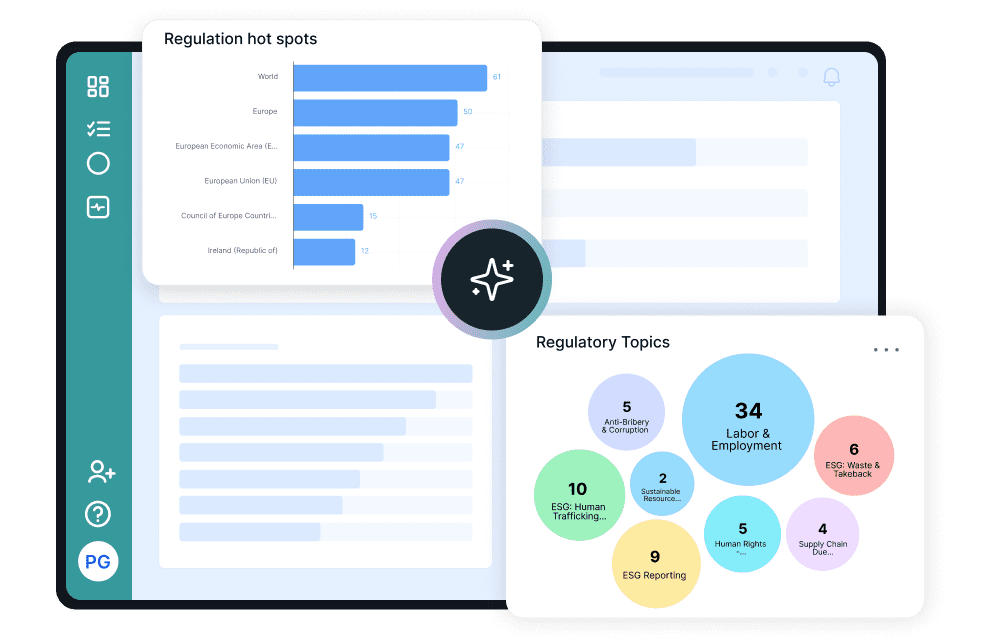
See Adherent in Action
Discover how agentic AI is reshaping product compliance for global enterprises.

The Ultimate Product Compliance Playbook
What the World’s Leading Product Organizations Have Figured Out About Product Compliance