

Regulatory Focus
Artificial Intelligence (AI)

Artificial intelligence (AI)
195
Countries Covered
28
Languages
792
Regulatory Sources
Artificial Intelligence (AI) refers to the software which can imitate human cognition and learning, enabling devices and machines to perform tasks which would otherwise require human input. AI is intelligent software which can simulate a number of human capabilities – to learn, reason, interact, and engage in sensory perception and understanding. It has many applications ranging from smart appliances and robotic manufacturing to surveillance systems, use in medical devices, and speech, image, and language processing.
When regulating AI, typically a risk management approach is taken whereby any systems that pose a serious or unacceptable risk will be banned outright. These typically include systems used for indiscriminate surveillance applied in a generalized manner and the use of ‘real-time’ remote biometric identification systems in publicly accessible spaces for the purpose of law enforcement.
High risk systems will be highly regulated, i.e critical infrastructure, or certain safety of products components. These AI are required to use high quality data sets to ensure that it does not present bias and does not discriminate. They must provide transparent and open information to users, ensure recordkeeping and logging is undertaken to ensure traceability should an incident occur and finally, undergo sufficient conformity assessment procedures to ensure that the above has been met.
Manufacturers who engage with AI will be looking at obligations including:
- Addressing risks specifically created by AI applications;
- Adhering to requirements for AI systems for high risk applications i.e “AI application in robot-assisted surgery”;
- Defining specific obligations for AI users and providers of high risk applications;
- Ensuring conformity assessment requirements before the AI system is put into service or placed on the market are undertaken;
- Awareness of enforcement actions after such an AI system is placed in the market;
- General information relating to governance structure at European and national level
We also cover the use of AI algorithms in relation to our core products. These are typically defined as “a set of instructions or rules that enable machines to learn, analyze data and make decisions based on that knowledge and ergo can perform tasks that would typically require human intelligence, such as recognizing patterns, understanding natural language, problem-solving and decision-making”. While early AI high-level principles were often non-specific, the current regulatory landscape has shifted toward a proposed focus on product-specific technical standards. We monitor these developments to ensure our clients can map AI requirements directly to their hardware and software portfolios. However it is important we include them as they are relevant to our clients. Legislators are also looking at algorithmic exploitation however this is an emerging area.
We cover copyright in the AI content, but we do NOT capture all AI copyright info. Only as it relates to AI, specifically AI in products.
Note: The following are excluded from our AI Coverage:
- AI in Automotive Products
- AI for Military/Weapons Use
- We do not cover deepfakes
- We do not cover voluntary standards
Adherent’s coverage of Artificial Intelligence is historically comprehensive and includes, but is not limited to:
- EU: Harmonised Rules on Artificial Intelligence, Regulation (EU) 2024/1689
- EU: Standardisation Request to CEN and CENELEC Regarding High-risk AI Systems in Support of Regulation (EU) 2024/1689, Implementing Decision C(2025)3871
- USA: Artificial Intelligence National Policy Framework, Executive Order 14365, December 2025
- South Korea: Framework Act on the Advancement of Artificial Intelligence and the Establishment of Trust-Based Systems, Law No. 20676, 2025
- Council of Europe: Framework Convention on Artificial Intelligence and Human Rights, Democracy and the Rule of Law, CETS 225, September 2024
- Kyrgyz Republic: Digital Data, Draft Code, August 2023
- China: Measures for Identifying AI-Generated Content, Announcement No. 2, 2025
- Canada: The Artificial Intelligence and Data Act (AIDA), Companion Document, March 2023
- Canada: Responsible Development and Management of Advanced Generative AI Systems, Voluntary Code of Conduct, 2023
- South Korea: Establishment of Korean Industrial Standards (KS) for Certain Artificial Intelligence (AI), Notice No. 2023-612
- India: Artificial Intelligence (AI) Strategy, Expert Group Report, October 2023
- UK: National AI Strategy, September 2021
We cover standards for our core products that are available from our partner Accuris. These are available through our Product Compliance Solution.
Connection with other regulatory content:
Medical Devices: Following the entry into force of the EU AI Act, manufacturers of AI systems as medical devices shall comply with both MDR requirements and with those laid down in the Artificial Intelligence Regulation.
Data Protection: Where measures in relation to regulating AI systems have an impact on personal data, for example, use of personal data or taking measures to use that personal data within a software system, a source may also fall under Data Protection.
Cybersecurity: It is likely we will see more references to AI under the Cybersecurity content as global regulations are implemented. This will likely include reference to AI in upcoming National Cybersecurity Plans and the intersection of cybersecurity and AI becoming more prevalent.
Labor & Employment: We cover the use of AI by employers in their business practices.
Experts in this Area

Intelligent Resources



Automate the work of managing regulatory change.
Let AI agents do the heavy lifting of monitoring regulations, mapping requirements to products, extracting obligations, and surfacing the risks that need attention first.
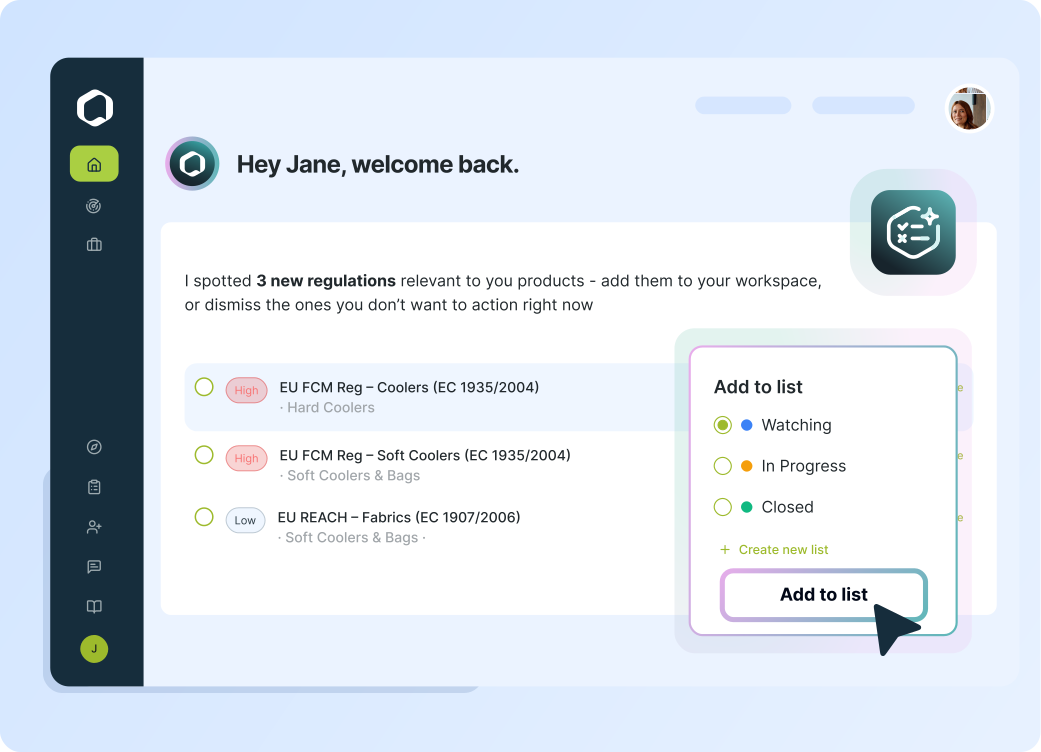
Monitor Product Compliance
Stay Ahead of Regulatory Change
Get early visibility into changes that could affect your products, supply chain, or market access—so you can act proactively, not reactively.
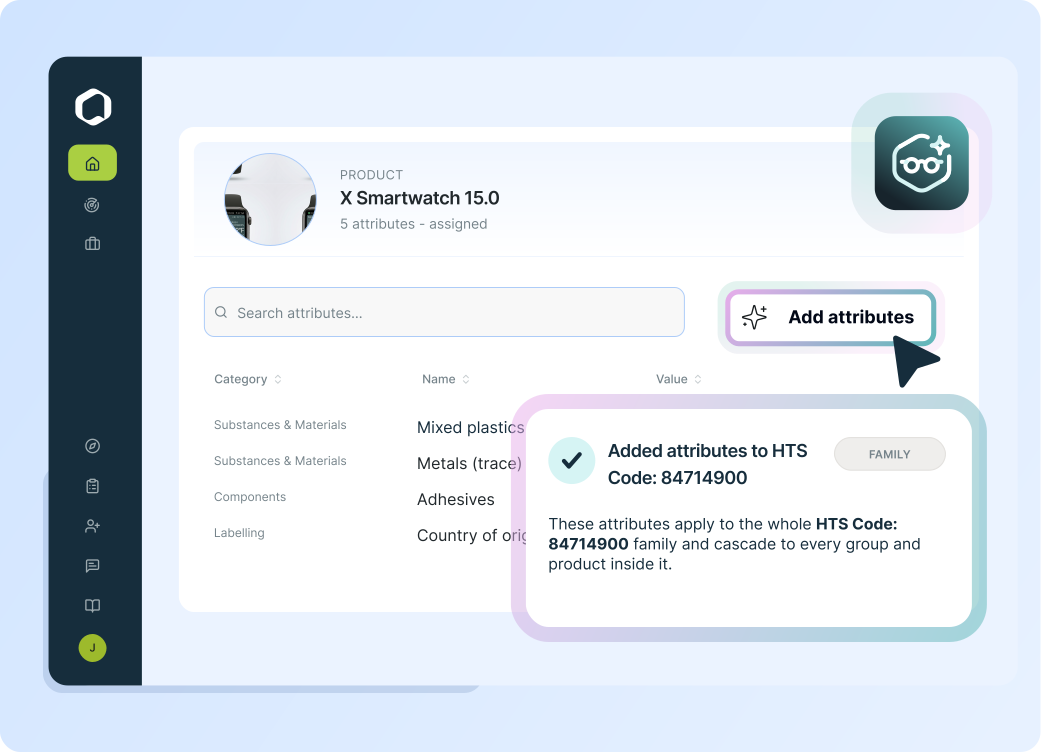
Assess Regulatory Applicability
Map Regulations to Your Products
Eliminate manual research and cut through regulatory noise by surfacing only the requirements relevant to your business, markets, and product categories.
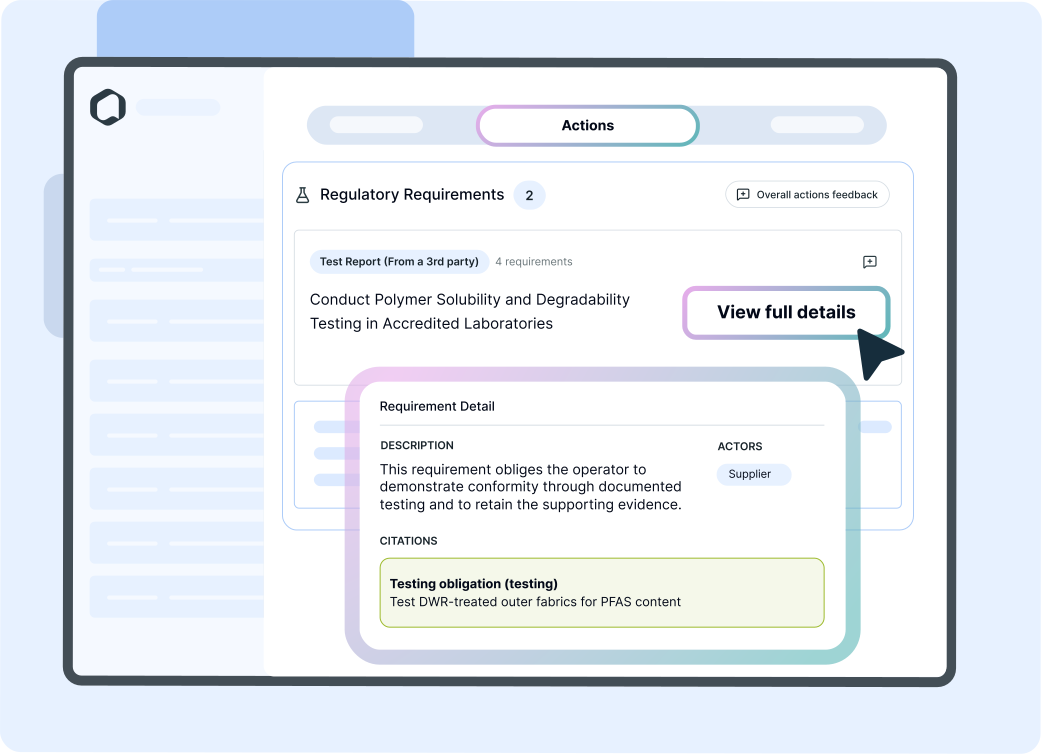
Identify Compliance Requirements
Turn complex regulations into clear, actionable tasks.
Give your teams instant clarity as AI agents transform dense legal and regulatory text into structured, easy-to-understand requirements.
Prioritize Business Risk
Focus Where Risk Is Highest
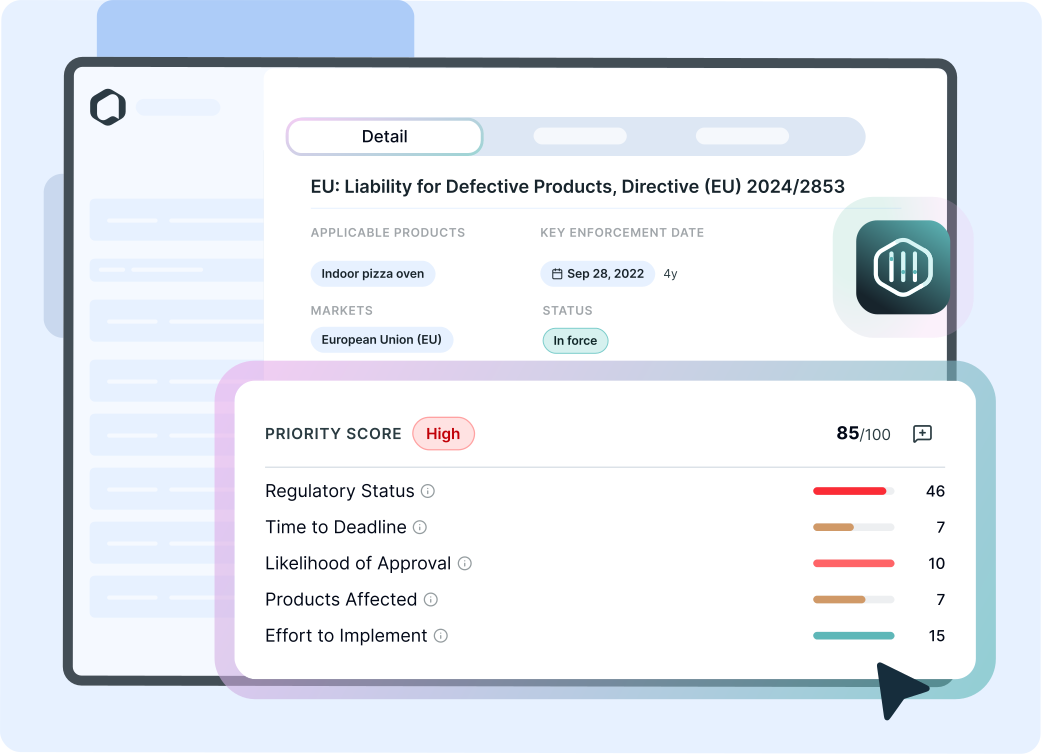
Make faster, risk-informed decisions with confidence as AI agents automatically rank regulatory changes based on urgency, business impact, compliance deadlines, and product exposure.
Spotlight
Turning Compliance into Value

The State of Product
Compliance 2026
Discover how 500+ global leaders are shifting product compliance from a cost-centre into a strategic driver of growth, with key benchmarks like 69% of teams calling remediation their biggest challenge.
Frequently Asked Questions
-
Risk classification is typically based on the intended use and potential impact of the AI system. Systems affecting areas such as safety, fundamental rights, employment decisions, or critical infrastructure are more likely to be subject to higher regulatory scrutiny and additional compliance obligations.
-
Many AI regulations and standards are principles-based or in draft form, which can create uncertainty around practical implementation. Compliance teams must monitor regulatory developments closely, interpret high-level requirements, and align governance, documentation, and monitoring practices with evolving expectations.
-
Article 6 of the EU AI Act states that an AI system is high‑risk if it is intended as a safety‑critical component of a product (or is itself a product) covered by EU harmonisation legislation listed in Annex I and requires a third‑party conformity assessment. 6(2) goes on to say that AI systems listed in Annex III are also considered high‑risk. The full list can be found here.
-
A simple rule of thumb is that having sensors or the internet doesn’t automatically make a product “AI-regulated”, and it is usually only in scope if it uses AI/ML to make predictions or decisions that can affect people’s safety, rights, or opportunities, i.e., biometrics, surveillance/monitoring or dealing with critical systems. If the AI is just doing small behind-the-scenes improvements, such as something like battery optimisation, it’s usually lower risk and less likely to be targeted by AI laws. This again would vary depending on your specific product scope and markets, however.