

Regulatory Focus
Comply with Chemical Safety Requirements
Chemicals and EH&S: Occupational Health & Safety
195
Countries Covered
28
Languages
1958
Regulatory Sources
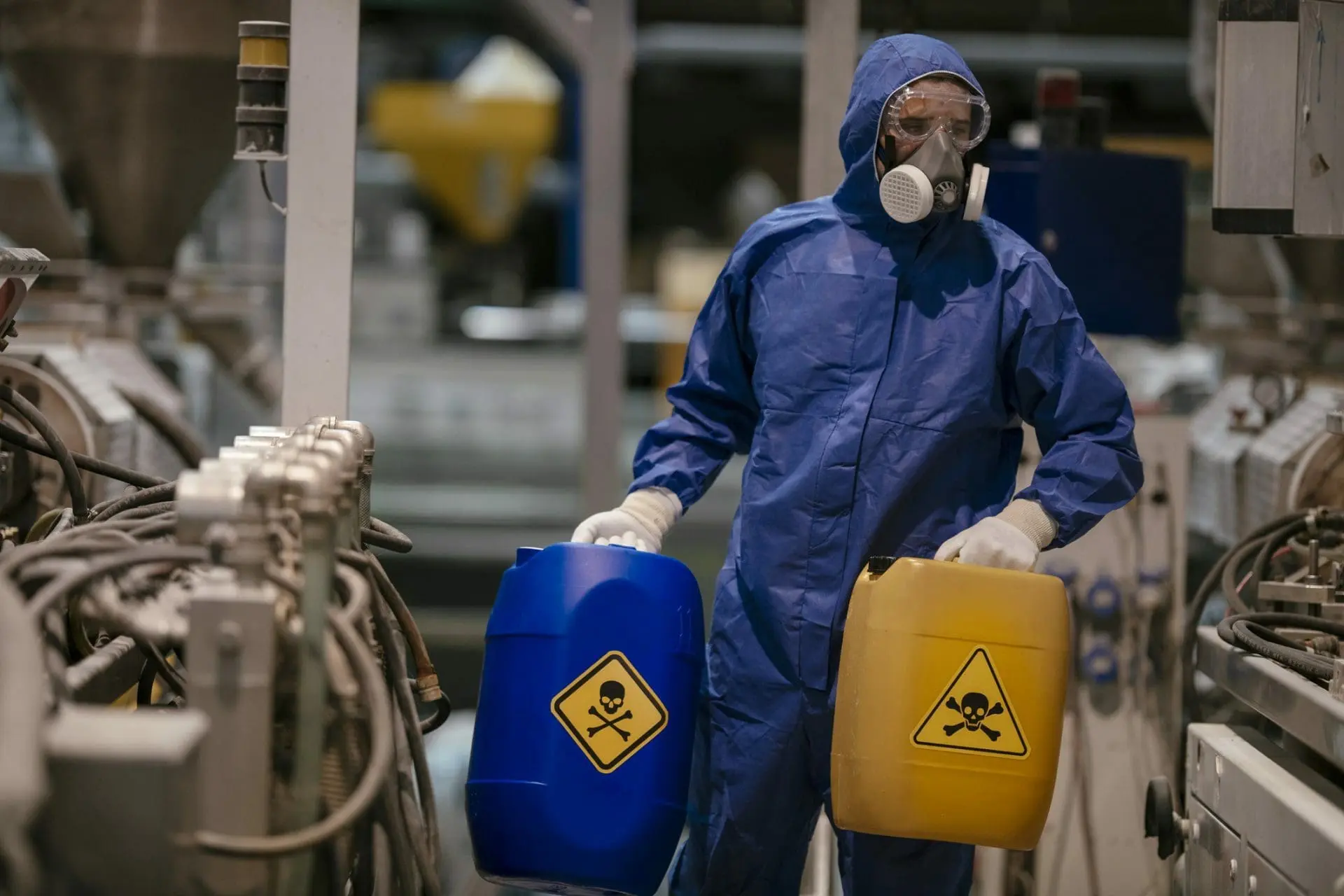
Chemicals can present serious health hazards, including irritation, sensitization, and carcinogenicity, as well as physical hazards such as flammability, corrosion, and explosibility. Occupational or Workplace Health and Safety focuses on protecting workers by managing and controlling these hazards arising from workplace activities.
Chemical safety in the workplace addresses obligations for employers to manage chemical hazards through labeling, safety data sheets, and training, reducing worker exposure and ensuring regulatory compliance.
Employers must assess workplace chemical hazards and ensure worker exposures stay within established limits. This typically involves identifying applicable Occupational Exposure Limits (OELs), monitoring exposure levels, and implementing controls to reduce risks when limits are exceeded. Compliance also requires ongoing evaluation and documentation of exposure management.
- Written Hazard Communication Program: Every facility with hazardous chemicals must have a written plan that serves as the foundation for their safety protocols
- Safety Data Sheets (SDS) Management: Employers are responsible for ensuring that an SDS is available for every hazardous chemical in the workplace.
- Labeling and Warning Systems: Employers must ensure that every container of hazardous chemicals is properly labeled.
- Employee Information and Training: Training is not a “one and done” task. At the time of initial assignment, whenever a new hazard is introduced, and regular training for employees is required.
- Exposure Control and PPE: Following the Hierarchy of Controls, employers must take active steps to protect workers from chemical exposure.
Our regulatory coverage includes global standards and laws governing chemical hazard communication, occupational exposure limits, and workplace safety measures. These regulations typically require employers to classify and label hazardous substances, provide safety data sheets, implement exposure controls, and establish worker training and monitoring programs.
- USA: Occupational Safety and Health Standards, Hazard Communication, Rules, 29 CFR 1910.1200, 1994
- USA: Occupational Safety Standards for Toxic and Hazardous Substances, 29 CFR 1910.1000-1499, Subpart Z, 1974
- China: Occupational Hazard Communication and Warning Signs Management, Code, 2014
- China: Occupational Exposure Limits (OELs) for Hazardous Agents in the Workplace Part 1 – Chemical Agents, Standard GBZ 2.1-2019
- EU: Classification, Labelling and Packaging of Substances and Mixtures, Regulation (EC) No 1272/2008
- EU: Indicative Occupational Exposure Limit Values Directive 2000/39/EC
- Brazil: Evaluation and Control of Occupational Exposure to Physical, Chemical, and Biological Agents, Regulatory Standard No. 9, 2020
- Brazil: Activities and Operations Carrying Health Risks in the Work Place, Regulatory Standard No. 15, 1978



Intelligent Resources
Automate the work of managing regulatory change.
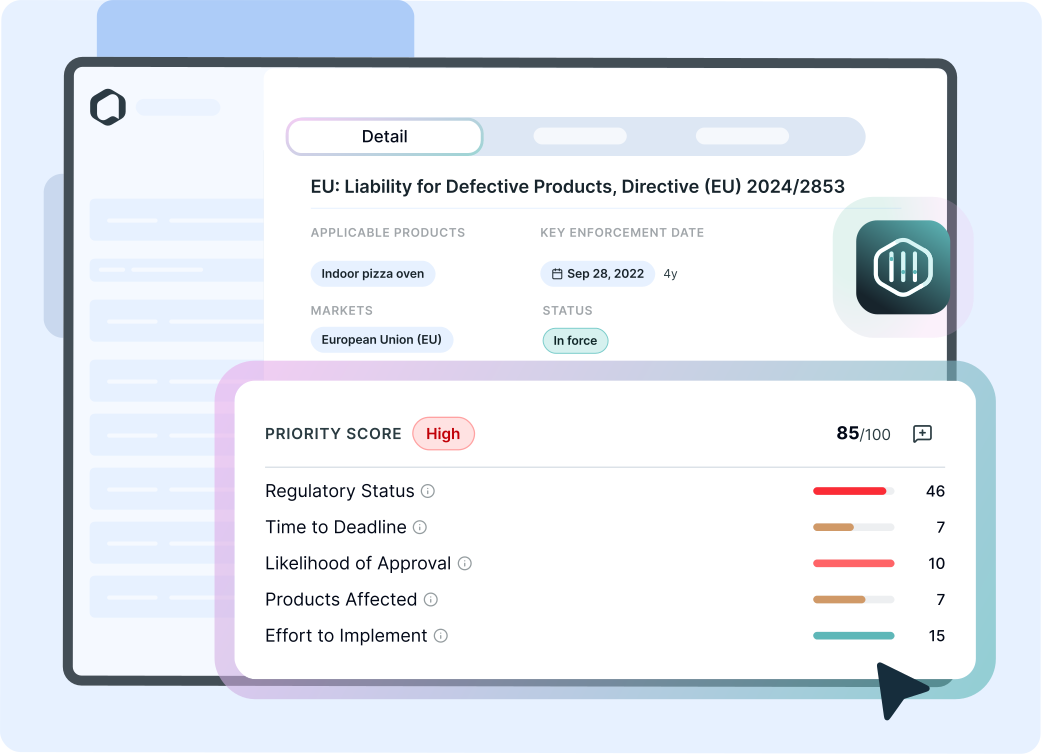
Let AI agents do the heavy lifting of monitoring regulations, mapping requirements to products, extracting obligations, and surfacing the risks that need attention first.
Monitor Product Compliance
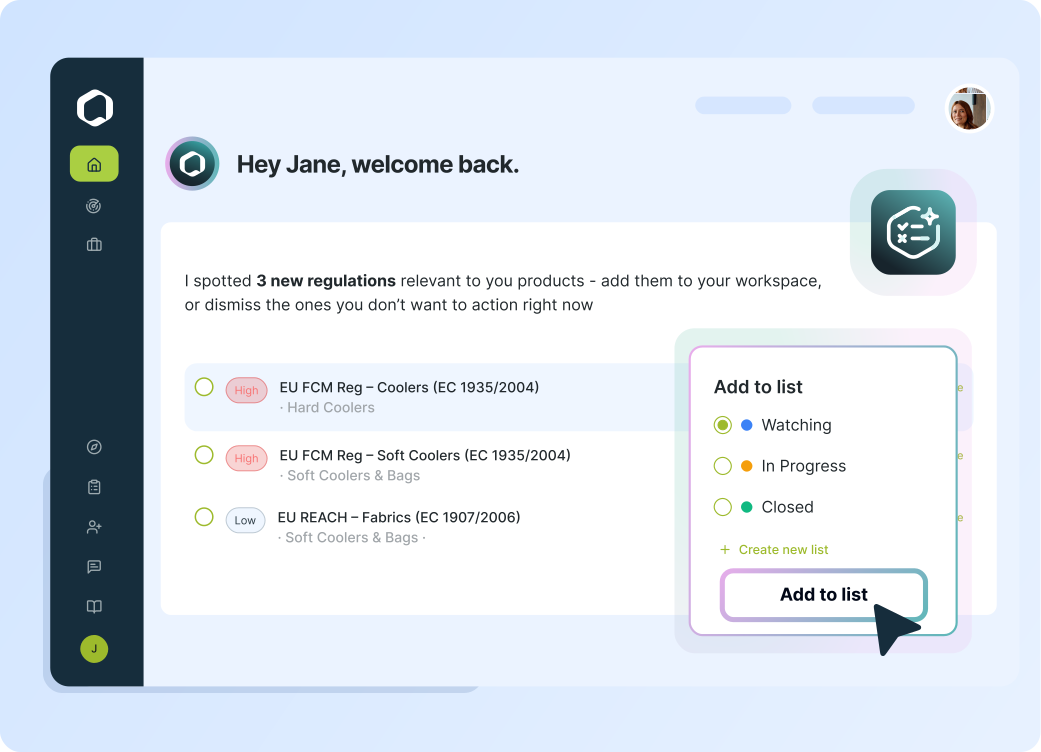
Stay Ahead of Regulatory Change
Get early visibility into changes that could affect your products, supply chain, or market access—so you can act proactively, not reactively.
Assess Regulatory Applicability
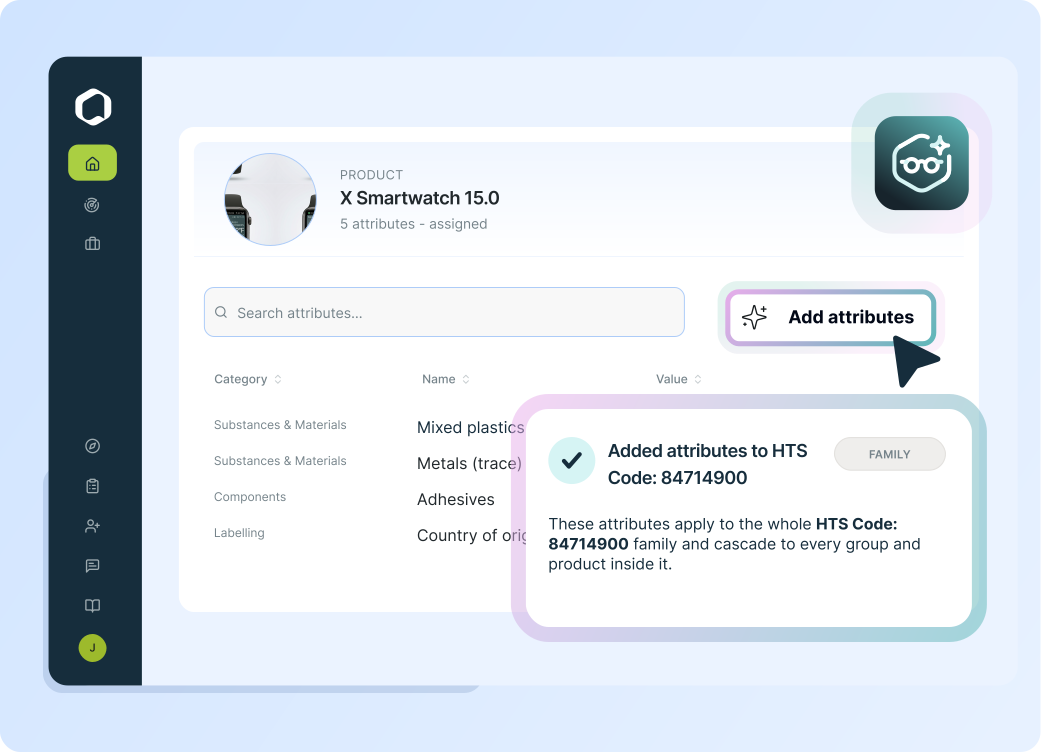
Map Regulations to Your Products
Eliminate manual research and cut through regulatory noise by surfacing only the requirements relevant to your business, markets, and product categories.
Identify Compliance Requirements
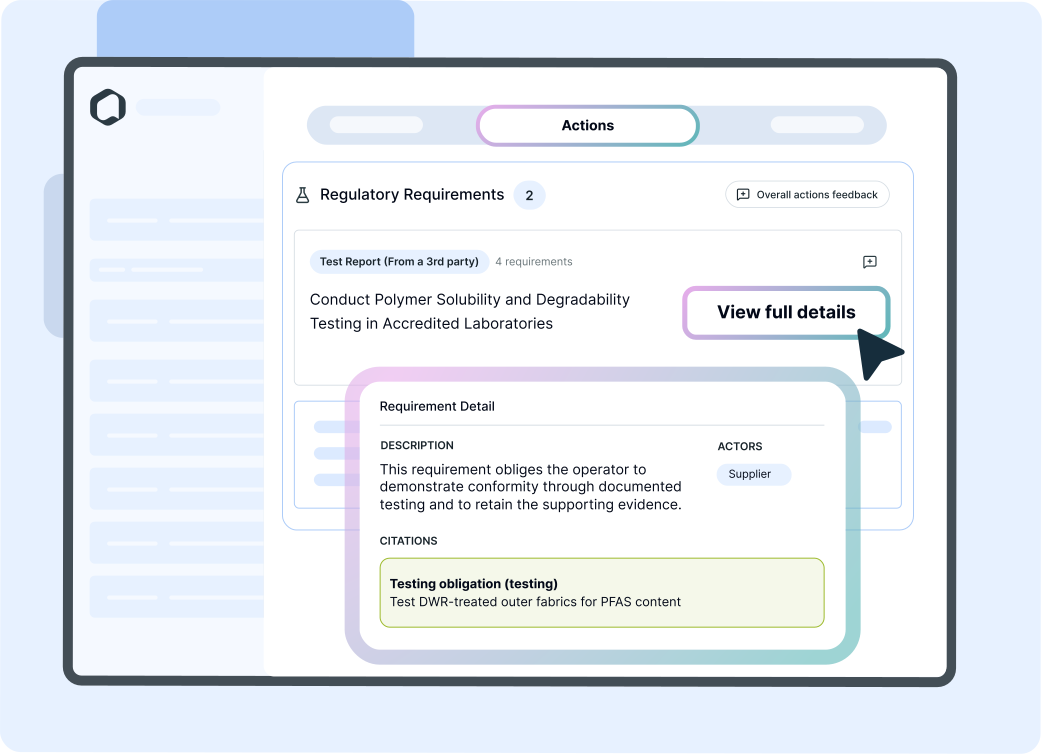
Turn complex regulations into clear, actionable tasks.
Give your teams instant clarity as AI agents transform dense legal and regulatory text into structured, easy-to-understand requirements.
Prioritize Business Risk
Focus Where Risk Is Highest
Make faster, risk-informed decisions with confidence as AI agents automatically rank regulatory changes based on urgency, business impact, compliance deadlines, and product exposure.
Spotlight
Turning Compliance into Value


The State of Product
Compliance 2026
Discover how 500+ global leaders are shifting product compliance from a cost-centre into a strategic driver of growth, with key benchmarks like 69% of teams calling remediation their biggest challenge.
Frequently Asked Questions
-
Employers must ensure chemical hazards are clearly communicated to workers through labels and Safety Data Sheets (SDS), and provide training on chemical identities, hazards, safe handling, and protective measures. This aligns with regulations such as OSHA’s Hazard Communication Standard (29 CFR 1910.1200) and similar global frameworks requiring hazard information to be accessible and understandable to exposed workers.
-
OELs are legally established limits on worker exposure to hazardous chemicals (e.g., PELs and RELs in the US). Employers must identify and evaluate chemical exposure risks, compare measured exposure levels to applicable OELs, and implement controls if exposures exceed limits. This is consistent with standards such as 29 CFR 1910.1000–1499 (Subpart Z) and equivalent international OEL frameworks.
-
Regulatory standards (like OSHA’s Hazard Communication Standard) typically require training upon initial assignment, when a new hazard is introduced, and periodically (“best practice” facilities run annual refreshers to prevent complacency).
-
This is one of the most common gray areas.
- The Rule – You generally do not need an SDS for consumer products (like Windex or Clorox) if they are used in the workplace the same way a consumer would use them (e.g., a small bottle used occasionally to wipe a desk).
- The Exception – If an employee uses that same product with a greater frequency or duration than a typical consumer (e.g., a janitor cleaning for 8 hours a day), it is considered a workplace hazard. In that case, you must have the SDS on file and provide training.
-
Electronic access (via tablets, QR codes, or company intranets) is allowed as long as:
- Employees have immediate access at all times during their shift.
- There is a back-up system in place (like a physical binder or battery backup) in case of a power outage or internet failure.
- Employees are trained on how to use the specific digital system chosen.