

Regulatory Focus
Conflict Minerals Regulatory Compliance

Conflict Minerals
195
Countries Covered
28
Languages
348
Regulatory Sources
Regulations governing conflict minerals require companies to identify, trace, and report the origin of gold, tantalum, tin, tungsten, and their alloys, and to conduct due diligence to assess and mitigate risks of financing conflict, human rights abuses, or illicit activities within supply chains.
Conflict minerals regulations require companies to conduct supply chain due diligence and reporting on mineral sourcing, creating legal, reputational, and compliance risks if obligations are not met.
Companies importing gold, tantalum, tin, or tungsten are typically required to conduct supply chain due diligence and assess the origin and processing of these minerals. Requirements often include tracing minerals to their source, evaluating supplier practices, and reporting on the measures taken to ensure minerals have not financed armed conflict or human rights abuses.
- Due Diligence: per OECD Due Diligence Guidance for Responsible Supply Chains of Minerals from Conflict-Affected and High-Risk Areas, organisations shall identify and assess supply chain risks, implement mitigation strategies, conduct independent audits, and report annually on due diligence and risk management.
- Retention/destruction of records: means establishing internal systems to document the organisation’s due diligence, support mineral traceability, and prepare for audits by authorities or third-party auditors.
- Corporate reporting: preparing and submitting an annual report detailing due diligence efforts and risk management measures related to the sourcing of 3TG.
We cover binding regulations and authoritative guidance governing conflict minerals due diligence, supply chain transparency, and reporting obligations for tin, tantalum, tungsten, and gold. Our coverage spans mandatory importer obligations, disclosure frameworks, and internationally recognized guidelines shaping responsible mineral sourcing across major jurisdictions.
- USA: Financial Reform and Congo Conflict Minerals Reporting, House Bill 4173 Enacted, 2010
- EU: Supply Chain Due Diligence Obligations for Importers of Tin, Tantalum and Tungsten, their Ores, and Gold Originating in Conflict-Affected and High-Risk Areas, Regulation (EU) 2017/821
- China: Due Diligence for Responsible Mineral Supply Chains, Guidelines, December 2015



Intelligent Resources




Automate the work of managing regulatory change.
Let AI agents do the heavy lifting of monitoring regulations, mapping requirements to products, extracting obligations, and surfacing the risks that need attention first.
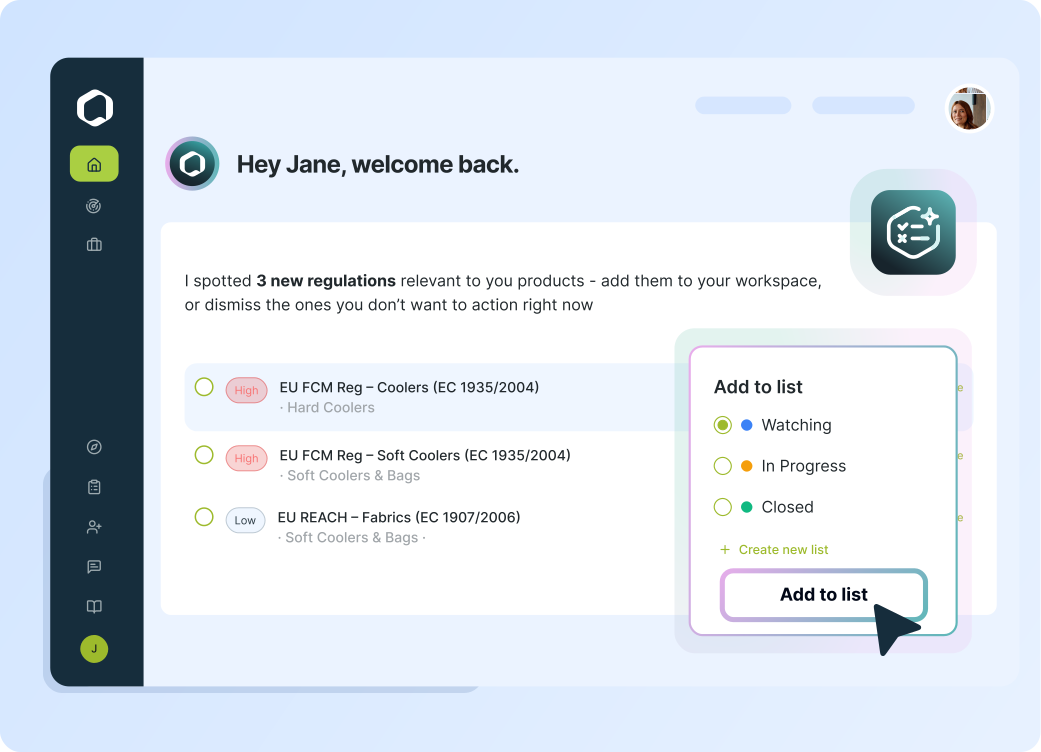
Monitor Product Compliance
Stay Ahead of Regulatory Change
Get early visibility into changes that could affect your products, supply chain, or market access—so you can act proactively, not reactively.
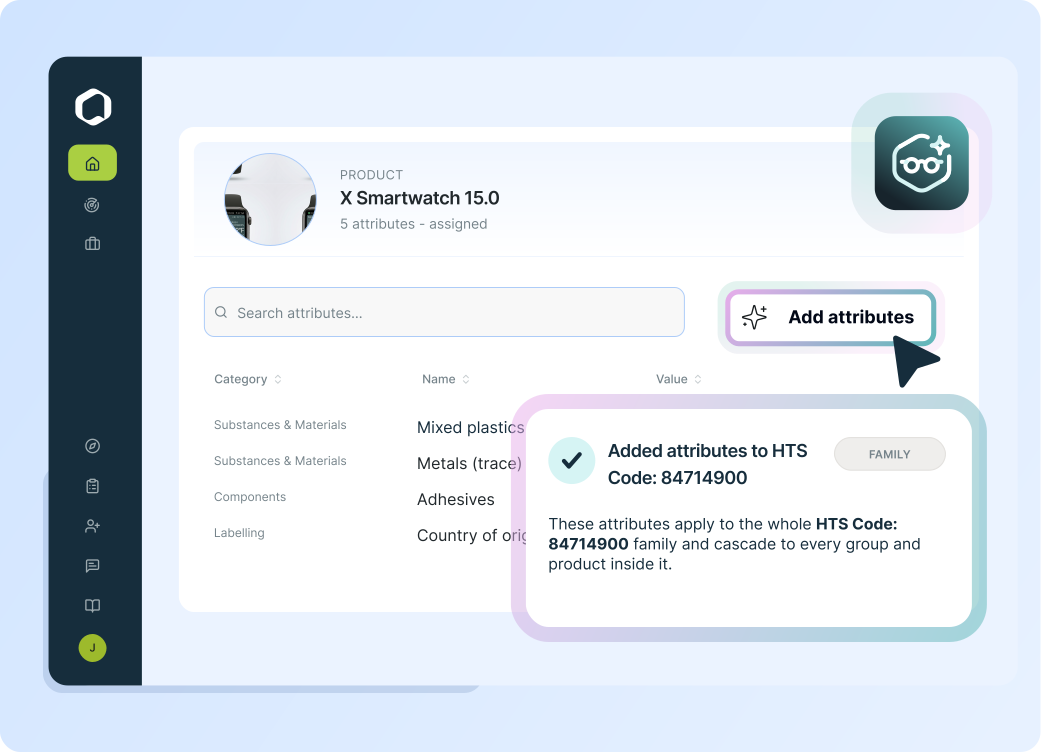
Assess Regulatory Applicability
Map Regulations to Your Products
Eliminate manual research and cut through regulatory noise by surfacing only the requirements relevant to your business, markets, and product categories.
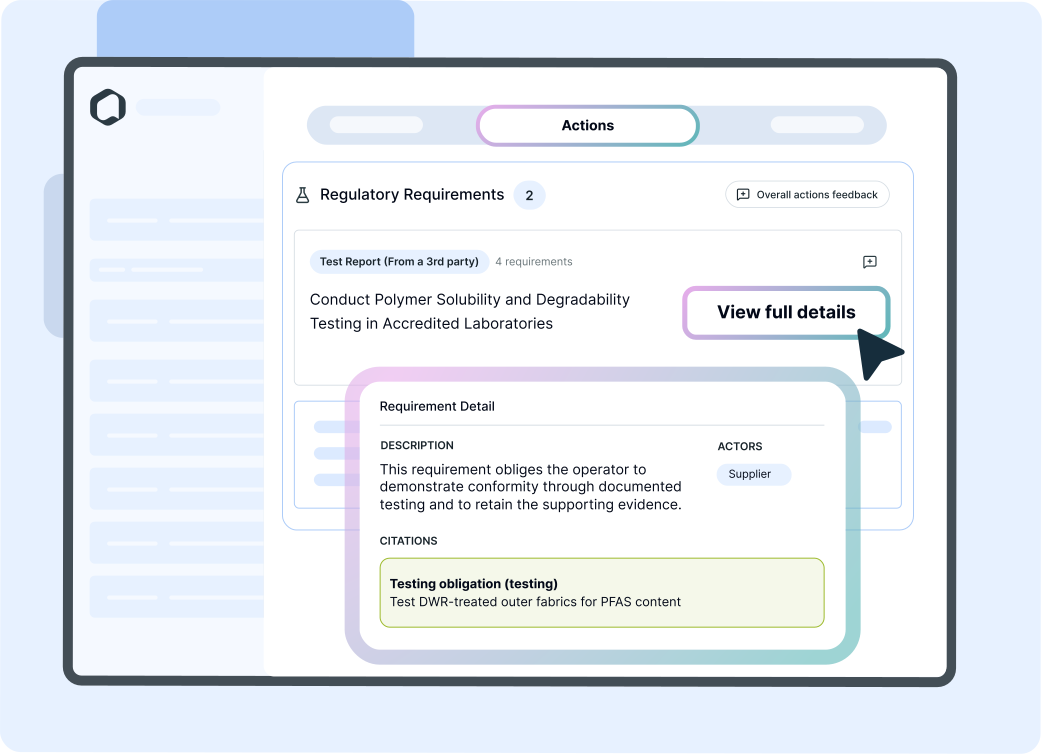
Identify Compliance Requirements
Turn complex regulations into clear, actionable tasks.
Give your teams instant clarity as AI agents transform dense legal and regulatory text into structured, easy-to-understand requirements.
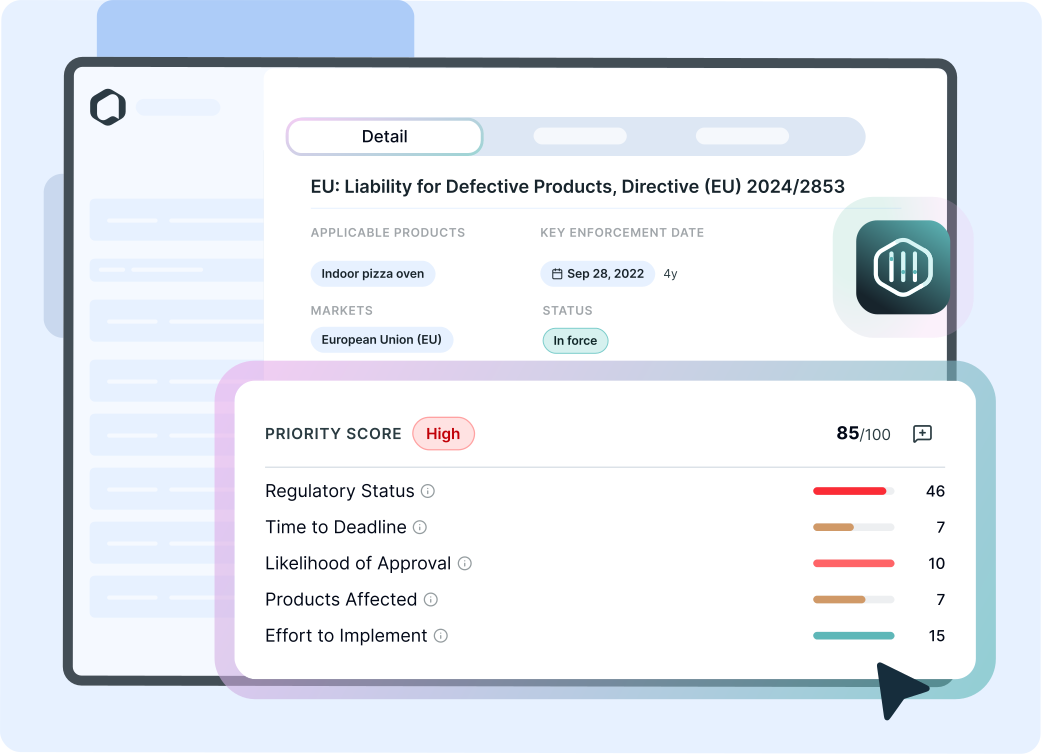
Prioritize Business Risk
Focus Where Risk Is Highest
Make faster, risk-informed decisions with confidence as AI agents automatically rank regulatory changes based on urgency, business impact, compliance deadlines, and product exposure.
Spotlight
Turning Compliance into Value


The State of Product
Compliance 2026
Discover how 500+ global leaders are shifting product compliance from a cost-centre into a strategic driver of growth, with key benchmarks like 69% of teams calling remediation their biggest challenge.
Frequently Asked Questions
-
Companies are subject to conflict minerals obligations when they import or use gold, tantalum, tin, or tungsten and their ores, particularly when sourcing from conflict-affected or high-risk areas. Requirements apply under EU law to Union importers of covered minerals, under US law to certain SEC-reporting companies, and through due diligence expectations set by Chinese and international guidelines.
-
Due diligence requires companies to identify and assess risks in their mineral supply chains, determine the origin and processing of covered minerals, and verify whether they were sourced responsibly. This generally includes supplier engagement, risk mitigation measures, record-keeping, and, where applicable, public or regulatory reporting on due diligence efforts.
-
The EU Conflict Minerals Regulation primarily applies to EU-based importers of 3TG (tin, tungsten, tantalum, and gold) in mineral or metal form. It does not directly apply to companies importing finished products containing 3TG, such as electronics or jewellery. However, downstream companies (those importing products containing 3TG) are encouraged to enhance supply chain transparency and may be subject to reporting requirements under other EU directives, such as the Non-Financial Reporting Directive.
-
While both regulations advise using the Conflict Minerals Reporting Template (CMRT) for data collection, they differ significantly in their data collection and reporting requirements.
- The EU Regulation targets EU-based importers of 3TG (tin, tungsten, tantalum, gold) minerals or metals, whereas the US Dodd-Frank Act (Section 1502) applies to all SEC-reporting companies manufacturing products containing 3TG, regardless of source. It mandates due diligence and annual reporting, particularly regarding minerals from the DRC and neighbouring countries.
As regards due diligence and reporting, the EU requires mandatory due diligence for upstream companies in line with OECD guidelines, but does not mandate standardised public reporting. Downstream companies are encouraged to report voluntarily.
The US, on the other hand, requires a Reasonable Country of Origin Inquiry (RCOI) and due diligence from all applicable companies, with a formalised Conflict Minerals Report filed with the SEC, including a supply chain audit.