

Regulatory Focus
Global Water Efficiency Requirements
Water Efficiency
195
Countries Covered
28
Languages
243
Regulatory Sources
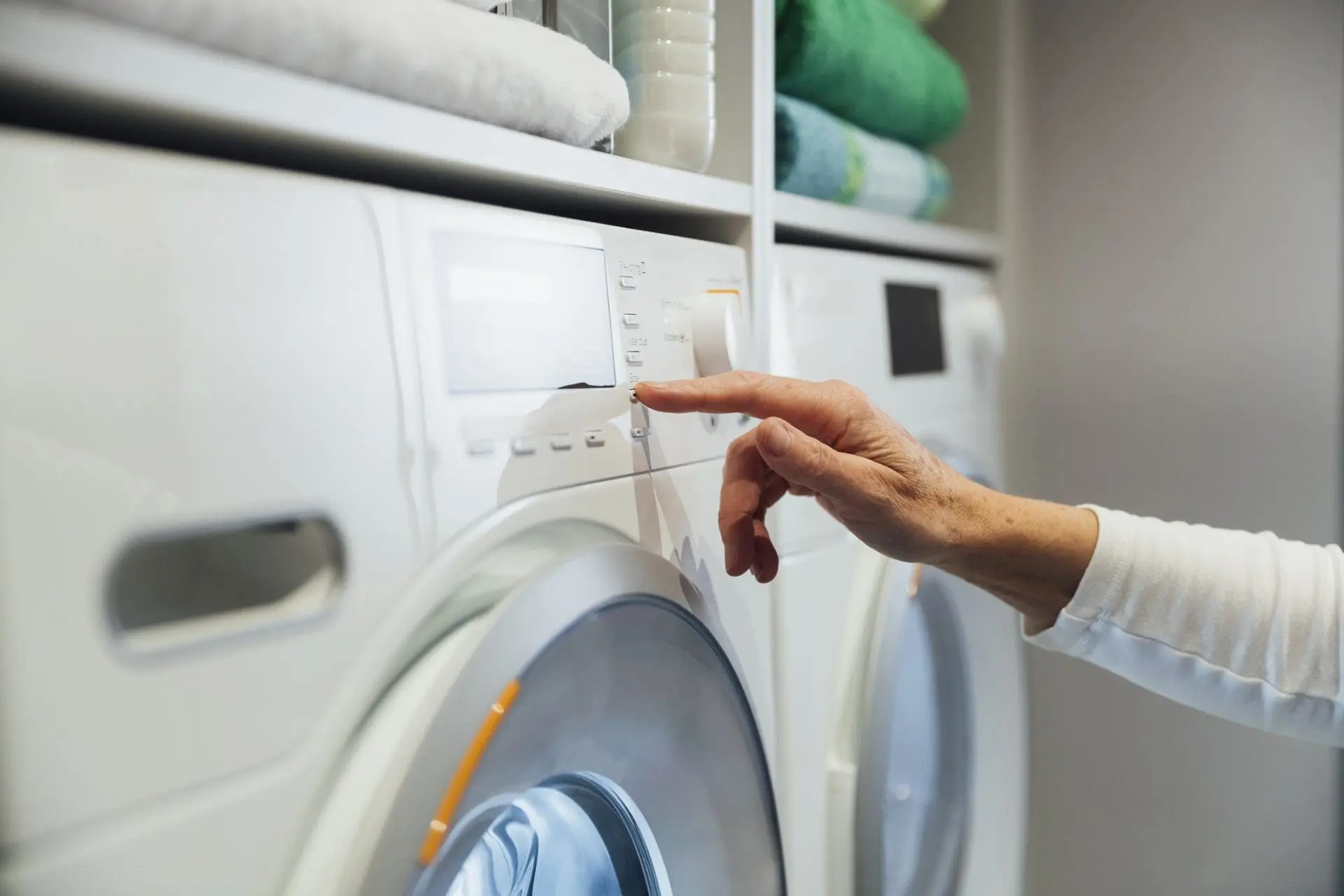
Water efficiency focuses on reducing water consumption while maintaining performance across products, processes, and operations. It covers measures, standards, and requirements that promote conservation, improved water use practices, and the protection of essential freshwater resources amid growing scarcity and regulatory attention.
Water efficiency requirements regulate water use and performance of products and operations, creating compliance obligations around labeling, approvals, and efficiency standards while increasing non-compliance, recall, and penalty risks.
Companies are typically required to meet product-specific water efficiency performance thresholds, comply with mandatory labeling or marking schemes, and provide accurate technical and usage information to regulators and consumers. Additional obligations may include product registration or certification, conformity assessment, payment of applicable fees, and ongoing compliance monitoring to avoid enforcement action or recalls.
- Ensure products meet minimum water efficiency performance thresholds set by regulators
- Design and test products to comply with product-specific water consumption or flow limits
- Display mandatory water efficiency labels, ratings, or markings in the required format and location
- Ensure all labeling and marking information is accurate, verifiable, and not misleading
- Provide clear technical specifications, including water use, flow rates, and efficiency levels
- Supply user instructions that support proper and water-efficient operation
- Submit technical documentation and test results to regulators when required
- Register products with the relevant authority or in official product databases where applicable
- Obtain required certification or third-party approval prior to placing products on the market
We cover a wide range of national and subnational regulations, mandatory standards, and implementing measures governing water efficiency performance, labeling, registration, and market access for water-using products. Our coverage includes enacted and amended laws, supporting regulations, and administrative requirements that define testing methods, labeling schemes, and enforcement expectations across key global markets.
- United Kingdom: Mandatory Water Efficiency Labelling, Draft Regulations, 2026
- China: Water Efficiency Labelling of Toilets, Rules, 2025
- New Zealand: Consumer Information Standards (Water Efficiency) Regulations, SR 2017/212
- Ontario (Canada): Energy and Water Efficiency for Appliances and Products, Regulation 509/18
- Taiwan: Fee-Charging Standards for Using the Water Efficiency Label, Order No. 10704600950, 2018
- China: 2025 Edition of Water Efficiency Labelling Product Catalogue, Announcement No. 1662, 2025
- China: Energy and Water Efficiency Thresholds for Intelligent Water Closets, Standard GB 38448-2025
- Vietnam: On the Criteria for Determining the Water Efficiency of Products and Equipment, Circular No. 12/2019 / TT-BKHCN
- China: Product Catalog (Fourth Batch) of Water Efficiency Labeling, Notice No. 1516, 2023
- China: Energy Saving and Environmental Protection Specification for Household and Similar Electrical Appliances, Standard GB 44499-2024
Experts in this Area

Intelligent Resources




Automate the work of managing regulatory change.
Let AI agents do the heavy lifting of monitoring regulations, mapping requirements to products, extracting obligations, and surfacing the risks that need attention first.
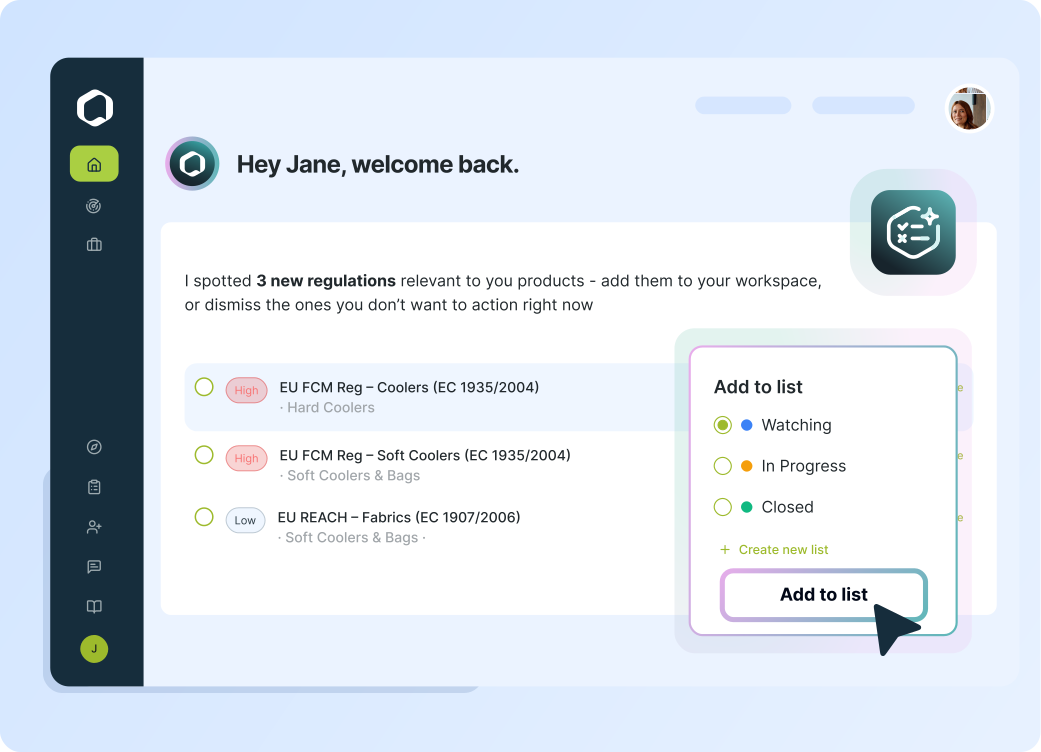
Monitor Product Compliance
Stay Ahead of Regulatory Change
Get early visibility into changes that could affect your products, supply chain, or market access—so you can act proactively, not reactively.
Assess Regulatory Applicability
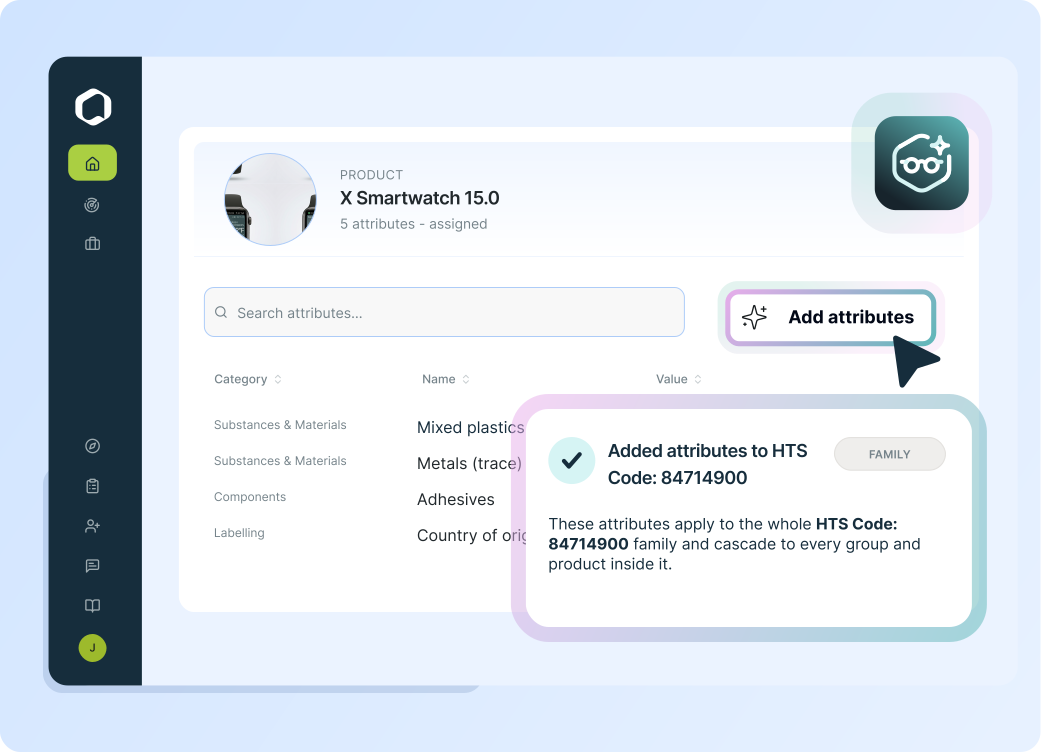
Map Regulations to Your Products
Eliminate manual research and cut through regulatory noise by surfacing only the requirements relevant to your business, markets, and product categories.
Identify Compliance Requirements
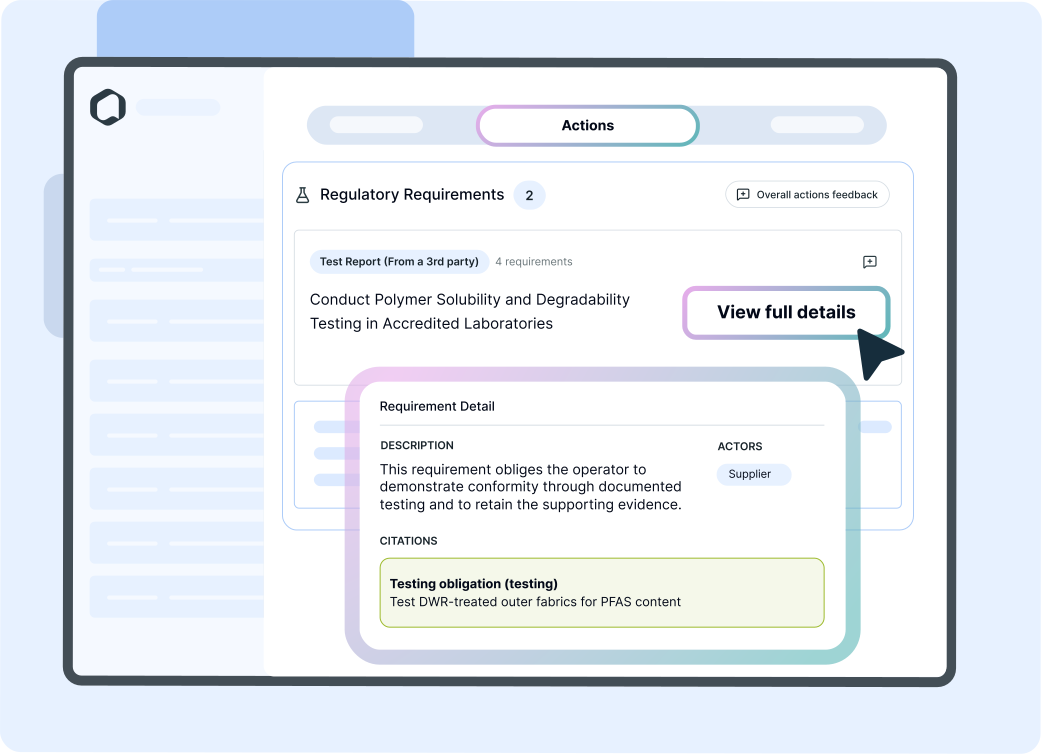
Turn complex regulations into clear, actionable tasks.
Give your teams instant clarity as AI agents transform dense legal and regulatory text into structured, easy-to-understand requirements.
Prioritize Business Risk
Focus Where Risk Is Highest
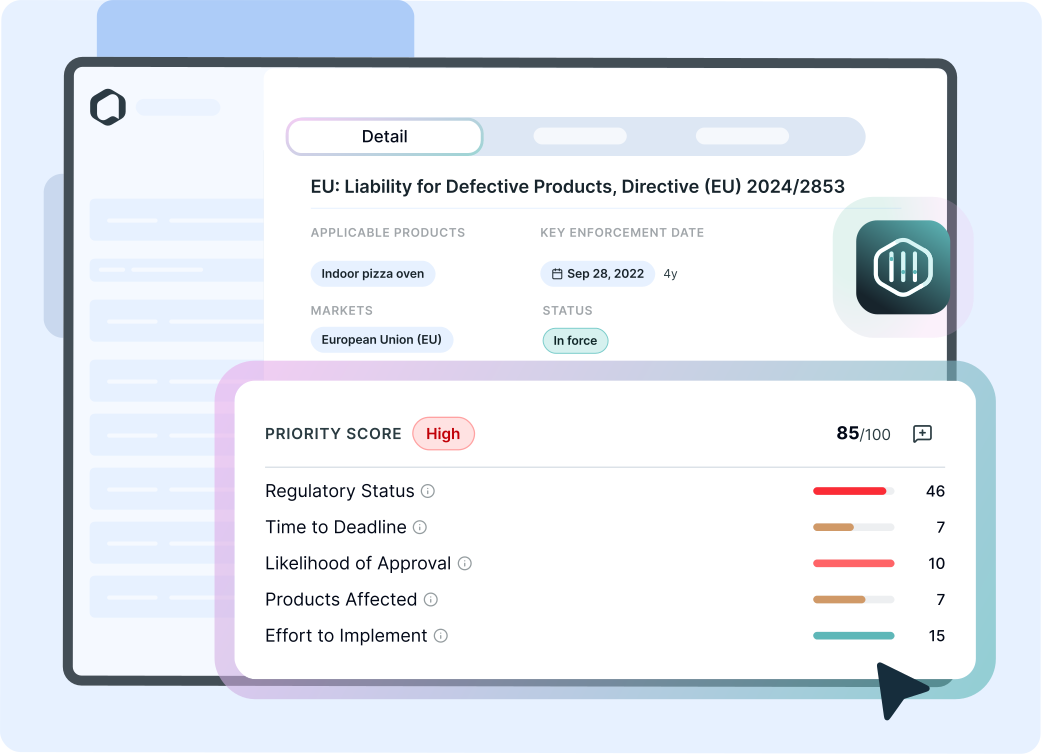
Make faster, risk-informed decisions with confidence as AI agents automatically rank regulatory changes based on urgency, business impact, compliance deadlines, and product exposure.
Spotlight
Turning Compliance into Value

The State of Product
Compliance 2026
Discover how 500+ global leaders are shifting product compliance from a cost-centre into a strategic driver of growth, with key benchmarks like 69% of teams calling remediation their biggest challenge.
Frequently Asked Questions
-
Water efficiency requirements commonly apply to household appliances and water-using products such as washing machines, dishwashers, toilets, taps, and showers. Coverage varies by jurisdiction, with some markets mandating labels and minimum performance standards, while others apply registration or approval requirements before products can be placed on the market.
-
Manufacturers and importers are generally required to test products against prescribed water efficiency criteria, register or certify products with the relevant authority, apply correct labels or markings, and maintain technical documentation. Non-compliance can result in product recalls, fines, or restrictions on market access.
-
Requirements vary by jurisdiction, but companies are generally expected to conduct ongoing compliance monitoring, maintain quality control processes, and cooperate with market surveillance authorities, who may perform spot testing or audits.
-
Yes, programs like Singapore’s WELS, Australia’s Water Efficiency Labelling, and EU eco-design rules vary in criteria,labeling, and enforcement.
-
Some programs are mandatory (e.g., WELS in Singapore), while others are voluntary, offering incentives for efficient products.