

Regulatory Focus
Consumer Protection

Consumer Protection
195
Countries Covered
28
Languages
4804
Regulatory Sources
Covers the protection and enforcement of consumer rights by addressing unfair, deceptive, misleading, or fraudulent conduct in trade. It focuses on safeguarding consumers from unconscionable practices, unjust contractual terms, misleading claims, and other improper commercial behaviors across goods and services.
Sets obligations for companies to ensure fair, transparent, and lawful dealings with consumers, covering product information, digital and online sales practices, contractual fairness, and risks of misleading or deceptive conduct.
Companies must ensure that products, services, and commercial practices are fair, transparent, and not misleading across physical and digital channels. This includes clear consumer information, compliant contract terms, truthful marketing claims, and appropriate remedies such as repair, replacement, or refunds when goods or services are defective or misrepresented.
Key obligations arising from current legislation include:
- Fair business to consumer contract terms, including distance selling/online sales
- Liability for defective products
- E-commerce protections
- Consumer disclosure requirements
- Accessibility requirements
- Lawful product marketing claims including environmental claims
Our coverage regarding consumer protection typically includes laws and standards governing unfair commercial practices, consumer information, contract terms, warranties, and remedies, across both offline and digital markets. It also extends to rules on marketing claims, e-commerce practices, accessibility, and non-discriminatory access to goods and services, supported by enforcement and redress mechanisms.
- EU: Consumer Rights Directive 2011/83/EU
- EU: Unfair Commercial Practices Directive 2005/29/EC
- USA: Consumer Product Warranties, 15 U.S.C. 2301, 1975
- Brazil: General Consumer Protection, Law 8078/1990
- China: Protection of Consumer Rights and Interests, Law, 1993
- Russian Federation: Protection of Consumers, Federal Law No.2300-I, 1992
- South Africa: Consumer Protection Regulations, Notice No. R. 293, 2011
- India: Consumer Protection, Act No.35/2019
- EU: Addressing Unjustified Geo-blocking and Other Forms of Discrimination, Regulation (EU) No.2018/302
- EU: Accessibility Requirements for Products and Services, Directive (EU) 2019/882
- USA: Green Guides for the Use of Environmental Marketing Claims, Final Rule, 16 CFR Part 260, As Revised 2012
- EU: Empowering Consumers for the Green Transition Directive (EU) 2024/825
- UK: Digital Markets, Competition and Consumers Act, 2024


Intelligent Resources




Automate the work of managing regulatory change.
Let AI agents do the heavy lifting of monitoring regulations, mapping requirements to products, extracting obligations, and surfacing the risks that need attention first.
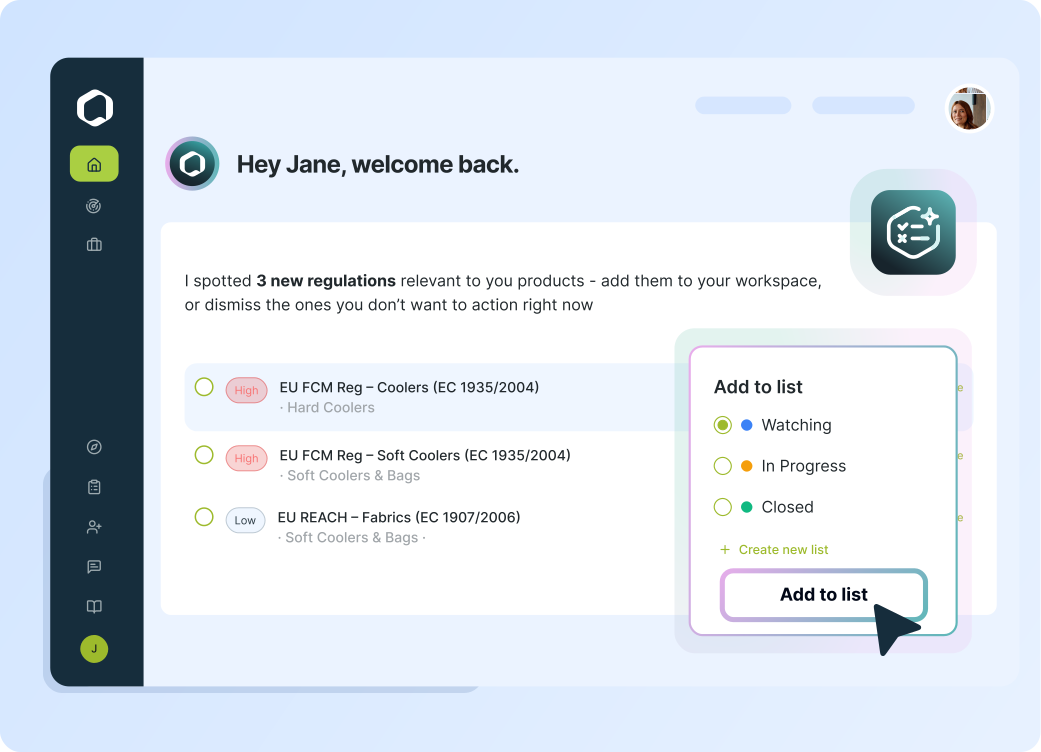
Monitor Product Compliance
Stay Ahead of Regulatory Change
Get early visibility into changes that could affect your products, supply chain, or market access—so you can act proactively, not reactively.
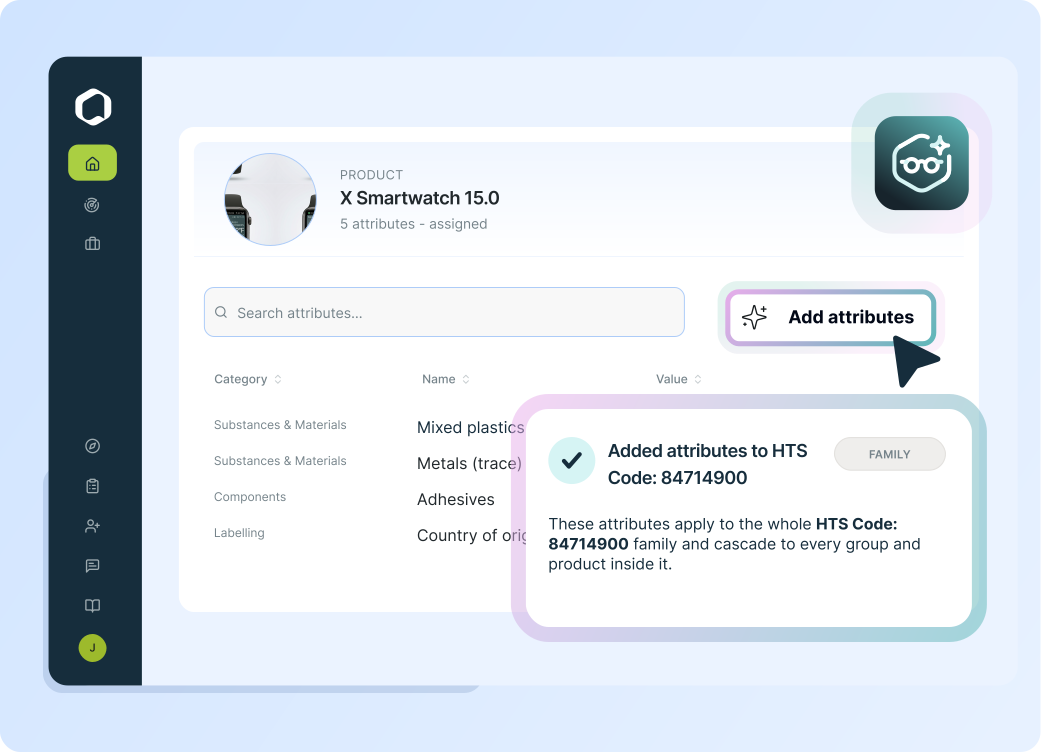
Assess Regulatory Applicability
Map Regulations to Your Products
Eliminate manual research and cut through regulatory noise by surfacing only the requirements relevant to your business, markets, and product categories.
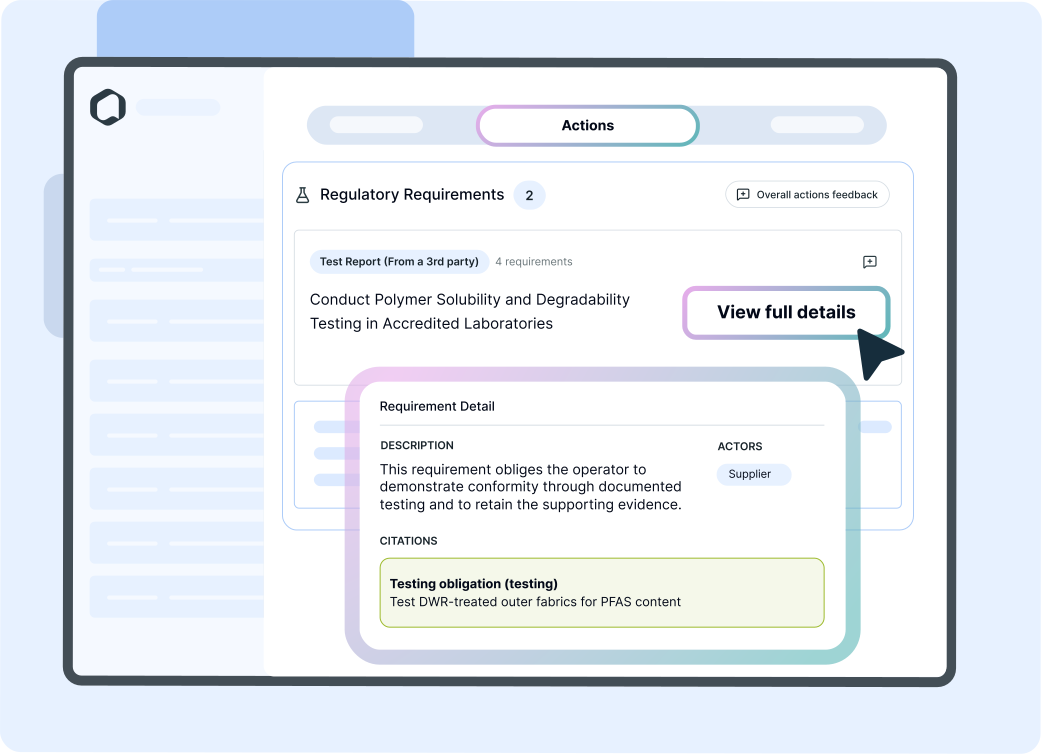
Identify Compliance Requirements
Turn complex regulations into clear, actionable tasks.
Give your teams instant clarity as AI agents transform dense legal and regulatory text into structured, easy-to-understand requirements.
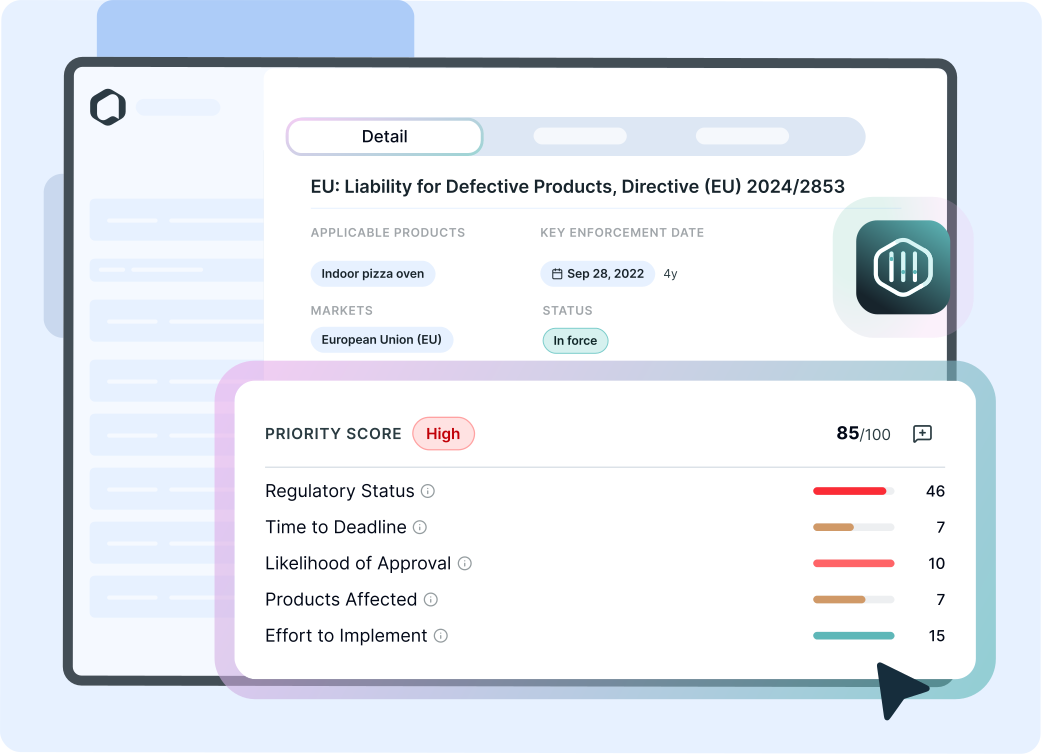
Prioritize Business Risk
Focus Where Risk Is Highest
Make faster, risk-informed decisions with confidence as AI agents automatically rank regulatory changes based on urgency, business impact, compliance deadlines, and product exposure.
Spotlight
Turning Compliance into Value


The State of Product
Compliance 2026
Discover how 500+ global leaders are shifting product compliance from a cost-centre into a strategic driver of growth, with key benchmarks like 69% of teams calling remediation their biggest challenge.
Frequently Asked Questions
-
Businesses selling online or at a distance are subject to rules on pre-contract information, transparent pricing, fair contract terms, withdrawal rights, and remedies such as repair, replacement, or refund. These obligations apply to both physical goods and digital content or services, supporting fair treatment of consumers in e-commerce.
-
Product marketing, including environmental or “green” claims, must be accurate, clear, and not misleading about characteristics, origin, or benefits. Frameworks such as the EU Unfair Commercial Practices Directive and the US FTC Green Guides guide claim substantiation and presentation, helping companies manage compliance and reputational risk.
-
Emerging global trends emphasise transparency by requiring manufacturers to inform consumers about the existing product guarantees and the repairability options in case of defective products. New regulatory approaches are positioning repair as a preferred remedy, also by granting consumers of extended guarantee periods.
-
Growing consumer demand for sustainable products is significantly influencing how companies design, source, and manufacture goods. At the same time, legislators are strengthening consumer protection laws by ensuring transparency and accountability. Key operational transformations must include sustainable sourcing of raw materials, circular economy models, waste reduction and supply chain transparency. Furthermore, these transformations must be clearly communicated and accessible by consumers. Transparency tools, accurate labeling, and traceability mechanisms are essential to enable consumers to make informed purchasing decisions.
-
Governments worldwide are increasingly supporting digital labelling, either replacing or complementing traditional paper labels. This shift is accelerating due to emerging information and disclosure requirements and the rising consumer demand for transparency and accessible product information. The European Union is at the forefront, for example, by implementing Digital Product Passports under its Ecodesign for Sustainable Products Regulation (ESPR), while other countries are adopting e-labelling frameworks to provide consumers with digital access to product details, instructions, and sustainability information.
This transition is empowering consumers to make informed and responsible purchasing decisions while encouraging manufacturers to maintain transparency along their supply chains.