

Regulatory Focus
Product Safety Compliance Solutions

Product Safety
195
Countries Covered
28
Languages
10398
Regulatory Sources
Adherent offers a comprehensive collection of global proposed, enacted and amended laws and regulations covering general product safety and those focused on specific products.
A paramount consideration for manufacturers placing products on the market is the safety of their products. Laws and regulations in countries worldwide promote the principle that only safe products should be placed on the market and, to this end, set out legal obligations pertaining to safe design and production of products, as well as appropriate warnings and labels, provision of information, reporting obligations, and corrective actions. Non-compliance can have serious implications for companies, from product recalls and fines to potentially culminating in criminal prosecution.
The EU boasts a mature framework regulating product safety, providing product-specific legislation for certain categories of products e.g. electrical appliances, machinery and gas appliances. Additionally, the General Product Safety Regulation (GPSR) establishes rules governing safety where no specific sectoral laws exist, or where certain risks are not already covered in dedicated legislation.
Our product safety regulatory content provides extensive coverage of global product safety legislation from general product safety laws and regulations to those focused on specific products. We cover legislation on the safety of:
- Electrical & electronic equipment
- Machinery products
- Gas appliances
- Pressure equipment
- Construction products
We do not cover legislation on the safety of gas cylinders as core.
Adherent’s coverage of Product Safety is historically comprehensive and includes, but is not limited to:
- EU: General Product Safety, Regulation (EU) 2023/988
- EU: Liability for Defective Products, Directive (EU) 2024/2853
- EU: Low Voltage Electrical Equipment, Directive 2014/35/EU
- EU: Machinery Regulation (EU) 2023/1230
- EU: Appliances Burning Gaseous Fuels, Regulation (EU) 2016/426
- EU: Pressure Equipment Directive 2014/68/EU
- EU: Harmonised Rules for the Marketing of Construction Products, Regulation (EU) 2024/3110
- USA: Consumer Product Safety Act, 15 U.S.C. 2051-2084, 1972, As Amended 1994
- Canada: Safety of Consumer Products Act, c. 21, 2010
- UK: Product Regulation and Metrology Act, 2025
- UK: Recalls of Non-Food Consumer Products, Code of Practice, PAS 7100:2022, March 2022
- Australia: Competition and Consumer Act 2010
- China: Strengthening the Supervision of Recall of Consumer Products Sold Online, Announcement No. 21, 2025
- Singapore: Product Recall Guide for Suppliers, Guidance Document, September 2025
- EU: Making Available on the Market of Simple Pressure Vessels, Directive 2014/29/EU
We track regulatory developments governing product recalls, specifically recall obligations that apply to manufacturers such as:
- The use of standardised notice templates
- Prescribed public-facing information and the channels through which it is communicated including formal notifications to regulators via centralised alert mechanisms
- Consumer remedy rights
- Maintenance of records demonstrating how a safety issue was identified, assessed, and resolved as well as records of all communications with regulators and supply chain partners
- Risk assessments justifying the recall
- Traceability data identifying affected products and their distribution
- Internal register of complaints, recalls and corrective measures taken
- Sanctions are also relevant and may include penalties for inadequate actions such as delayed incident reporting or failure to notify the authorities
We cover standards for our core products that are available from our partner Accuris. These are available through our Product Compliance Solution.
Note: Coverage of General Product Safety and Electrical & Electronic Equipment is global. Machinery & Gas Appliances coverage is 72 countries. Pressure Equipment coverage is global. Construction Products coverage includes the EU, EEA & UK.
Connection with other regulatory content:
Coverage with respect to radio equipment and electromagnetic compatibility can be found under our Wireless & EMC content. Laws & regulations on the safety of batteries, packaging, medical devices, vehicles & textiles are found in separate designated content.
Occasionally, regulations set out requirements for both product safety features and the protection of consumer rights. Where this occurs, a source may fall under Product Safety and Consumer Protection.




Intelligent Resources


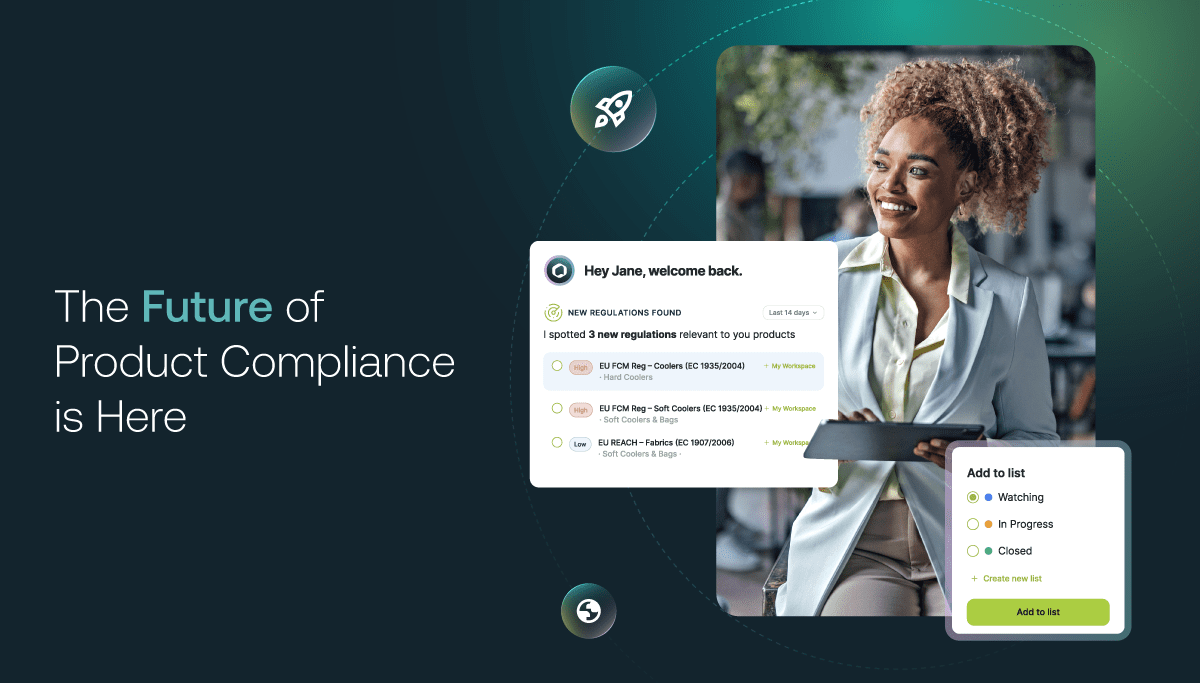
Automate the work of managing regulatory change.
Let AI agents do the heavy lifting of monitoring regulations, mapping requirements to products, extracting obligations, and surfacing the risks that need attention first.
Monitor Product Compliance
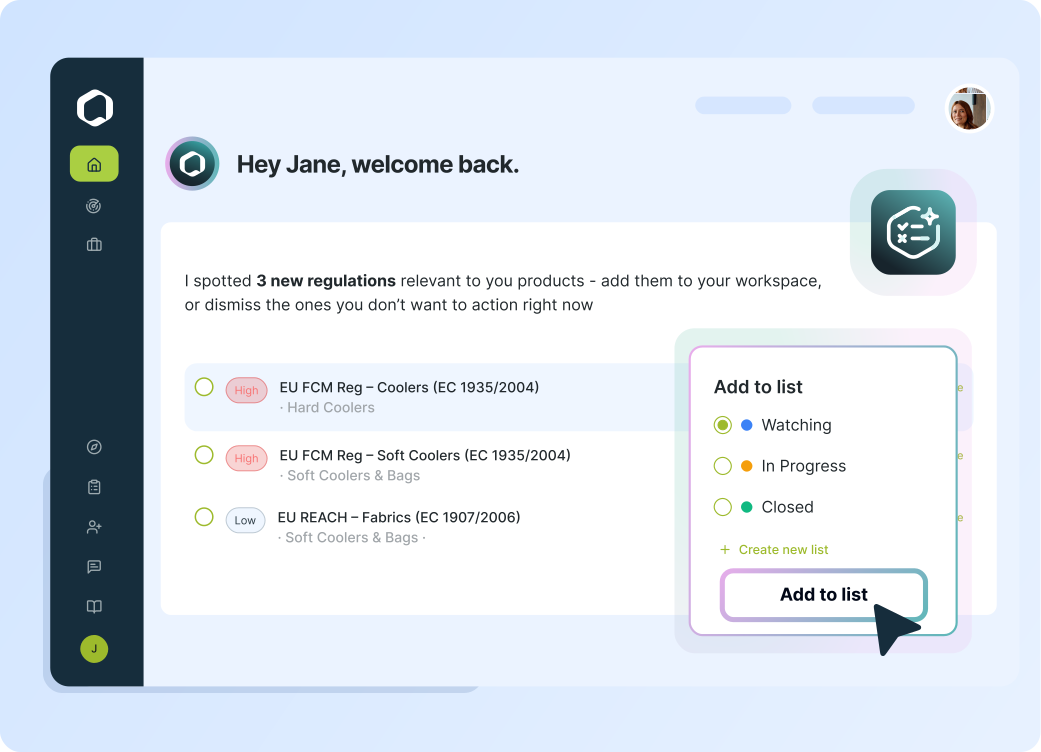
Stay Ahead of Regulatory Change
Get early visibility into changes that could affect your products, supply chain, or market access—so you can act proactively, not reactively.
Assess Regulatory Applicability
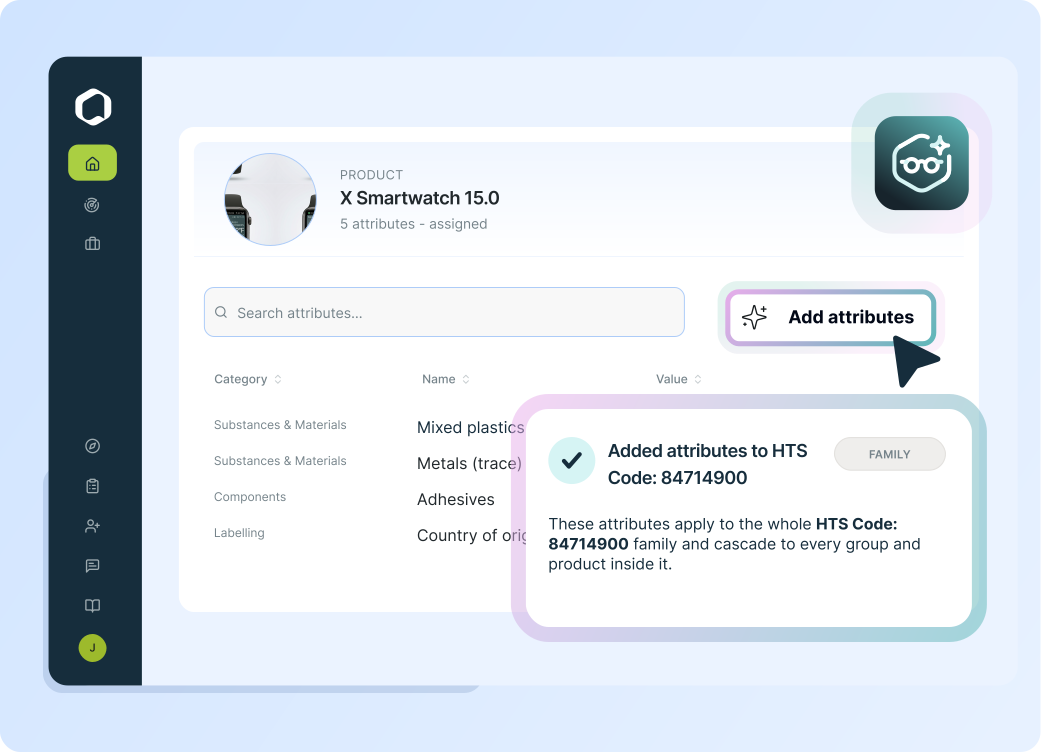
Map Regulations to Your Products
Eliminate manual research and cut through regulatory noise by surfacing only the requirements relevant to your business, markets, and product categories.
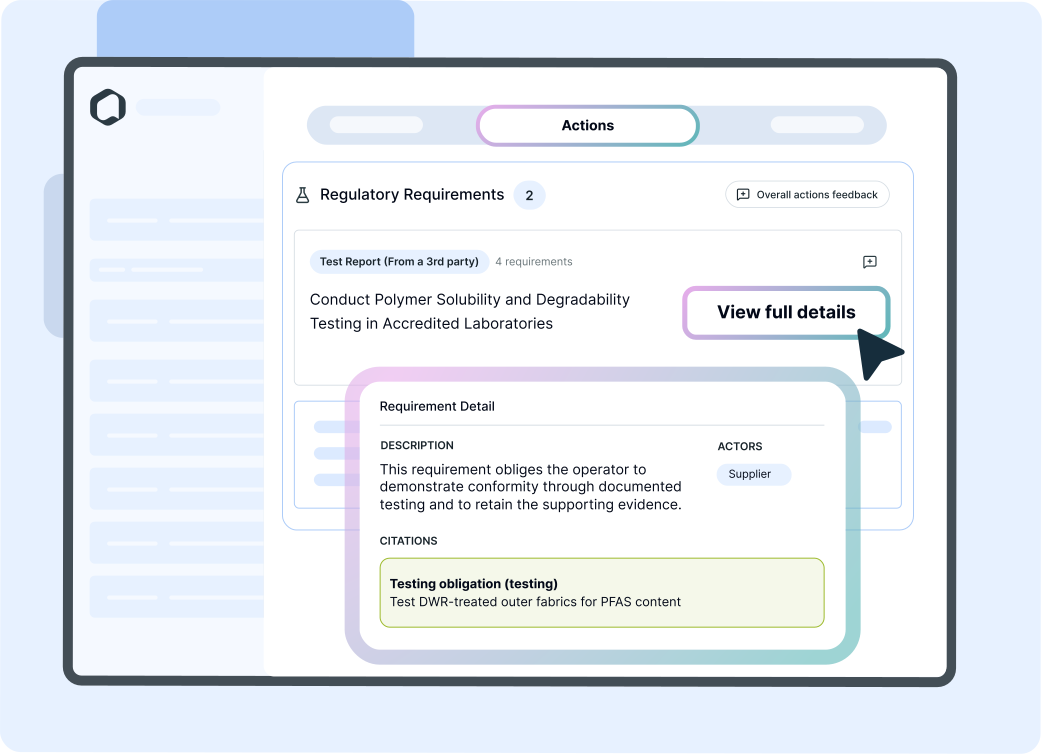
Identify Compliance Requirements
Turn complex regulations into clear, actionable tasks.
Give your teams instant clarity as AI agents transform dense legal and regulatory text into structured, easy-to-understand requirements.
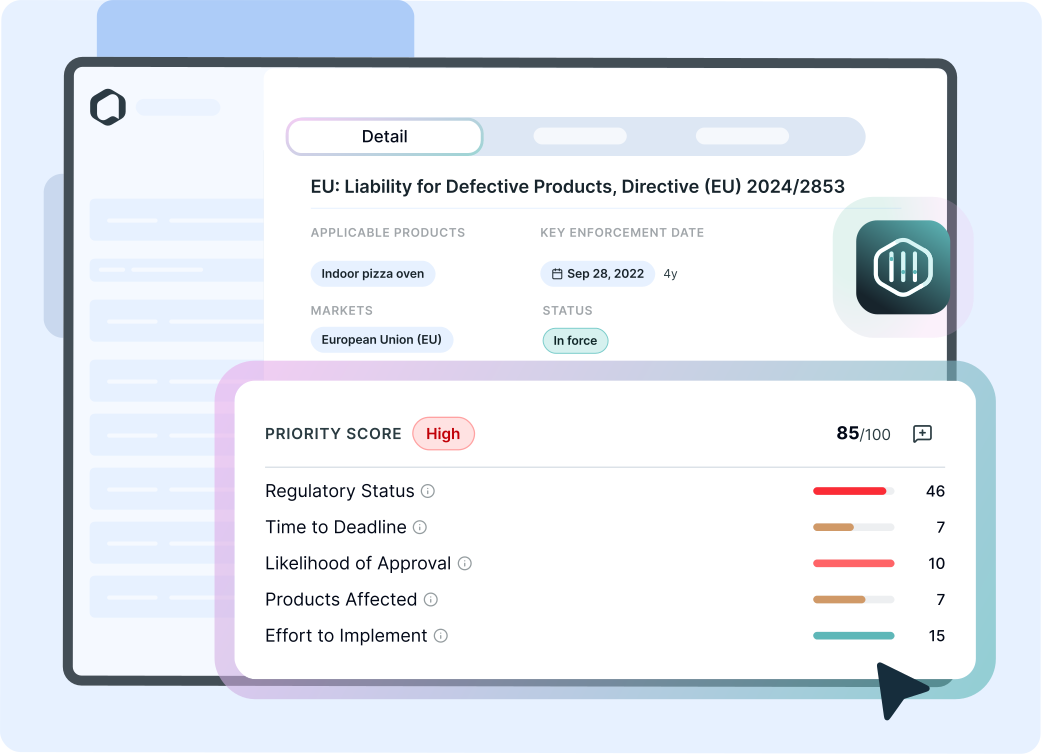
Prioritize Business Risk
Focus Where Risk Is Highest
Make faster, risk-informed decisions with confidence as AI agents automatically rank regulatory changes based on urgency, business impact, compliance deadlines, and product exposure.
Spotlight
Turning Compliance into Value


The State of Product
Compliance 2026
Discover how 500+ global leaders are shifting product compliance from a cost-centre into a strategic driver of growth, with key benchmarks like 69% of teams calling remediation their biggest challenge.
Frequently Asked Questions
-
Manufacturers are primarily responsible for ensuring products are safe and compliant before market placement. Importers and distributors also have obligations, including verifying conformity, maintaining documentation, cooperating with authorities, and taking corrective action if safety risks are identified.
-
Companies must promptly assess the risk, inform relevant authorities, and implement corrective measures such as warnings, withdrawals, or recalls. Ongoing post-market monitoring and incident reporting are essential to demonstrate compliance and limit legal and reputational exposure.
-
Yes. Traceability is required by the GPSR in 3 ways:
- The normal traceability obligation that already applies under harmonised legislation (LVD, EMC Directive, etc.) requiring manufacturers to provide information on their products (or packaging) placed on the market
- Under the GPSR Article 15(3), upon request by the authorities, economic operators must identify:
- any economic operator who has supplied your company with the product, or with a part, a component or any software embedded into the product; and
- any economic operator to whom you have supplied the product.
You must be in a position to to present this information for a period of 6 years from the date of supply.
- Article 18 refers to the possibility of the Commission establishing a traceability system for some products likely to present a serious risk to public health and safety that it can use to collect and store data, including by electronic means.
-
Information that will support product traceability is required under the new Regulation. The rule is however the same as that which applies under current EU harmonisation legislation, that is to say: manufacturers must ensure that their products bear a type, batch or serial number or other element enabling the identification of the product.
So the manufacturer has some discretion as to what element to include which allows identification of the product. This does not necessarily need to be a production batch number, provided that another identifier can be used that is easily visible and legible for consumers.
-
The UK Parliament has passed legislation which continues recognition of current EU requirements, including the CE marking for a range of products. This recognition has been extended indefinitely – so there is currently no cut-off point beyond which UKCA must be used.
The EU markings and declaration of conformity are recognised by the UK, so the same declaration of conformity you use to market goods in accordance with EU regulatory requirements is acceptable in the UK, provided that it is in English, lists the regulations met and indicates how these have been met. You also have the option to use either the UKCA marking or the CE marking to place relevant products on the GB market.
More
Regulatory
Topics
Consumer Protection
Regulatory Focus Consumer Protection 195 Countries Covered 28 Languages 4804 Regulatory So…
Electromagnetic Compatibility (EMC) Compliance
Regulatory Focus Electromagnetic Compatibility (EMC) 195 Countries Covered 28 Languages 14…
Battery Regulatory Compliance
Regulatory Focus Batteries 195 Countries Covered 28 Languages 3216 Regulatory Sources Batt…
Wireless Devices Regulatory Compliance
Regulatory Focus Wireless 195 Countries Covered 28 Languages 3353 Regulatory Sources Wirel…
Cybersecurity
Regulatory Focus Cybersecurity 195 Countries Covered 28 Languages 1062 Regulatory Sources …