

Regulatory Focus
Ecodesign

Ecodesign
195
Countries Covered
28
Languages
1406
Regulatory Sources
Ecodesign legislation requires manufacturers to design products that meet strict environmental criteria in order to minimize their environmental impact throughout the entire life cycle. It includes requirements for energy efficiency, material and resource efficiency, durability, repairability, information transparency, and recyclability.
Ecodesign sets mandatory environmental design requirements that shape product development and manufacturing processes prior to market placement, while requiring companies to manage compliance obligations and certification procedures.
Companies must ensure that products placed on the market comply with environmental criteria covering energy performance and non-energy aspects, including material and resource efficiency, durability, upgradeability, repairability, and recyclability.
In particular, we can find requirements related to:
- Conformity assessment and certification of products.
- Information requirements (DPP, product instructions, labelling and end of life information).
- Energy efficiency of products.
- Lifecycle assessments.
- Retention of technical documentation and compliance records.
- Incorporation of durability, upgradeability, reparability, and recyclability measures into product design.
We cover a wide range of laws, regulations, and guidance that establish environmental design criteria for products, regarding energy efficiency, as well as non-energy aspects such as:
- EU: Framework for Setting Ecodesign Requirements for Sustainable Products (ESPR), Regulation (EU) 2024/1781
- EU: Details and Format for the Disclosure of Information on Discarded Unsold Consumer Products under Regulation (EU) 2024/1781, Regulation (EU) 2026/2
- EU: Ecodesign for Sustainable Products and Energy Labelling Working Plan 2025-2030, Communication, April 2025
- EU: Ecodesign Requirements for Off Mode, Standby Mode, and Networked Standby Energy Consumption of Electrical and Electronic Household and Office Equipment, Regulation (EU) 2023/826
- Ukraine: Approval of Technical Regulation on Ecodesign Requirements for Servers and Data Storage Products, Resolution No. 160, 2026
- EU: Eco-design requirements for smart phones, other mobile phones, cordless phones and slate tablets, Regulation (EU) 2023/1670
Experts in this Area

Intelligent Resources




Automate the work of managing regulatory change.
Let AI agents do the heavy lifting of monitoring regulations, mapping requirements to products, extracting obligations, and surfacing the risks that need attention first.
Monitor Product Compliance
Stay Ahead of Regulatory Change
Get early visibility into changes that could affect your products, supply chain, or market access—so you can act proactively, not reactively.
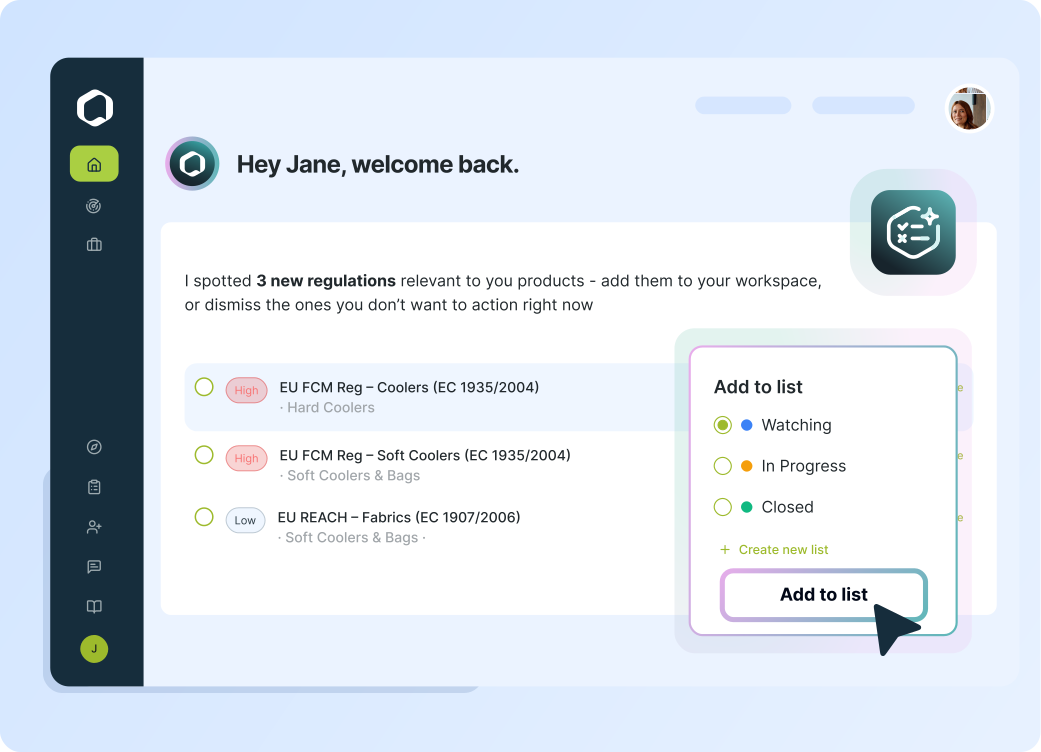
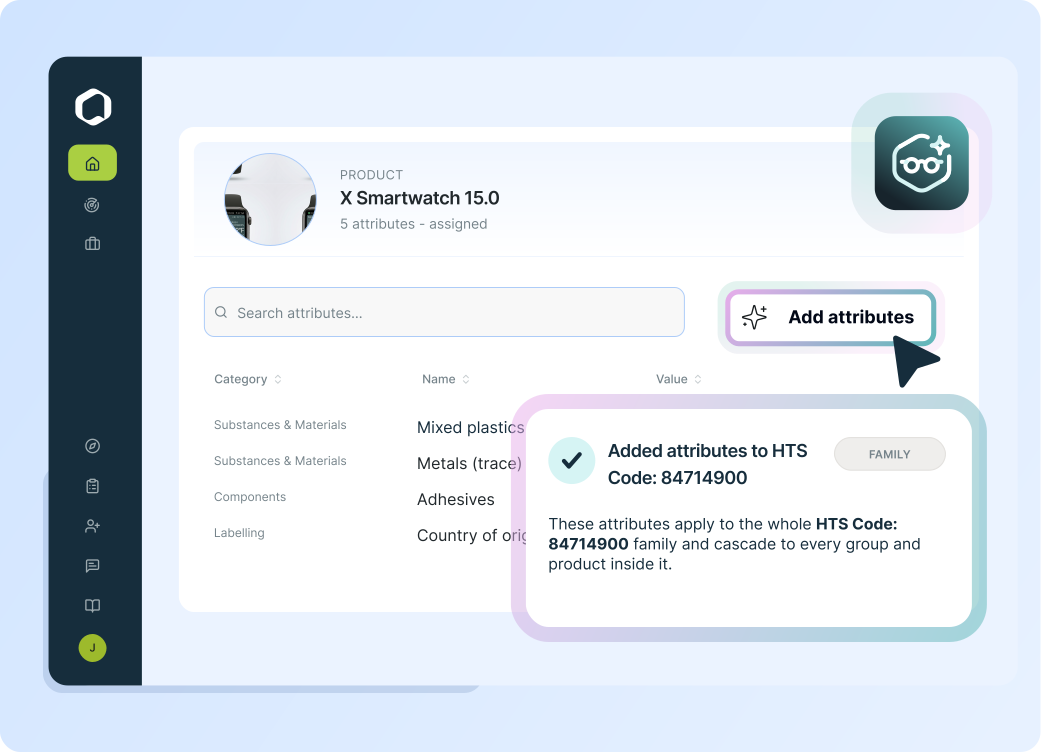
Assess Regulatory Applicability
Map Regulations to Your Products
Eliminate manual research and cut through regulatory noise by surfacing only the requirements relevant to your business, markets, and product categories.
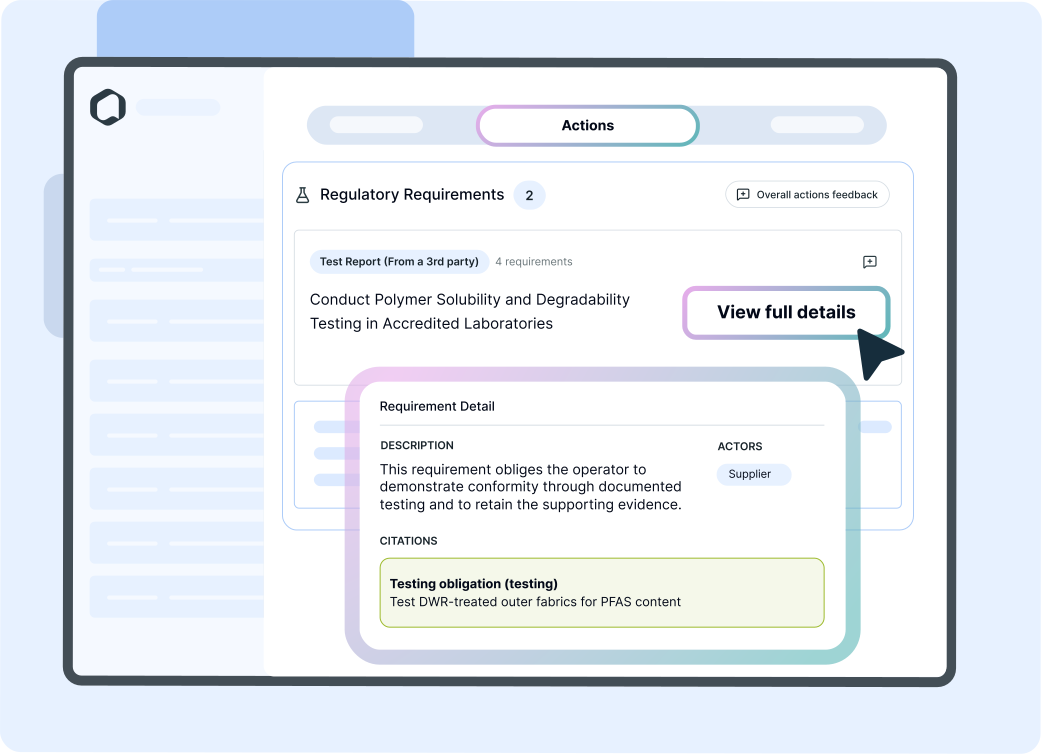
Identify Compliance Requirements
Turn complex regulations into clear, actionable tasks.
Give your teams instant clarity as AI agents transform dense legal and regulatory text into structured, easy-to-understand requirements.
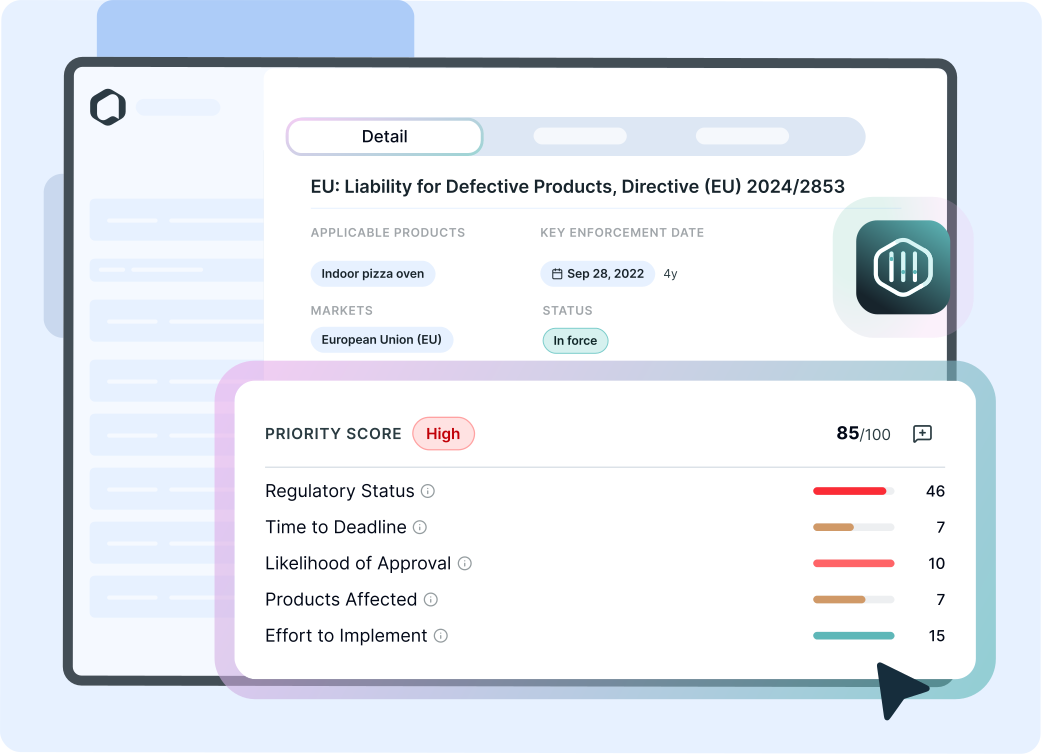
Prioritize Business Risk
Focus Where Risk Is Highest
Make faster, risk-informed decisions with confidence as AI agents automatically rank regulatory changes based on urgency, business impact, compliance deadlines, and product exposure.
Spotlight
Turning Compliance into Value


The State of Product
Compliance 2026
Discover how 500+ global leaders are shifting product compliance from a cost-centre into a strategic driver of growth, with key benchmarks like 69% of teams calling remediation their biggest challenge.
Frequently Asked Questions
-
Coverage varies by jurisdiction. In the European Union, for example, ecodesign requirements have traditionally applied to energy-related products, such as lighting equipment, computers and servers, and household appliances.
However, with the new Ecodesign for Sustainable Products Regulation (ESPR), the scope will progressively expand to potentially cover almost all physical products subject to limited exceptions (e.g., food, feed, and medicinal products).
-
Generally, manufacturers must ensure that products meet applicable ecodesign requirements, which may include energy efficiency, material and resource efficiency, durability, repairability, and recyclability, conduct a conformity assessment and affix a CE marking where applicable.
-
ESPR Regulation (EU) 2024/1781 applies to a broad range of products marketed in the European market, including components and intermediate products. Only limited categories are excluded, such as food; feed; medicinal and veterinary products, living plants, animals, and micro-organisms; products of human origin; products of plants and animals directly related to their future reproduction and vehicles.
-
Ecodesign requirements established under the ESPR Regulation (EU) 2024/1781 apply to new products. Therefore, reused products are not covered. In contrast, remanufactured products may fall within the scope of ESPR measures, as they are considered new products when placed on the market.
-