

Regulatory Focus
Human Trafficking & Modern Slavery Compliance

Human Trafficking and Slavery (HTS)
195
Countries Covered
28
Languages
408
Regulatory Sources
Encompasses existing and proposed laws and regulations as well as supporting guidance documents designed to prevent and address modern slavery, servitude, forced labour, and human trafficking, including disclosure and due diligence obligations that require companies to identify, prevent, and remediate these risks across their operations and business relationships, as well as measures prohibiting the import or export of goods produced with forced labour.
No industry is immune to forced labour or modern slavery risks; therefore, addressing such risks is a Responsible Business Conduct priority that helps companies protect reputation, meet stakeholder expectations, ensure compliance, and safeguard long-term financial performance.
Companies are expected to identify, prevent, and address the risks of modern slavery and human trafficking across their operations and supply chains.
Increasingly, laws and regulations require companies to:
- Disclose their efforts to eliminate slavery in their supply chains.
- Implement due diligence systems to identify and manage risks.
- Train employees on preventing human trafficking in their supply chains.
- Certify that materials or products comply with human trafficking laws.
- Register in a Modern Slavery Register.
We cover laws, regulations, and guidance globally addressing slavery and human trafficking risks, encompassing transparency and disclosure regimes, supply chain due diligence, and import control obligations related to products made with forced labour, such as:
- Australia: Modern Slavery Act, No. 153, 2018
- Australia: Statutory Review of the Modern Slavery Act 2018, Report, May 2023
- Australia: Strengthening the Modern Slavery Act, Consultation Paper, July 2025
- Canada: Fighting Against Forced Labour and Child Labour in Supply Chains Act, c. 9, 2023
- California (USA): Transparency in Supply Chains Act, 2010
- EU: Prohibiting Products Made with Forced Labour on the Union Market, Regulation (EU) 2024/3015
- France: Duty and Vigilance of Parent and Subcontracting Companies, Law No. 2017-399
- Germany: Standards, Audits and Certifications as Due Diligence Tools, Guidance Document, December 2024
- Ireland: Designating Competent Authorities for the Application of the EU Forced Labour Regulation, Regulations S.I. No. 63/2025
- Indonesia: Prohibition on Import of Products Made with Forced Labour, Regulation No. 9/2026
- ILO: Combating Forced Labour: A Handbook for Employers and Business, Guidelines, November 2025
- Mexico: Prohibition on Import of Products Made with Forced Labour, Agreement, February 2023
- Netherlands: Child Labour Due Diligence Law, 2019
- Netherlands: Responsible and Sustainable International Business Conduct, Revised Draft Law, November 2022
- New South Wales (Australia): Modern Slavery Act, 2018
- New Zealand: Modern Slavery and Worker Exploitation Supply Chain Legislation, Policy Document, September 2023
- New Zealand: Modern Slavery, Bill No. 242-1, February 2026
- Norway: Business Transparency and Work on Fundamental Human Rights and Decent Working Conditions, Act No. 99, 2021
- Norway: Penalties for Non-Compliance with the Transparency Act, Regulation No. 193, 2023
- Switzerland: Due Diligence Obligations and Transparency Regarding Minerals and Metals from Conflict Areas and Child Labour, Ordinance, December 2021
- SRA: Slavery & Trafficking Risk Template (STRT), Version 3.2, 2023
- Thailand: Measures for Preventing and Suppressing Human Trafficking, Announcement, October 2024
- UK: Modern Slavery Act, 2015
- UK: Slavery and Human Trafficking in Supply Chains, Guidance Document, March 2025
- UK: Strengthening the UK’s Forced Labour and Human Rights Legislative Framework, Report, December 2025
- UK, Canada and Australia: International Reporting on Modern Slavery, Forced Labour and Child Labour, Voluntary Guidance, July 2025
- USA: Forced Labor Division Withhold Release Order (WRO) and Finding Modifications, Guidance Document, June 2025
- USA: Prevention of Forced Labor in Xinjiang Uyghur, House Bill 6256 Enacted, 2021
- USA: Submission of Force Labor Supporting Documents, Guidance Document, May 2023
- USA: Reporting of Sourcing and Due Diligence Activities within Supply Chains, Senate Bill 1358, 2025
Experts in this Area

Intelligent Resources




Automate the work of managing regulatory change.
Let AI agents do the heavy lifting of monitoring regulations, mapping requirements to products, extracting obligations, and surfacing the risks that need attention first.
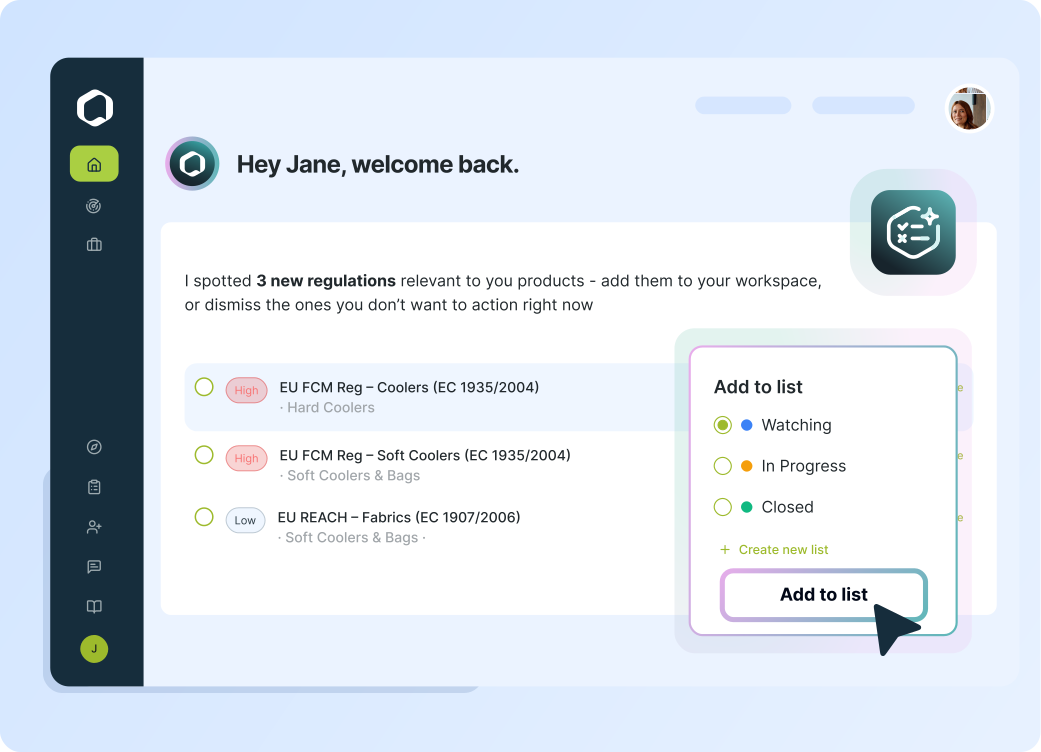
Monitor Product Compliance
Stay Ahead of Regulatory Change
Get early visibility into changes that could affect your products, supply chain, or market access—so you can act proactively, not reactively.
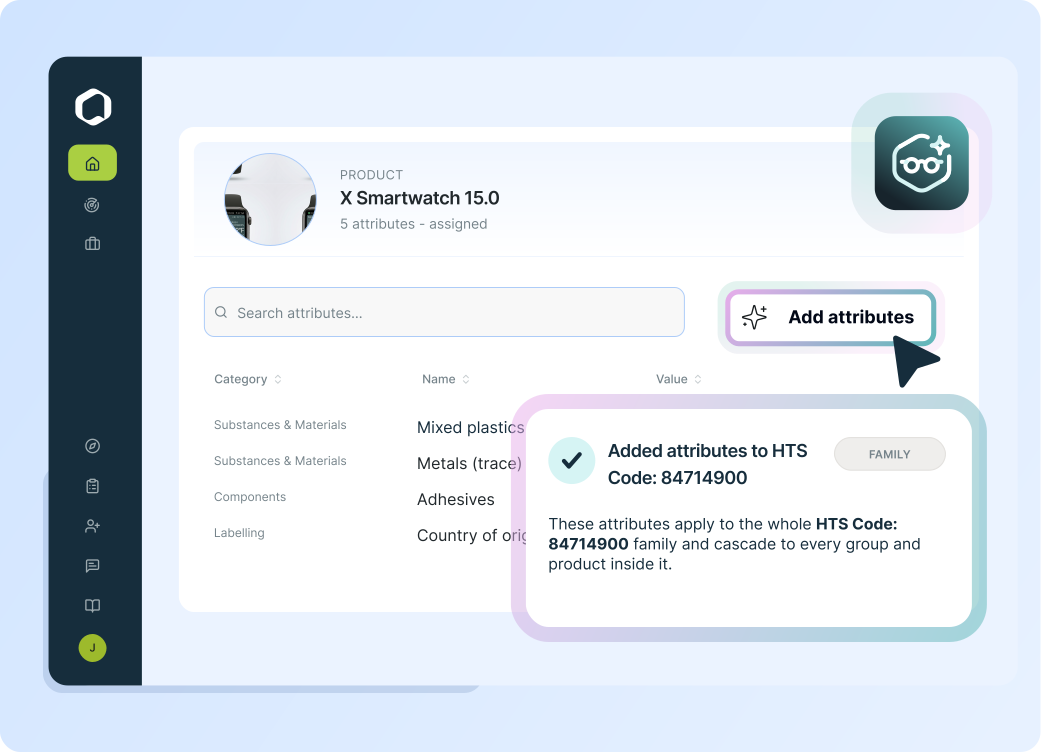
Assess Regulatory Applicability
Map Regulations to Your Products
Eliminate manual research and cut through regulatory noise by surfacing only the requirements relevant to your business, markets, and product categories.
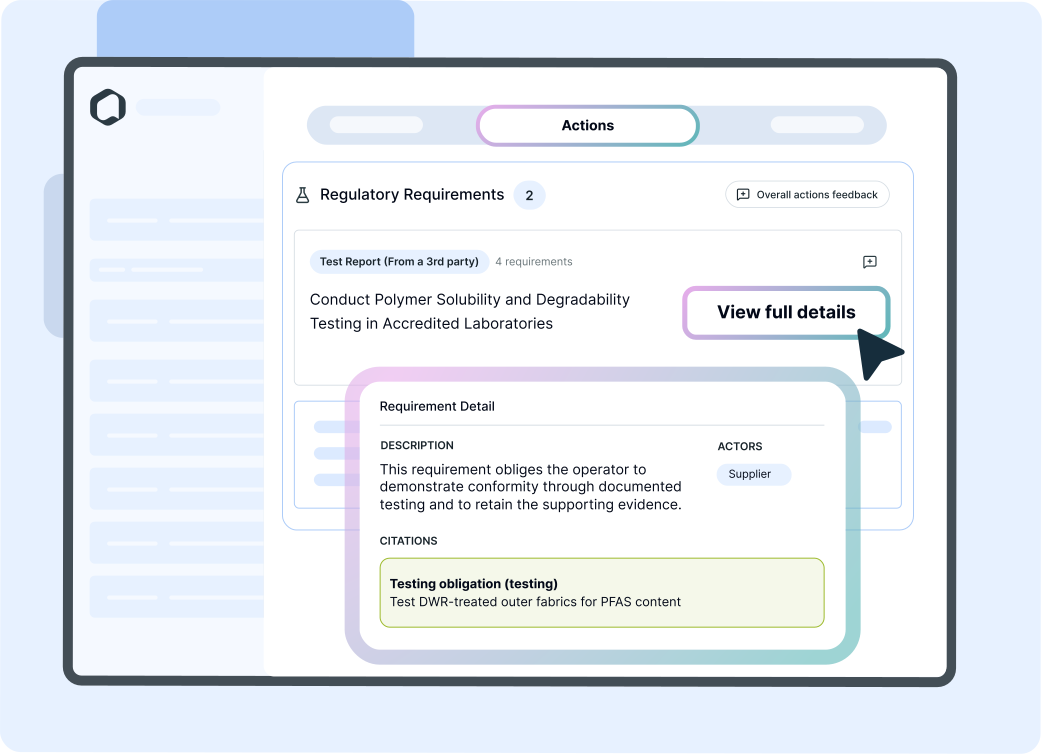
Identify Compliance Requirements
Turn complex regulations into clear, actionable tasks.
Give your teams instant clarity as AI agents transform dense legal and regulatory text into structured, easy-to-understand requirements.
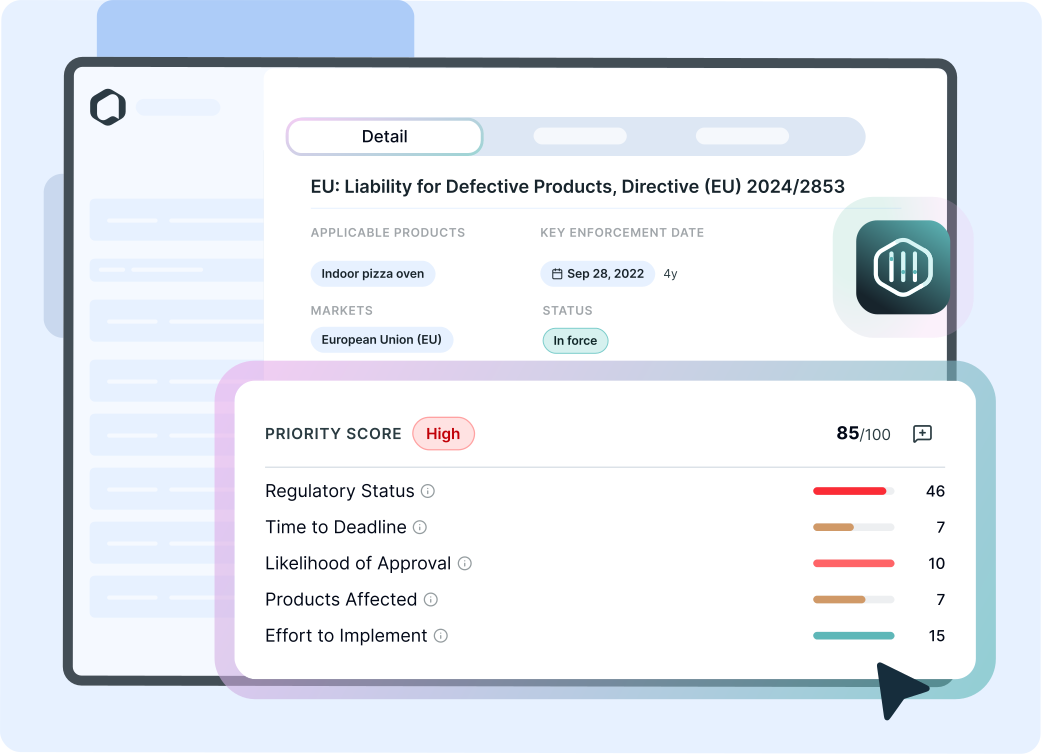
Prioritize Business Risk
Focus Where Risk Is Highest
Make faster, risk-informed decisions with confidence as AI agents automatically rank regulatory changes based on urgency, business impact, compliance deadlines, and product exposure.
Spotlight
Turning Compliance into Value

The State of Product
Compliance 2026
Discover how 500+ global leaders are shifting product compliance from a cost-centre into a strategic driver of growth, with key benchmarks like 69% of teams calling remediation their biggest challenge.
Frequently Asked Questions
-
Companies are generally required to publish a modern slavery or human trafficking statement when they meet certain thresholds, such as minimum revenue, turnover, or business presence in a jurisdiction. For example, in the UK, this applies to companies with annual revenue of £36 million or more, while in Australia, it applies to companies with annual revenue of $100 million AUD or more.
Where applicable, companies must disclose their policies, due diligence processes, and actions taken to identify and address slavery and trafficking risks in their operations and supply chains—typically on an annual basis and, in some jurisdictions, in a public registry.
-
Due diligence generally involves five steps: committing to prevent forced labor, identifying and assessing risks, addressing impacts through corrective actions, tracking implementation, and communicating progress. Therefore, companies are expected to map supply chains, conduct risk-based checks on suppliers, obtain compliance certifications, take remedial action when needed, and, in some jurisdictions, train staff and ensure products are free from forced or trafficked labor.
-
The Regulation does not introduce new due diligence or reporting obligations beyond those already established under EU and national law, but it strongly encourages the adoption of due diligence systems, as the European Commission and national authorities are empowered to investigate and, where necessary, detain, seize, or order the withdrawal or disposal of products made with forced labour. For that purpose, the EU Commission is expected to publish guidance for companies on forced labour by June 2026.
-
The Uyghur Forced Labor Prevention Act (UFLPA) establishes a rebuttable presumption that all goods produced wholly or in part in the Xinjiang region of China, or by entities on the “Entity List”, are made using forced labor and are thus prohibited from import to the US. The burden of proof lies with the importing companies, which must demonstrate that their supply chains are free of forced labour if their goods are seized.