

Regulatory Focus
Single-use Plastics

Single-use Plastics
195
Countries Covered
28
Languages
1336
Regulatory Sources
Amid growing global concern over plastic pollution, single-use plastics face increasing regulation addressing production, market placement, labeling, collection, recycling, and bans. Coverage includes measures targeting waste reduction, extended producer responsibility, consumer information, and restrictions designed to limit environmental harm and health risks worldwide.
Single-use plastics regulations impose bans, restrictions, levies, and producer responsibility obligations, creating compliance, cost, and supply-chain risks for manufacturers, importers, and distributors.
Companies are typically expected to comply with measures that restrict or prohibit the manufacture, import, distribution, or use of certain single-use plastic products, often alongside market access conditions. Requirements commonly include meeting reduction or consumption targets, paying taxes or levies, fulfilling extended producer responsibility obligations for waste management, and complying with labeling, reporting, or participation in voluntary reduction schemes.
- Bans/Restrictions on the manufacturing, importation, distribution and/or usage of single-use plastics;
- Taxes or levies on production or distribution (fixed or recommended);
- National consumption and reduction targets; and
- Extended producer responsibility (EPR) on the prevention and management of plastic products at the end of their life cycle (collection, management, sorting, etc.).
We cover regulations and supporting instruments that address the reduction, restriction, and management of single-use plastics across their lifecycle. This includes binding laws, regional and national initiatives, technical regulations, and international guidance that introduce bans, levies, labeling, reporting, and extended producer responsibility measures, as well as voluntary frameworks influencing market practices.
- EU: Reduction of the Environmental Impact of Certain Plastic Products, Directive (EU) 2019/904 (‘Single-Use Plastics Directive’)
- EU: European Plastics Pact, February 2020
- France: Anti-waste and Promotion of Circular Economy, Law 2020-105
- New York (USA): Bag Waste Reduction, Part H of Assembly Bill 2008 Enacted, 2019
- Queensland (Australia): Waste Reduction and Recycling Act, No. 31, 2011 – Amendment – (on lightweight plastic shopping bags, beverage containers etc.) Act No. 31, 2017
- Saudi Arabia: Biodegradable Plastic Products, Technical Regulation, June 2016
- South Korea: Compulsory Recycling Rates for Products and Packaging Materials for 2026, Notice No. 2026-27
- China: Administrative Measure on the Use and Reporting of Single Use Plastics, Order No. 1, 2023
- India: Plastic Waste Management, Rules, March 2016 – Amendment – (on QR code labelling of plastic carry bag and multi-layered packaging, penalties for non-compliance, etc) Rules, G.S.R. 73(E), 2025
- California (USA): Single Use Plastic Carryout Bag Ban, Senate Bill 270 Enacted, 2014 – Amendment – (on carryout bag ban, repealing at-store recycling program) Senate Bill 1053 Enacted, 2024
- Canada: Reporting of Certain Plastic Resins and Products for the Federal Plastics Registry for 2024, 2025 and 2026, Notice, April 2024 – Amendment – (on delaying the reporting due date for phases 2 and 3) Notice, March 2026








Intelligent Resources




Automate the work of managing regulatory change.
Let AI agents do the heavy lifting of monitoring regulations, mapping requirements to products, extracting obligations, and surfacing the risks that need attention first.
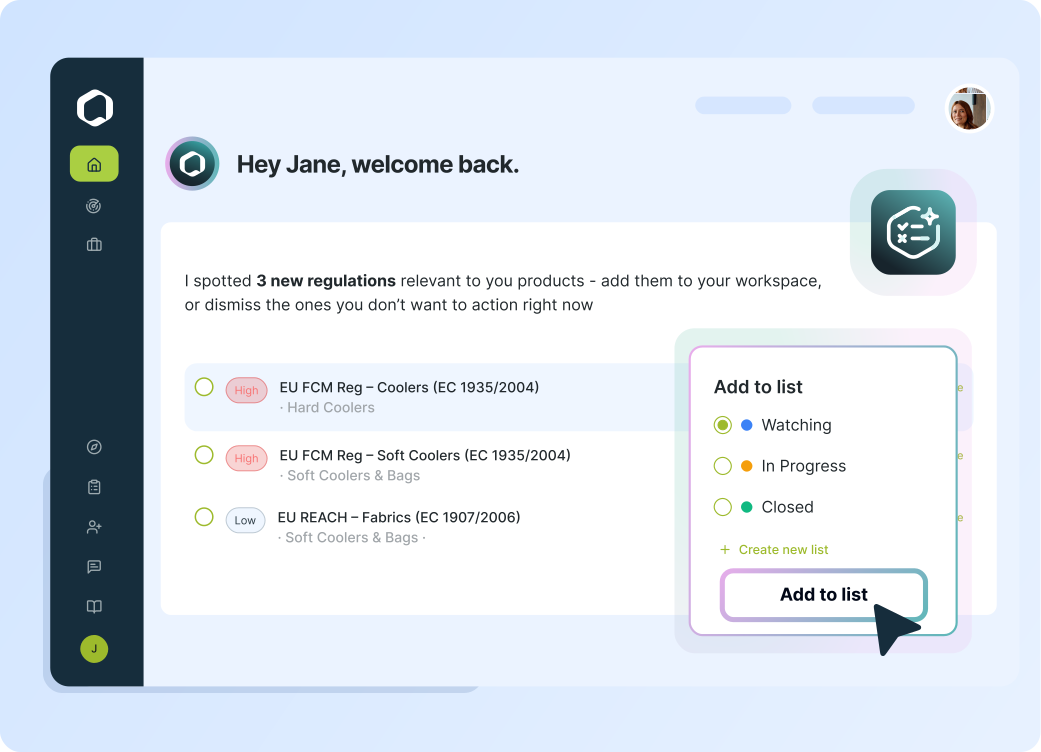
Monitor Product Compliance
Stay Ahead of Regulatory Change
Get early visibility into changes that could affect your products, supply chain, or market access—so you can act proactively, not reactively.
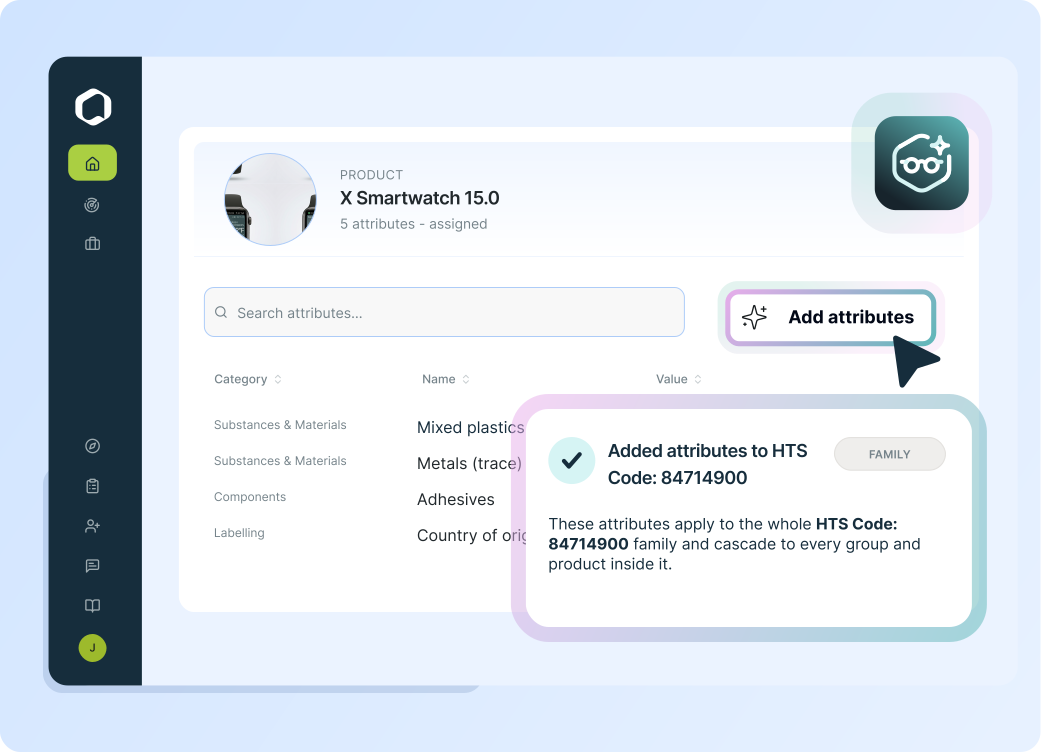
Assess Regulatory Applicability
Map Regulations to Your Products
Eliminate manual research and cut through regulatory noise by surfacing only the requirements relevant to your business, markets, and product categories.
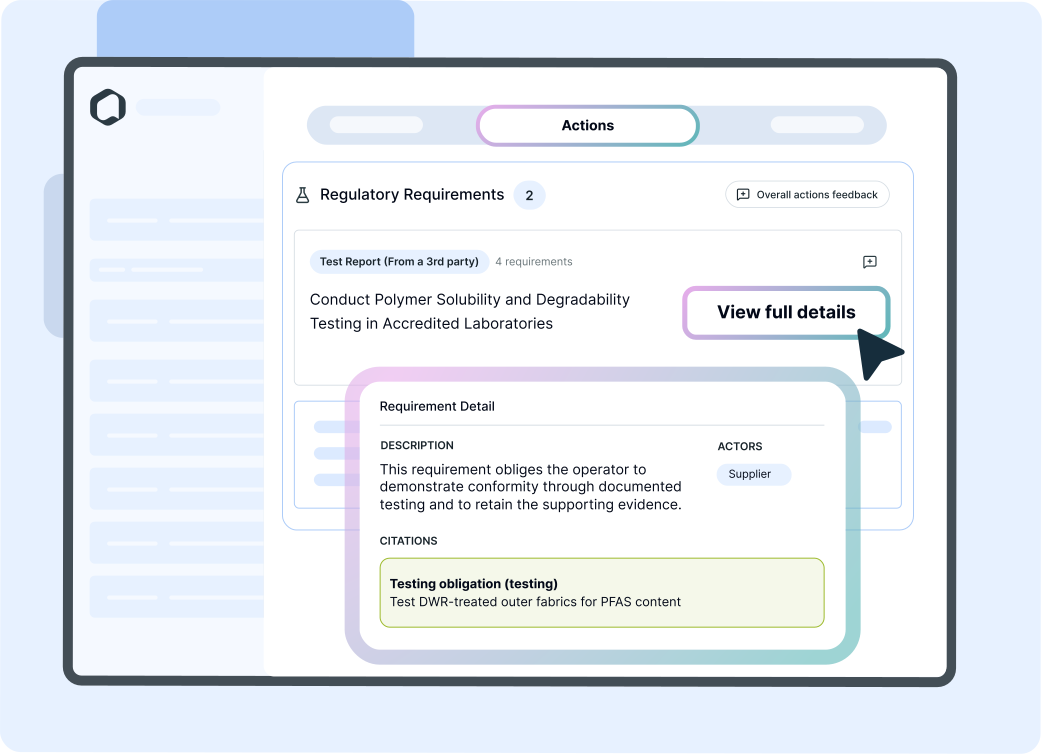
Identify Compliance Requirements
Turn complex regulations into clear, actionable tasks.
Give your teams instant clarity as AI agents transform dense legal and regulatory text into structured, easy-to-understand requirements.
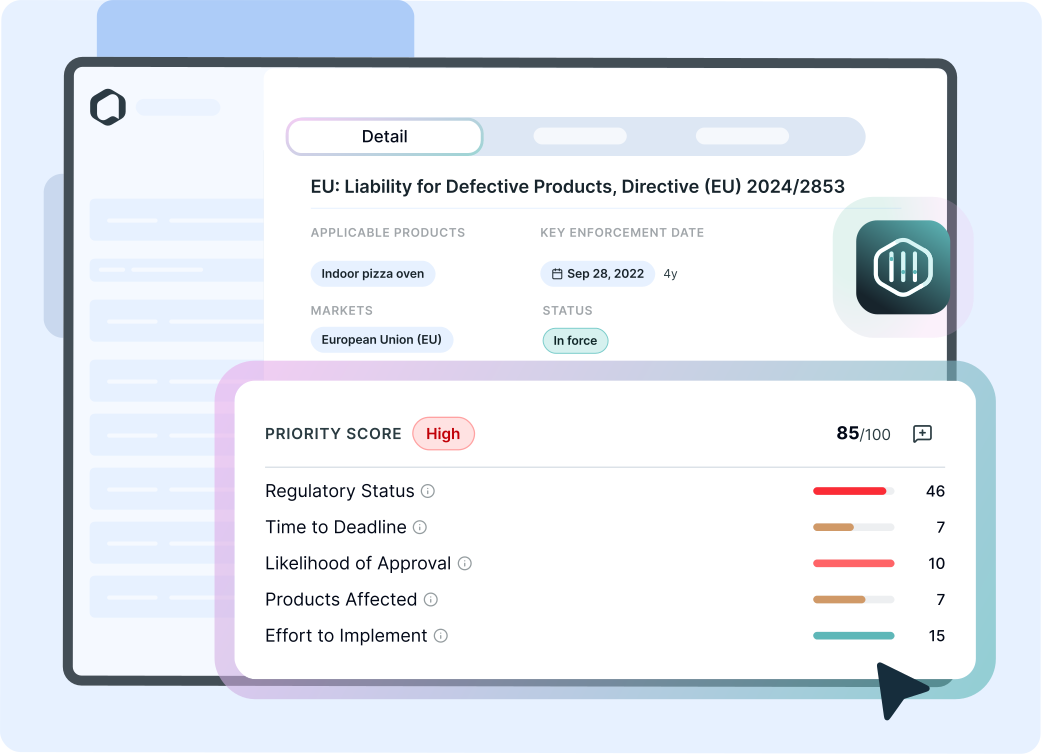
Prioritize Business Risk
Focus Where Risk Is Highest
Make faster, risk-informed decisions with confidence as AI agents automatically rank regulatory changes based on urgency, business impact, compliance deadlines, and product exposure.
Spotlight
Turning Compliance into Value


The State of Product
Compliance 2026
Discover how 500+ global leaders are shifting product compliance from a cost-centre into a strategic driver of growth, with key benchmarks like 69% of teams calling remediation their biggest challenge.
Frequently Asked Questions
-
Single-use plastics regulations typically target high-volume, short-lived products such as plastic carrier bags, certain polystyrene materials, oxo-degradable plastics, and some biodegradable or compostable plastics. Measures vary by jurisdiction and may include outright bans, use restrictions, design requirements, or conditions tied to labeling, reporting, or end-of-life management.
-
Companies commonly need to ensure restricted products are not manufactured, imported, or sold, comply with labeling or marking rules, meet material or design standards, and contribute to waste management through levies or extended producer responsibility schemes. In some jurisdictions, reporting on quantities placed on the market or progress toward reduction targets is also required.
-
The Single‑Use Plastics Directive targets specific SUP items, while the PPWR adds labelling, design‑for‑recyclability, recycled content and minimisation rules that apply to a much wider range of packaging, including plastic formats.
-
The EU Single‑Use Plastics Directive sets common objectives and products in scope, but each Member State transposes the rules into its own legislation, which can lead to differences in definitions, reporting formats, fees, enforcement thresholds and additional national measures. Businesses operating in several countries must therefore check each national transposition to ensure their product design, labelling and reporting systems meet local requirements.
-