

Regulatory Focus
Packaging

Packaging
195
Countries Covered
28
Languages
3888
Regulatory Sources
Packaging and packaging waste regulations shape how packaging is designed, managed, and recovered. They drive waste reduction, reuse, and recycling, while in regions such as the EU enabling harmonized market access delivers measurable environmental outcomes and removes barriers to trade.
Packaging Policy Coverage
Our packaging coverage supports manufacturers navigating regulatory requirements across plastic, metal, wood, and glass packaging. It addresses critical obligations from hazardous substances and material design to labeling, volume controls, and waste rules that shape packaging decisions from development through production and market entry.
Companies placing packaging on the market are generally required to reduce environmental impact through responsible design, material selection, and end-of-life management. Obligations typically include minimizing packaging volume and weight, ensuring reuse and recyclability, restricting hazardous substances such as lead, cadmium, mercury, hexavalent chromium, and PFAS, participating in extended producer responsibility (EPR) schemes, and complying with labeling requirements that support material disclosure and proper waste sorting.
- Reuse/recycling of packaging;
- Restrictions on concentration levels of heavy metals/substances (lead, cadmium, mercury and hexavalent chromium, PFAS) in packaging;
- Minimisation of packaging volume and weight;
- Design and composition of packaging in a manner that permits reuse and recycling;
- EPR on the prevention and management of packaging at the end of its life cycle (financing packaging collection, sorting, recycling etc.);
- Packaging labelling in relation to the material composition of packaging or to aid packaging waste sorting.
Our coverage includes laws, regulations, and standards governing packaging design, substance restrictions, labeling, waste management, and extended producer responsibility across key jurisdictions. These frameworks address limits on hazardous substances, recyclability and reuse requirements, material disclosures, and producer obligations for financing collection and recycling systems in the EU, UK, United States (including state-level laws), South Korea, India, and Japan. Standards supporting our core products are provided through our partner Accuris and are available within our Product Compliance solution.
- EU: Packaging and Packaging Waste, Regulation (EU) 2025/40
- EU: Guidance Document for Regulation (EU) 2025/40 on Packaging and Packaging Waste, Guidance Document, March 2026
- Italy: Environmental Labelling Obligations for Packaging, Guidelines, November 2022
- California (USA): Plastic Pollution Producer Responsibility Act, Senate Bill 54 Enacted, 2022
- Colorado (USA): Producer Responsibility Program for Statewide Recycling, House Bill 22-1355 Enacted, 2022
- China: Method for Administration on Recycling Packaging Materials, Plan, 2007
- EurAsEC: Approving Technical Regulations on Safety of Packaging, Decision No. 769, August 2011
- France: Packaging Producer Responsibility Organisation Approval Procedures and Specifications for Packaging from Products used by Professionals, Order, December 2025
- USA: Packaging and Claims Knowledge Act, House Bill 6832, December 2025
- Rhode Island (USA): Statewide Recycling Needs Assessment for a Packaging Extended Producer Responsibility Program, House Bill 6207A Enacted, 2025
- South Korea: Promotion of Saving and Recycling Resources Act, No. 4538, 1992
- South Korea: Criteria for Packaging Material Structural Grade Marking, Notice No. 2020-39
- Australia: Packaging Covenant, 2017
Standards for our core products are provided through our partner Accuris and available in our Product Compliance solution.








Intelligent Resources



Automate the work of managing regulatory change.
Let AI agents do the heavy lifting of monitoring regulations, mapping requirements to products, extracting obligations, and surfacing the risks that need attention first.
Monitor Product Compliance
Stay Ahead of Regulatory Change
Get early visibility into changes that could affect your products, supply chain, or market access—so you can act proactively, not reactively.
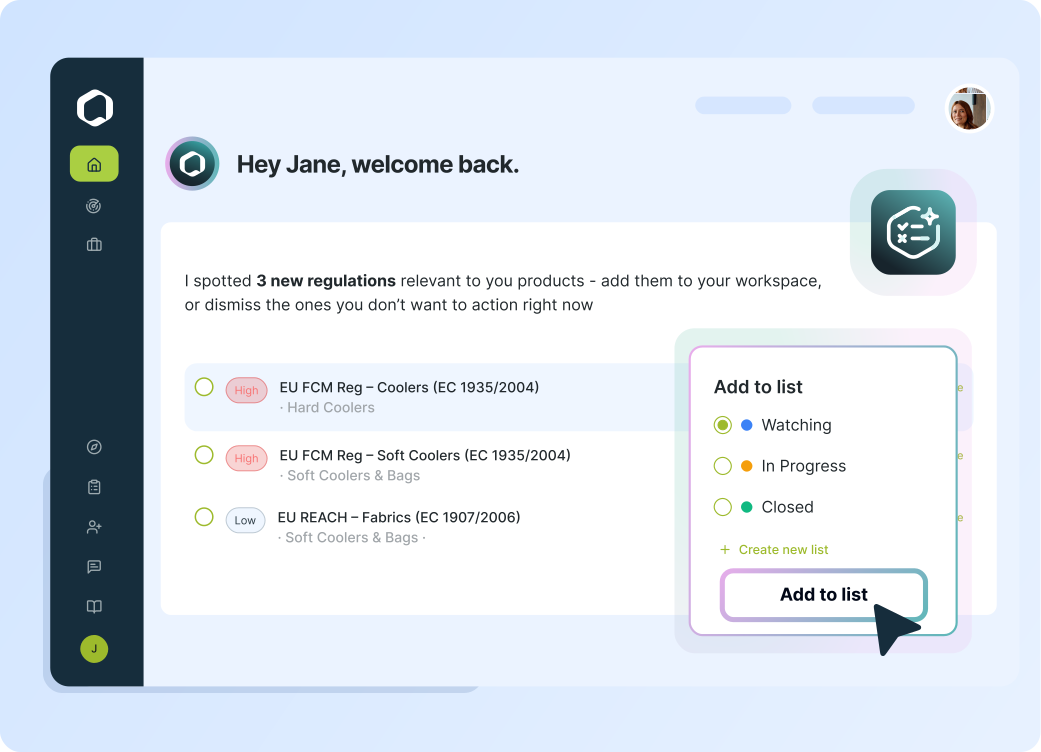
Assess Regulatory Applicability
Map Regulations to Your Products
Eliminate manual research and cut through regulatory noise by surfacing only the requirements relevant to your business, markets, and product categories.
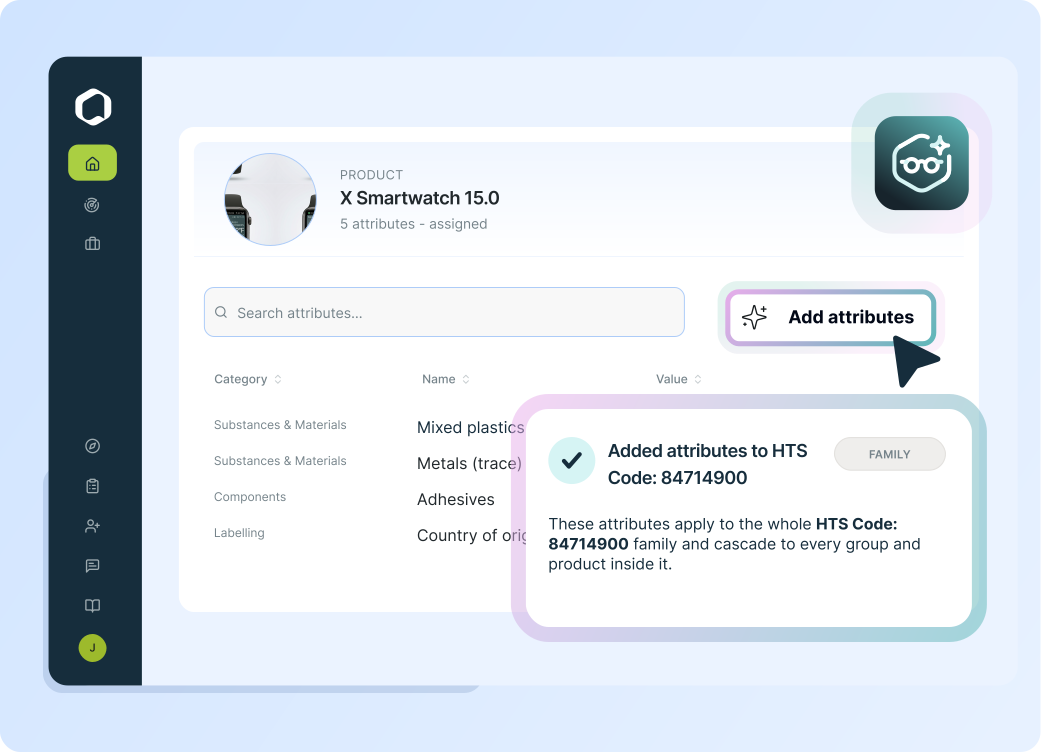
Identify Compliance Requirements
Turn complex regulations into clear, actionable tasks.
Give your teams instant clarity as AI agents transform dense legal and regulatory text into structured, easy-to-understand requirements.
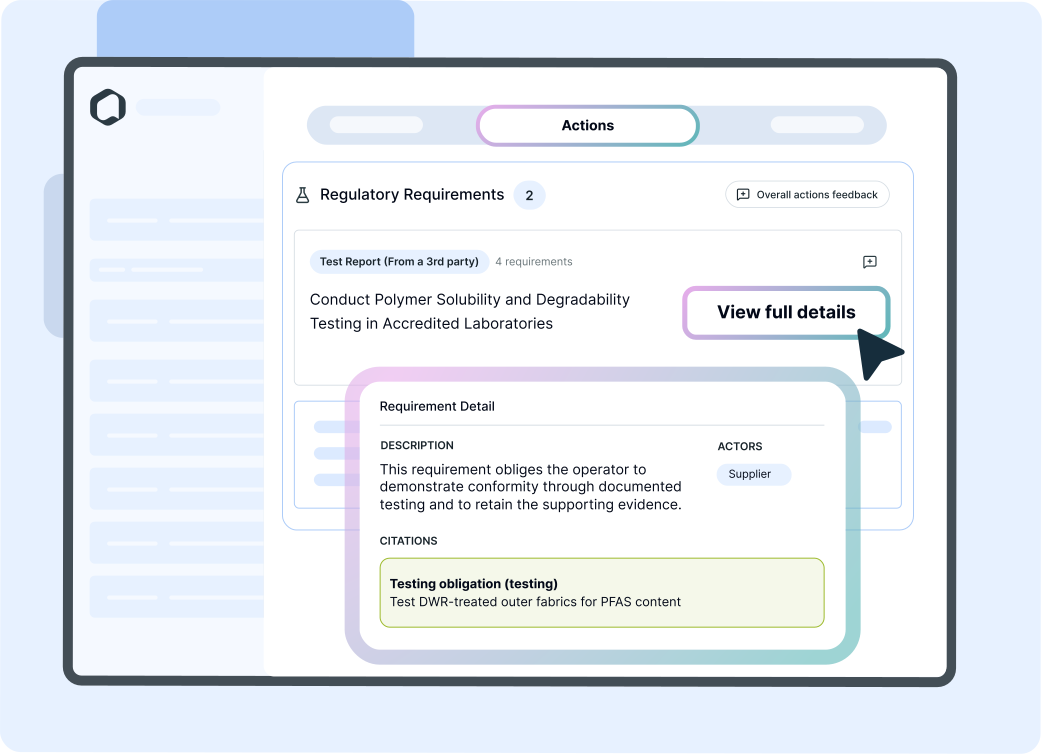
Prioritize Business Risk
Focus Where Risk Is Highest
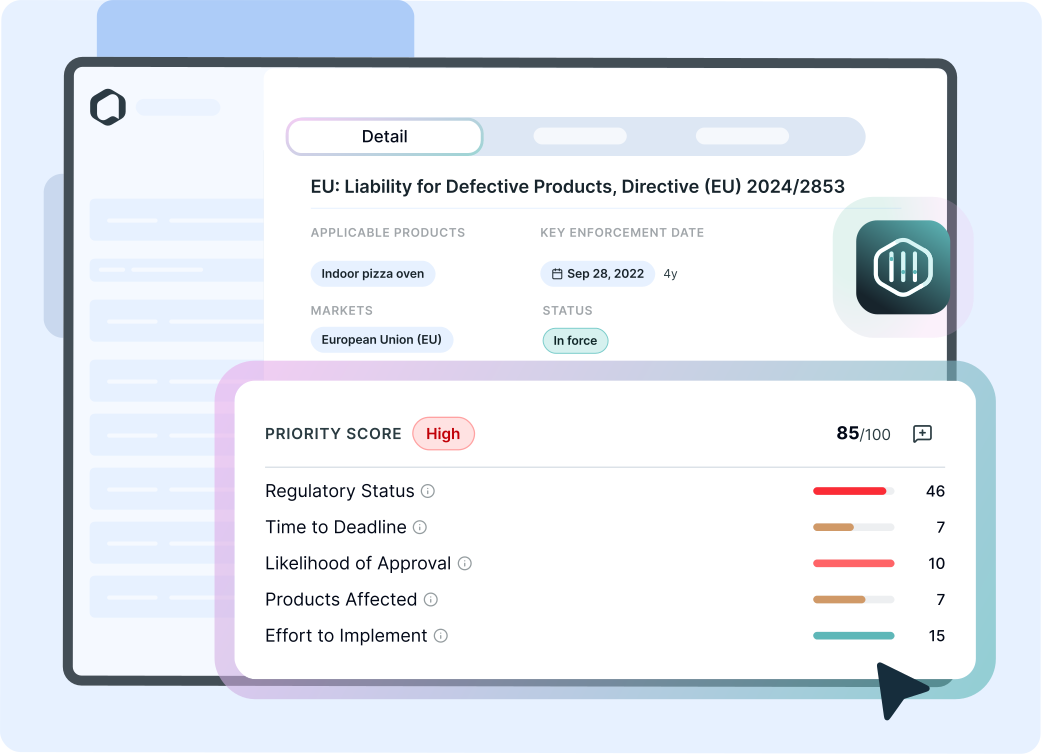
Make faster, risk-informed decisions with confidence as AI agents automatically rank regulatory changes based on urgency, business impact, compliance deadlines, and product exposure.
Spotlight
Turning Compliance into Value


The State of Product
Compliance 2026
Discover how 500+ global leaders are shifting product compliance from a cost-centre into a strategic driver of growth, with key benchmarks like 69% of teams calling remediation their biggest challenge.
Frequently Asked Questions
-
Packaging is typically subject to regulations covering material safety, labeling, waste management, and environmental performance. Companies must ensure packaging complies with applicable chemical restrictions, food contact rules where relevant, and obligations on recyclability, reuse, and extended producer responsibility, depending on the jurisdiction.
-
Companies must assess and manage differing national and regional requirements on materials, labeling, reporting, and waste obligations. This often involves adapting packaging designs, maintaining compliance documentation, and tracking evolving rules such as packaging waste, recyclability targets, and substance restrictions across markets.
-
PPWR allows a single EU Declaration of Conformity covering all applicable Union acts, and this single DoC can be a dossier of individual declarations, so packaging and product requirements can be combined provided all applicable legislation is clearly ident17. When are QR codes explicitly required on packaging under the PPWR?
-
The PPWR explicitly requires QR codes (or another standardised digital carrier) for reusable packaging to give users information on re‑use systems and collection points, while allowing but not mandating QR codes for other purposes such as traceability and labelling.
-
Spain, France, Portugal and Italy are the primary EU markets with specific mandatory packaging labelling schemes, and there are additional Decision 97/129/EC‑based identification requirements in countries such as Luxembourg, Bulgaria and Malta.
However, all of these national packaging labelling requirements will be repealed by the time EU-wide labelling requirements under Article 12 of the PPWR come into force.