

Regulatory Focus
Transboundary Movement of Hazardous Waste
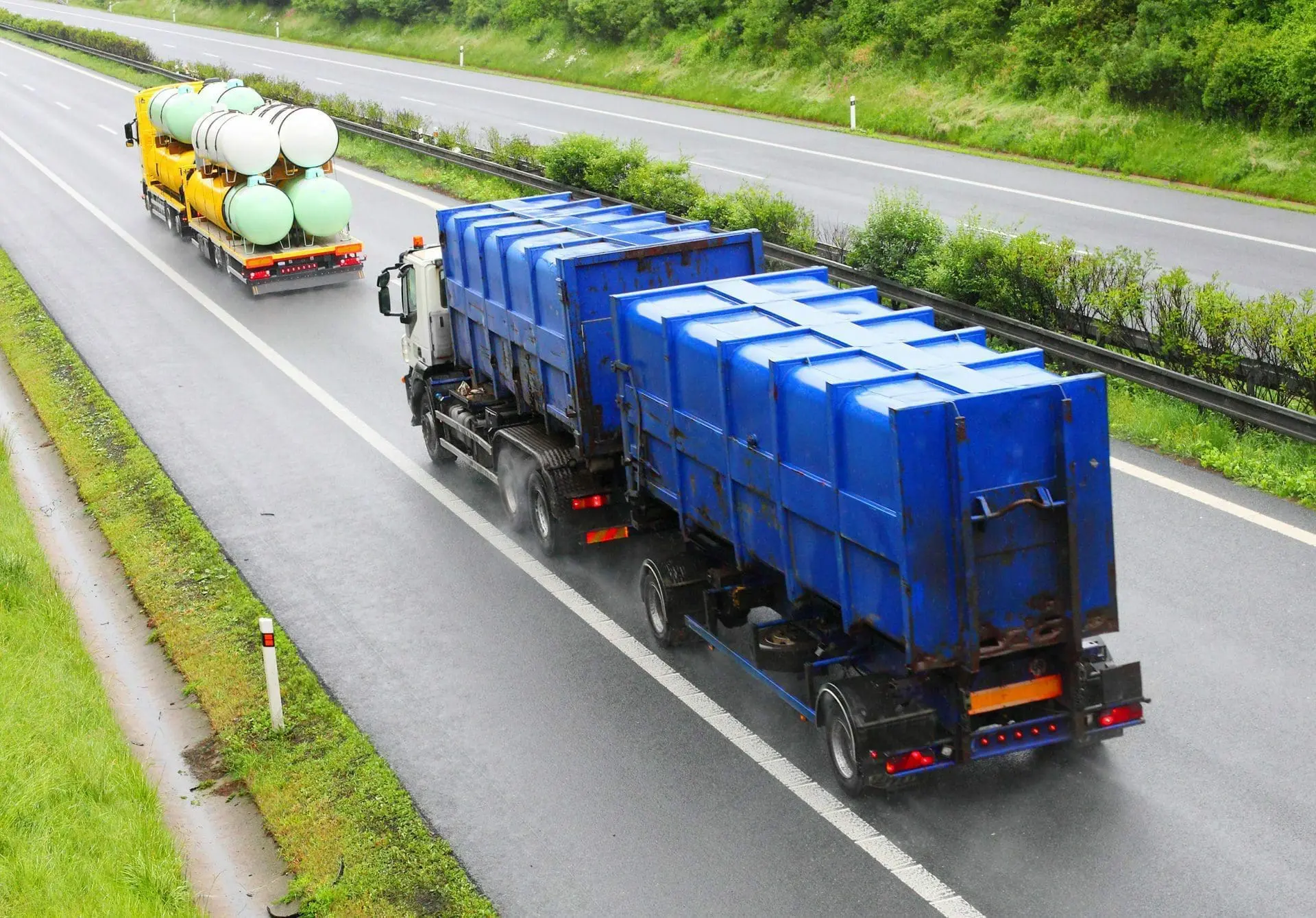
Transboundary Movement of Hazardous Waste
195
Countries Covered
28
Languages
1163
Regulatory Sources
Laws, conventions, and regulations on the transboundary movement of hazardous waste govern the import, export, and transit of hazardous waste to protect human health and the environment. They cover notification and consent procedures, trade restrictions, documentation, tracking, and enforcement across international and national regimes.
Laws, conventions, and regulations on the transboundary movement of hazardous waste govern the import, export, and transit of hazardous waste to protect human health and the environment. They cover notification and consent procedures, trade restrictions, documentation, tracking, and enforcement across international and national regimes.
Companies involved in cross-border shipments of hazardous waste must comply with strict procedural, documentation, and authorization requirements before, during, and after transport. These obligations are designed to ensure traceability, prior informed consent from authorities, safe handling, and environmentally sound disposal or recovery.
- A prior notification procedure for the proposed shipment
- General information requirements
- Waste movement documentation
- Prior consent approval in the country of import or transit
- Marking and labeling of the waste
- Import/export waste permits and licensing
- Proper waste disposal or recovery
- Warranties/guaranties
We cover international conventions, regional agreements, and national regulations that govern the notification, consent, transport, traceability, and disposal of hazardous waste across borders.
Our content reflects global frameworks such as UN-led conventions, regional prohibitions, and country-specific shipment controls that companies must navigate to ensure lawful and environmentally sound waste movements.
- UN: Basel Convention on the Control of Transboundary Movement of Hazardous Wastes and Their Disposal, 1989
- Australia: Export and Import of Hazardous Waste Regulations, SR 1996 No. 2
- China: Ban on the Import of Solid Waste, Announcement No. 53, 2020
- EU: Waste Shipments, Regulation (EU) 2024/1157
- Italy: Waste Traceability System and National Electronic Waste Traceability Register, Regulation, 2023
- OECD: Control of Transboundary Movements of Waste Destined for Recovery Operations, Council Decision C(2001)107/Final
- Pacific Islands: Waigani Convention, 1995
- Canada: Cross-border Movement of Hazardous Waste and Hazardous Recyclable Material, Regulations SOR/2021-25
- EU: Export of Waste to Certain Non-OECD Decision Countries, Regulation (EC) No 1418/2007



Intelligent Resources



Automate the work of managing regulatory change.
Let AI agents do the heavy lifting of monitoring regulations, mapping requirements to products, extracting obligations, and surfacing the risks that need attention first.
Monitor Product Compliance
Stay Ahead of Regulatory Change
Get early visibility into changes that could affect your products, supply chain, or market access—so you can act proactively, not reactively.
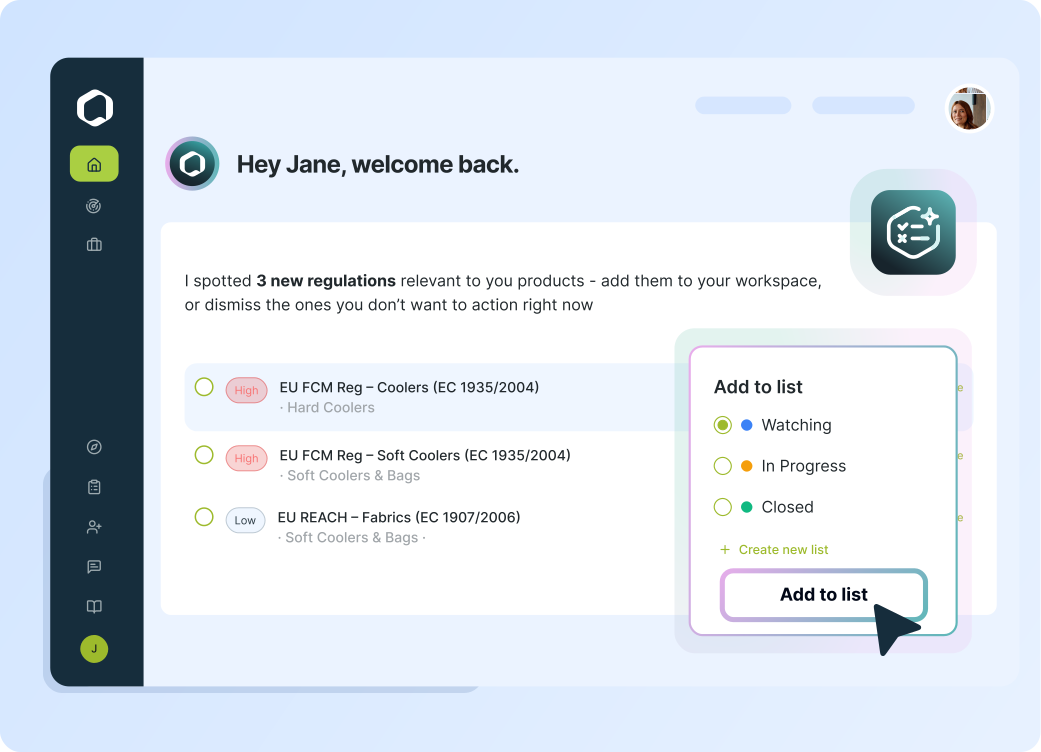
Assess Regulatory Applicability
Map Regulations to Your Products
Eliminate manual research and cut through regulatory noise by surfacing only the requirements relevant to your business, markets, and product categories.
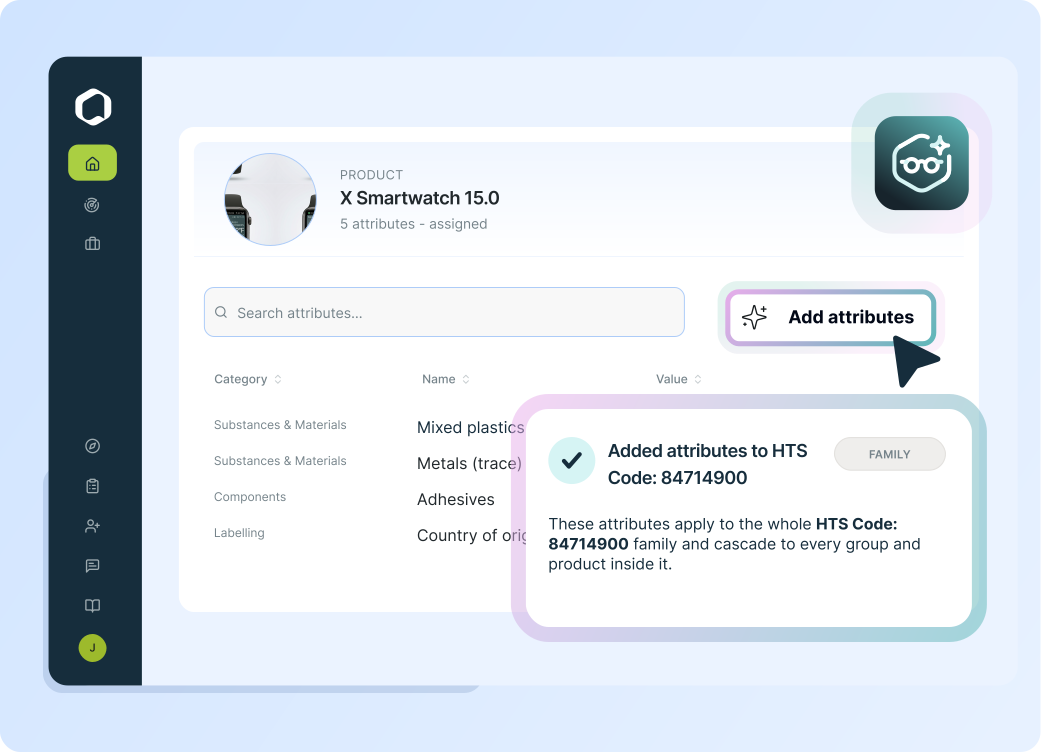
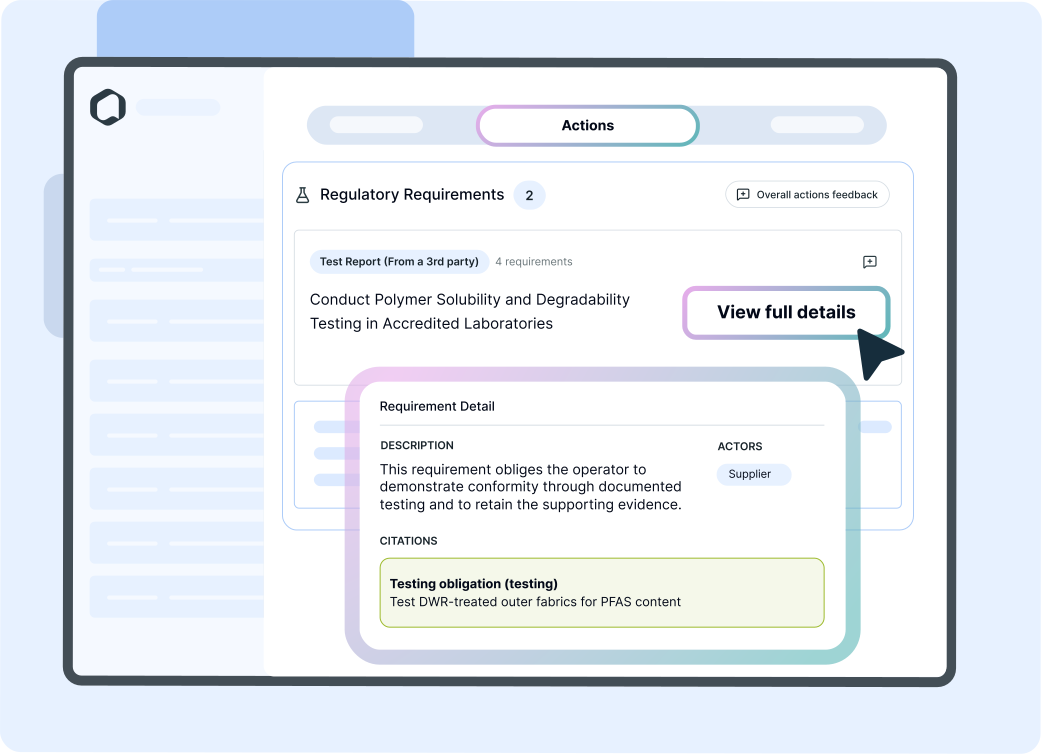
Identify Compliance Requirements
Turn complex regulations into clear, actionable tasks.
Give your teams instant clarity as AI agents transform dense legal and regulatory text into structured, easy-to-understand requirements.
Prioritize Business Risk
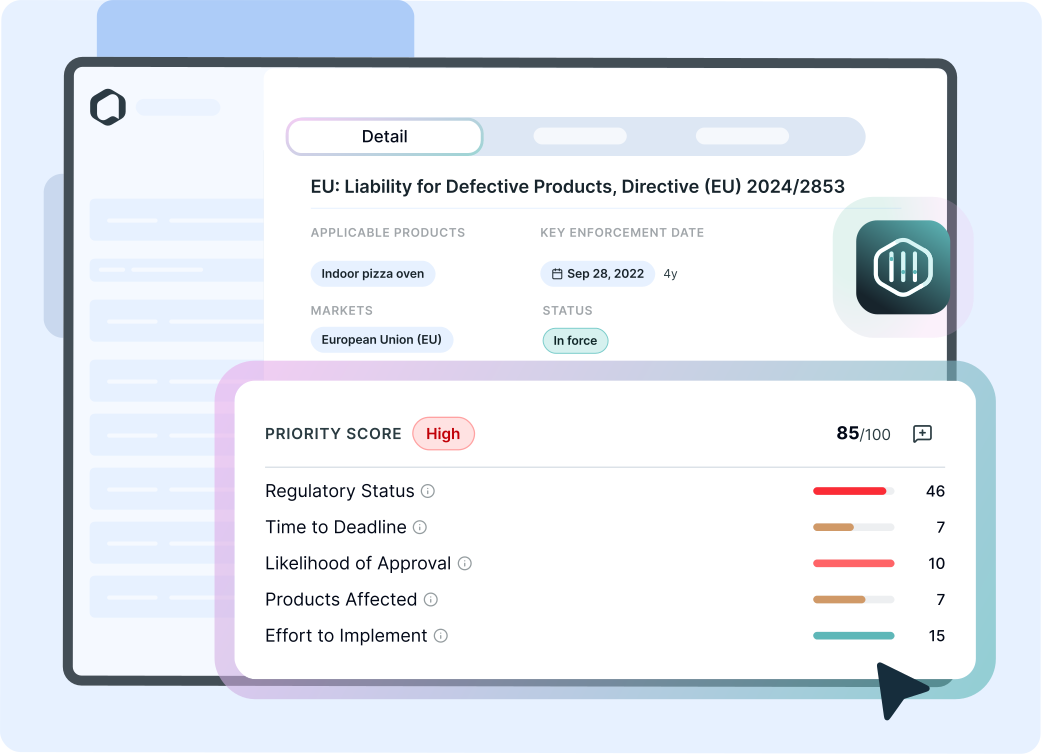
Focus Where Risk Is Highest
Make faster, risk-informed decisions with confidence as AI agents automatically rank regulatory changes based on urgency, business impact, compliance deadlines, and product exposure.
Spotlight
Turning Compliance into Value


The State of Product
Compliance 2026
Discover how 500+ global leaders are shifting product compliance from a cost-centre into a strategic driver of growth, with key benchmarks like 69% of teams calling remediation their biggest challenge.
Frequently Asked Questions
-
Prior informed consent is required before exporting hazardous waste to another country, or transiting through one, under the Basel Convention and aligned national laws. Exporters must notify competent authorities and obtain written consent from the importing country and any transit countries before shipment can begin.
-
If a shipment is illegal, rejected, or cannot be completed, the exporter is generally responsible for taking the waste back or ensuring its environmentally sound disposal. Financial guarantees or insurance are typically required to cover return transport, storage, and proper disposal or recovery.
-
The EU Waste Shipment Regulation implements the provisions of the UN Basel Convention on the Transboundary Movement of Hazardous Waste and the OECD Council Decision into EU law.
The Basel Convention is a multilateral agreement signed by 191 parties including the European Union.
The OECD Council Decision is narrower in scope and covers a smaller subset of transboundary movements of hazardous waste sent for recovery only between OECD Member countries participating in the agreement.
-
The Basel Convention on the Control of Transboundary Movements of Hazardous Wastes and Their Disposal is the primary international agreement regulating cross-border movements of hazardous wastes and certain other wastes.
It requires parties to ensure environmentally sound management (ESM) and control of export/import, including a prior informed consent (PIC) procedure for hazardous wastes.
-
The Basel Convention establishes a prior informed consent (PIC) procedure for the export of hazardous waste. Under this mechanism:
- Exporting countries must provide advance notification to the importing country about planned shipments.
- The importing country must give written consent before shipment can proceed.
- Exports should not take place if the importing country cannot manage the waste in an environmentally sound manner.
-
According to the latest guidance from the EU Commission this means that from 1 January 2025:
- The export of all e-waste from the EU to non-OECD countries will be prohibited;
- The export of all e-waste from the EU to OECD countries will be subject to the “prior informed consent” procedure;
- The import of all e-waste from third countries into the EU will be subject to the “prior informed consent” procedure;
- The shipment of e-waste between EU Member States will be subject to the “prior informed consent” procedure, except for shipments of non-hazardous e-waste classified, where appropriate, under entries GC010 and GC020, which will remain subject to the general information procedure until the end of 2026.
-
The new EU Waste Shipment Regulation 2024/1157 entered into force on 20 May 2024.
A major innovation under the new regulation is the Digital Waste Shipment System (DIWASS).
DIWASS is a mandatory European Union electronic system designed to digitize, monitor, and streamline cross-border waste shipments
From 21 May 2026, DIWASS will be used for electronic submission and exchange of documents and information for all waste shipments.
This replaces paper-based procedures and aims to increase traceability, efficiency, and enforcement across Member States.
-
No, the United States is not a party to the Basel Convention and so it is not legally bound by the treaty’s restrictions on hazardous waste.