

Regulatory Focus
Electronic Waste / E-Waste / WEEE Compliance

Electronic Waste / E-Waste / WEEE
195
Countries Covered
28
Languages
3727
Regulatory Sources
Waste Electrical and Electronic Equipment (WEEE or e-waste) legislation aims to protect the environment and human health by ensuring that waste from electrical and electronic equipment (EEE) is properly managed. The legislation is based on the principle of extended producer responsibility (EPR), under which manufacturers and importers are responsible for the entire lifecycle of their products. This includes the post-consumer stage, meaning after the product is used and becomes waste.
Electronic waste legislation requires manufacturers and importers of electrical and electronic equipment to be responsible for their products throughout their entire lifecycle, including the post-consumer stage. Companies must ensure and finance proper collection, recycling, and disposal of their products. They are also required to comply with labelling and reporting obligations.
Under WEEE legislation, companies placing electrical and electronic equipment (EEE) on the market – including household appliances, IT and telecommunications equipment, lighting, tools, medical devices, monitoring and control instruments, and gas discharge lamps, among others – are required to comply with applicable obligations.
These requirements generally include:
- Register and report products placed on the market;
- Finance and organise WEEE collection and treatment;
- Provide consumer information on proper collection and disposal;
- Affixing required labels or markings to products; and
- Retain compliance records.
We cover a wide range of electronic waste regulations and guidance documents regarding producer responsibilities, product labelling, and waste management requirements for electrical and electronic equipment.
Below is a high-level summary of our coverage for this topic:
- EU: Waste Electrical and Electronic Equipment (WEEE) Directive 2012/19/EU (and EU Member State implementations)
- Brazil: Mandatory Reverse Logistics System for Household Electrical and Electronic Products and their Components, Decree No. 10.240, 2020
- France: Anti-waste and Promotion of Circular Economy, Law 2020-105
- Ghana: Hazardous and Electronic Waste Control and Management, Law, 2016
- India: E-Waste (Management) Rules, G.S.R. 801(E), 2022
- Hungary: Rules for the Operation of the Extended Producer Responsibility System, Decree 80/2023
- Colombia: Collection and Management of WEEE, Resolution No. 851, 2022
- Kenya: Sustainable Waste Management (Extended Producer Responsibility) Regulations, October 2024





Intelligent Resources
Canada’s E-Waste Regulations 2026: How National Principles Drive Provincial Action?

Cost of Compliance: Canada’s E-Waste Patchwork Can Be A Headache
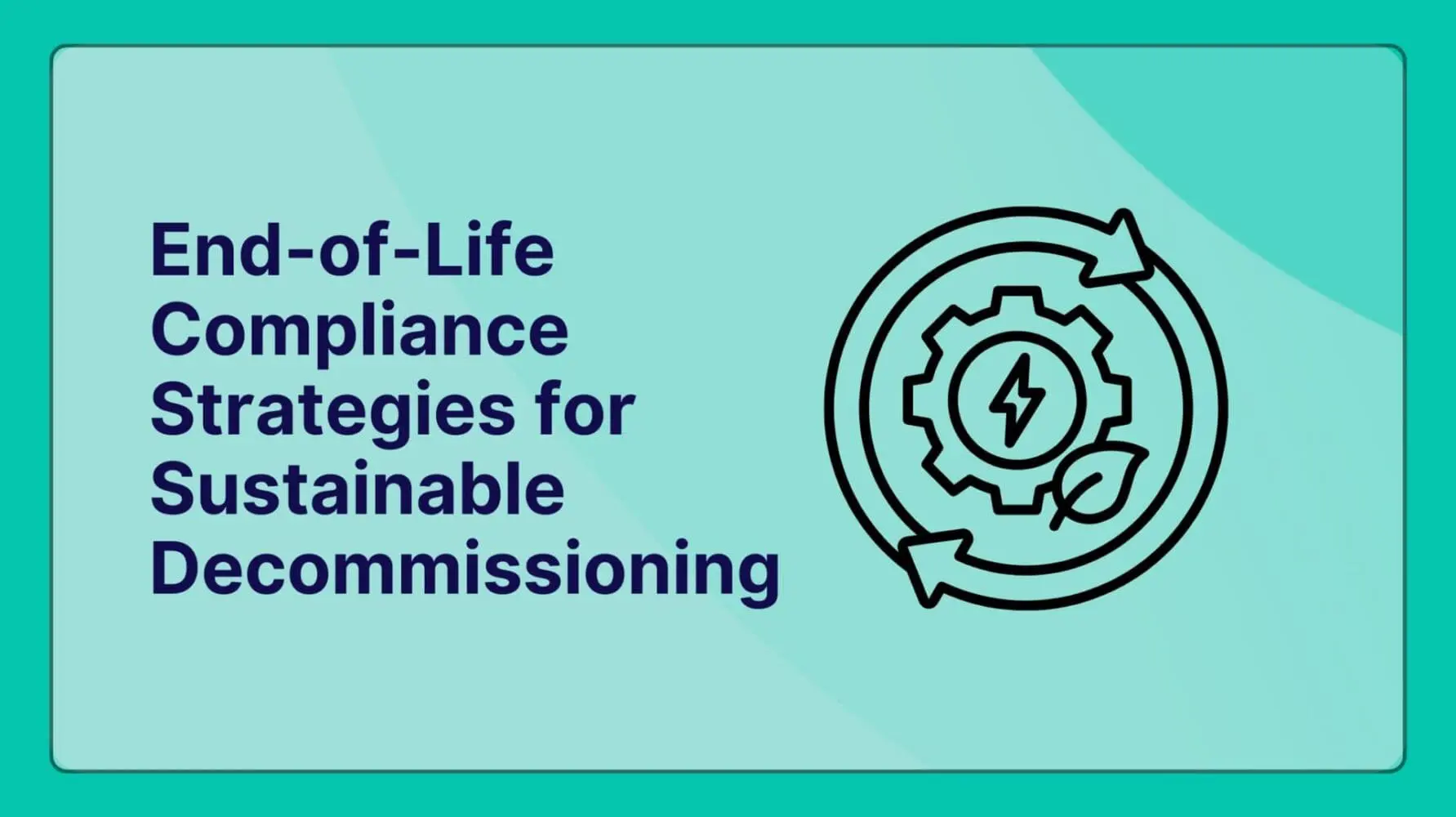






Automate the work of managing regulatory change.
Let AI agents do the heavy lifting of monitoring regulations, mapping requirements to products, extracting obligations, and surfacing the risks that need attention first.
Monitor Product Compliance
Stay Ahead of Regulatory Change
Get early visibility into changes that could affect your products, supply chain, or market access—so you can act proactively, not reactively.
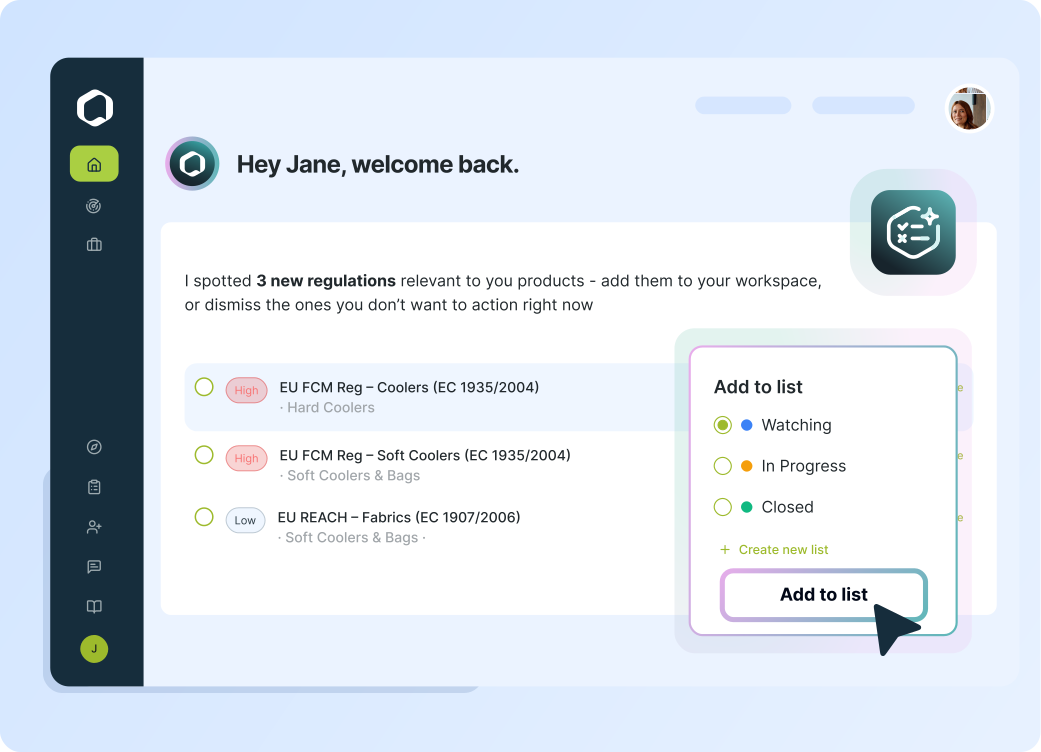
Assess Regulatory Applicability
Map Regulations to Your Products
Eliminate manual research and cut through regulatory noise by surfacing only the requirements relevant to your business, markets, and product categories.
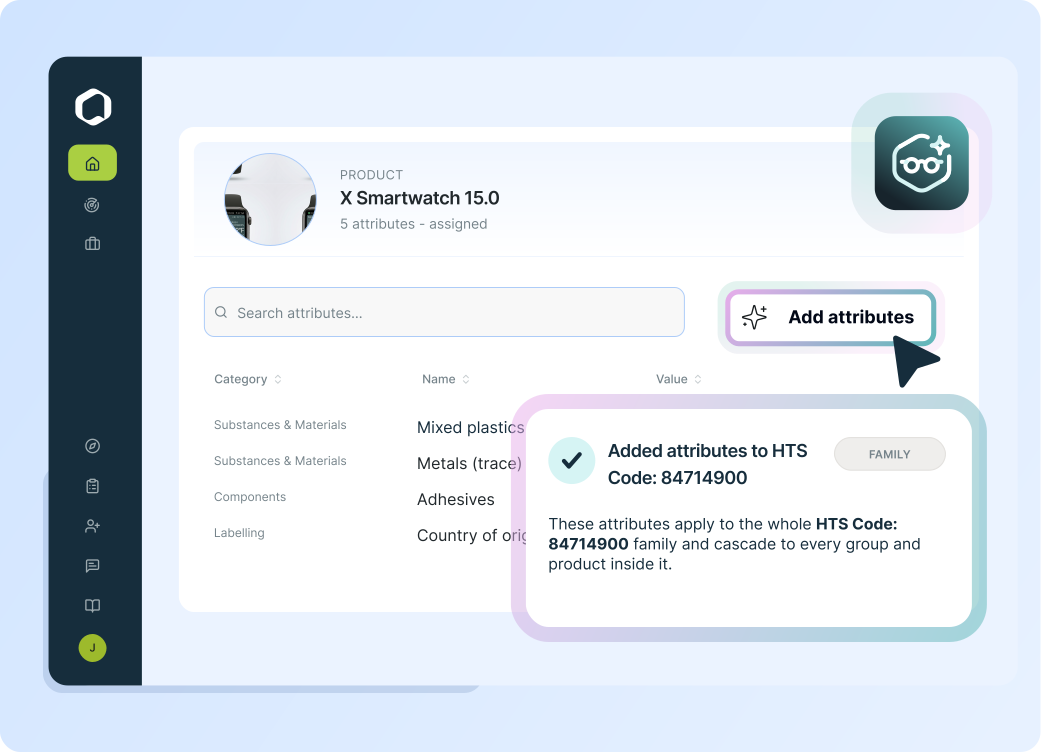
Identify Compliance Requirements
Turn complex regulations into clear, actionable tasks.
Give your teams instant clarity as AI agents transform dense legal and regulatory text into structured, easy-to-understand requirements.
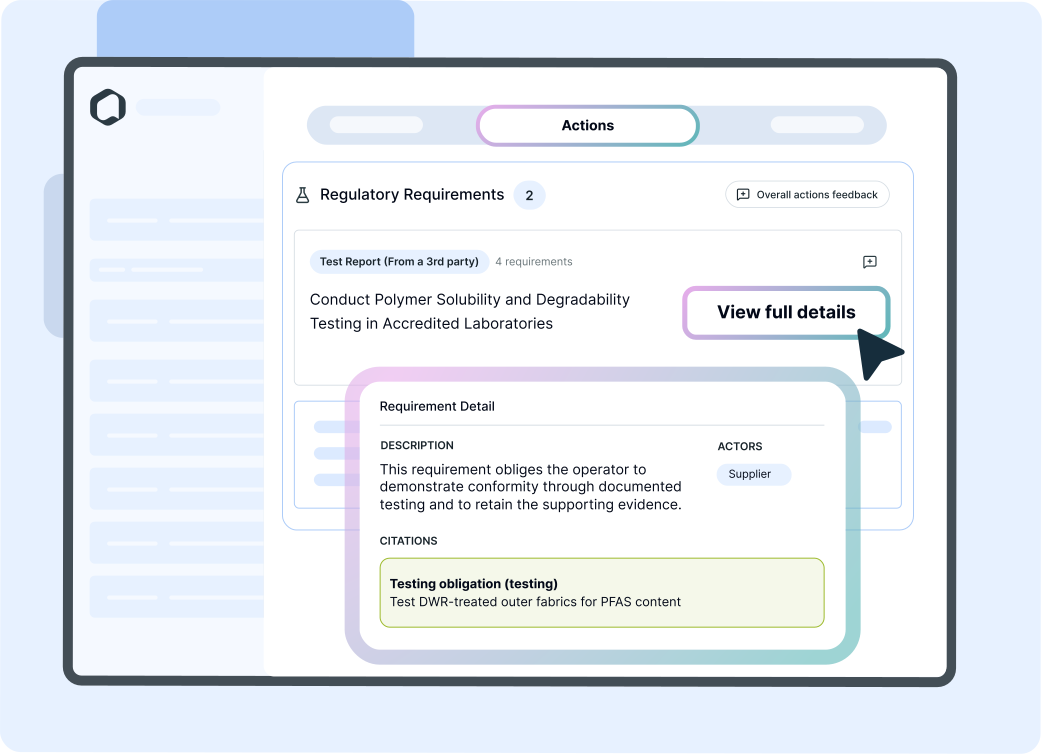
Prioritize Business Risk
Focus Where Risk Is Highest
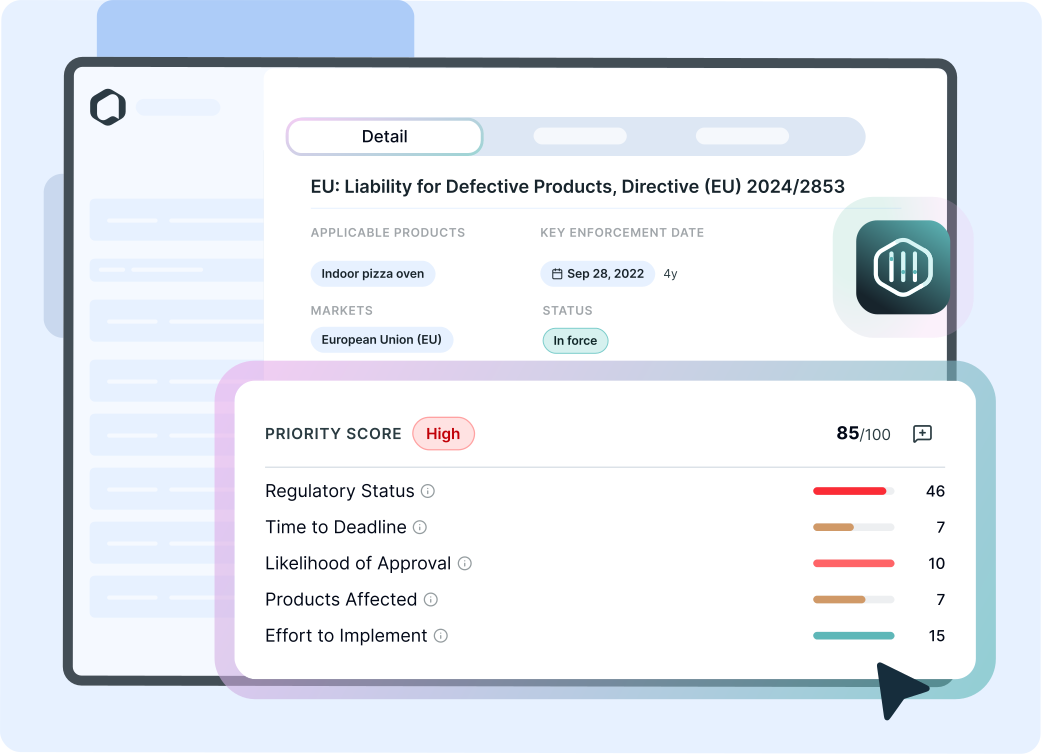
Make faster, risk-informed decisions with confidence as AI agents automatically rank regulatory changes based on urgency, business impact, compliance deadlines, and product exposure.
Spotlight
Turning Compliance into Value


The State of Product
Compliance 2026
Discover how 500+ global leaders are shifting product compliance from a cost-centre into a strategic driver of growth, with key benchmarks like 69% of teams calling remediation their biggest challenge.
Frequently Asked Questions
-
Apply to most electrical and electronic equipment, including household appliances, IT and telecommunications equipment, lighting, electrical tools, and medical devices, with a few exceptions such as military and infective medical devices. Other jurisdictions, such as the United States and Canada, cover a narrower range of products.
-
Producer obligations may vary by country, but they typically include financing and operating take-back systems, registering with relevant authorities, submitting reports on products, waste management, and recycling, and labelling products with the required e-waste symbols, such as the crossed-out wheelie bin.
-
Components include items that, when assembled, enable an EEE to function properly. Components placed on the market separately for manufacturing or repairing an EEE are generally outside the scope of the WEEE Directive, unless they have an independent function themselves. However, a self-assembly kit consisting of components that together form an EEE is considered an EEE at the time it is sold as a kit. For example, a remote-controlled electric helicopter sold as an assembly kit is treated as an EEE.
-
The UK WEEE Regulations are modelled on the EU WEEE Directive and are therefore closely aligned. Both operate under an open scope, meaning all electrical and electronic equipment (EEE) is included unless explicitly excluded. For reporting purposes, the EU WEEE Directive categorises EEE into six groups, while the UK WEEE Regulations use 15 categories. Producer obligations are similar under both frameworks.
Recently, the UK WEEE Regulations introduced new obligations, particularly affecting marketplaces. These are now classified as producers and must either register directly or join a producer compliance scheme, assuming the same obligations as other producers.
More
Regulatory
Topics
Circular Economy Solutions
Regulatory Focus Circular Economy 195 Countries Covered 28 Languages 2748 Regulatory Sourc…
Transboundary Movement of Hazardous Waste
Regulatory Focus Transboundary Movement of Hazardous Waste 195 Countries Covered 28 Langua…
Battery Regulatory Compliance
Regulatory Focus Batteries 195 Countries Covered 28 Languages 3216 Regulatory Sources Batt…