

Regulatory Focus
Brexit

Brexit
195
Countries Covered
28
Languages
391
Regulatory Sources
Brexit refers to the United Kingdom’s withdrawal from the European Union and its ongoing regulatory consequences. Coverage focuses on how EU-derived rules have changed or diverged in the UK, and how these developments affect compliance, market access, and regulatory obligations.
Brexit reshaped the UK regulatory framework, requiring companies to track retained and amended EU laws, manage divergence risks, and ensure ongoing compliance for UK market access.
Companies placing products on the UK market must ensure conformity with post-Brexit product safety and marking rules. This includes understanding which conformity markings apply in Great Britain and Northern Ireland, how third-party assessments are handled, and how continued recognition of EU requirements affects product placement and compliance planning.
Our coverage includes UK legislation and amendments that govern the retention, modification, and application of EU-derived rules following the UK’s withdrawal from the EU. These instruments address how product safety, chemicals, construction, ecodesign, and digital requirements continue to apply or diverge within the UK regulatory framework.
- UK: European Union (Withdrawal) Act 2018 “Great Repeal” Bill
- UK: Product Safety and Metrology etc. (Amendment) Regulations, SI No. 2024/696
- UK: REACH etc. (Amendment etc.) (EU Exit) Regulations, SI 2019/758
- UK: Product Safety and Metrology etc. (Amendment etc.) (EU Exit) Regulations, SI 2019/696
- UK: Construction Products (Amendment etc.) (EU Exit) Regulations, SI 2019/465
- UK: Communications Act (e-Commerce) (EU Exit), Regulations, SI No. 2020/1420
- UK: Ecodesign for Energy-Related Products and Energy Information (Amendment) (EU Exit) Regulations, S.I. 2019/539


Intelligent Resources



![Adherent (formerly Compliance & Risks). EU & UK Product Compliance - What's Hot in 2025 & Beyond [Website Banner]](https://www.adherent.com/wp-content/smush-webp/2026/05/EU-UK-Product-Compliance-Whats-Hot-in-2025-Beyond-Website-Banner-scaled-1-1800x877.jpg.webp)
Automate the work of managing regulatory change.
Let AI agents do the heavy lifting of monitoring regulations, mapping requirements to products, extracting obligations, and surfacing the risks that need attention first.
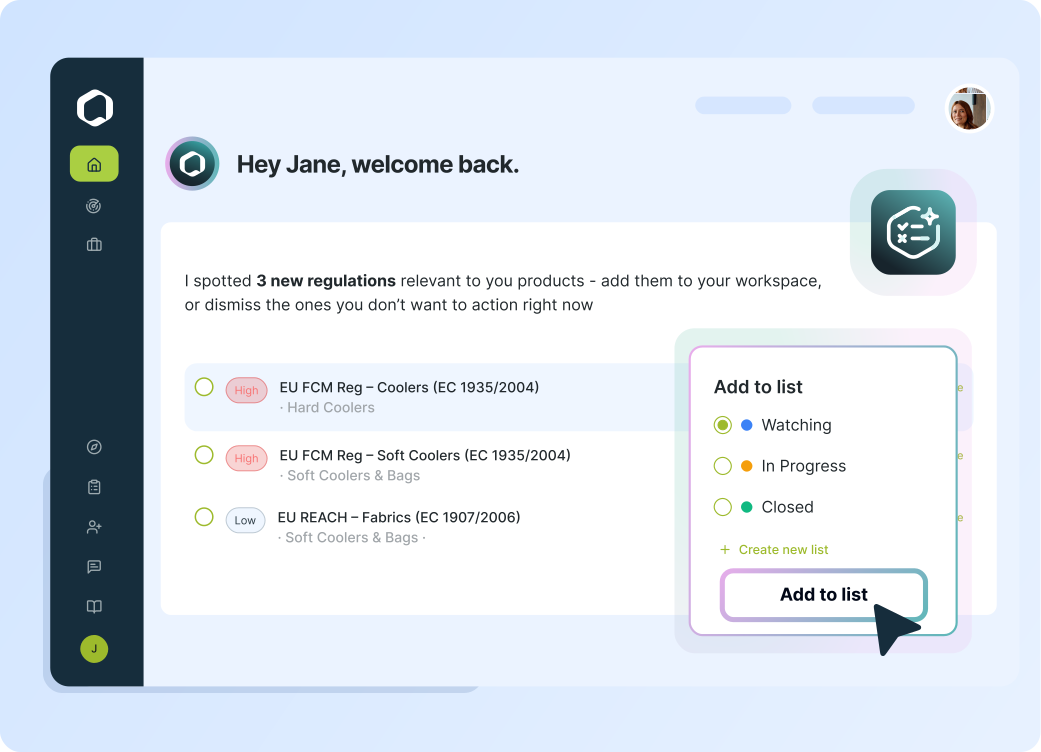
Monitor Product Compliance
Stay Ahead of Regulatory Change
Get early visibility into changes that could affect your products, supply chain, or market access—so you can act proactively, not reactively.
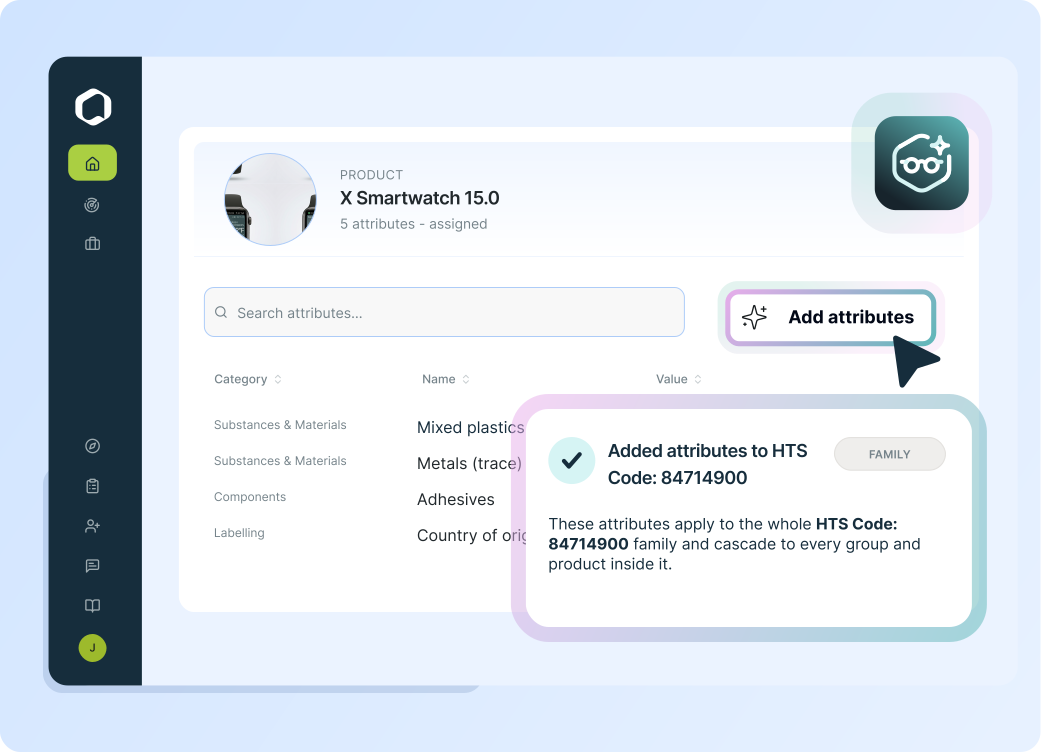
Assess Regulatory Applicability
Map Regulations to Your Products
Eliminate manual research and cut through regulatory noise by surfacing only the requirements relevant to your business, markets, and product categories.
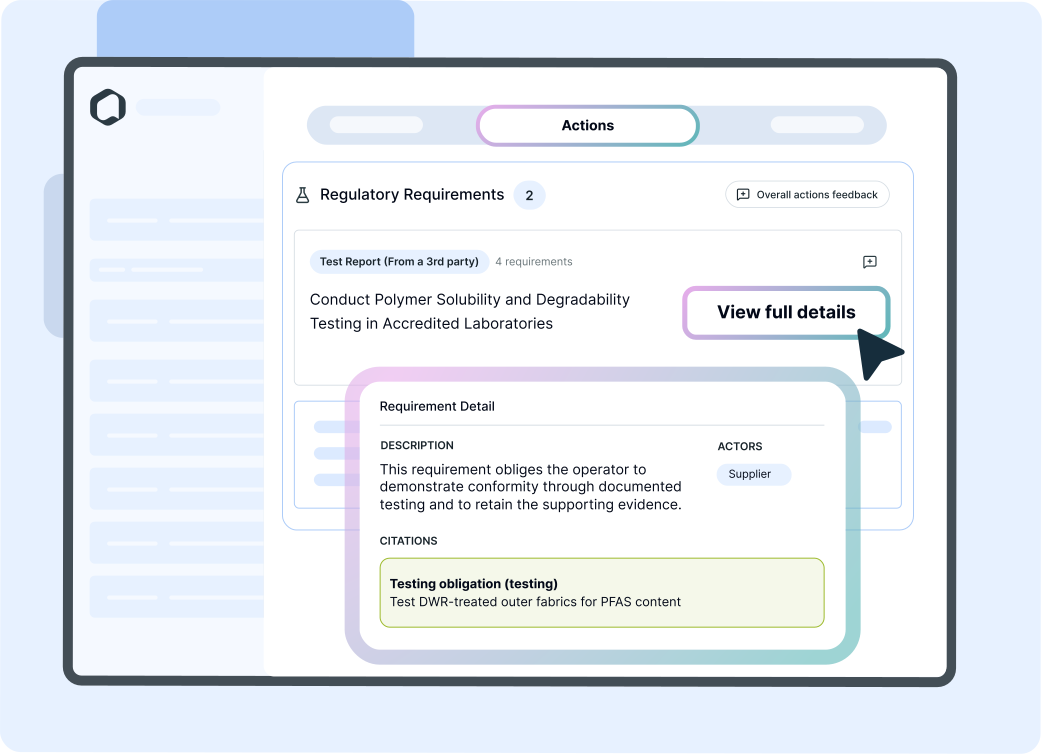
Identify Compliance Requirements
Turn complex regulations into clear, actionable tasks.
Give your teams instant clarity as AI agents transform dense legal and regulatory text into structured, easy-to-understand requirements.
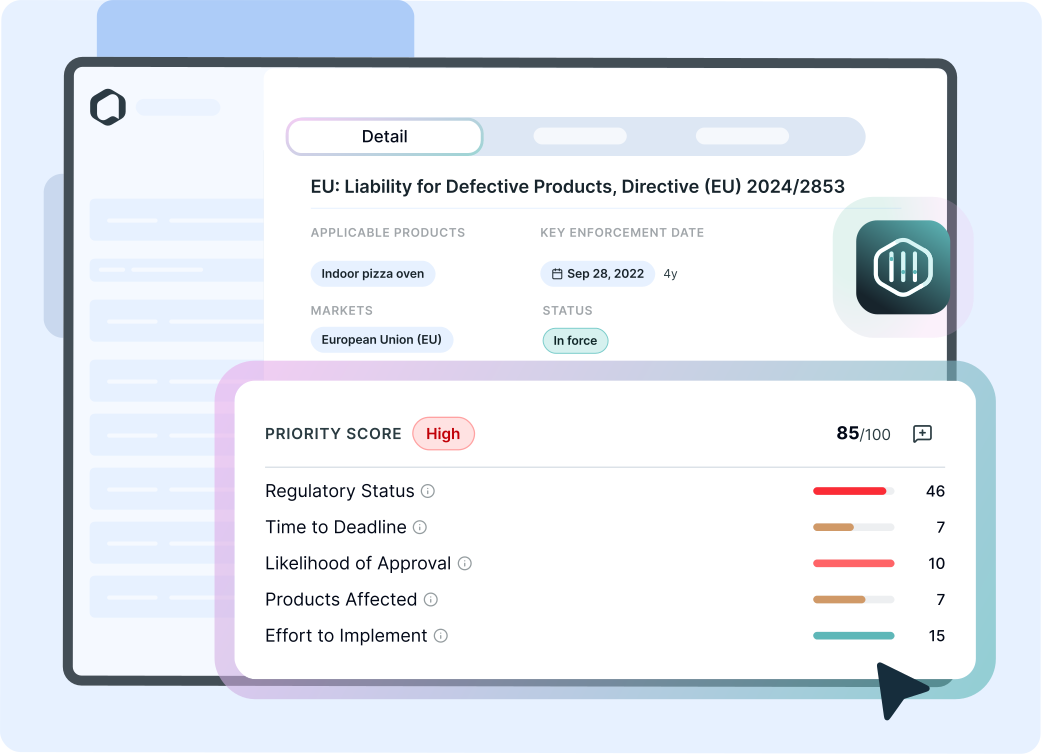
Prioritize Business Risk
Focus Where Risk Is Highest
Make faster, risk-informed decisions with confidence as AI agents automatically rank regulatory changes based on urgency, business impact, compliance deadlines, and product exposure.
Spotlight
Turning Compliance into Value


The State of Product
Compliance 2026
Discover how 500+ global leaders are shifting product compliance from a cost-centre into a strategic driver of growth, with key benchmarks like 69% of teams calling remediation their biggest challenge.
Frequently Asked Questions
-
Brexit resulted in the UK retaining many EU-derived laws with amendments, while introducing UK-specific conformity rules. Companies must now assess whether UK or EU requirements apply based on where products are placed on the market.
-
Yes. UK legislation allows continued recognition of the CE marking in Great Britain, giving businesses flexibility to use either the CE or UKCA marking when placing products on the GB market.
-
CE-marked medical devices may be placed on the Great Britain market to the following timelines:
general medical devices compliant with the EU medical devices directive (EU MDD) or EU active implantable medical devices directive (AIMDD) can be placed on the Great Britain market up until the sooner of expiry of certificate or 30 June 2028;
in vitro diagnostic medical devices (IVDs) compliant with the EU in vitro diagnostic medical devices directive (IVDD) can be placed on the Great Britain market up until the sooner of expiry of certificate or 30 June 2030;
general medical devices including custom-made devices, compliant with the EU medical devices regulation (EU MDR) and IVDs compliant with the EU in vitro diagnostic medical devices regulation (EU IVDR) can be placed on the Great Britain market up until 30 June 2030.
-
Designated standards can help manufacturers demonstrate their products, services or processes comply with GB law. By following designated standards, manufacturers can claim, ‘presumption of conformity’ (which can be countered by evidence) with the corresponding essential requirements.
-