

Regulatory Focus
Drinking Water

Drinking Water
195
Countries Covered
28
Languages
458
Regulatory Sources
Adherent’s Drinking Water coverage addresses the quality of drinking water that is in contact with our Core Products and is intended for human consumption. The overall goal is to protect human health from the adverse effects of any contamination by ensuring that the water is wholesome and clean. These requirements may apply to manufacturers, importers, or retailers of products designed for personal use or for use in food establishments/enterprises.
Many countries have requirements for food contact materials (packaging, utensils, dishes, containers, etc.) which are covered by our Food Contact Materials content. However, the Drinking Water content is different in that it covers specific requirements for drinking water in contact with Core Products only (e.g. coffee machines, water heaters, etc.), and does not cover requirements for other food/drink in contact with our Core Products.
Drinking water in the EU is regulated by Directive (EU) 2020/2184 on the quality of water intended for human consumption, i.e. the Drinking Water Directive (DWD) Recast. Water intended for human consumption is defined to include:
- All water intended for drinking, cooking, food preparation or other domestic purposes, regardless of its origin and whether it is supplied from a distribution network, from a tanker, or in bottles or containers;
- All water used in any food-production undertaking for the manufacture, processing, preservation or marketing of products or substances intended for human consumption.
This Recast was published on 12 January 2021 and repeals the previous DWD. The recast updates the quality standards that drinking water must meet and introduces a cost-effective, risk-based approach to the monitoring of water quality. The deadline for transposition for Member States was 12 January 2023 with the end of the transitional period for Member States to ensure compliance to Annex I, part B, for Chlorate, Chlorite, Bisphenol-A, Haloacetic Acids, Microcystin-LR, PFAS total, Sum of PFASs, Uranium per Article 2, being 12 January 2026.
Article 11 of the DWD Recast, minimum hygiene requirements for materials that come into contact with water intended for human consumption, is the most relevant section of the Directive for the Drinking Water content, as it specifically addresses materials and products in contact with drinking water.
Although we are using the EU DWD for illustrative purposes in this content area, we have coverage across more countries as mentioned below. We will only include sources related to drinking water in contact with *Core Products.
This content does not cover Non-Core Products including, but not limited to, installations, plumbing systems, or articles used for the abstraction, treatment, storage, or distribution of water intended for human consumption.
Under our Drinking Water coverage, we also cover implementations of Directive 2013/51/EURATOM which lays down requirements for the protection of the health of the general public with regard to radioactive substances in water intended for human consumption. It lays down parametric values and frequencies and methods for monitoring radioactive substances.
Aderent’s coverage includes the following regulations, but not limited to:
- EU: Radioactive Substances in Water Intended for Human Consumption, Directive 2013/51/EURATOM
- EU: Methodologies for Testing and Accepting Starting Substances, Compositions and Constituents to Be Included in the European Positive Lists, Decision (EU) 2024/365
- EU: Positive Lists of Starting Substances, Compositions and Constituents Authorised for Use in the Manufacture of Materials or Products that Come into Contact with Water Intended for Human Consumption, Decision (EU) 2024/367
- EU: Procedures and Methods for Testing and Accepting Final Materials as Used in Products that Come into Contact with Water Intended for Human Consumption, Decision (EU) 2024/368
- EU: Procedure on Inclusion In or Removal from the European Positive Lists of Starting Substances, Compositions and Constituents, Regulation (EU) 2024/369
- EU: Conformity Assessment Procedures for Products that Come into Contact with Water Intended for Human Consumption and the Rules for the Designation of Conformity Assessment Bodies Involved in those Procedures, Regulation (EU) 2024/370
- EU: Harmonised Specifications for the Marking of Products that Come into Contact with Water Intended for Human Consumption, Regulation (EU) 2024/371
- Germany: Evaluation of Plastics and Other Organic Materials In Contact With Drinking Water, Evaluation Criteria, August 2024
- USA: Lead Free Pipes and Plumbing Products for Drinking Water, Rule, 40 CFR 141 and 143, September 2020, Use of Lead Free Pipes, Fittings, Fixtures, Solder, and Flux for Drinking Water, 85 FR 54235
We cover standards for our core products that are available from our partner Accuris. These are available through our Product Compliance Solution.
*Bottled water and related requirements, such as the labeling of bottled water, are not included as part of the Drinking Water content. Requirements for municipal water supplies, such as requirements for proper filtration, treatment, testing, etc. are not included as part of our Drinking Water coverage. Products such as water filters and water purifiers are not Core Products.
*Materials in contact with drinking water: Sources establishing requirements for materials, starting substances, compositions or constituents intended for use in contact with drinking water are covered. However, requirements relating solely to materials or articles used in excluded systems or applications (e.g. municipal water treatment, abstraction, storage or distribution infrastructure) remain outside scope.
*Products: Where a Source regulates products rather than materials generally, it is only covered where the requirements apply to Core Products.
Connection to other content:
Since the Drinking Water content specifically covers requirements for materials and Core Products in contact with drinking water, there will be some overlap with the Food Contact Materials content. While the sources specifically related to Drinking Water will most likely not apply to other food/beverages, there will be food contact material requirements that could apply to products and materials in contact with drinking water.



Intelligent Resources
Automate the work of managing regulatory change.
Let AI agents do the heavy lifting of monitoring regulations, mapping requirements to products, extracting obligations, and surfacing the risks that need attention first.
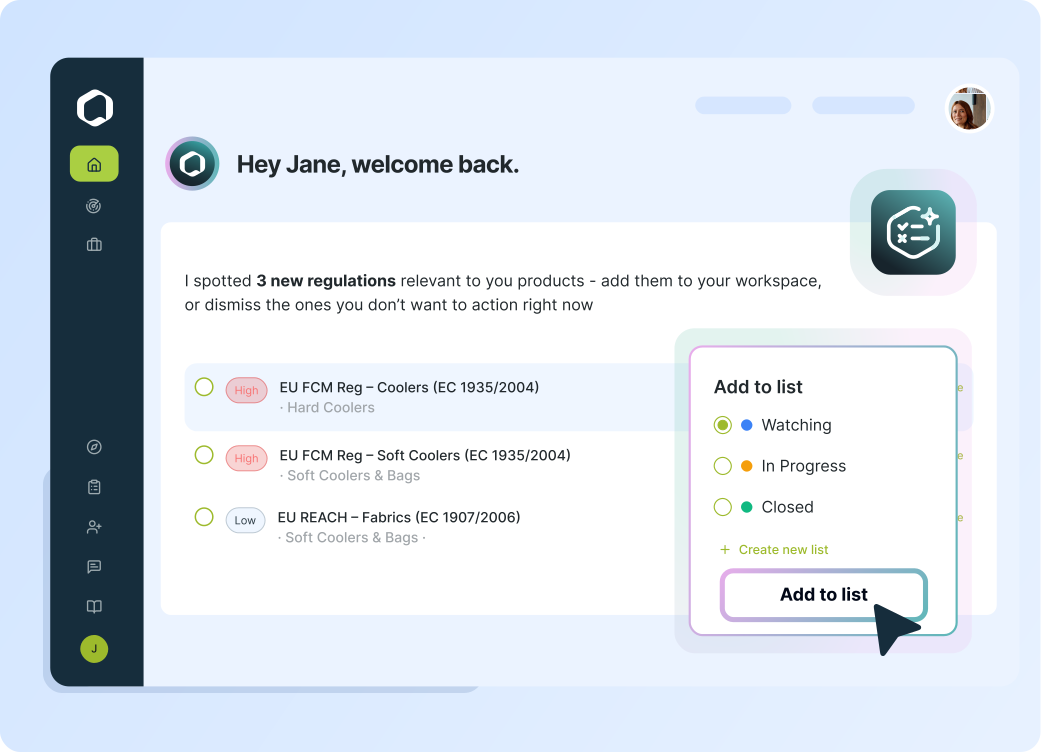
Monitor Product Compliance
Stay Ahead of Regulatory Change
Get early visibility into changes that could affect your products, supply chain, or market access—so you can act proactively, not reactively.
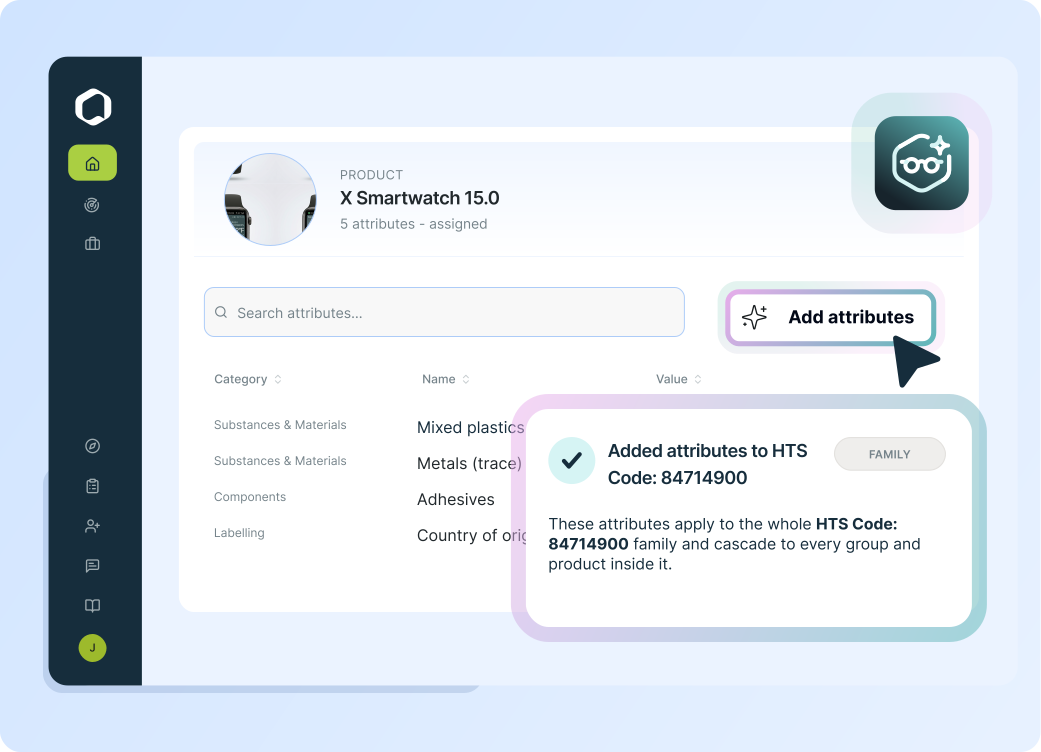
Assess Regulatory Applicability
Map Regulations to Your Products
Eliminate manual research and cut through regulatory noise by surfacing only the requirements relevant to your business, markets, and product categories.
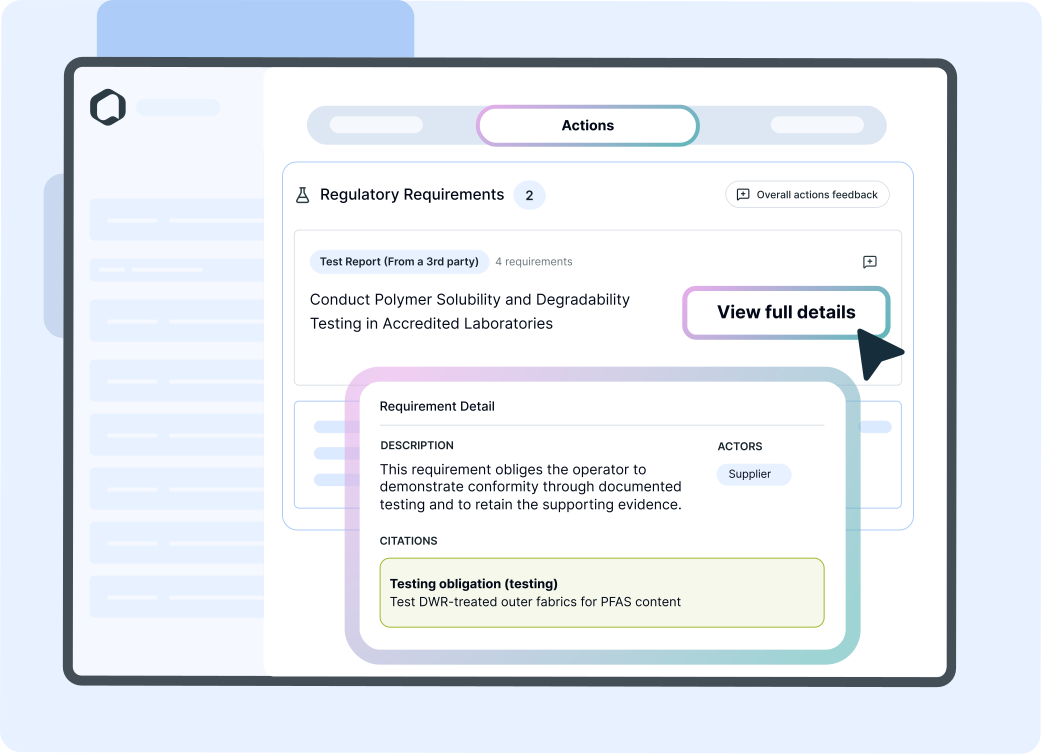
Identify Compliance Requirements
Turn complex regulations into clear, actionable tasks.
Give your teams instant clarity as AI agents transform dense legal and regulatory text into structured, easy-to-understand requirements.
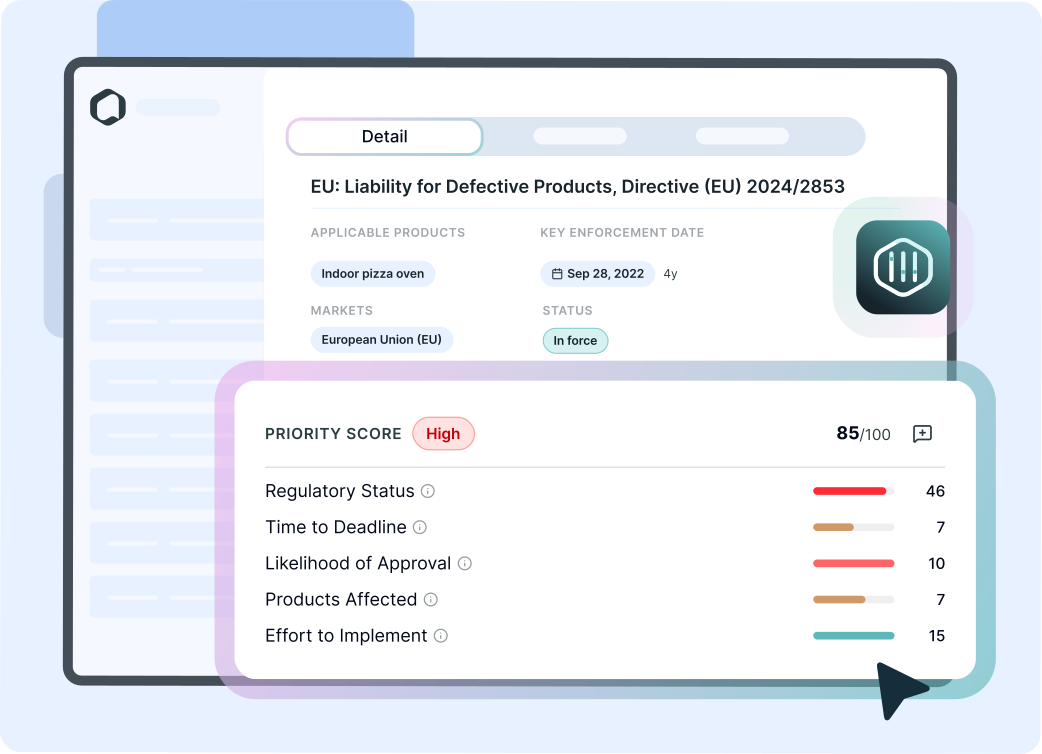
Prioritize Business Risk
Focus Where Risk Is Highest
Make faster, risk-informed decisions with confidence as AI agents automatically rank regulatory changes based on urgency, business impact, compliance deadlines, and product exposure.
Spotlight
Turning Compliance into Value


The State of Product
Compliance 2026
Discover how 500+ global leaders are shifting product compliance from a cost-centre into a strategic driver of growth, with key benchmarks like 69% of teams calling remediation their biggest challenge.
Frequently Asked Questions
-
Products that come into contact with water intended for human consumption are in scope. This includes materials and articles used in drinking, cooking, food preparation or food production. It covers manufacturers of materials and components such as pipes, fittings, fixtures, appliances and other relevant articles placed on the market in regulated jurisdictions.
-
Companies must ensure that materials in contact with drinking water do not adversely affect water quality or human health. This typically includes complying with substance restrictions, meeting material safety and performance criteria, and demonstrating conformity with applicable national or regional drinking water regulations, such as the Drinking Water Directive (EU) 2020/2184 or equivalent frameworks in other jurisdictions.
-
EU harmonised requirements for materials and products in contact with drinking water are expected to apply from 31 December 2026, after which the EU framework will govern product compliance across Member States.
-
Under the EU framework, materials that come into contact with drinking water from the water source to the tap are regulated under drinking water legislation. Once the water flows from the tap, materials that come into contact with drinking water are regulated under food safety and food contact materials legislation.
More
Regulatory
Topics
Food Contact Materials & Articles Compliance Solution
Regulatory Focus Food Contact Materials & Articles 195 Countries Covered 28 Languages …
Chemicals In Products
Regulatory Focus Chemicals In Products 195 Countries Covered 10144 Regulatory …
EH&S: Environment
Regulatory Focus EH&S: Environment 195 Countries Covered 28 Languages 19838 Regulatory…
Chemicals & EH&S: Environment
Regulatory Focus Chemicals & EH&S: Environment 195 Countries Covered 28 Languages …