

Regulatory Focus
Food Contact Materials & Articles Compliance Solution

Food Contact Materials & Articles
195
Countries Covered
28
Languages
2151
Regulatory Sources
Food contact materials (FCM) are either materials and articles intended to come into contact with food or reasonably expected to come into contact with food. Our coverage is limited to kitchen equipment, processing machinery, and components used in combination with a core product which can be made from a variety of materials, including plastics, rubber, paper, and metal. FCM are not chemically inert and may release harmful substances into food.
Legislation, such as in the EU, is commonly arranged as follows:
- Framework Regulation: a framework measure sets up general requirements for all FCM
- Good Manufacturing Practice (GMP): the manufacture of materials and articles must comply with good manufacturing practice (GMP) so that, under normal or foreseeable conditions of use, they do not transfer their constituents to food in quantities which could: (a) endanger human health, (b) bring about an unacceptable change in the composition of the food, or (c) bring about a deterioration in the organoleptic properties of the food
- Material/Specific Regulations: measures regulate groups of materials and articles e.g. ceramics, plastics, recycled plastic materials, regenerated cellulose film, active and intelligent materials; and measures regulate individual substances or groups of substances used in the production of FCM.
These regulations normally provide a positive list, sets out limits or restrictions on use of certain substances in FCM as well as testing methods
Furthermore, certain regulations also specify labeling and traceability requirements for FCMs.
Adherent’s coverage of FCMs and articles is historically comprehensive and includes, but is not limited to:
Framework Regulation
- EU: Materials and Articles Intended to Come into Contact with Food, Regulation (EC) No 1935/2004 (and Member States implementations)
- China: General Safety Requirements for Food Contact Materials and Articles, Standard GB 4806.1-2016
- China: General Safety Requirements for Food Contact Materials and Articles, Draft Standard GB 4806.1-20XX, April 2023
- USA: Food and Drugs, Indirect Food Additives, General, 21 CFR 174, Regulation, 1977
- Turkey: Materials and Articles in Contact with Food, Food Codex Regulation, April 2018
- Indonesia: Food Contact Materials and Packaging, Regulation No. 20/2019
- Indonesia: Food Contact Materials and Packaging, Draft Regulation, October 2023
- Saudi Arabia: Tools, Surfaces and Devices used for Food-Contact in Cooking – Amendment – (on updating list of products, etc) Technical Regulation, January 2021
- Denmark: Food Contact Materials and Penalties for Breaches Related to EU Legislation, Order No. 681, 2020
- EU: Recycled Plastic Materials and Articles Intended to Come into Contact with Foods, Regulation (EU) No 2022/1616
- Ukraine: Approving the Requirements for a Written Declaration of Food Contact Material Conformity, Order No. 1743, 2023
Good Manufacturing Practice (GMP) Regulation
- EU: Good Manufacturing Practice for Food Contact Materials, Regulation (EC) No 2023/2006
- China: General Hygiene Principles for the Production of Food Contact Materials and Products, Standard GB 31603-2015
Material/Specific Regulations
- EU: Restriction of Certain Epoxy Derivatives in Food Contact Materials, Regulation (EC) No 1895/2005
- EU: Regenerated Cellulose Film Food Contact Materials, Directive 2007/42/EC
- EU: Ceramic Articles Intended to Come into Contact with Foodstuffs, Directive 84/500/EEC
- EU: Active and Intelligent Food Contact Materials, Regulation (EC) No 450/2009
- EU: Plastic Materials Intended to Come into Contact with Food, Regulation (EU) No 10/2011 & Other – Amendment – (on increasing quality control as regards recycled plastics, purity requirements for substances obtained from waste, natural materials, etc.) Regulation No. 2025/351
- Egypt: Packages, Containers and Wrapping used for Food Products, Decision No. 73/2001
- China: National Food Safety Standard on Ceramic Food Contact Articles, Standard GB 4806.4-2016
- China: National Food Safety Standard on Inks for Food Contact Materials and Articles, Standard GB 4806.14-2023
- China: National Food Safety Standard on Silicone Rubber Materials and Articles Intended to Come Into Contact With Food, Standard GB 4806.16-2025
- Vietnam: Safety and Hygiene for Plastic Food Contact Materials, Technical Regulation, QCVN 12-1:2011/BYT, 2011
- USA: Indirect Food Additives: Adhesives and Components of Coatings, Rules, 21 CFR 175, 1977
- Brazil: Approving the Technical Regulation on Regenerated Cellulose Films in Contact with Food, Resolution No. 217/2002
- Brazil: Silicones for the Production of Materials, Packaging, Coatings, and Equipment in Contact with Food – Draft Resolution, Public Consultation No. 1235, February 2024
- Brazil: Requirements on Metal Packaging, Coatings, and Other Equipment intended to Come into Contact with Food, Resolution RDC No. 854, 2024
- Mercosur: Technical Regulation on Positive List of Monomers, other Starting Substances & Polymers Authorized for the Manufacture of Food Contact Plastic Packaging & Equipment, Resolution MERCOSUR/GMC/RES No.02/12 – Amendment – (on positive list) Resolution MERCOSUR/GMC/RES No. 28/2024
- USA: Food and Drugs, Food Additives, 21 CFR 170, 1977 – Amendment – (on expiry of food contact substance notification requirement) Final Rule, 2024
We cover standards for our core products that are available from our partner Accuris. These are available through our Product Compliance Solution.
Note: We do not cover Food Packaging under this content.






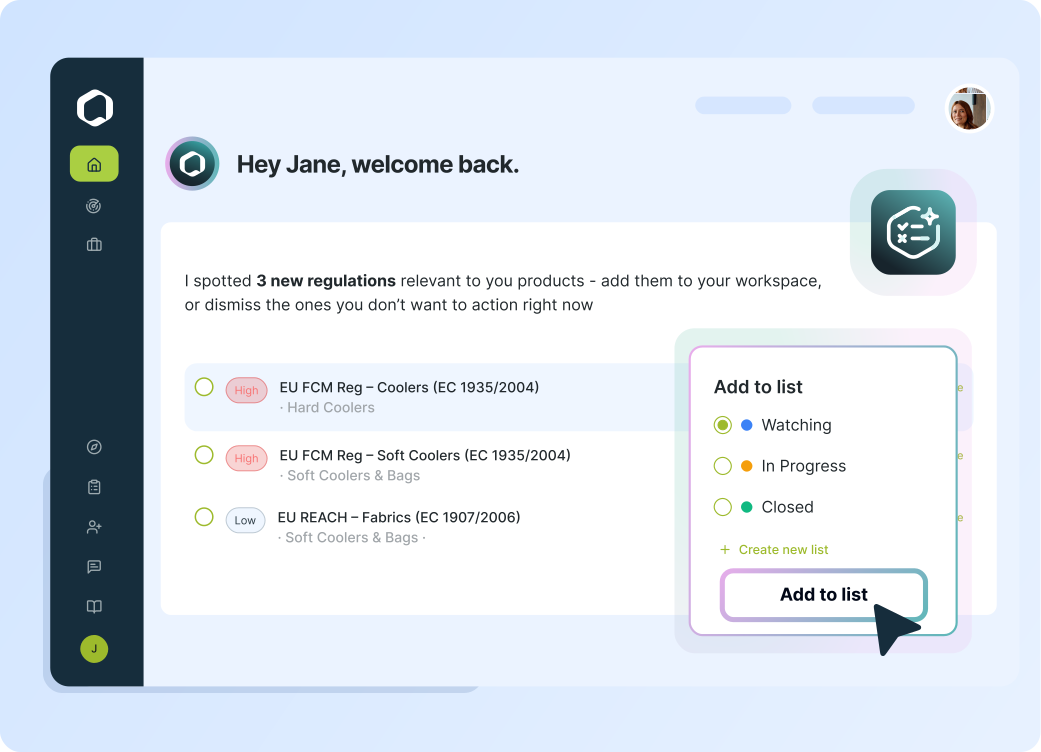
Automate the work of managing regulatory change.
Let AI agents do the heavy lifting of monitoring regulations, mapping requirements to products, extracting obligations, and surfacing the risks that need attention first.
Monitor Product Compliance
Stay Ahead of Regulatory Change
Get early visibility into changes that could affect your products, supply chain, or market access—so you can act proactively, not reactively.
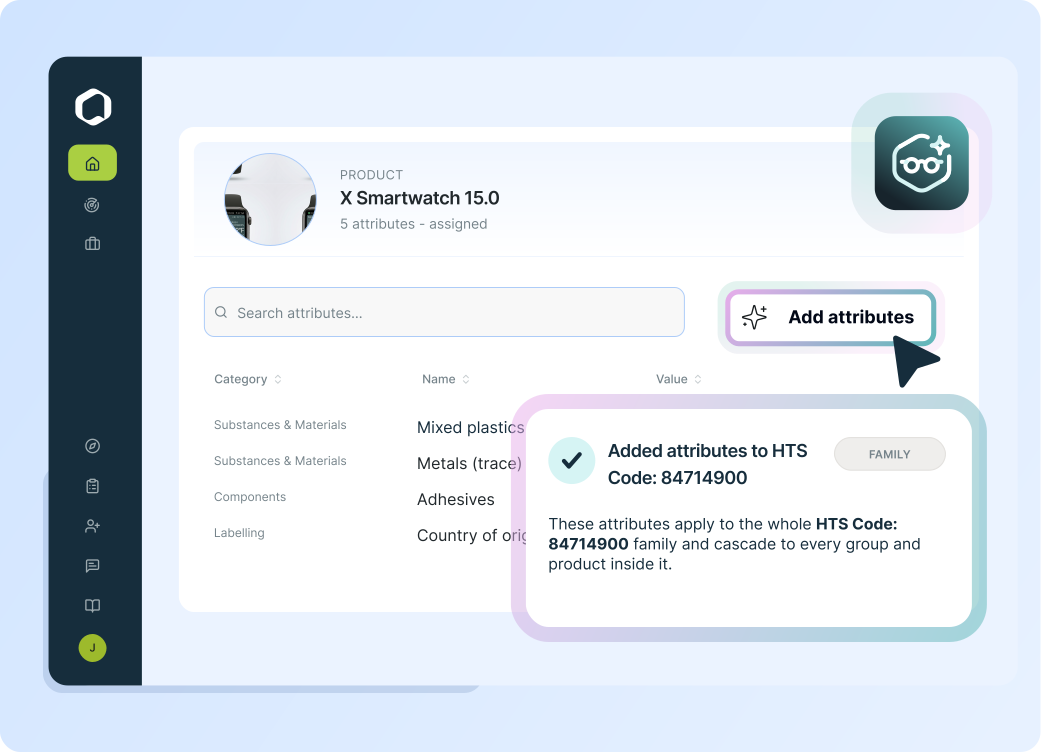
Assess Regulatory Applicability
Map Regulations to Your Products
Eliminate manual research and cut through regulatory noise by surfacing only the requirements relevant to your business, markets, and product categories.
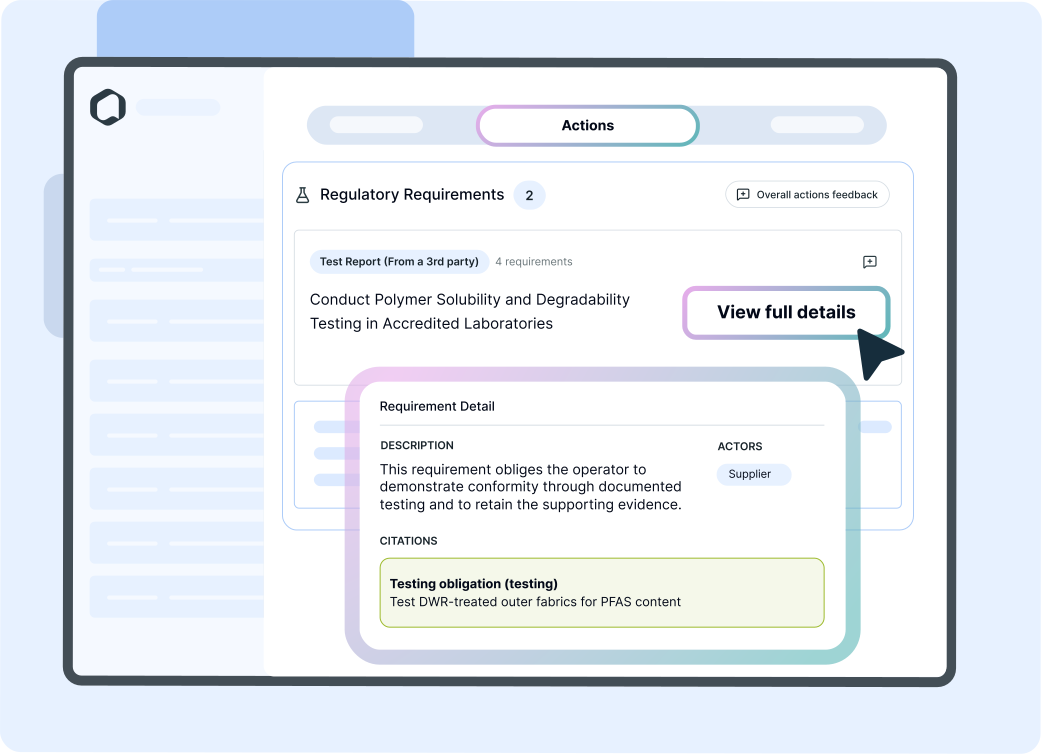
Identify Compliance Requirements
Turn complex regulations into clear, actionable tasks.
Give your teams instant clarity as AI agents transform dense legal and regulatory text into structured, easy-to-understand requirements.
Prioritize Business Risk
Focus Where Risk Is Highest
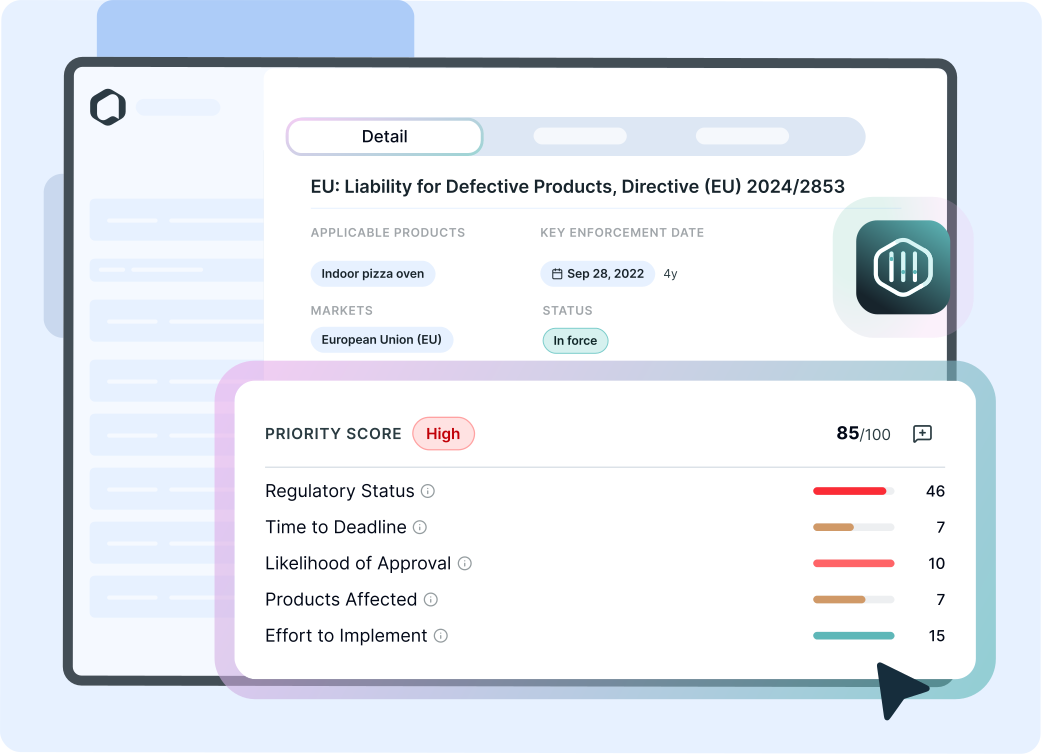
Make faster, risk-informed decisions with confidence as AI agents automatically rank regulatory changes based on urgency, business impact, compliance deadlines, and product exposure.
Spotlight
Turning Compliance into Value


The State of Product
Compliance 2026
Discover how 500+ global leaders are shifting product compliance from a cost-centre into a strategic driver of growth, with key benchmarks like 69% of teams calling remediation their biggest challenge.
Frequently Asked Questions
-
The scope encompasses any material or article intended to – or reasonably expected to – come into contact with food. This includes kitchen equipment, tableware, and food processing machinery, as well as individual components used within a core product. The food contact products may be composed of diverse materials including plastics, rubber, paper, silicones, metals and so on.
-
Companies must ensure that materials are manufactured in accordance with the Good Manufacturing Practices (GMP). Key obligations include using authorised substances (Positive Lists), adhering to specific and overall migration limits, and preventing any alteration to the food’s taste or composition. Furthermore, businesses must fulfil mandatory labelling requirements, maintain a robust Declaration of Compliance (DoC) and ensure full traceability throughout the supply chain.
-
No, while many standards overlap, each region has its own specific migration limits and “positive lists”. For example, a substance permitted by the US FPA may not be listed in the EU’s Plastics Regulation 10/2011 or the Chinese Standard GB 9685 on the use of additives in FCMs.
-
EU, US, and China food contact materials (FCM) labelling rules vary in detail, focusing on traceability, safe use, and compliance.
The EU (Regulation 1935/2004) mandates detailed labelling for safe use, including producer identification, instructions on restrictions like suitable food types or temperature or time limits, use of symbols (like glass-and-fork), and a mandatory Declaration of Compliance (DoC) provided upon request.
The US (FDA) has no specific FCM labelling mandates beyond general identification, focusing on warnings only where restrictions exist (e.g., acidic foods, microwave use). US compliance relies on internal records like FCNs, GRAS, or CFR references, not a formal DoC, which must be retained and shared with regulators/customers.
China (GB 4806.1-2016) is prescriptive, requiring labels to state product name, material type, explicit compliance declaration, producer details, date, shelf-life, safety symbols, and use directions, backed by a mandatory DoC detailing standards met and test results. Overall, the EU and China require more visible producer and compliance details with DoC support, while the US prioritises flexible records and use-specific warnings.
-
NIAS are substances present in FCMs that were not deliberately added during manufacturing — such as reaction by-products, impurities, or degradation products. In the EU, manufacturers must risk-assess NIAS based on exposure; identification is required if an unknown NIAS exceeds 10 ppb.
-
Each layer in contact with food must comply individually with the applicable regulations for that material type. For multi-material articles (e.g., paper/plastic laminates), one must assess the migration from all layers collectively and ensure no harmful transfer occurs. The EU Framework Regulation 1935/2004 applies to the final article, regardless of the materials used.