

Regulatory Focus
Transport of Dangerous Goods
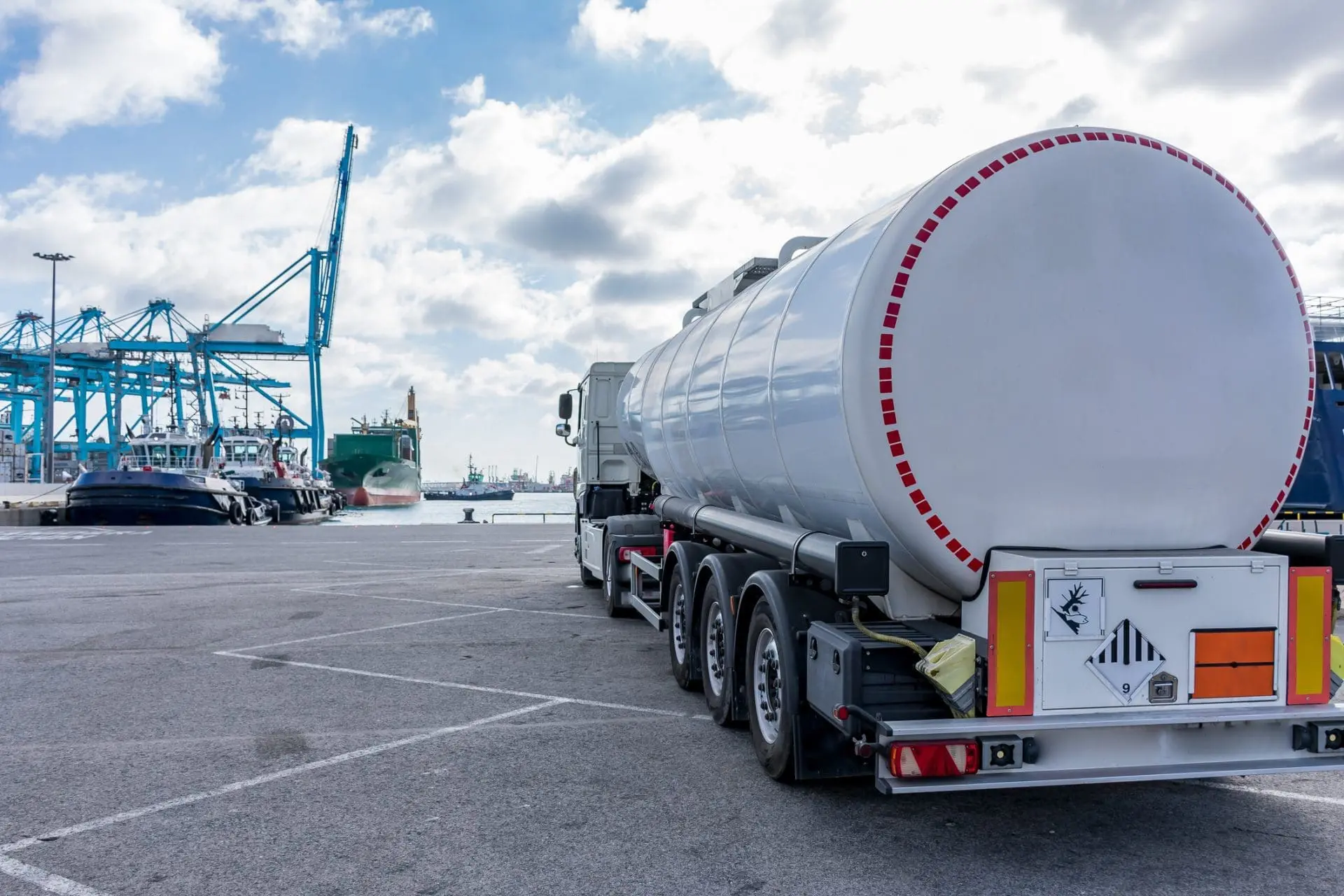
Transport of Dangerous Goods
195
Countries Covered
28
Languages
1457
Regulatory Sources
Regulations governing the transport of dangerous goods set safety rules for packaging, classification, labeling, documentation, and handling of hazardous materials. They cover road, rail, sea, air, and inland waterways to prevent accidents, protect people and property, and reduce environmental harm.
Sets safety and transport obligations for hazardous goods across all transport modes, requiring companies to classify, package, document, train staff, and manage compliance risks throughout the supply chain.
Companies must ensure dangerous goods are correctly classified, packaged, labeled, documented, and handled in line with modal and jurisdiction-specific rules. Requirements also include approved equipment and vehicles, trained personnel, defined responsibilities across the supply chain, and compliance with international standards for air, sea, rail, and road transport, including radioactive substances.
- Marking/labelling
- Declaring/certifying conformity
- Reporting
- Registration
- Permits/licences/approvals
- Retention/Destruction of records
- Training
We cover global and national frameworks governing the safe transport of dangerous goods across air, sea, road, rail, and inland waterways. Our coverage includes binding regulations, codes, and international model rules that set requirements for classification, packaging, labeling, documentation, vehicle approval, inspections, and enforcement.
- Australia: Transport of Dangerous Goods by Road and Rail, Code, Edition 7.9, 2024
- EU: Inland Transport of Dangerous Goods, Directive 2008/68/EC
- EU: Uniform Procedures for Checks on the Transport of Dangerous Goods by Road, Directive (EU) 2022/1999
- IMO: International Maritime Dangerous Goods Code (IMDG), 2024
- IATA: Battery Shipping Regulations (BSR), 2026
- IATA: Dangerous Goods Regulations (DGR), 2026
- ICAO: Supplement to the Technical Instructions for the Safe Transport of Dangerous Goods by Air 2025-2026, Doc 9284, 2025
- OTIF: International Carriage of Dangerous Goods by Rail, Convention, Appendix C, 2025
- UK: The Carriage of Dangerous Goods and Use of Transportable Pressure Equipment Regulations, SI 2009/1348
- UN: Transport of Dangerous Goods, Model Regulations, Twenty Third Revised Edition, 2024
- UNECE: Agreement Concerning the International Carriage of Dangerous Goods by Road (ADR), 2025 Edition
- UNECE: European Agreement Concerning the International Carriage of Dangerous Goods by Inland Waterways (ADN), 2025 Edition
- South Korea: Rules for the Transportation of Dangerous Goods by Rail, Ordinance No. 452, 2005
Experts in this Area

Intelligent Resources



Automate the work of managing regulatory change.
Let AI agents do the heavy lifting of monitoring regulations, mapping requirements to products, extracting obligations, and surfacing the risks that need attention first.
Monitor Product Compliance
Stay Ahead of Regulatory Change
Get early visibility into changes that could affect your products, supply chain, or market access—so you can act proactively, not reactively.
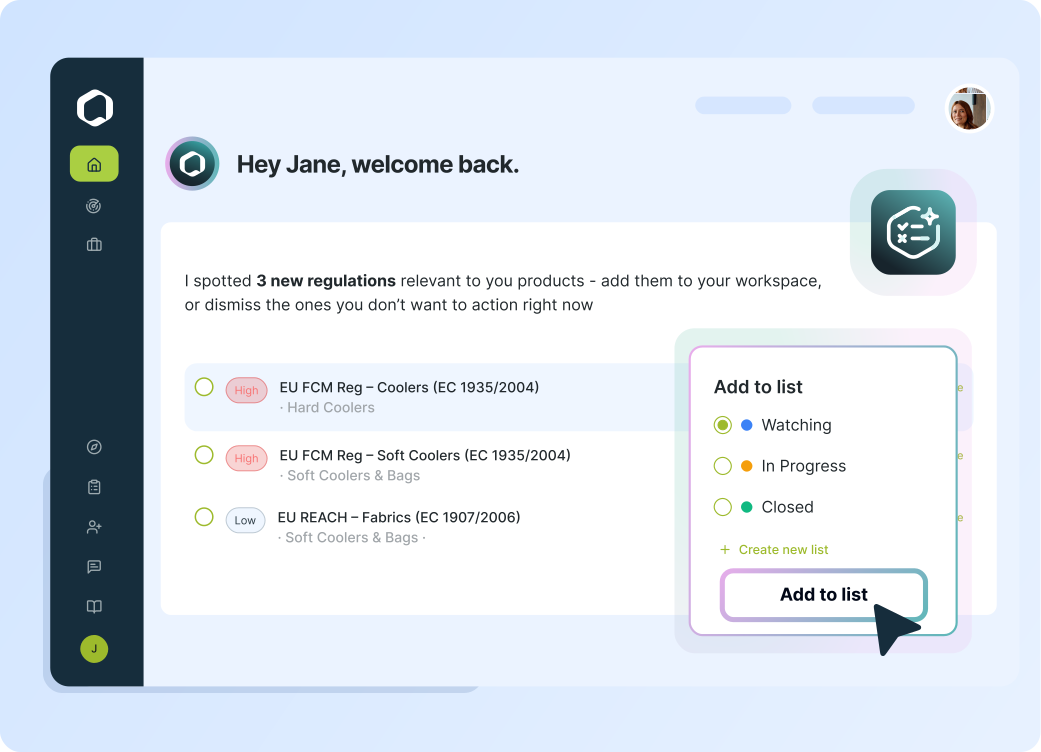
Assess Regulatory Applicability
Map Regulations to Your Products
Eliminate manual research and cut through regulatory noise by surfacing only the requirements relevant to your business, markets, and product categories.
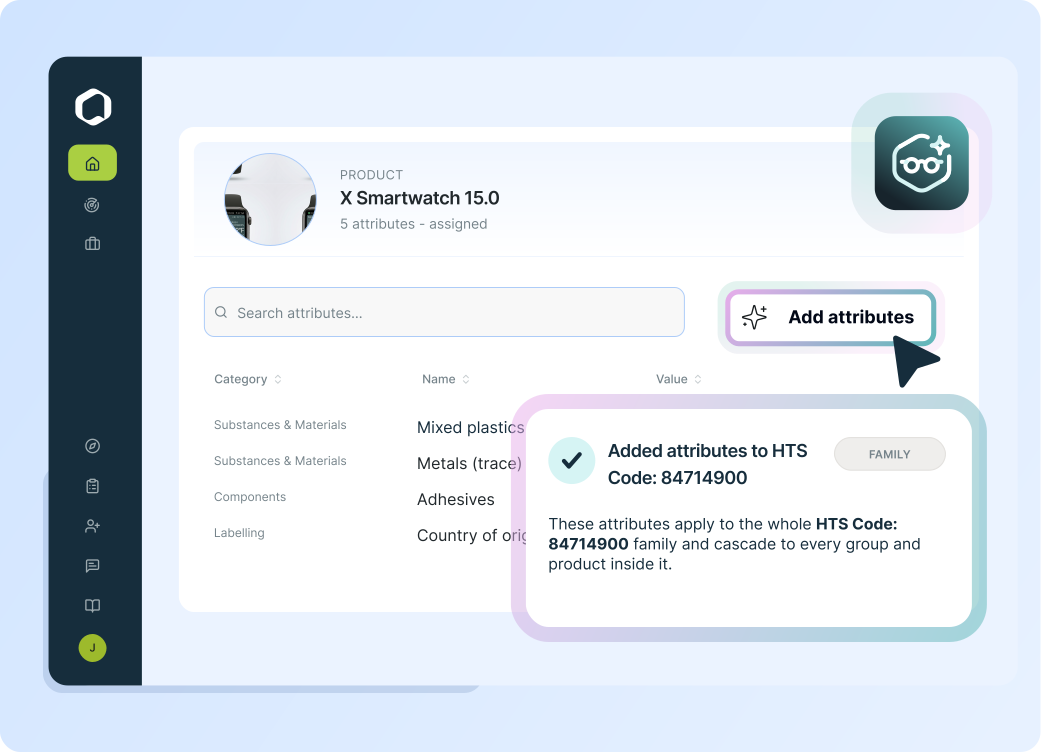
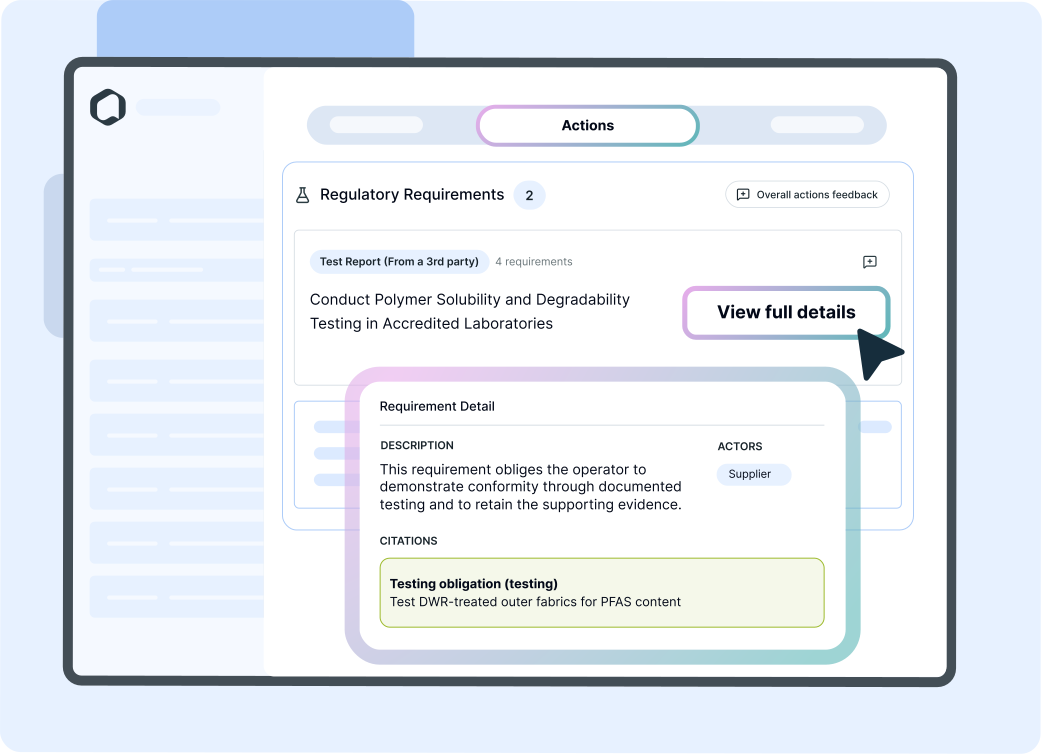
Identify Compliance Requirements
Turn complex regulations into clear, actionable tasks.
Give your teams instant clarity as AI agents transform dense legal and regulatory text into structured, easy-to-understand requirements.
Prioritize Business Risk
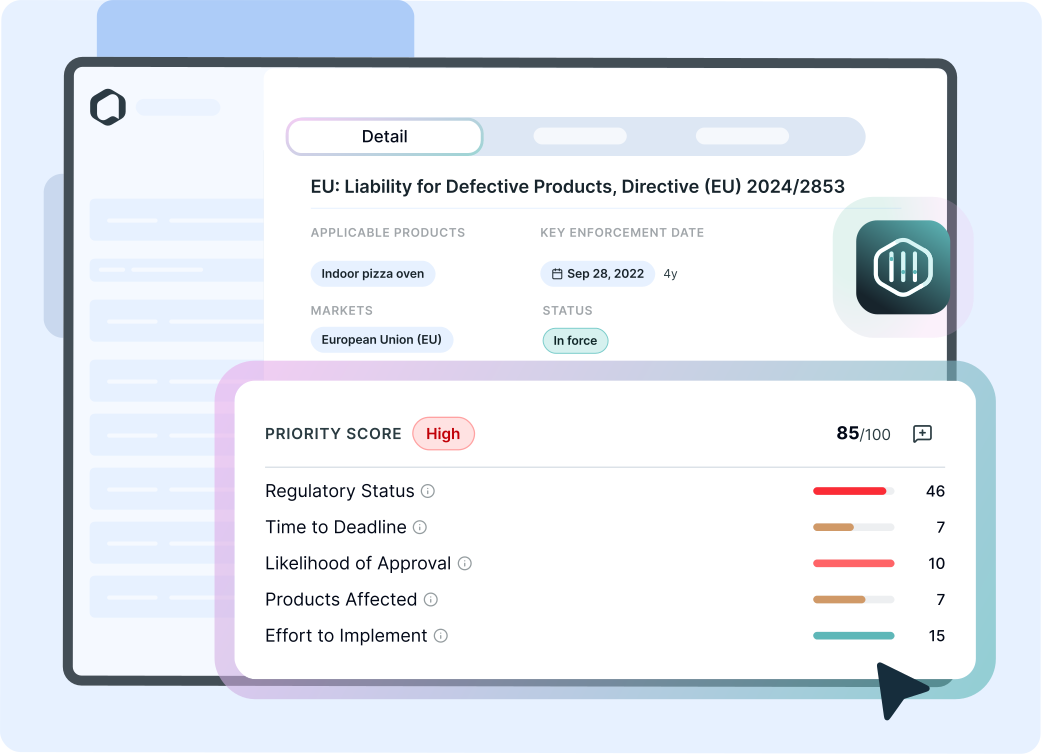
Focus Where Risk Is Highest
Make faster, risk-informed decisions with confidence as AI agents automatically rank regulatory changes based on urgency, business impact, compliance deadlines, and product exposure.
Spotlight
Turning Compliance into Value

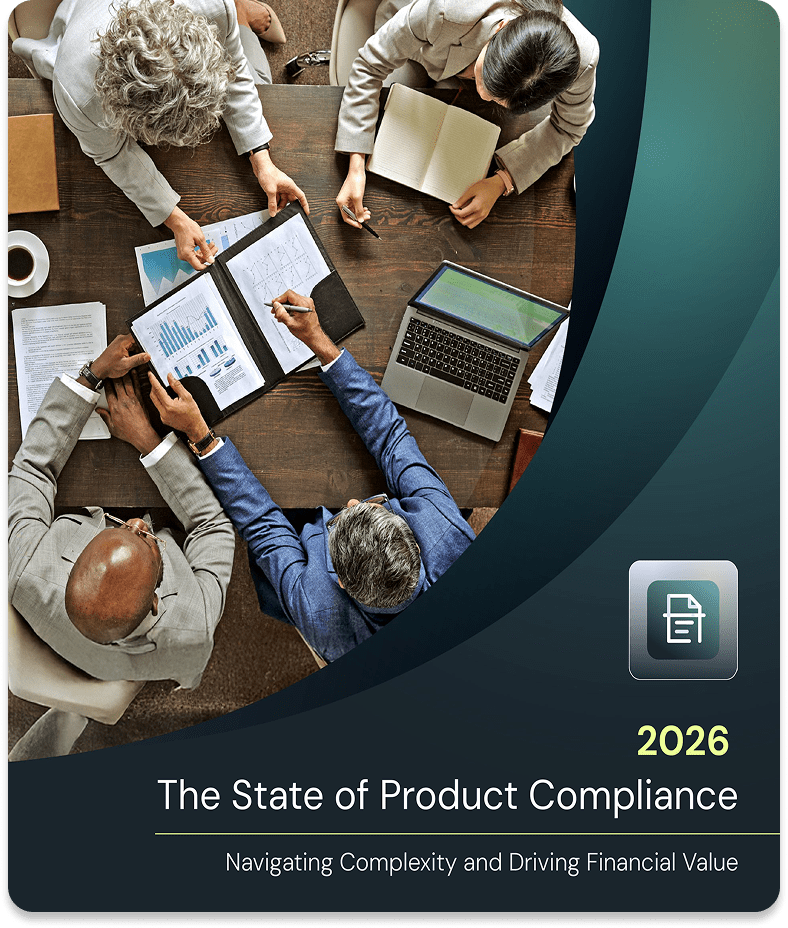
The State of Product
Compliance 2026
Discover how 500+ global leaders are shifting product compliance from a cost-centre into a strategic driver of growth, with key benchmarks like 69% of teams calling remediation their biggest challenge.
Frequently Asked Questions
-
Legal duties are shared across multiple actors involved in the transport chain, including the consignor, packager, filler, loader/unloader, carrier, driver or crew, container or tank operator, and consignee. Responsibilities typically cover correct classification, packaging, marking, documentation, and training, with enforcement authorities able to take action against any party that fails to meet its specific obligations.
-
Requirements depend on the transport mode and are largely aligned with UN Model Regulations. Air transport follows ICAO Technical Instructions and IATA Dangerous Goods Regulations, sea transport follows the IMO IMDG Code, rail transport follows RID under OTIF, road transport follows ADR, and inland waterways follow ADN. National laws generally implement or reference these instruments to ensure consistency across borders.
-
More
Regulatory
Topics
Battery Regulatory Compliance
Regulatory Focus Batteries 195 Countries Covered 28 Languages 3216 Regulatory Sources Batt…
EH&S: Environment
Regulatory Focus EH&S: Environment 195 Countries Covered 28 Languages 19838 Regulatory…
EH&S: Occupational Health & Safety
Regulatory Focus EH&S: Occupational Health & Safety 195 Countries Covered 28 Langu…
Chemicals & EH&S: Environment
Regulatory Focus Chemicals & EH&S: Environment 195 Countries Covered 28 Languages …
Comply with the Globally Harmonized System (GHS)
Regulatory Focus Globally Harmonized System (GHS) 195 Countries Covered 28 Languages 1130 …