

Regulatory Focus
Explosive Atmospheres / ATEX Compliance

Explosive Atmospheres (ATEX)
195
Countries Covered
28
Languages
251
Regulatory Sources
Atmospheres can become explosive when dust, vapor, or gas is present in concentrations that may ignite under certain conditions. ATEX refers to the EU framework governing the design, manufacture, and use of equipment and protective systems intended for potentially explosive environments.
ATEX regulations require companies to assess explosive atmosphere risks, classify hazardous zones, and ensure equipment meets strict safety standards to prevent ignition and avoid fines, shutdowns, or liability.
Explosive atmosphere regulations typically require companies to assess the risk of explosive atmospheres, classify hazardous zones, and implement controls to prevent ignition. For manufacturers, this includes designing and certifying equipment for use in explosive environments, while employers must manage workplace safety through risk assessments, protective measures, and compliance documentation.
- Ensure their equipment eliminates or controls potential ignition sources.
- Conformity assessment and certification
- Maintain a technical file for 10 years after the product is placed on the market
- Every piece of Ex equipment must bear specific, legible markings
Requirements for employers regarding explosive atmospheres:
- Employers must identify all areas where explosive atmospheres (gases, vapors, mists, or dusts) may occur. These areas are classified into Zones based on the frequency and duration of the hazard
- Before work commences, employers must create and maintain an Explosion Protection Document
- Employers are legally required to ensure that any equipment used in these zones is properly certified
- Beyond technical hardware, employers must implement strict administrative controls (signage, permit-to-work, and static control)
- Employers must ensure that workers are trained to recognize the specific hazards of their assigned zones, staff understand how to use specialized PPE and emergency equipment, and refresher training is conducted whenever processes change or new hazardous substances are introduced
Our ATEX regulatory coverage includes both equipment manufacturer requirements and workplace safety requirements, spanning key EU directives and equivalent national laws. We track regulations governing the design, certification, and conformity assessment of equipment for explosive atmospheres, as well as employer obligations for risk assessment, zoning, and worker protection in hazardous environments.
Regulations for Equipment Manufacturers
- EU: Equipment and Protective Systems for Use in Potentially Explosive Atmospheres, Directive 2014/34/EU
- Austria: Equipment and Protective Systems for Use in Potentially Explosive Atmospheres, Ordinance 52/2016
- Belgium: Equipment and Protective Systems for Use in Explosive Atmospheres, Royal Decree, 21 April 2016
- Brazil: Requirements for the Conformity Assessment of Electrical and Electronic Equipment Designed for Explosive Atmospheres, Portaria No. 179, 2010
- Czech Republic: Equipment and Protective Systems Intended for Use in Potentially Explosive Atmospheres, Regulation 116/2016
- EurAsEC: Approving Technical Regulation on Safety of Equipment Intended for Use in Explosive Atmosphere, Decision No. 825, 2011
- France: Conditions of Installation of Electrical Equipment in Potentially Explosive Atmospheres, Order, July 2003
- Germany: Explosion Protection, Ordinance BGBl. 39, 2016
- Netherlands: Implementation of Recast ATEX Directive 2014/34/EU, Decree, 17 February 2016
- Norway: Equipment and Safety Systems for Use in Potentially Explosive Areas, Regulation No. 1849, 2017
- Poland: Equipment and Protective Systems for Use in Potentially Explosive Atmospheres, Regulation Nr. 817, 2016
- Switzerland: Equipment and Protective Systems Intended for Use in Potentially Explosive Atmospheres, Ordinance, November 2015
- Turkey: Equipment and Protective Systems Used in Potentially Explosive Environments, Regulation, June 2016
- Ukraine: Approving Technical Regulations on Equipment and Protective Systems Intended for Use in Potentially Explosive Environments, Resolution No. 1055, 2016
- EU: Harmonised Standards for Equipment and Protective Systems Intended for Use in Potentially Explosive Atmospheres Drafted in Support of Directive 2014/34/EU, Decision (EU) 2022/1668
- UK: BS EN ISO/IEC 80079-49:2024 Explosive atmospheres-Flame arresters. Performance requirements, test methods and limits for use, 2024
- UK: BS EN IEC 60079-15:2019+A11:2026 Explosive atmospheres-Equipment protection by type of protection n, 2026
Regulations for Equipment Users in the Workplace
- EU: Health and Safety of Workers at Risk from Explosive Atmospheres, Directive 1999/92/EC
- Czech Republic: Detailed Requirements for Safety and Health at Work in Potentially Explosive Atmospheres, Regulation No. 406/2004
- Finland: Prevention of Hazards in Explosive Atmospheres, Decree 576/2003
- Norway: Health and Safety in Explosive Atmospheres, Regulations No. 911 of 2003
- Poland: Safety and Health Protection of Workers Potentially at Risk from Explosive Atmospheres, Regulation Nr. 931, 2010
- Turkey: Health and Safety of Workers at Risk from Explosive Atmospheres, Regulation, April 2013
- UK: Dangerous Substances and Explosive Atmospheres Regulations, SI 2002/2776





Automate the work of managing regulatory change.
Let AI agents do the heavy lifting of monitoring regulations, mapping requirements to products, extracting obligations, and surfacing the risks that need attention first.
Monitor Product Compliance
Stay Ahead of Regulatory Change
Get early visibility into changes that could affect your products, supply chain, or market access—so you can act proactively, not reactively.
Assess Regulatory Applicability
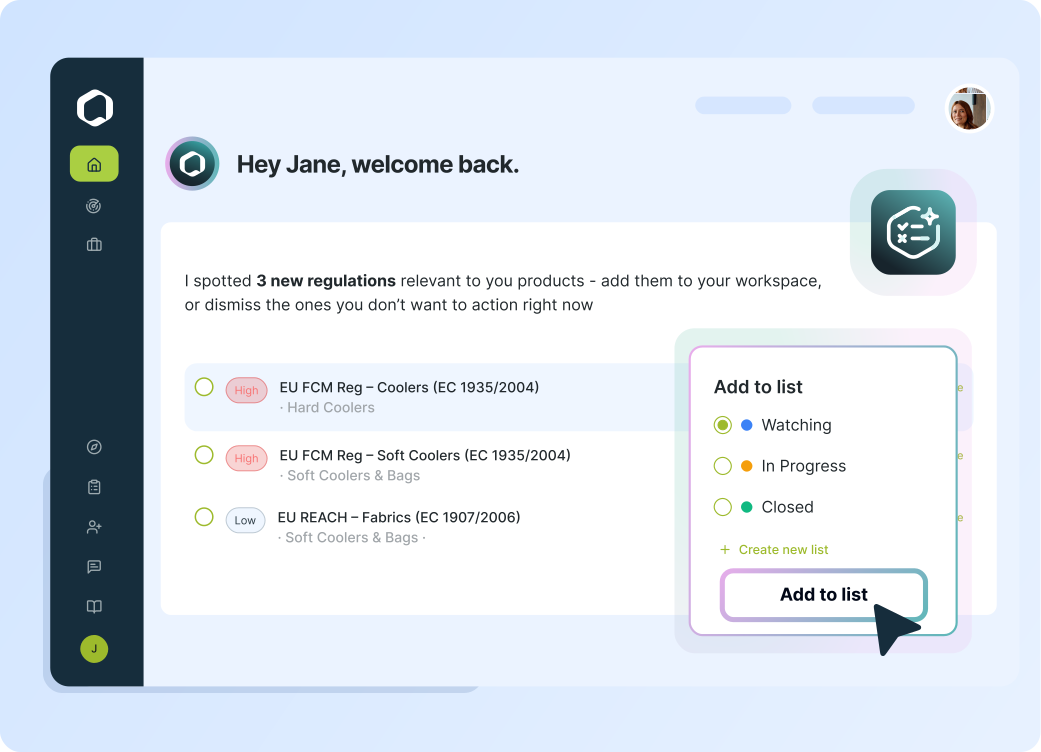
Map Regulations to Your Products
Eliminate manual research and cut through regulatory noise by surfacing only the requirements relevant to your business, markets, and product categories.
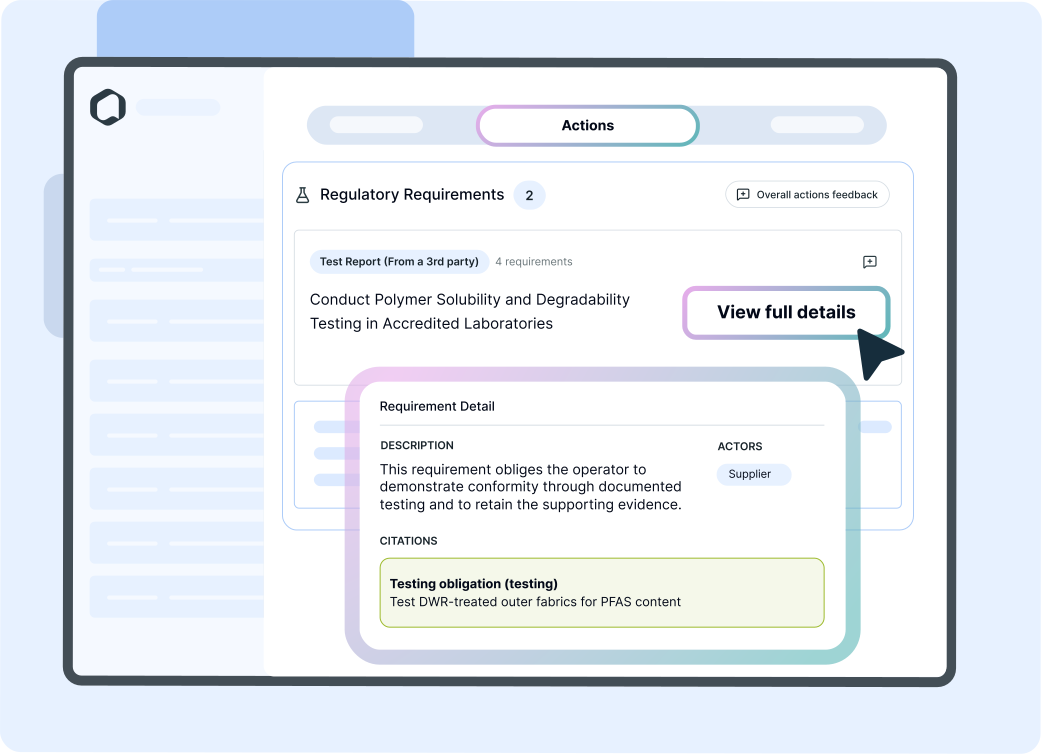
Identify Compliance Requirements
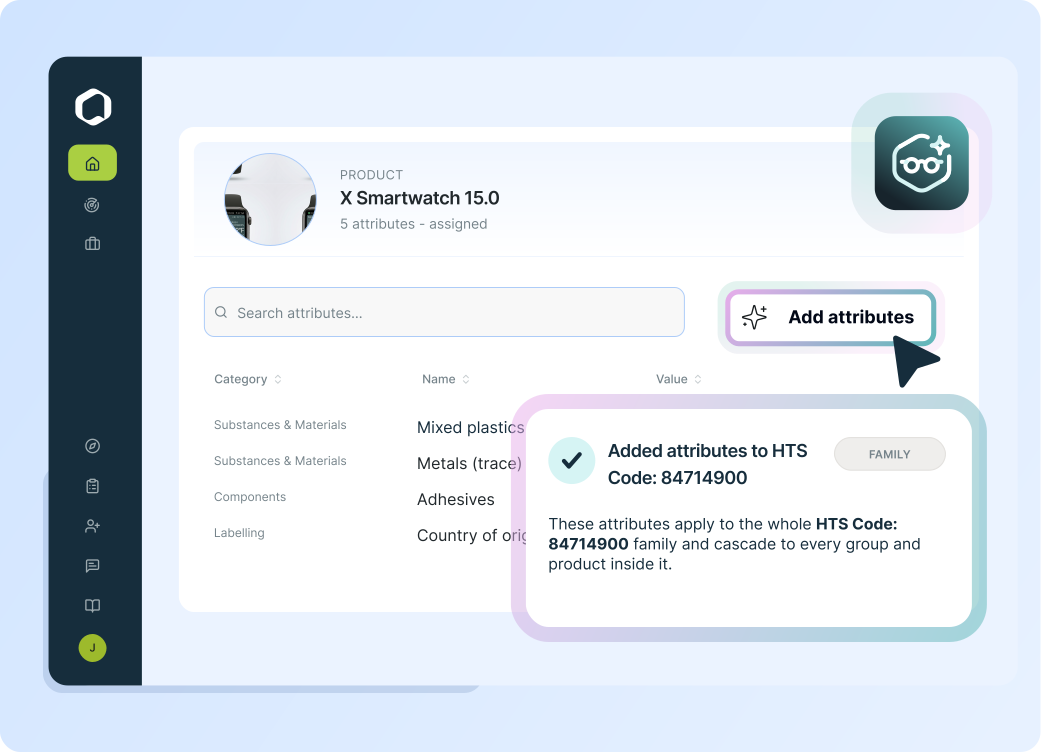
Turn complex regulations into clear, actionable tasks.
Give your teams instant clarity as AI agents transform dense legal and regulatory text into structured, easy-to-understand requirements.
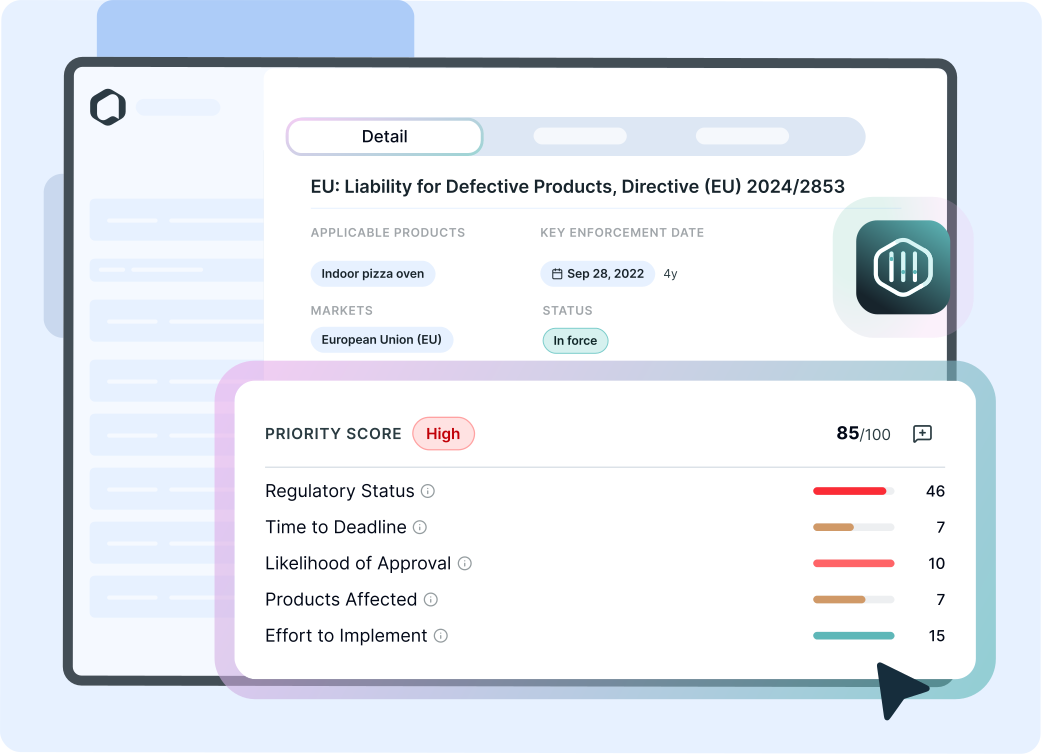
Prioritize Business Risk
Focus Where Risk Is Highest
Make faster, risk-informed decisions with confidence as AI agents automatically rank regulatory changes based on urgency, business impact, compliance deadlines, and product exposure.
Spotlight
Turning Compliance into Value


The State of Product
Compliance 2026
Discover how 500+ global leaders are shifting product compliance from a cost-centre into a strategic driver of growth, with key benchmarks like 69% of teams calling remediation their biggest challenge.
Frequently Asked Questions
-
Equipment manufacturers must design, test, and certify equipment and protective systems intended for use in potentially explosive atmospheres. These requirements focus on essential health and safety design standards and conformity assessment procedures before products are placed on the market (e.g., Directive 2014/34/EU). Workplace users, on the other hand, must assess risks, classify explosive zones, and implement protective measures to safeguard workers in environments where explosive atmospheres may occur (e.g., Directive 1999/92/EC).
-
ATEX requirements apply when your company either manufactures or places equipment intended for use in potentially explosive atmospheres on the market, or operates facilities where explosive atmospheres can occur (e.g., due to flammable gases, vapours, or combustible dust). If your products or workplace conditions fall within these scenarios, you must comply with the relevant manufacturer or workplace directives and any applicable national implementing laws.
-
While they share the same technical roots (the IEC 60079 standards), they serve different legal functions:
- ATEX (Directive 2014/34/EU):
A legal requirement for selling and using equipment in the European Union. It focuses on the manufacturer’s self-declaration or “Notified Body” certification for the EU market. - IECEx:
An international certification scheme. It is voluntary in many places but often required for global projects (e.g., in Australia or Southeast Asia). It is more rigorous because it requires every step of the supply chain to be audited, whereas ATEX sometimes allows self-certification for lower-risk zones.
- ATEX (Directive 2014/34/EU):
-
Yes. This is a common oversight. Mechanical equipment like pumps, gearboxes, and conveyor belts can create sparks through friction or static buildup.
- In the EU, mechanical ATEX certification is mandatory.
- Equipment is often marked with “Ex h,” which covers protection by constructional safety (Ex c), control of ignition sources (Ex b), or liquid immersion (Ex k).
-
No. Equipment categories are designed for “downward compatibility,” not upward.
- Zone 0/20 equipment (Category 1) can be used in Zones 1 and 2.
- Zone 1/21 equipment (Category 2) can be used in Zone 2.
- Zone 2/22 equipment (Category 3) can only be used in Zone 2.
Using Category 3 equipment in a Zone 1 area is a major safety violation because the equipment is not designed to stay safe during an “expected malfunction”—it is only rated to remain safe during normal, error-free operation.
More
Regulatory
Topics
EH&S: Occupational Health & Safety
Regulatory Focus EH&S: Occupational Health & Safety 195 Countries Covered 28 Langu…
Product Safety Compliance Solutions
Regulatory Focus Product Safety 195 Countries Covered 28 Languages 10398 Regulatory Source…
Cybersecurity
Regulatory Focus Cybersecurity 195 Countries Covered 28 Languages 1062 Regulatory Sources …