

Regulatory Focus
Wireless Devices Regulatory Compliance
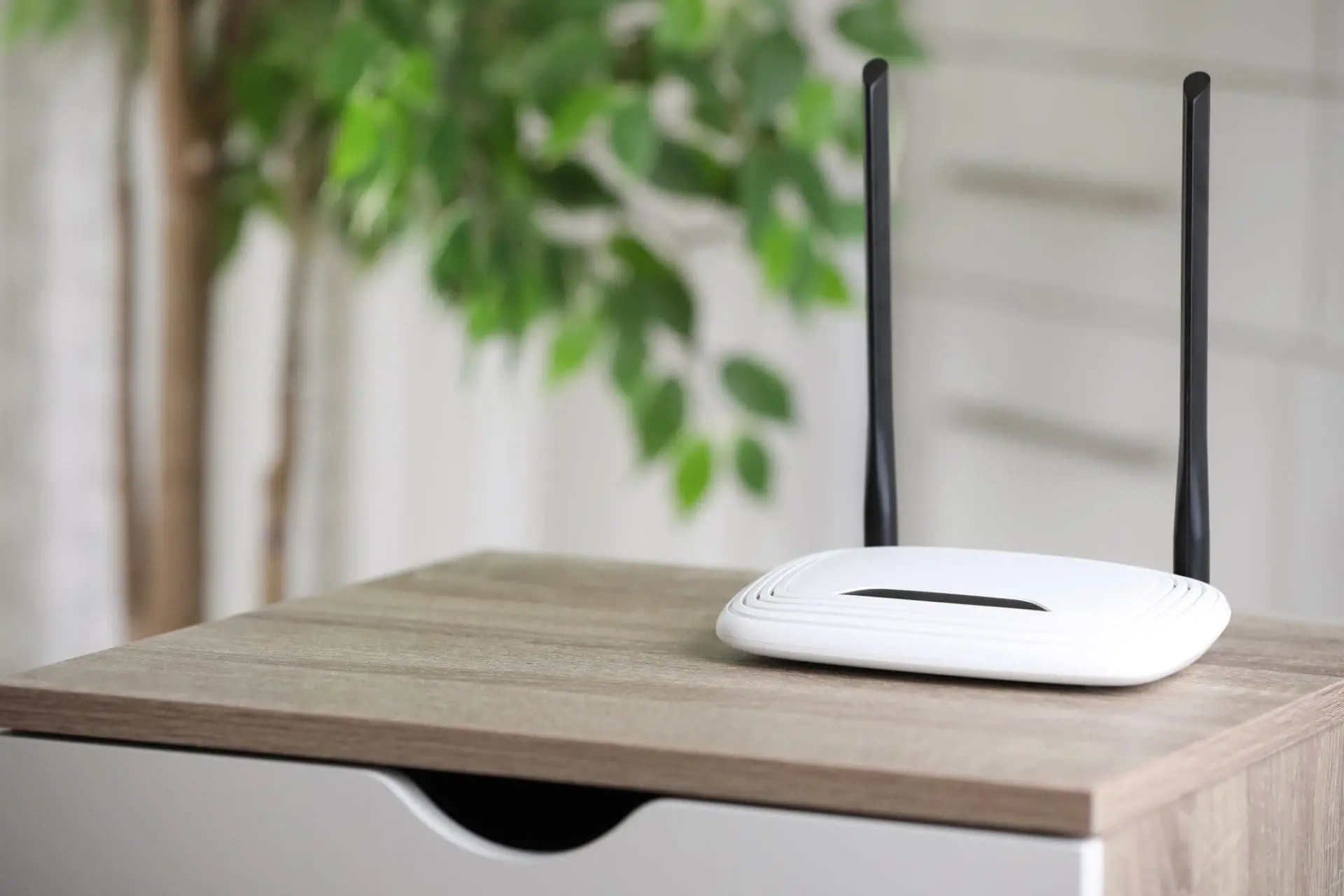
Wireless
195
Countries Covered
28
Languages
3353
Regulatory Sources
Wireless regulations govern devices that intentionally emit radiofrequency signals, setting rules for spectrum use, certification, testing, labeling, and market access. They cover equipment such as Wi-Fi, Bluetooth, cellular, and IoT devices to prevent interference and ensure safe, compliant operation.
Wireless Standards & Regulations
Wireless regulations impose licensing, testing, certification, and labeling obligations on companies, creating compliance risks and market-access barriers for RF-enabled, IoT, and short-range wireless devices.
Companies are typically required to ensure wireless-enabled products operate within permitted spectrum bands and meet technical limits for power, frequency use, and interference. This commonly includes conformity testing, certification or type approval, registration and labeling obligations, and ongoing monitoring of national spectrum allocation and approval requirements for short-range and IoT devices.
Requirements include:
- Type Approval
- Certification
- Testing
- Labelling
- User Instructions
We cover mandatory regulations and supporting standards governing radiofrequency use and type approval for short-range radio devices using unlicensed spectrum allocation, enabling market access for wireless-enabled products. Our coverage focuses on certification, approval, testing, labeling, and operational requirements for short-range, low-power devices operating primarily in unlicensed spectrum across key global markets.
- USA: FCC Radio Frequency Devices Regulations, 47 CFR Part 15, 1989
- EU: Radio Equipment, Directive 2014/53/EU
- Macau (China): Low Power Radio Equipment Exemption from Authorisation, Order 198, 2014 – Amendment – (on exempted wireless equipment) Order No. 64/2024
- Brazil: Conformity Assessment and Approval of Telecommunications Products, Resolution No. 715, 2019
- China: Regulations on the Management of Radio Operation, Order No. 128, 1993
- China: Rules on Management of Micro-Power (Short Distance) Radio Transmission Equipment (Interim), Notice No. 178, 1998
- IEEE 802.11x WLAN and 802.15 WPAN of Wireless Standards
We cover standards for our core products that are available from our partner Accuris. These are available through our Product Compliance Solution.








Automate the work of managing regulatory change.
Let AI agents do the heavy lifting of monitoring regulations, mapping requirements to products, extracting obligations, and surfacing the risks that need attention first.
Monitor Product Compliance
Stay Ahead of Regulatory Change
Get early visibility into changes that could affect your products, supply chain, or market access—so you can act proactively, not reactively.
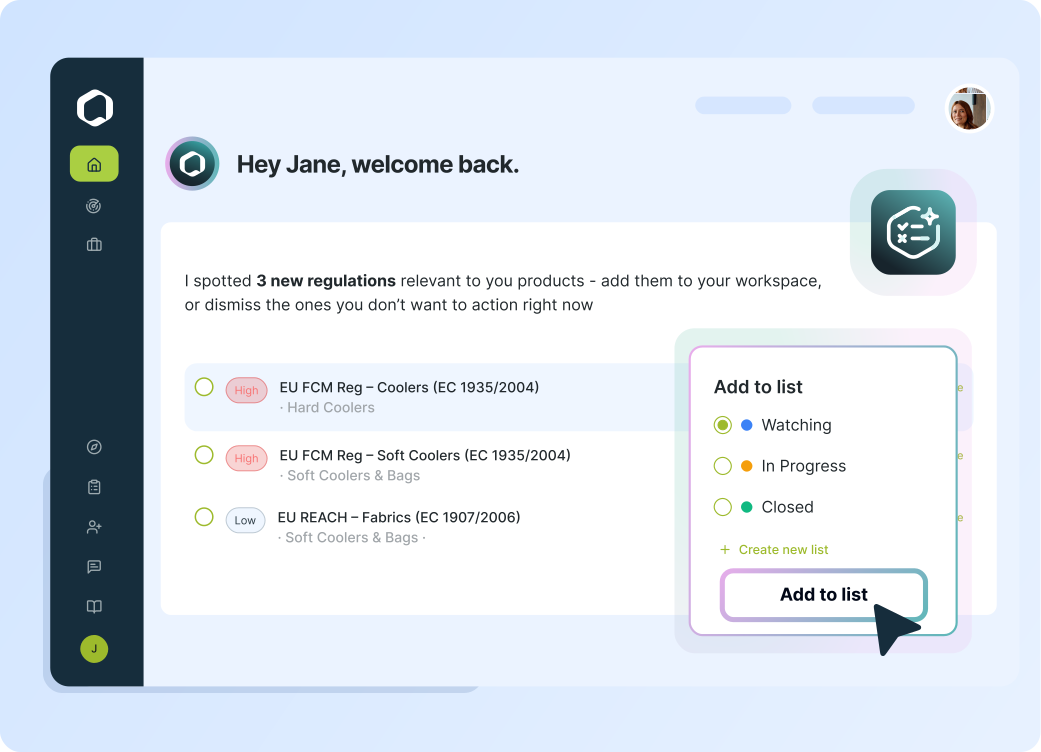
Assess Regulatory Applicability
Map Regulations to Your Products
Eliminate manual research and cut through regulatory noise by surfacing only the requirements relevant to your business, markets, and product categories.
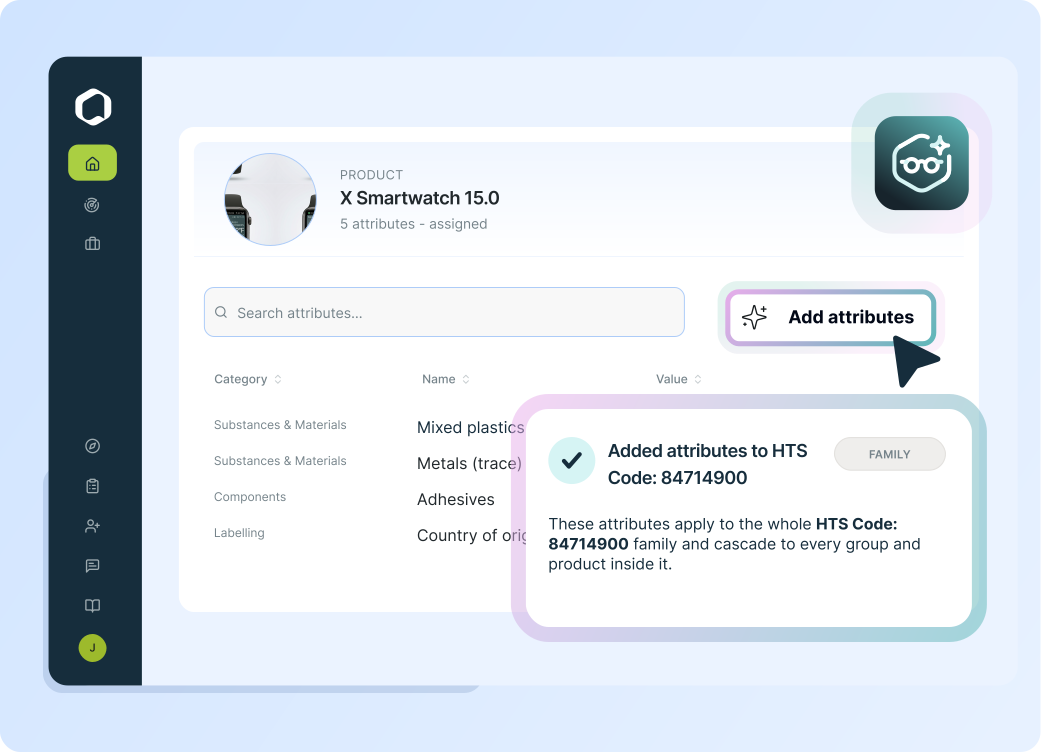
Identify Compliance Requirements
Turn complex regulations into clear, actionable tasks.
Give your teams instant clarity as AI agents transform dense legal and regulatory text into structured, easy-to-understand requirements.
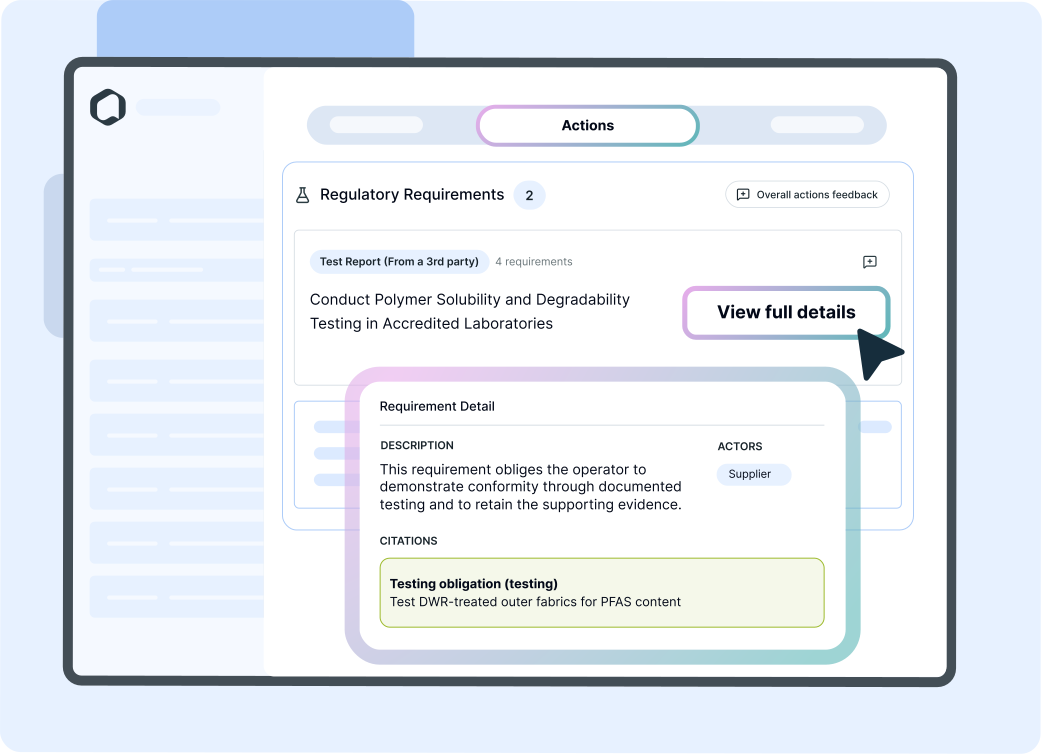
Prioritize Business Risk
Focus Where Risk Is Highest
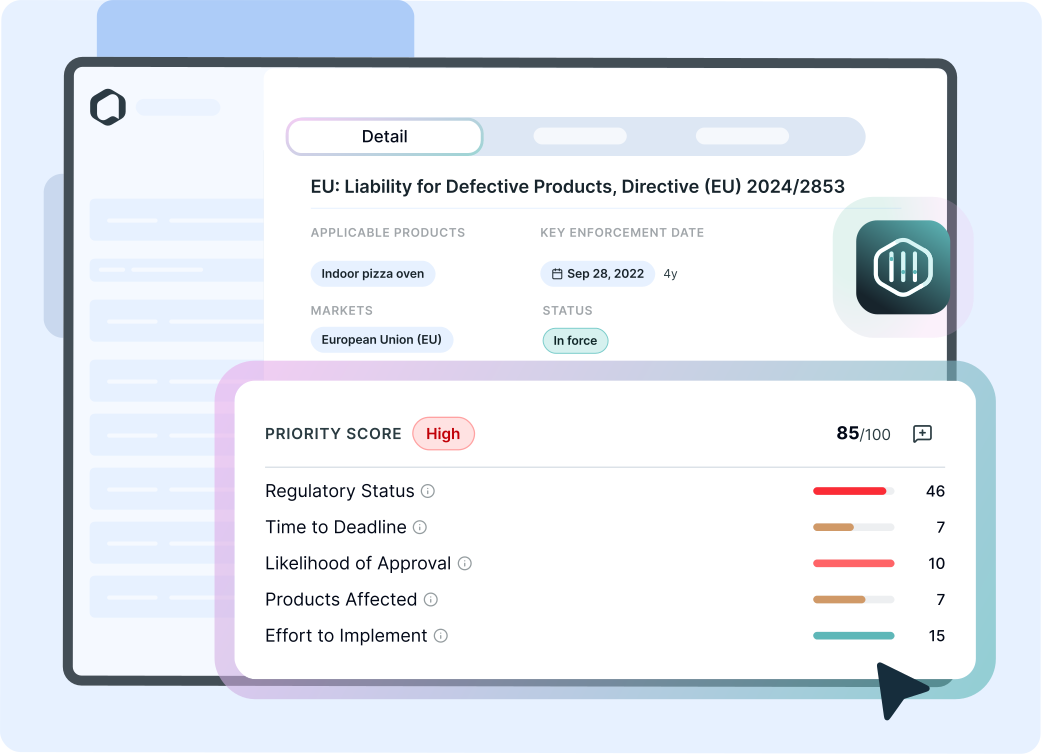
Make faster, risk-informed decisions with confidence as AI agents automatically rank regulatory changes based on urgency, business impact, compliance deadlines, and product exposure.
Spotlight
Turning Compliance into Value


The State of Product
Compliance 2026
Discover how 500+ global leaders are shifting product compliance from a cost-centre into a strategic driver of growth, with key benchmarks like 69% of teams calling remediation their biggest challenge.
Frequently Asked Questions
-
Yes. Even when operating in unlicensed bands, wireless devices must comply with applicable technical requirements such as power limits, frequency use, and interference controls, and typically require testing, certification, registration, and labeling under frameworks like FCC Part 15 in the USA and the EU Radio Equipment Directive (2014/53/EU).
-
While technologies like Wi-Fi and Bluetooth are globally used, each jurisdiction sets its own spectrum allocation, conformity assessment, and approval processes. Companies must verify country-specific requirements, as certification schemes, documentation, and approval authorities vary between markets such as the EU, USA, Brazil, and China.
-
Yes. Type approval is typically required for the finished product even if the wireless module is already approved. However, pre-existing module approval and testing may substantially simplify the type approval process for the finished product. The US FCC, for example, provides a certification pathway for pre-approved modules.
-
In C2P, we cover Short Range Devices (SRD) that do not require individual licenses to use the radio spectrum allocated for them by the radio spectrum regulator.
-
Short Range Devices (SRD) are radio devices that offer a low risk of interference with other radio services, usually because their transmitted power, and hence their range, is low. The definition ‘Short Range Device’ may be applied to many different types of wireless equipment, including various forms of:
- Access control (including door and gate openers)
- Alarms and movement detectors
- Closed-circuit television (CCTV)
- Cordless audio devices, including wireless microphones
- Industrial control
- Local Area Networks
- Medical implants
- Metering devices
- Remote control
- Radio frequency identification (RFID)
- Road Transport Telematics
- Telemetry.
Short range devices often benefit from a relaxed regulatory regime compared with other radio communications equipment. As a general principle, a user is licence free to operate such equipment, some specific cases may require an individual licence.