

Regulatory Focus
California Proposition 65 Compliance

California Proposition 65
195
Countries Covered
28
Languages
117
Regulatory Sources
California’s Proposition 65 requires businesses to warn about exposures to chemicals known to cause cancer, birth defects, or reproductive harm. It covers chemical listings, warning requirements, and restrictions aimed at protecting public health and the state’s drinking water from harmful substances.
Understanding California Proposition 65
Proposition 65 requires companies to assess chemical exposures, provide clear consumer warnings, and manage compliance risks when listed substances may be present in products or packaging.
Companies must evaluate whether listed chemicals are present in their products, operations, or emissions and assess potential exposure levels. Where exposures exceed applicable thresholds, they must prevent discharges into drinking water sources or provide clear and reasonable warnings through appropriate communication methods, unless they can demonstrate no significant risk.
- Marking/labelling – Obligation to provide a warning where required when products may expose individuals to listed chemicals.
- Providing product information – Requirement to communicate warning information to consumers or users through appropriate means in accordance with applicable regulatory provisions.
- Testing – Requirement to assess potential exposure to listed chemicals in order to determine whether warning obligations apply.
Our coverage focuses on warning, disclosure, and enforcement obligations tied to chemicals listed as causing cancer or reproductive harm, alongside related exposure thresholds and compliance defenses. We track regulatory updates, amendments, and implementation guidance to help companies manage risk, maintain compliant warnings, and respond to evolving enforcement expectations.
- California (USA): Proposition 65, Safe Drinking Water and Toxic Enforcement Act of 1986
- California (USA): Proposition 65 Implementing List, Chemicals Known to Cause Cancer or Reproductive Toxicity, 2025
- California (USA): Proposition 65 Implementing Regulations, 27 Cal.Code Regulations 25102 – 27000, 1988
- California (USA): Proposition 65 Implementing Regulations, 27 Cal.Code Regulations 25102 – 27000, 1988 – Amendment – (on short-form warnings) Regulation, 27 CCR 25601-25653, December 2024



Intelligent Resources




Automate the work of managing regulatory change.
Let AI agents do the heavy lifting of monitoring regulations, mapping requirements to products, extracting obligations, and surfacing the risks that need attention first.
Monitor Product Compliance
Stay Ahead of Regulatory Change
Get early visibility into changes that could affect your products, supply chain, or market access—so you can act proactively, not reactively.

Assess Regulatory Applicability
Map Regulations to Your Products
Eliminate manual research and cut through regulatory noise by surfacing only the requirements relevant to your business, markets, and product categories.
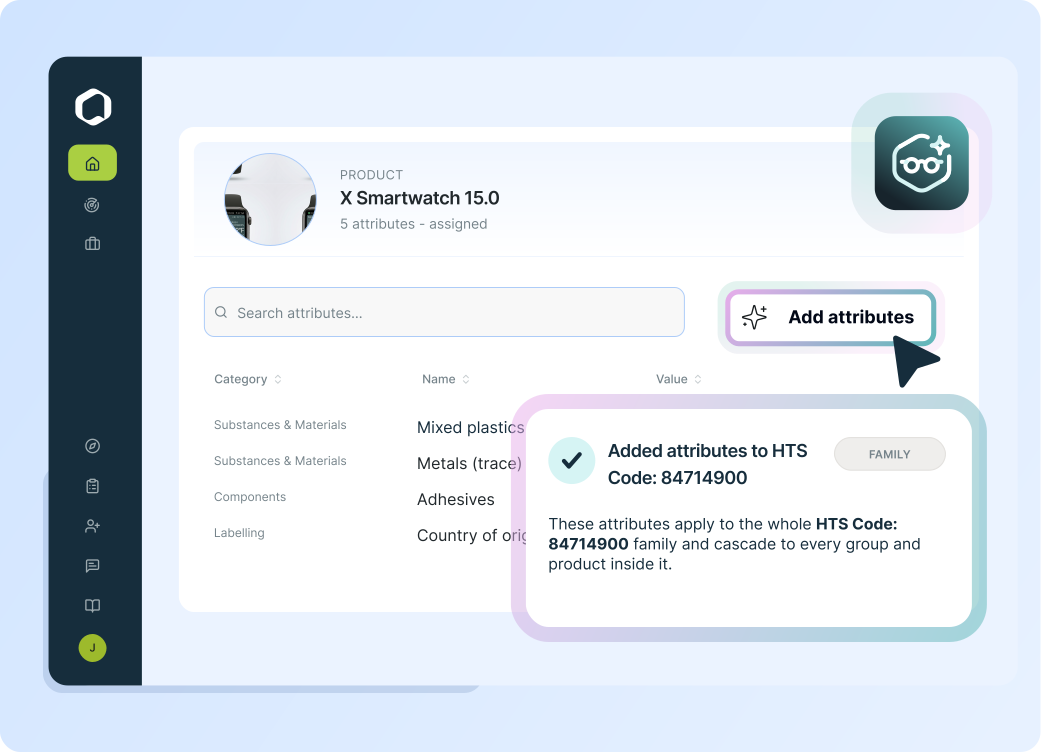
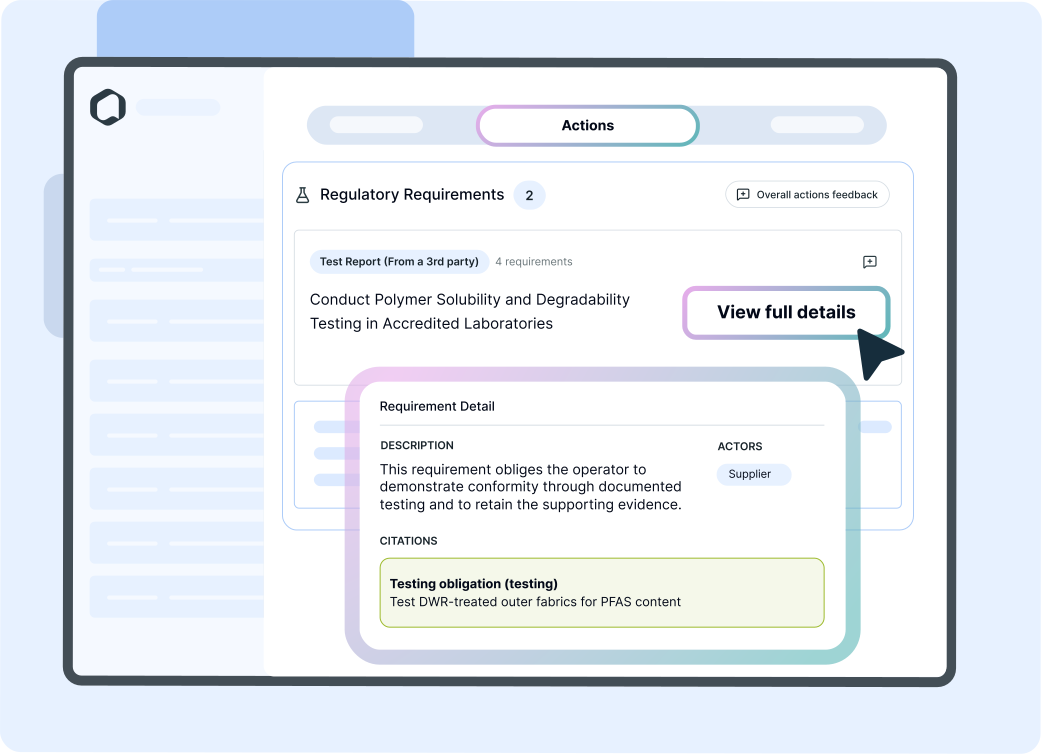
Identify Compliance Requirements
Turn complex regulations into clear, actionable tasks.
Give your teams instant clarity as AI agents transform dense legal and regulatory text into structured, easy-to-understand requirements.
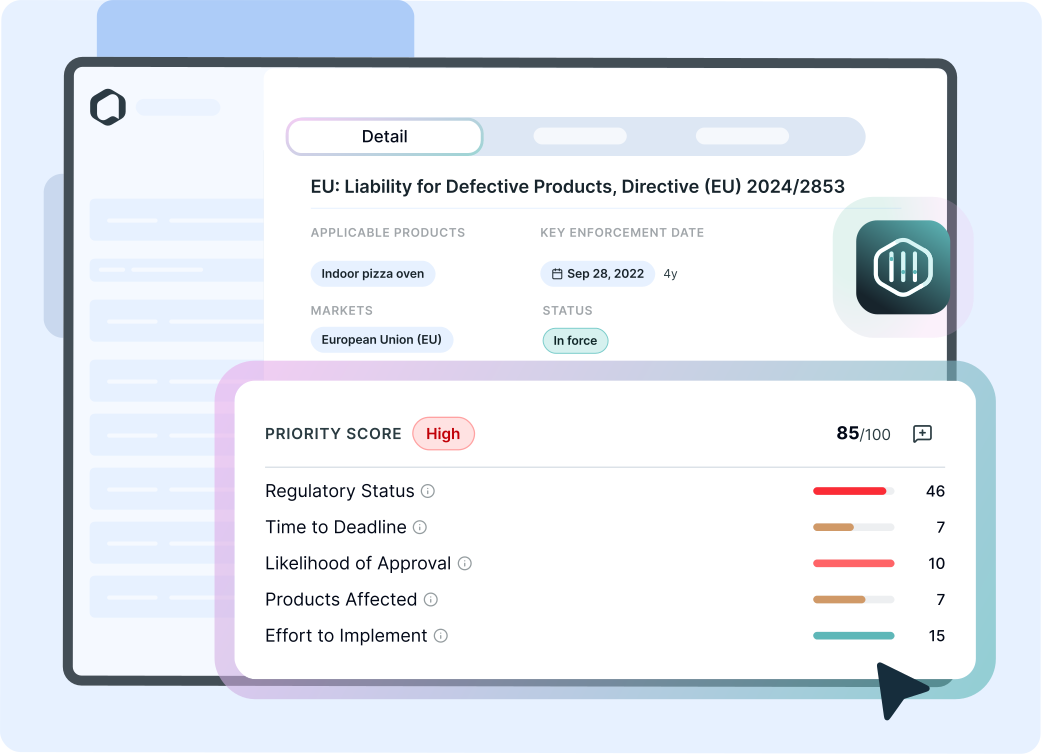
Prioritize Business Risk
Focus Where Risk Is Highest
Make faster, risk-informed decisions with confidence as AI agents automatically rank regulatory changes based on urgency, business impact, compliance deadlines, and product exposure.
Spotlight
Turning Compliance into Value


The State of Product
Compliance 2026
Discover how 500+ global leaders are shifting product compliance from a cost-centre into a strategic driver of growth, with key benchmarks like 69% of teams calling remediation their biggest challenge.
Frequently Asked Questions
-
A warning is required when a business knowingly and intentionally exposes individuals in California to a listed chemical, unless it can demonstrate that the exposure poses no significant risk (for carcinogens) or is below the maximum allowable dose level (for reproductive toxicants).
-
Warnings may be provided through product labels, on-product or on-package notices, workplace or point-of-sale signage, or other methods reasonably likely to inform consumers or workers before exposure occurs, provided the warning is clear, conspicuous, and compliant with applicable regulatory guidance.
-
No. Proposition 65 does not prohibit listed chemicals in products. Instead, it requires businesses to provide warnings if exposures exceed established safe harbor levels.
-
Safe harbor levels are exposure thresholds established by the Office of Environmental Health Hazard Assessment (OEHHA). A warning is not required if exposure to a listed chemical is at or below these levels — the No Significant Risk Level (NSRL) for carcinogens or the Maximum Allowable Dose Level (MADL) for reproductive toxicants.
-
The Proposition 65 list is updated at least once per year by California’s Office of Environmental Health Hazard Assessment (OEHHA). Businesses should monitor updates to determine whether new warnings or compliance actions are required.