

Regulatory Focus
Chemicals Management Regulatory Compliance

Chemicals Management
195
Countries Covered
28
Languages
5979
Regulatory Sources
Our chemicals management topic covers international and national measures for the safe and sound management of chemicals in their pure form or in mixtures. It includes rules on classification, registration, labeling, and other controls that govern how chemicals are produced, marketed, handled, and communicated.
Global chemicals management establishes obligations for companies to classify, register, label, and handle chemicals safely, ensuring compliance with international and national regulations while minimizing risks to health and the environment.
Companies typically need to meet requirements for chemical notification, risk assessment, and registration to improve knowledge of toxicological and ecotoxicological properties. They must also classify and label chemicals according to recognized standards like the UN GHS, manage hazardous substances safely, and comply with international rules on trade, phase-out, and disposal of restricted chemicals such as POPs and ozone-depleting substances.
- Registration – Obligation to register or notify substances, mixtures, or activities with competent authorities prior to manufacture, import, or placing on the market.
- Reporting – Ongoing submission of required information to authorities, such as production/import volumes, releases, monitoring data, or export notifications.
- Testing – Requirement to generate, submit, or maintain toxicological, ecotoxicological, environmental fate, or exposure data to support regulatory compliance.
- Permits/licences/approvals – Obligation to obtain prior authorization, licence, quota, or formal approval for the manufacture, import, use, or export of certain hazardous substances.
- Providing product information – Requirement to supply regulatory information to downstream users or authorities, including Safety Data Sheets (SDS), substance disclosures, or technical documentation.
- Marking/labelling – Obligation to classify and label chemicals according to applicable hazard communication rules, including required pictograms, warnings, and packaging elements.
- Retention/Destruction of records – Requirement to maintain compliance documentation (e.g., registrations, test data, SDS versions, permits) for defined periods and ensure proper record management or destruction.
- Declaring/certifying conformity – Obligation to formally declare or certify that products comply with applicable chemical restrictions, registration requirements, or regulatory standards.
Our coverage includes global and national chemicals management frameworks that address the classification, registration, risk assessment, and safe handling of chemical substances. This includes the UN GHS system, major regulatory regimes such as REACH, TSCA, and K-REACH, as well as international conventions on hazardous chemicals and chemical trade.
- EU: Registration, Evaluation, Authorisation and Restriction of Chemicals (REACH), Regulation (EC) 1907/2006
- USA: Toxic Substances Control Act (TSCA), Law, 15 USC 2601 et seq., 1976 (TSCA)
- China: Measures on the Environmental Management and Registration of New Chemical Substances, Order No. 12, 2020 (China REACH)
- South Korea: Registration and Assessment of Chemical Substances, Law No. 11789, 2013 (K-REACH)
- Japan: Chemical Substances Control Law (CSCL “Kashinho”), Law No. 117 of 1973
- Turkey: Registration, Evaluation, Authorisation and Restriction of Chemicals, Regulation, June 2017 (Turkish KKDİK Regulation)
- Ukraine: Approving Technical Regulations on the Safety of Chemical Products, Resolution No. 847, 2024 (Ukraine REACH)
- UN: Globally Harmonized System (GHS) of Classification and Labelling of Chemicals, Rev. 11, 2025
- California (USA): Proposition 65 Implementing Regulations, 27 Cal.Code Regulations 25102 – 27000, 1988 (Prop 65)
- Brazil: Establishing a National Inventory of Industrial Chemical Substances, Law No. 15022/2024
- Peru: Approval of the Law on the Integral Management of Chemical Substances, Decree 1570, 2023
- World: Stockholm Convention on Persistent Organic Pollutants
- World: Rotterdam Convention on the Prior Informed Consent Procedure for Certain Hazardous Chemicals and Pesticides in International Trade





Intelligent Resources


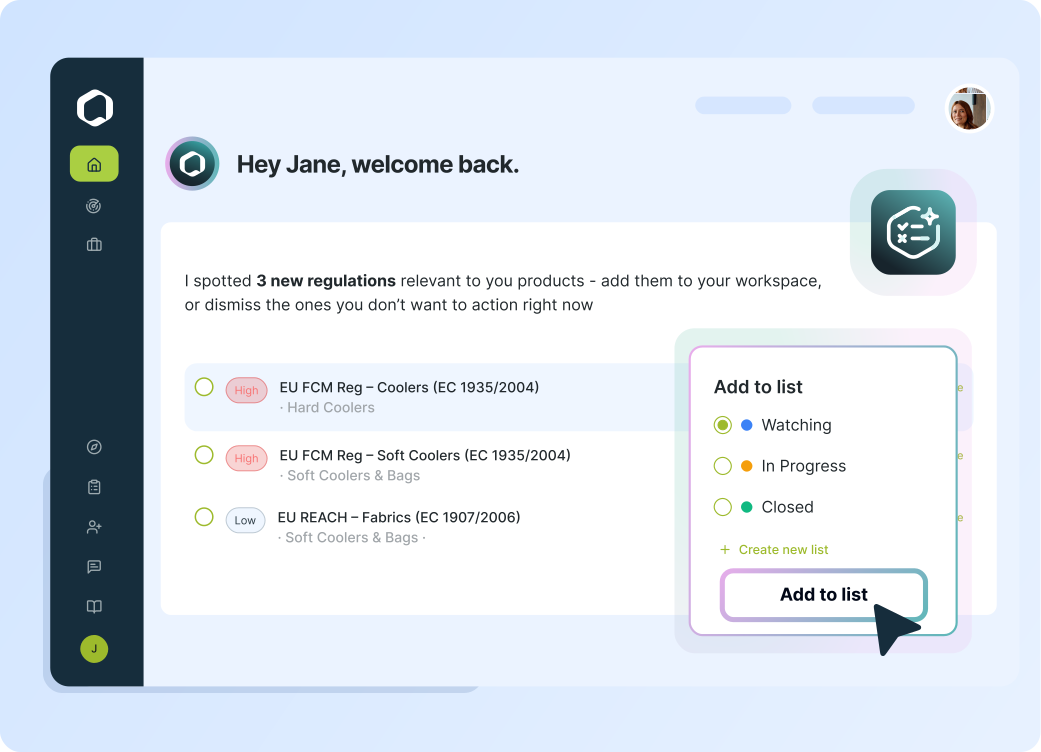
Automate the work of managing regulatory change.
Let AI agents do the heavy lifting of monitoring regulations, mapping requirements to products, extracting obligations, and surfacing the risks that need attention first.
Monitor Product Compliance
Stay Ahead of Regulatory Change
Get early visibility into changes that could affect your products, supply chain, or market access—so you can act proactively, not reactively.
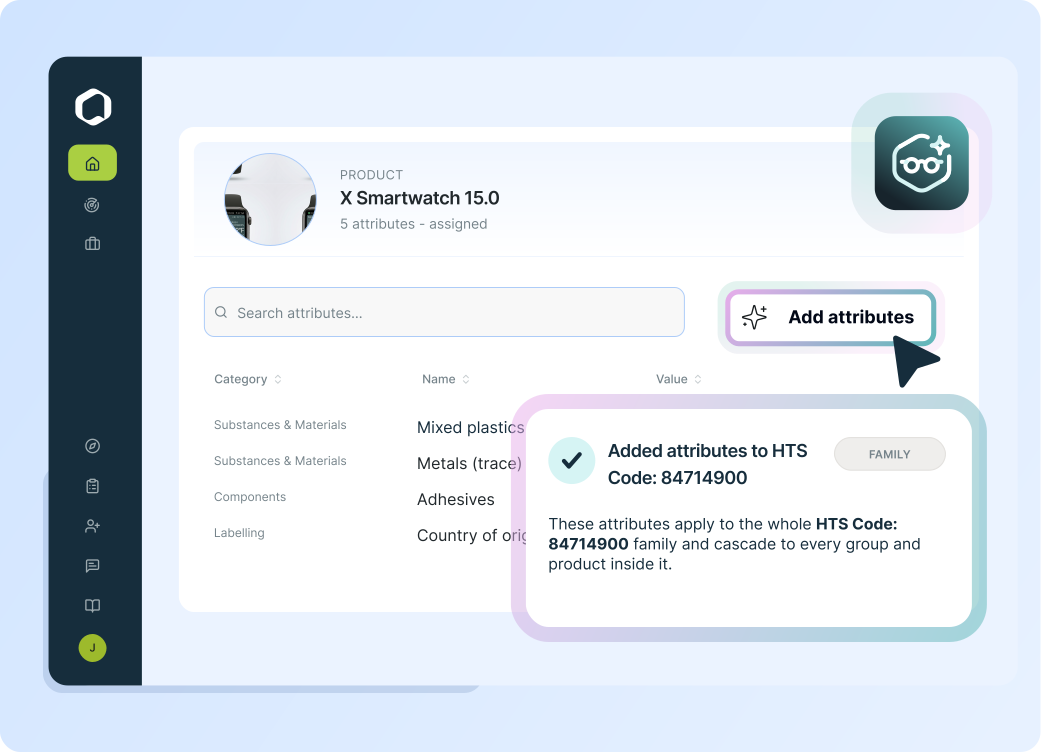
Assess Regulatory Applicability
Map Regulations to Your Products
Eliminate manual research and cut through regulatory noise by surfacing only the requirements relevant to your business, markets, and product categories.
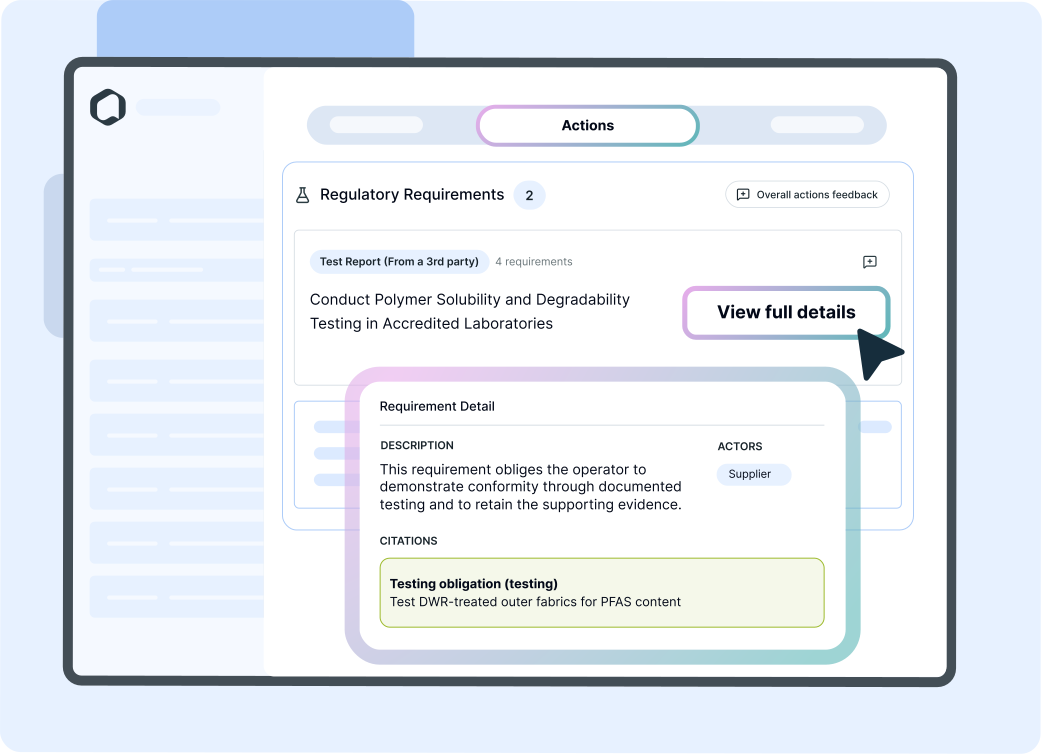
Identify Compliance Requirements
Turn complex regulations into clear, actionable tasks.
Give your teams instant clarity as AI agents transform dense legal and regulatory text into structured, easy-to-understand requirements.
Prioritize Business Risk
Focus Where Risk Is Highest
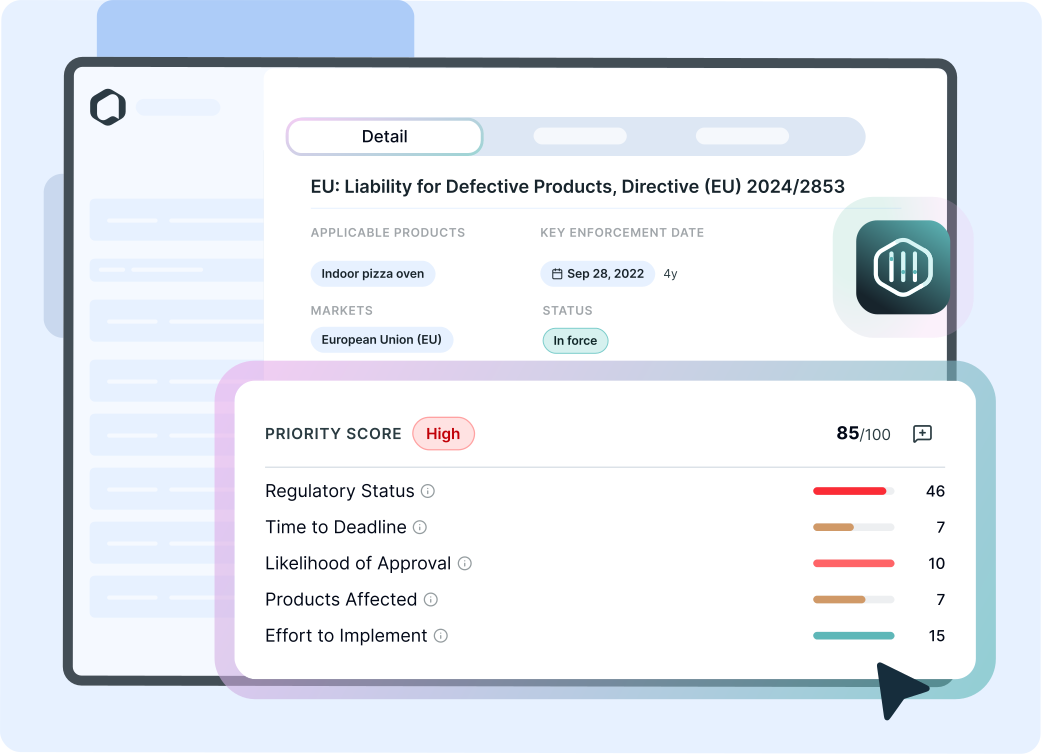
Make faster, risk-informed decisions with confidence as AI agents automatically rank regulatory changes based on urgency, business impact, compliance deadlines, and product exposure.
Spotlight
Turning Compliance into Value


The State of Product
Compliance 2026
Discover how 500+ global leaders are shifting product compliance from a cost-centre into a strategic driver of growth, with key benchmarks like 69% of teams calling remediation their biggest challenge.
Frequently Asked Questions
-
Compliance obligations typically include notifying and registering chemicals, conducting risk assessments, and classifying and labeling chemicals according to recognized systems like the UN GHS. Companies must also manage hazardous chemicals safely, control their use, and ensure proper handling and disposal in line with national regulations and international conventions.
-
The most commonly referenced conventions include the Stockholm Convention on Persistent Organic Pollutants (POPs), the Rotterdam Convention on prior informed consent for hazardous chemicals and pesticides in international trade, and the Montreal Protocol and Vienna Convention addressing ozone-depleting substances. These agreements establish controls on production, trade, phase-out, and safe management of specific hazardous chemicals.
-
International conventions (e.g., Stockholm or Rotterdam) establish high-level obligations between countries. However, companies are directly subject to national or regional implementing legislation, which may go beyond convention requirements.
For example, a substance listed under the Stockholm Convention may be subject to:
– Full prohibition in one jurisdiction
– Restricted use with exemptions in another
– Additional reporting or authorization requirements regionally
Professionals must therefore monitor both international listings and country-specific implementation measures.
-
Common challenges include:
– Divergent hazard classification outcomes under different GHS revisions
– Inconsistent substance thresholds (e.g., SVHC, toxic substances, restricted chemicals)
– Varying notification and registration triggers
– Supply chain data gaps (especially for imported articles)
– Rapidly evolving PFAS and POPs restrictions
Maintaining compliance requires robust regulatory intelligence, supplier engagement, and change management systems.
-
“REACH-like” refers to regulatory systems that adopt core REACH principles, such as:
– Pre-market registration of substances
– Data submission and hazard evaluation
– Risk management measures (restrictions/authorizations)
Examples include:
– UK REACH (post-Brexit regime)
– K-REACH (South Korea)
– China REACH (China’s MEE Order 12 – new substances)
– Turkey KKDIK
– TSCA
While similar in structure, each regime has unique timelines, data thresholds, and scope.
-
More
Regulatory
Topics
California Proposition 65 Compliance
Regulatory Focus California Proposition 65 195 Countries Covered 28 Languages 117 Regulato…
EU REACH
Regulatory Focus REACH Compliance Solutions 195 Countries Covered 28 Languages 2006 Regula…
Comply with the Globally Harmonized System (GHS)
Regulatory Focus Globally Harmonized System (GHS) 195 Countries Covered 28 Languages 1130 …
Nanotechnology
Regulatory Focus Nanotechnology 195 Countries Covered 28 Languages 384 Regulatory Sources …