Football and Forced Labour: Why Supply Chain Due Diligence Is Essential

This blog was originally posted on 8th July, 2026. Further regulatory developments may have occurred after publication. To keep up-to-date with the latest compliance news, sign up to our newsletter.
AUTHORED BY CRISTIAN BARROSO, REGULATORY COMPLIANCE SPECIALIST, NEDAA YOUSEF, REGULATORY COMPLIANCE ANALYST, ADHERENT
Introduction
With the knockout stage underway, the U.S.-Canada-Mexico 2026 FIFA World Cup has reached its midpoint. Billions of fans around the world are closely following the tournament as teams compete for a place in the final at MetLife Stadium on 19 July 2026.
As one of the world’s largest sporting events, the FIFA World Cup generates significant economic activity across sectors including hospitality, construction, advertising, manufacturing, and transportation. It creates employment opportunities, attracts investment, and stimulates commercial growth throughout the host countries and beyond.
Hosting a tournament of this scale, however, requires far more than sporting excellence. It depends on comprehensive legal and regulatory frameworks in areas such as public safety, security, procurement, and the protection of human rights, including measures to prevent forced labour within global supply chains.
As with any major event, the speed at which accelerated construction projects and the production of large volumes of merchandise can increase the risk of labour or modern slavery exploitation, particularly where multiple tiers of suppliers and subcontractors are involved. Concerns regarding working conditions and forced labour have led governments, businesses and organisers to place greater emphasis on responsible sourcing and supply chain due diligence.
For businesses, supplying products or services connected to the World Cup represents a significant commercial opportunity. By contrast, it also brings increased scrutiny over how products are manufactured and sourced, as well as services delivered. Because supply chains often span multiple sectors and layers of subcontracting, risks can be embedded deep within production processes, making it difficult to detect and address.
Against this backdrop, governments are strengthening measures to prevent goods made with forced labour from entering their markets, while introducing transparency requirements for businesses operating in global supply chains. These laws not only affect companies directly involved in supplying World Cup-related products and services but also any company importing goods into jurisdictions with forced labour restrictions.
This article examines the legal frameworks adopted by the United States, Canada and Mexico to address forced labour import restrictions and supply chain transparency. It also explores the practical implications for businesses participating in World Cup supply chains and explains why robust, risk-based human rights due diligence has become an essential component of legal compliance and responsible business conduct.
Want an in-depth look at Forced Labour & Modern Slavery Regulations? Download our whitepaper.
A Closer Look at the Regulations in the United States, Canada and Mexico
United States
The United States prohibits the importation of goods produced with forced labour under Section 307 of the 1930 Tariff Act (19 U.S.C. 1307). This was later reinforced by the Uyghur Forced Labor Prevention Act (UFLPA), which establishes a rebuttable presumption that all goods mined, produced, or manufactured wholly or in part in the Xinjiang Uyghur Autonomous Region of China (XUAR) or by entities listed under the Act involve forced labour and are therefore prohibited from entering the United States.
Unlike traditional import controls, the onus of proof rests on importers, who must demonstrate, through clear and convincing evidence, that their products are free of forced labour; otherwise, their shipments risk being detained or seized by U.S. Customs and Border Protection (CBP).
To overcome this presumption, importers may include evidence of supply chain mapping, traceability, supplier management systems, risk assessments, due diligence procedures, and any other records demonstrating that the goods are free from links to the XUAR or forced labour.
In practice, this means that although the legislation does not expressly mandate human rights due diligence, it imposes an obligation of result that indirectly requires importers to conduct exhaustive risk-based due diligence to mitigate forced labour risks in their supply chain.
Canada and Mexico
Canada and Mexico introduced their respective prohibitions on the importation of goods produced with forced labour pursuant to their commitments under the United States–Mexico–Canada Agreement (USMCA). In Canada, the prohibition has been in force since 1 July 2020 through amendments to the Customs Tariff. It was subsequently expanded to include goods produced with child labour following the enactment of the Fighting Against Forced Labour and Child Labour in Supply Chains Act (Forced Labour Act). Mexico, on the other hand, adopted in February 2023 its Agreement Prohibiting the Importation of Products made with Forced or Compulsory Labour.
Unlike the U.S. UFLPA, which establishes a rebuttable presumption that certain goods are produced with forced labour, both Mexico and Canada adopt a risk-based approach when assessing imports suspected of being linked to it. If the authorities determine that the goods have been produced using forced or compulsory labour, these are restricted from entry.
In addition, the Canadian Forced Act requires certain businesses to report annually on the steps they have taken to address modern slavery risks in their operations and supply chains. The reporting obligation applies to entities that meet at least two of the following thresholds:
- Assets exceeding CAD 20 million;
- Revenue exceeding CAD 40 million;
- An average workforce of more than 250 employees.
While both the Canadian and Mexican frameworks explicitly ban the import of goods made with forced labour, neither imposes a legal obligation on businesses to establish or implement human rights due diligence systems; instead, both jurisdictions encourage companies to adopt appropriate due diligence measures
Despite the above, a bill was recently introduced in Canada to strengthen the country’s existing import control regime by establishing a standalone legislative framework to prevent goods produced with forced labour from entering the Canadian market, replacing the current prohibition contained in the Customs Tariff to:
- Designate high-risk goods linked to forced labour
- Require enhanced supply chain traceability information.
- Prohibit the importation of designated high-risk goods.
- Create a cost recovery model.
The legal frameworks discussed above have practical implications across sectors involved in the World Cup supply chain.
Forced Labour Risks in the Manufacturing Sector
Textiles are one of the sensitive products most exposed to forced labour risks linked to major international sporting events such as the FIFA World Cup. Millions of jerseys, replica shirts, volunteer uniforms, staff apparel, hospitality textiles, and promotional merchandise are made through long and often complex supply chains that can stretch across several countries before the finished products reach the event and final consumers.
The greatest risks often begin with the raw materials at the earliest stage of production. Cotton, yarn, and fabric sourced from places with known forced labour concerns can end up in finished garments for the tournament, even when the final sewing or assembly happen somewhere else. That makes it hard for companies to see the full picture, especially when fibres, fabrics, and trims supply chains typically involve numerous intermediaries, manufacturers, and subcontractors.
One of the most significant compliance concerns continues to be the XUAR in China. According to CBP’s UFLPA Enforcement Statistics Dashboard, apparel, footwear, and textile products originating from China accounted for 4,413 shipment lines stopped under the UFLPA since its implementation in 2022, representing approximately one-third of the 13,092 shipment lines detained globally across all countries of origin.
The European Center for Constitutional Human Rights (ECCHR) has indicated that cotton from the Chinese XUAR can still be detected in the clothing of well-known German brands, since more than one-fifth of the world’s cotton supply comes from such regions. Meanwhile, Equidem has found labour risk indicators in the FIFA apparel supply chain.
Moreover, a Report from the Business and Human Rights Resource Centre highlights that Mexico’s apparel industry is exposed to significant labour risks, identifying concerns across 18 major parent companies linked to the country’s top apparel brand supply chains. The report underscores a persistent lack of transparency regarding the human rights due diligence practices.
Recent reports have shed light on state-imposed forced labour in the cotton industry in Turkmenistan. This specifically raises concerns in terms of imports that include Turkmen cotton into countries like the U.S where they may face enforcement scrutiny under 19 U.S.C. 1307 (Section 307 of the Tariff Act of 1930), as well as under the Canadian and Mexican frameworks, which prohibit the importation of goods made wholly or in part with forced labour.
In addition, the United States Trade Representative (USTR) has also highlighted persistent gaps in global enforcement. In its most recent report published in June 2026, it concluded that all 60 economies reviewed, including the United Kingdom, Canada, Mexico, Australia, China, Brazil, the Philippines, Vietnam, among others, have either not adopted or not effectively enforced restrictions on imports made with forced labour across different sectors such as cotton, electronics, batteries, aluminium, rice and tobacco.
For companies supplying apparel, textiles and other products for international sporting events, these risks show why strong supply chain due diligence matters so much. Businesses need to know not only who makes the final garment, but also where the cotton, yarn, fabric, and other inputs come from. Good due diligence, including supplier checks, traceability systems, country of origin records, and independent audits, can help companies achieve compliance and reduce the risk of goods being detained, blocked from import, or excluded from procurement programmes due to forced labour concerns.
Other Sectors: Hospitality and Construction
Among the major sectors that are involved in such sporting events are construction and hospitality. The forced labour risk arises from the existing operational framework which functions through a multi-tiered system involving various contractors, subcontractors, and recruitment firms. While such a model offers significant versatility, it effectively isolates the workforce from the organisations utilising their services. Consequently, this fragmentation of oversight makes identifying accountability for employment standards increasingly complex, even as financial influence remains centralised, presenting enduring obstacles to effective human rights enforcement.
The Qatar World Cup is a clear example of how these events depend not only on products and materials, but on the labour of thousands of workers, particularly migrant construction workers building stadiums, transport links, accommodation and related infrastructure. In Qatar, the tournament drew global attention to the conditions faced by construction workers, including recruitment fees, passport confiscation, delayed or withheld wages, excessive working hours, unsafe conditions and restrictions on changing employers or leaving the country.
Interestingly, the media attention to forced labour in Qatar prompted investigations into cases of previous tournaments like the one hosted by Brazil in 2014. News media outlets and several organisations published articles on the death of 111 workers in Brazil in 2014. These concerns showed that forced labour as a human rights violation extends not only to the goods supplied but also to the workforce delivering the event.
As with textiles, the greatest forced labour risks can arise well before the event opens. In construction, the key issue is often the treatment of workers rather than the origin of materials. One example of a risk that construction companies face during this ongoing World Cup is the scorching heat, which is the most prominent risk identified through Equidem’s research into FIFA 2026.
The examples of Qatar and Brazil illustrate how quickly labour rights concerns can become a reputational and legal issue for organisers and their commercial partners. For companies supplying construction services or hospitality labour for international sporting events, comprehensive human rights due diligence is therefore essential. Businesses should assess recruitment practices, verify that workers have not paid prohibited fees, monitor wages and working hours, ensure safe accommodation and working conditions, and provide accessible grievance mechanisms. They should also scrutinise subcontractors and labour agencies, since forced labour risks often arise several tiers down the chain. Strong due diligence helps companies demonstrate compliance with labour standards, protect workers, and reduce the risk of legal, commercial and reputational harm.
Looking Beyond Tier One in Supply Chains
The UN Guiding Principles on Business and Human Rights (UNGPs), the OECD Due Diligence Guidance for Responsible Business Conduct and the ILO Guidance on Forced Labour recognise human rights due diligence as a process through which companies identify, prevent, mitigate and remedy human rights and environmental harms in their supply chains.
When it comes to tackling forced labour, businesses are encouraged to follow the OECD’s globally recognised six-step due diligence framework to identify risks and take action to address them not only in their operations but also in their supply chains.
Step 1: Embed Due Diligence Policies
Companies should integrate forced labour due diligence into their policies, governance structures and risk management systems, reflecting local contexts, sector-specific risks and operational circumstances in consultation with their relevant stakeholders.
Companies must also communicate their policies and expectations to suppliers and other relevant business partners, and prioritise sourcing from suppliers that meet their expectations on responsible business conduct. This process should help companies identify not only high-risk operations but also high-risk business relationships.
Step 2: Identify and Assess Risks
Companies should undertake a broad scoping exercise of their operations and, where relevant, of their business relationships to identify where forced labour risks are most likely to occur and where the potential impacts could be most severe.
Where risks are associated with business relationships, companies should evaluate whether their suppliers and other partners have appropriate policies and processes in place to identify, assess, prevent and address risks.
Step 3. Address Risks
Once risks have been identified, companies should implement measures to manage and respond to them. Where risks arise through business relationships, companies should use their leverage to encourage suppliers and other business partners to prevent, mitigate, or cease harmful practices. This may involve collaborative engagement, capacity-building, contractual requirements, or other appropriate measures.
Step 4: Track Implementation and Results
Companies should monitor the implementation and effectiveness of their due diligence measures. Monitoring should extend beyond the company’s own operations to include periodic assessments of business partners and suppliers, verifying whether risk-mitigation measures remain effective or need to be adapted.
Step 5: Communicate how Impacts are Addressed
Companies should publicly communicate information about their forced labour due diligence processes, including on how they provide for or cooperate with business partners and suppliers in remediation where appropriate.
Step 6: Provide for Remediation When Appropriate
Where companies identify that they have caused or contributed to forced labour impacts, they should provide for or cooperate in remediation through legitimate processes. The extent of the companies’ responsibility depends on their involvement in the impacts. Where a company is directly linked to forced labour through a business relationship but has neither caused it nor contributed to the harm, it should use its influence to encourage business partners to provide effective remediation.
Depending on the circumstances, remediation could include restitution, rehabilitation, compensation, internal accountability or disciplinary measures, and satisfaction actions.
All in all, due diligence is about prevention. It enables businesses to identify and address risk before they cause harm. The scope and complexity of due diligence will vary depending on factors such as the company’s size, context of its operations, its position in the supply chain and the nature of its products and services.
As governments focus on tackling human rights and forced labour violations, effective due diligence beyond Tier 1 is becoming essential for businesses in the manufacturing, as well as in the hospitality and construction sectors operating in many global markets and participating in major international events such as the FIFA World Cup.
Failing to establish a robust due diligence system can leave businesses exposed to forced labour, as well as significant operational, legal, financial and reputational risks, including potential product withdrawals and disruptions to their stock supply and fulfilment, not to mention heightened scrutiny from investors and consumers.
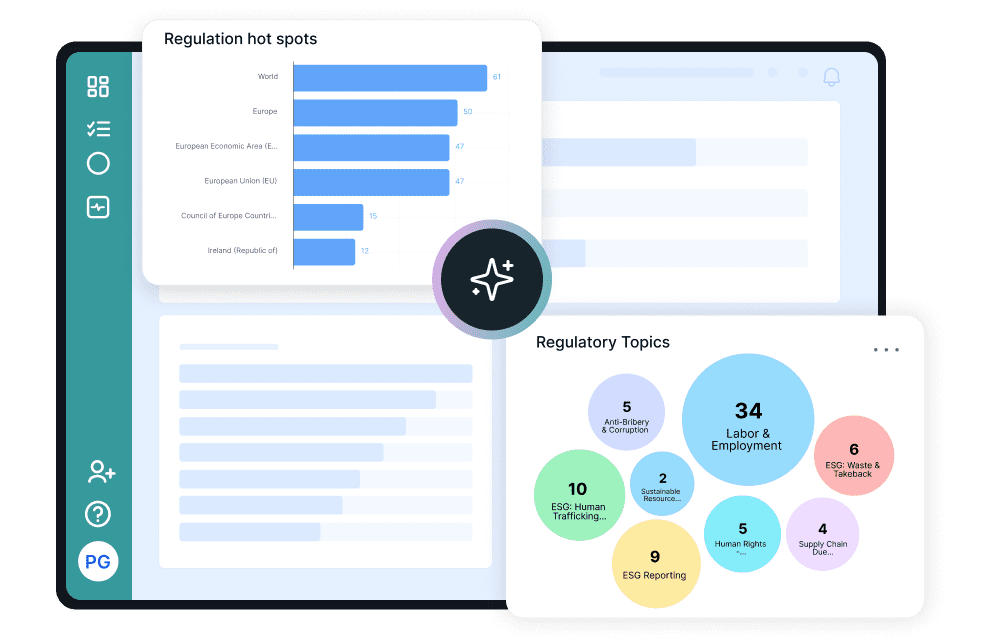
See Adherent in Action
Discover how agentic AI is reshaping product compliance for global enterprises.
Authors


Cristian Barroso
Regulatory Compliance Specialist
Compliance specialist with expertise in ESG, human rights, forced labor, circular economy, energy efficiency, ecodesign, and WEEE.

Nedaa Yousef
Regulatory Compliance Analyst
Regulatory compliance analyst with a focus on the Middle East and Arabic-speaking countries, specializing in circular economy, energy efficiency, ecodesign, supply chain due diligence and forced labor.

The Ultimate Product Compliance Playbook
What the World’s Leading Product Organizations Have Figured Out About Product Compliance