Regulatory Change Management Software: How to Choose the Right Tool

THIS BLOG WAS WRITTEN BY THE ADHERENT MARKETING TEAM TO INFORM AND ENGAGE. HOWEVER, COMPLEX REGULATORY QUESTIONS REQUIRE SPECIALIST KNOWLEDGE. TO GET ACCURATE, EXPERT ANSWERS, PLEASE CLICK ASK AN EXPERT.
Choosing the right regulatory change management software comes down to one question: can the tool turn a constant stream of incoming regulations into a structured, trackable workflow that your compliance team can actually execute? If the answer is yes, it belongs on your shortlist. If it leaves your team manually reconciling alerts in spreadsheets, it does not.
This guide walks compliance officers, risk managers, and GRC professionals through the key criteria, questions, and red flags to consider before committing to a platform.
Quick Answer
Regulatory change management software helps organizations monitor, assess, and respond to regulatory updates across jurisdictions. To choose the right tool, evaluate it against five core criteria: regulatory coverage breadth, impact assessment capabilities, workflow automation, integration with your existing GRC stack, and audit trail completeness. The best fit depends on your industry, geographic footprint, and the internal maturity of your compliance program.
Table of Contents
- What is regulatory change management software?
- Why spreadsheets and manual tracking fail at scale
- What features matter most in regulatory change management software
- How to evaluate regulatory coverage by jurisdiction and industry
- Integration requirements: fitting the tool into your GRC ecosystem
- Key questions to ask vendors before you buy
- Common mistakes when selecting compliance software
- FAQ
What Is Regulatory Change Management Software?
Regulatory change management software is a category of compliance technology designed to monitor regulatory developments, translate those changes into actionable tasks, and track implementation through to closure. It sits at the intersection of regulatory intelligence and internal project management.
At its core, a capable platform does three things well. First, it captures relevant regulatory changes from authoritative sources, whether that means legislative databases, regulatory body feeds, or curated compliance content libraries. Second, it surfaces only the changes that apply to your organization, based on your products, markets, or jurisdictions. Third, it routes those changes through an internal workflow so the right teams can assess impact, assign tasks, document decisions, and confirm completion.
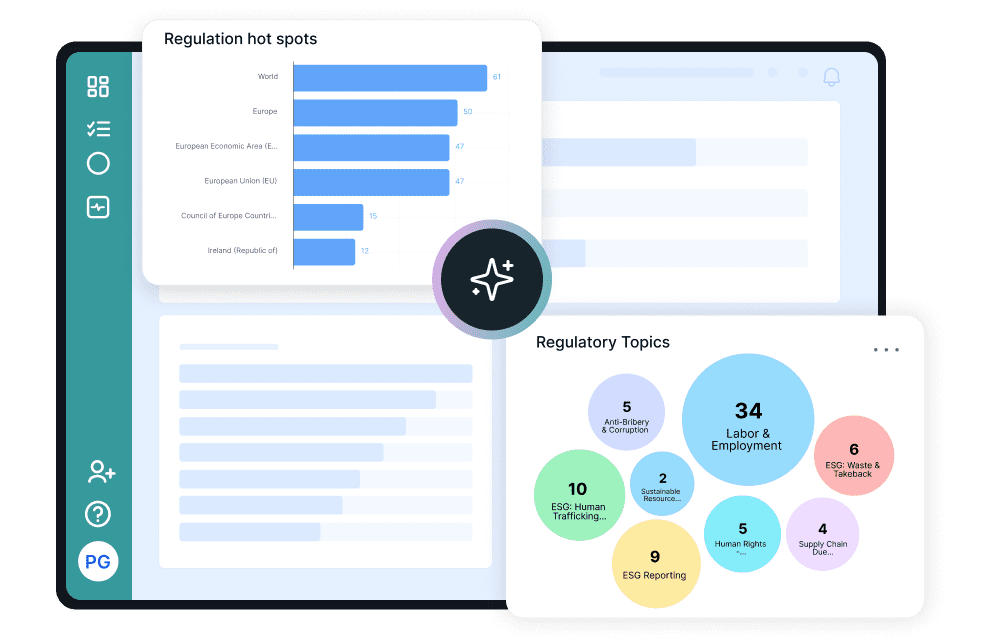
The Adherent platform is built around exactly this model: monitoring regulatory change, assessing impact, and managing the full workflow from alert to completion, with access to an in-platform expert compliance team to support interpretation.
Why Spreadsheets and Manual Tracking Fail at Scale
Many compliance teams start with spreadsheets. A shared tracker works when you are monitoring a handful of regulations in one or two markets. It breaks down quickly when you are tracking hundreds of regulatory changes annually across dozens of jurisdictions.
The failure modes are predictable. Ownership is unclear, so changes fall through without anyone noticing. Version control is nonexistent, so the compliance record is unreliable. There is no structured audit trail, which creates exposure during regulatory examinations. And the cognitive load of manually sifting through regulatory feeds burns out your best people on low-value work.
Organizations that rely on manual processes also tend to react late. By the time a regulatory change makes it into the tracker, gets assigned, and reaches the relevant business unit, the implementation window has already narrowed. Regulatory change management software solves this by collapsing the time between alert and assignment.
What Features Matter Most in Regulatory Change Management Software
Not all platforms are built the same, and feature lists can obscure what actually matters in practice. Here are the capabilities that separate capable tools from expensive noise.
Regulatory Intelligence and Coverage
The platform should pull from authoritative regulatory sources automatically, and the coverage should match your geographic and industry footprint. A tool with strong US federal coverage but limited EU or Asia-Pacific monitoring is not the right choice for a global manufacturer.
Ask vendors specifically which regulatory bodies and jurisdictions are covered natively, and how quickly changes are reflected in the platform after publication.
Impact Assessment Workflows
Receiving an alert is the easy part. The harder part is determining whether a regulatory change affects your products, processes, or policies, and to what degree. Look for platforms that support structured impact assessments, including fields to document scope, affected business units, required policy changes, and implementation timelines.
Some platforms, including those using AI-assisted analysis, can pre-populate impact fields based on your regulatory profile. This accelerates triage significantly when your team is handling a high volume of changes.
Task Management and Workflow Automation
Once impact is assessed, the platform needs to turn that assessment into executable work. This means creating tasks, assigning owners, setting deadlines, and tracking completion. The best tools integrate task management directly into the regulatory change record so there is a clean chain of custody from alert to resolution.
Look for configurable workflows, escalation rules for overdue tasks, and the ability to attach evidence of completion directly to the record.
Audit Trail and Reporting
Regulators expect to see documentation of how your organization monitored, assessed, and responded to regulatory changes. A clean, timestamped audit trail is not optional. Every decision, assignment, and status update should be logged automatically.
Reporting capabilities matter too. You should be able to produce a point-in-time compliance status report, filter by jurisdiction or regulatory body, and export records for external audit purposes.
Integration with Your GRC Ecosystem
Regulatory change management does not live in isolation. It connects to your policy management system, your risk register, your audit management platform, and potentially your ITSM or project management tools. A platform that sits as an island creates data silos and manual reconciliation work.
Evaluate the API capabilities and pre-built integrations carefully. Some enterprise GRC platforms offer integration-heavy architectures that connect regulatory change data to risk and control frameworks. Lighter-weight tools may offer webhook support but require custom development to connect to your stack.
How to Evaluate Regulatory Coverage by Jurisdiction and Industry
This is where vendor claims and reality can diverge most sharply. Before making a decision, pressure-test coverage in your specific context.
Request a demo using your actual regulatory universe. If you operate in the EU medical device space, ask the vendor to show you how they cover the Medical Device Regulation (EU MDR) and In Vitro Diagnostic Regulation (IVDR) update streams. If your footprint includes APAC markets, ask specifically about coverage for local regulators, not just international frameworks.
Check the sourcing methodology. Some platforms rely on third-party content aggregators, which introduces latency. Others maintain direct feeds or in-house editorial teams. Latency in regulatory intelligence is a real risk: a change published on a Tuesday that does not appear in your platform until the following week shortens your implementation window without warning.
For product compliance specifically, Adherent covers regulatory change across 195 countries with structured content, real-time alerts, and built-in task management tools, which is a strong benchmark for what enterprise-grade coverage looks like.
Integration Requirements: Fitting the Tool into Your GRC Ecosystem
Before issuing an RFP or entering vendor demos, map out your current GRC technology stack. Identify every system that touches compliance data: your policy library, risk management platform, internal audit system, document management repository, and any industry-specific compliance tools.
Then identify where regulatory change data needs to flow. In most organizations, a confirmed regulatory change should trigger a policy review in the policy management system, a risk reassessment in the risk register, and potentially a control update in the audit management platform.
The regulatory change management tool you select should either integrate natively with these systems or expose a robust API that allows your team to build the connections. Without this, your compliance operations will fragment across platforms, and you will end up doing manual data entry at every handoff point.
Also evaluate identity and access management compatibility, single sign-on support, and data residency requirements, particularly if you operate in jurisdictions with strict data localization rules.
Key Questions to Ask Vendors Before You Buy
Use these questions to move past marketing language and into specifics.
- How often is regulatory content updated, and what is the average latency between official publication and platform availability?
- How is content curated, by machine, by editorial teams, or some combination?
- Can you demonstrate the impact assessment workflow using a real regulation from our primary jurisdiction?
- What does the audit trail look like, and can you export it in formats accepted by external auditors?
- What integrations are pre-built, and what does custom integration require in terms of technical resources?
- What is the onboarding process, and how long does it typically take to configure the platform to our regulatory profile?
- How are changes to regulations handled mid-implementation, when a regulation is amended before your organization completes the response?
A vendor that cannot answer these questions specifically is a vendor worth deprioritizing.
Common Mistakes When Selecting Compliance Software
Selecting based on feature count rather than workflow fit is the most common mistake. A platform with forty features you will never use is less valuable than a focused tool that handles your core use case cleanly.
Underestimating implementation complexity is the second. Many platforms require significant configuration to reflect your organizational structure, regulatory profile, and workflow preferences. Factor implementation time and professional services costs into your total cost of ownership.
Skipping the reference check is the third. Ask vendors for references from organizations with a similar regulatory footprint and team size. A platform that works well for a 10-person compliance team at a domestic insurer may not be the right choice for a 200-person GRC function at a global manufacturer.
Finally, neglecting change management on the internal side. Technology alone does not improve compliance outcomes. Your team needs to understand how to use the platform and why the workflow it enforces matters. Build adoption into the implementation plan from day one.
For a broader view of how compliance risk assessment connects to your software selection process, see the Adherent blog for ongoing analysis of regulatory change management strategies.
FAQ
- What is the difference between regulatory change management software and a GRC platform?
A GRC platform is a broad category covering governance, risk, and compliance across many use cases. Regulatory change management software is a specialized subset focused specifically on monitoring, assessing, and responding to regulatory updates. Some GRC platforms include regulatory change management as a module, while others treat it as a separate product. Standalone regulatory change management tools typically offer deeper regulatory content libraries and more specialized workflows than the regulatory change module inside a general GRC suite. - How much does regulatory change management software cost?
Pricing varies significantly based on the number of jurisdictions covered, the size of your team, and the level of regulatory intelligence included. Entry-level tools may start in the low thousands per year. Enterprise platforms with broad global coverage, AI-assisted impact assessment, and deep integrations typically run from $50,000 to $200,000 or more annually. Total cost of ownership should include implementation, onboarding, and ongoing support. - Can small compliance teams benefit from regulatory change management software?
Yes, particularly if the team monitors multiple jurisdictions or a complex regulatory environment. The efficiency gains from automated monitoring and structured workflows often justify the investment for teams as small as five to ten people, especially when the alternative is a fragmented mix of manual feeds, spreadsheets, and ad hoc email chains. - How long does implementation typically take?
Implementation timelines range from a few weeks for lighter-weight cloud tools to six months or more for enterprise platforms requiring deep configuration and integration. The largest driver of implementation time is the complexity of your regulatory profile and the number of systems you need to integrate. Factor onboarding time into your vendor evaluation, particularly if you have a regulatory deadline approaching. - What role does AI play in regulatory change management software?
AI capabilities in this space are evolving quickly. Current applications include automated classification of regulatory changes by type, jurisdiction, and affected business area; natural language processing to extract key obligations from regulatory text; and impact pre-assessment based on your regulatory profile. More advanced platforms are beginning to offer predictive flagging, surfacing regulatory changes that have not yet been finalized but are likely to affect your organization based on legislative trends. The practical value of AI features depends on the quality of the underlying regulatory data.
See Adherent in Action
Discover how agentic AI is reshaping product compliance for global enterprises.


The Ultimate Product Compliance Playbook
What the World’s Leading Product Organizations Have Figured Out About Product Compliance