Advancing a Global Baseline for Product Safety: Key Takeaways from ICPHSO’s 2026 Brussels Symposium

This blog was originally posted on 21st September, 2026. Further regulatory developments may have occurred after publication. To keep up-to-date with the latest compliance news, sign up to our newsletter.
AUTHORED BY JOANNE O’DONNELL, SENIOR DIRECTOR OF GLOBAL REGULATORY COMPLIANCE, ADHERENT
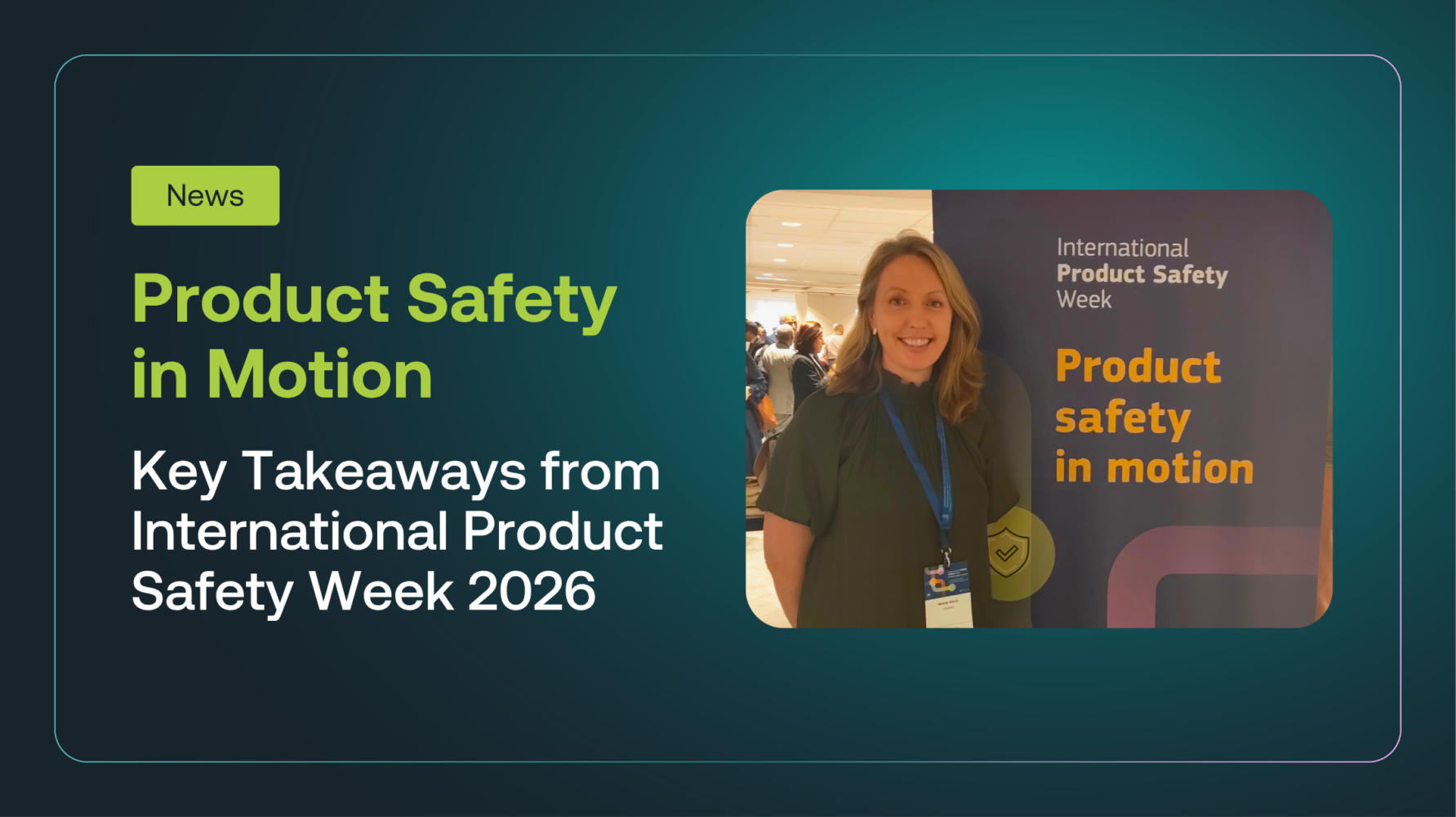
The ICPHSO (International Consumer Product Health & Safety Organization) Annual Symposium returned to Brussels on 9 and 10 September 2026 and featured an action-packed program of sessions focused on the theme: “Advancing a Global Baseline for Product Safety.”
Key Insight
The Symposium demonstrated that technology, including AI-driven market surveillance, digital labeling, and Digital Product Passports, is moving faster than regulatory harmonization across markets. International cooperation between regulatory authorities is increasingly emerging as a real driver of product safety whilst the scope of product safety itself is being forced to adapt to include emerging technologies and hazards as well as new business models like online platforms and marketplaces.
Below is a summary of some of my key takeaways.
Table of Contents
- Strengthening Regulatory Cooperation and Data Sharing
- 18 Trillion Reasons Why The UN Principles for Consumer Product Safety Apply to your Product
- Button Batteries: Designing the Hazard Out
- Microplastics as a Product Safety Issue, Not Just an Environmental One
- Online Marketplaces and Retailers Take Centre Stage
- Conclusion
Strengthening Regulatory Cooperation and Data Sharing
Across two Global Regulator Sessions, regulators from Australia, Canada, the EU, the UK, Brazil and Catalonia (with the US unfortunately absent again this year) set out how their priorities are converging on several fronts. Day 1 brought together the Australian Competition and Consumer Commission, Health Canada, the EU Commission and the UK’s Office for Product Safety and Standards, who pointed to three shared themes:
- AI as a market surveillance tool – from web crawlers flagging dangerous products online or catching the reappearance of items already notified under Safety Gate, to AI-assisted rapid review of public consultation responses;
- Emerging technologies blurring the boundaries between everyday consumer goods, medical devices and cosmetics with the OPSS highlighting its Innovative Products Advice Centre and Product Regulation Sandbox whilst the EU Commission also spoke about the EU Council proposal for common principles on regulatory sandboxes in order to reduce fragmentation between Member States;
- Stronger international cooperation and cross-border data sharing between market surveillance authorities and international bodies like the UN and OECD.
Day 2 featured Brazil’s National Institute of Metrology, Quality and Technology (INMETRO) who spoke about their Inmetro na Palma da Mão digital verification platform alongside AI-driven cyber inspections of online sales – but acknowledged that reaching vulnerable consumer groups remains an ongoing challenge. Catalonia’s regulator flagged personal mobility devices, sports supplements, and vulnerable groups such as children and older adults as enforcement priorities.
What to watch: whether the EU’s new sandbox proposal helps harmonise the approach to testing emerging technologies across Member States?
18 Trillion Reasons Why The UN Principles for Consumer Product Safety Apply to your Product
The UN Principles for Consumer Product Safety, adopted in December 2025, permeated several panel discussions at this year’s symposium. The Principles affirm the right of all consumers to have access to safe products and the need to provide consumers – including those in vulnerable and disadvantaged situations – with a high level of protection against unsafe products both online and offline, particularly in countries with less developed product safety frameworks. The Principles also call on governments to empower national authorities to develop and enforce standards, strengthen policies for online marketplaces, investigate and act against businesses selling unsafe products, and collect and communicate recall data effectively. UNCTAD is currently in the process of developing a handbook and training materials to help implement the Principles.
One of the sessions in particular – entitled 18 Trillion Reasons Why the UN Principles for Consumer Product Safety Apply to Your Product: Safe and Accessible Products for All Persons – focused on the business case in favour of the Principles, outlining that because the Principles declare safety a universal right, the entire supply chain is accountable even in countries that are not formal signatories. As such, ignoring accessibility is not just an ethics risk but also represents a revenue and compliance risk.
What to watch: Will UNCTAD’s forthcoming handbook and training materials give the Principles real practical bite – translating the business case made at ICPHSO into concrete accessibility and safety standards that businesses and non-signatory countries can begin to adopt?

Button Batteries: Designing the Hazard Out
On the ground, button batteries remain a top priority. A session featuring Reese’s Purpose and Energizer highlighted how a joint collaboration shows what is possible when manufacturers and consumer advocates work toward a shared goal of safer products. Discussion focused on the development of Energizer’s 3-in-1 Child Shield lithium coin batteries – an initiative born out of advocacy following the tragic death of 18-month-old Reese Hamsmith. The conversation centred on designing the hazard out of products altogether, not just meeting minimum regulatory thresholds.
What to watch: Could the Energizer-Reese’s Purpose model of designing hazards out at the source become standard industry practice?
Microplastics as a Product Safety Issue, Not Just an Environmental One
A striking, data-driven session reframed microplastics as a health hazard requiring product-design attention, not just an environmental issue. Some startling statistics were shared: a single steeped plastic tea bag can release 11.6 billion microplastic particles, infants show higher exposure levels than adults, and a 2025 Nature study found the average human brain contains roughly 7 grams of micro- and macroplastics. Panelists acknowledged that obstacles to solving the issue are multiple and complex, and include jurisdictions defining “microplastic” differently by size, shape, and composition, a lack of standardization for sampling methods, and the fact that most research is concentrated in OECD countries, leaving major data gaps in the developing world.
What to watch: The global digital platform ‘I’m Plastic Free’ – established to connect consumers and small businesses with verified, plastic-free alternatives to everyday items – is due to release a series of training modules on microplastics exposure from consumer products designed to guide product designers, manufacturers importers and retailers to review their product range for potential hazards.
Online Marketplaces and Retailers Take Centre Stage
Online marketplaces and retailers were a major focus at ICPHSO, as regulators continue to adapt to evolving online sales models. Discussions centred on changes to the EU Safety Gate portal introduced by the General Product Safety Regulation whereby online marketplaces must now register platform details, business names, logos, and contact channels via the dedicated registration module and must comply with official product removal orders from national authorities within two working days.
Panellists argued that while market surveillance is necessary, greater transparency through safe-by-design documentation before market entry – potentially enabled by the Digital Product Passport – could prevent unsafe products reaching the market in the first place and ease pressure on Safety Gate.
A separate session tackled how online resellers can comply with Extended Producer Responsibility (EPR) rules, highlighting significant friction points: fragmented requirements across Member States for registration, reporting, and Authorised Representatives, plus mounting financial and administrative burdens from multiple registrations, varied deadlines, and stacked costs (registration, EPR, PRO, AR, and compliance management fees).
What to watch: how heavily will the new Safety Gate response windows be enforced and will the EU’s attempt at harmonising EPR rules relieve the growing burden on online resellers?

Conclusion
Pulling the two days together, a few threads ran through almost every session in Brussels. Technology is moving faster than regulatory harmonization with market surveillance authorities across the EU, UK, Australia, Canada, Brazil and the US all taking different approaches to standardizing digital labeling, AI detection, and product passports. International cooperation, not just national compliance, is emerging as a real driver of product safety from cross-border data sharing between regulators to the UN Principles for Consumer Product Safety.
AI is reshaping both compliance and enforcement, but every panel that raised it also raised the same caveat: human judgment has to stay in the loop. The scope of product safety is also widening further still, from inclusive design under the UN Principles to emerging hazards like microplastics that were, until recently, treated as purely environmental issues.
I am already looking forward to the 2027 Annual Meeting & Training Symposium in Arlington, Virginia in February!
See Adherent in Action
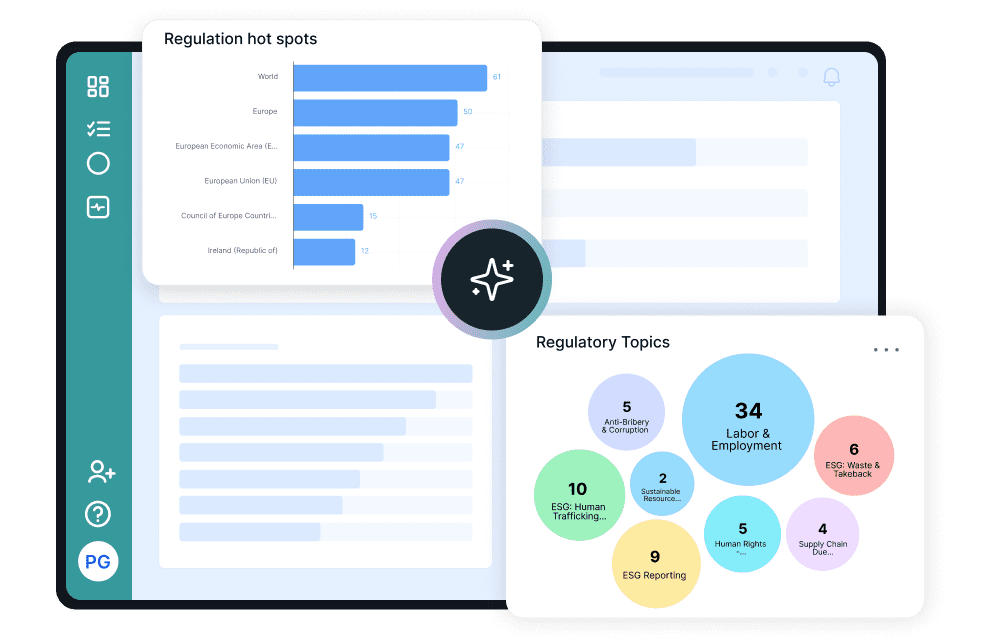
Discover how agentic AI is reshaping product compliance for global enterprises.
Authors


Joanne O’Donnell
Senior Director – Global Regulatory Compliance
Leading Global Regulatory Compliance with Expertise in Sustainability, ESG, Climate Change, Forced Labor, as well as Business and Human Rights.

The Ultimate Product Compliance Playbook
What the World’s Leading Product Organizations Have Figured Out About Product Compliance