

Regulatory Focus
Nanotechnology

Nanotechnology
195
Countries Covered
28
Languages
384
Regulatory Sources
Nanotechnology regulations govern the manufacture, use, and market placement of products containing nanoscale materials, requiring companies to assess risks, ensure safe handling, and comply with disclosure, testing, and labeling obligations to protect human health and the environment.
Nanotechnology regulations govern how companies assess, register, test, document, and communicate hazards of nanoscale materials to manage compliance, risk, and market access globally.
Companies must meet substance-level and product-specific obligations covering market entry, hazard assessment, and ongoing compliance for nanoscale materials. These typically include pre-market notifications or registrations, national or regional reporting, documentation, and compliance with chemical safety, classification, and labeling frameworks across jurisdictions.
- Registration – Requirement to register or notify substances, including nanoforms where applicable, under existing chemical regulatory frameworks prior to manufacture, import, or placing on the market.
- Chemical restrictions – regulatory provisions that oversee the manufacture and use of specific chemicals that may pose risks to human health or the environment. They require manufacturers and importers to ensure that their products do not contain prohibited or restricted substances above permitted thresholds.
- Reporting – Obligation to submit information to authorities regarding the manufacture, import, or use of nanomaterials, where required under national chemicals or product safety legislation.
- Testing – Requirement to generate or provide safety data sufficient to assess potential risks to human health or the environment, including evaluation of material properties relevant at the nanoscale.
- Marking/labelling – Obligation to communicate hazard or material information through labeling where nanomaterials are subject to classification, hazard communication, or sector-specific disclosure requirements.
- Providing product information – Requirement to supply relevant safety or technical information (e.g., through Safety Data Sheets, technical files, or regulatory submissions) concerning nanomaterial characteristics and safe use.
- Retention/Destruction of records – Obligation to maintain documentation demonstrating compliance with applicable chemical or product regulatory requirements, including safety assessments and submissions
We cover binding laws, implementing regulations, and authoritative guidance governing the definition, notification, reporting, and safety assessment of nanomaterials across chemicals, consumer products, cosmetics, and medical devices. Our coverage spans cross-sector chemical frameworks, product-specific regimes, and national nano-register and reporting systems, alongside supporting technical and regulatory guidance.
- EU: Definition of Nanomaterial, Commission Recommendation 2022/C 229/01
- EU Regulation (EU) 2018/1881 addressing nanoforms of substances
- EU: Cosmetic Products Regulation (EC) 1223/2009
- France: Annual Reporting of Substances Placed on the Market in Nanoparticle Form, Decree 2012-232
- France: Content and Conditions of Annual Declaration of Nanoparticle Substances, Ministerial Order, August 2012
- France: Conditions for Application for Exemption for Annual Declaration of Nanoparticle Substances, Ministerial Order, January 2013
- Belgium: Placing on the Market of Substances Manufactured at the Nanoscale, Royal Decree, 27 May 2014
- Denmark: Register of Mixtures and Products Containing Nanomaterials, Statutory Order No. 644/2014
- USA: Toxic Substances Control Act (TSCA), Reporting and Recordkeeping Requirements – Amendment – (on nanoscale materials reporting and recordkeeping), Final Rule, 40 CFR 704.20, January 2017
- Australia: Adjustments to NICNAS New Chemical Processes for Industrial Nanomaterials, Notice, October 2010
- Canada: Requirement to Provide Information on Certain Nanomaterials, Notice, July 2015
- EU: Guidance on the Determination of Potential Health Effects of Nanomaterials Used in Medical Devices, SCENIHR Opinion, January 2015
- USA: Application of Nanotechnology in FDA-Regulated Products, Guidance, June 2014
- Australia: Changes to Medical Device Essential Principles for Nanomaterials, Guidance Document, March 2023
- China: Evaluation of Safety and Effectiveness of Medical Devices Using Nanomaterials Part III: Biocompatibility/Toxicology Evaluation, Guidelines, August 2024
- Canada: Framework for the Risk Assessment of Manufactured Nanomaterials under the Environmental Protection Act, Plan, March 2026





Intelligent Resources




Automate the work of managing regulatory change.
Let AI agents do the heavy lifting of monitoring regulations, mapping requirements to products, extracting obligations, and surfacing the risks that need attention first.
Monitor Product Compliance
Stay Ahead of Regulatory Change
Get early visibility into changes that could affect your products, supply chain, or market access—so you can act proactively, not reactively.
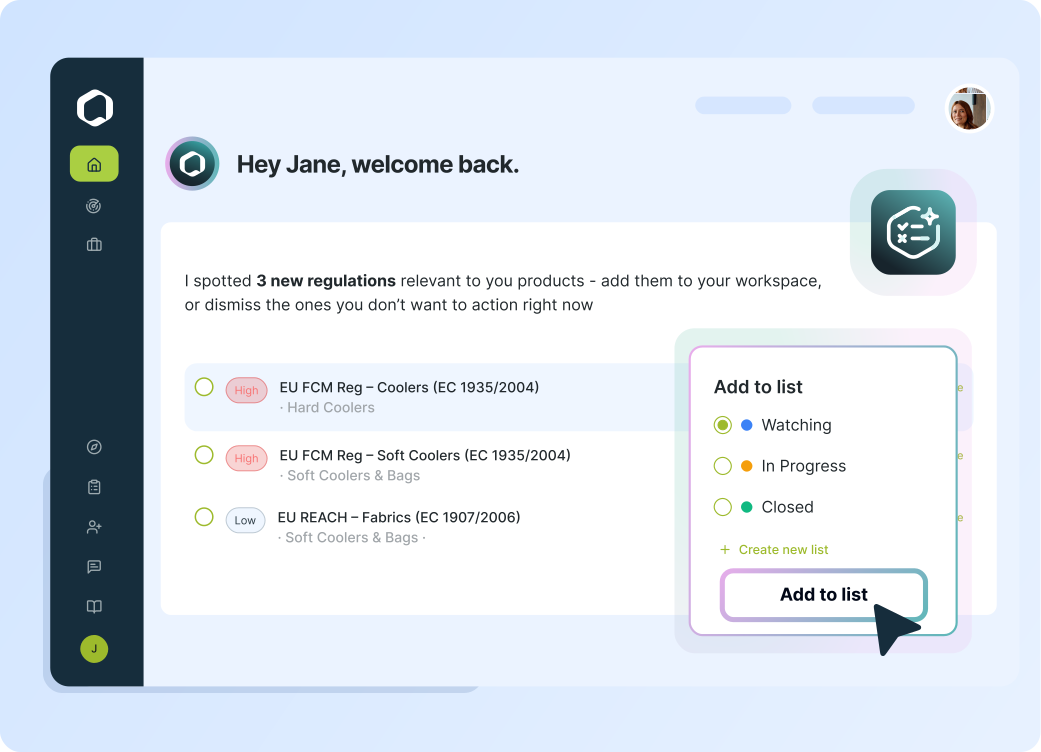
Assess Regulatory Applicability
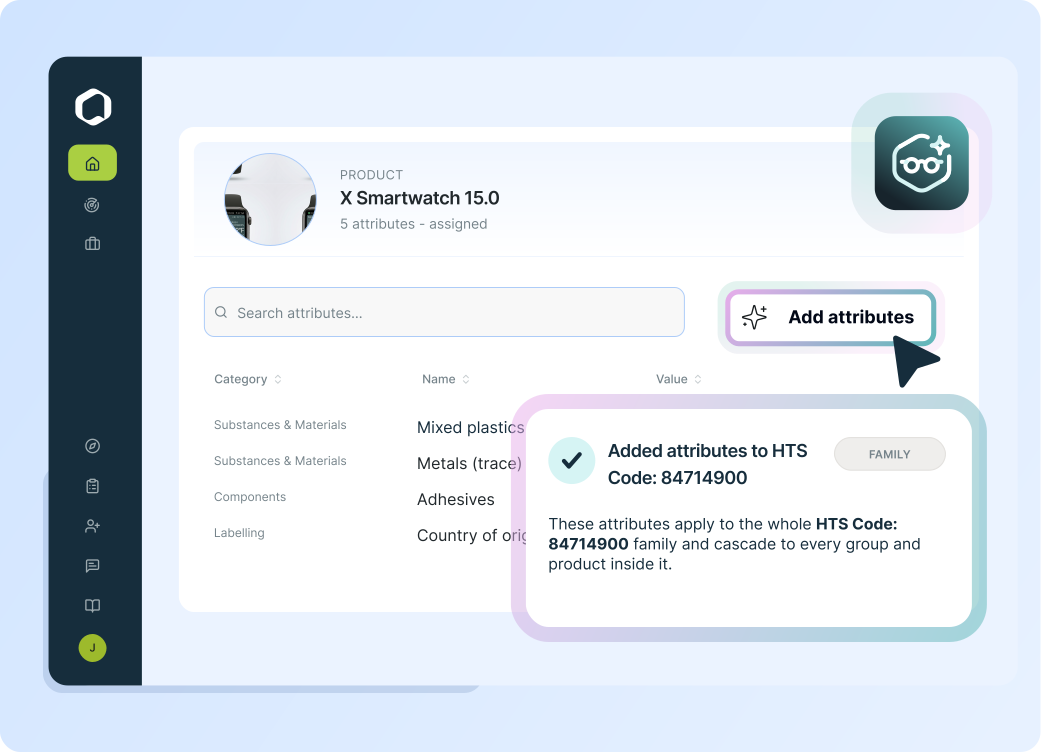
Map Regulations to Your Products
Eliminate manual research and cut through regulatory noise by surfacing only the requirements relevant to your business, markets, and product categories.
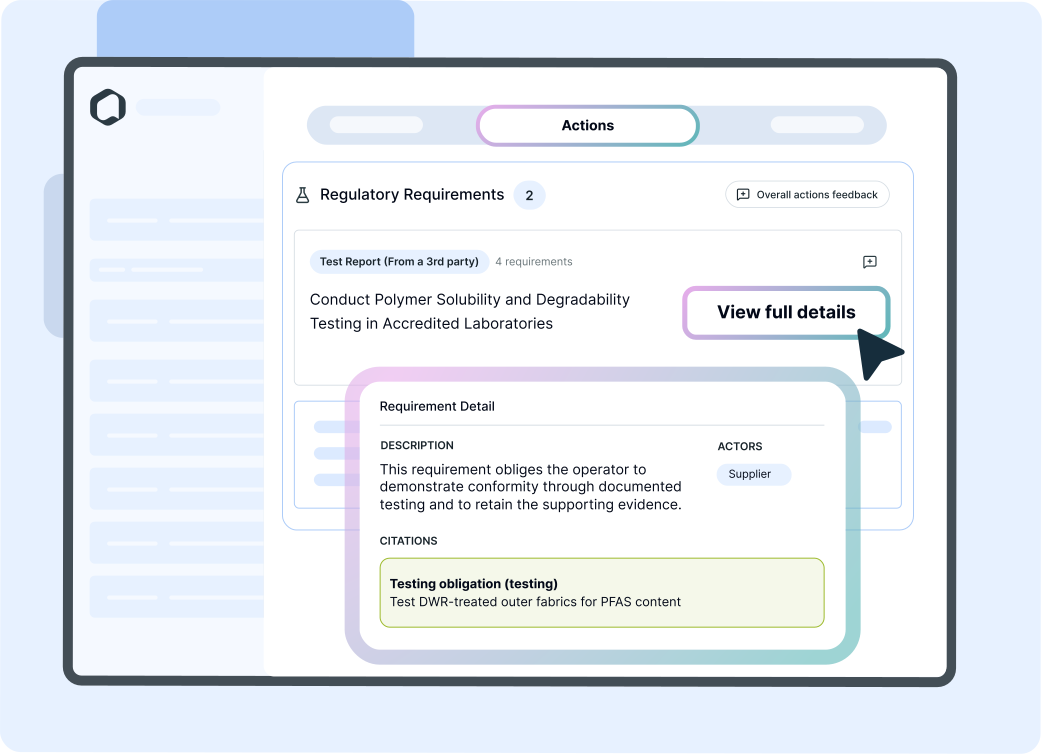
Identify Compliance Requirements
Turn complex regulations into clear, actionable tasks.
Give your teams instant clarity as AI agents transform dense legal and regulatory text into structured, easy-to-understand requirements.
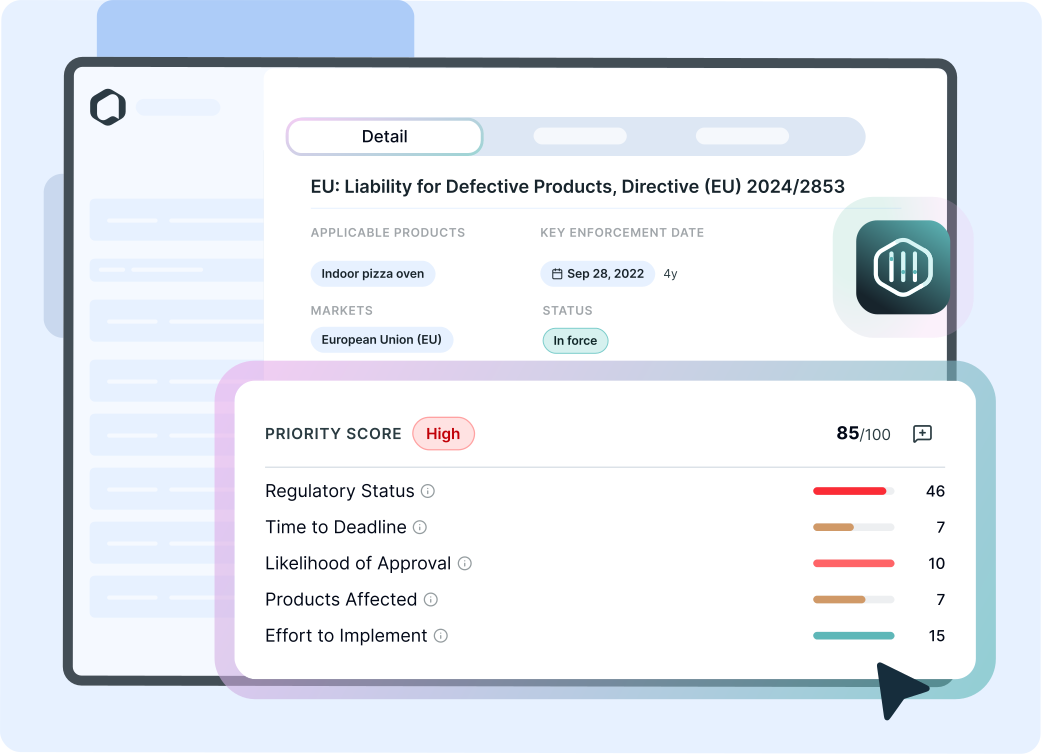
Prioritize Business Risk
Focus Where Risk Is Highest
Make faster, risk-informed decisions with confidence as AI agents automatically rank regulatory changes based on urgency, business impact, compliance deadlines, and product exposure.
Spotlight
Turning Compliance into Value


The State of Product
Compliance 2026
Discover how 500+ global leaders are shifting product compliance from a cost-centre into a strategic driver of growth, with key benchmarks like 69% of teams calling remediation their biggest challenge.
Frequently Asked Questions
-
A material is generally considered a nanomaterial when it meets the applicable regulatory definition, such as the EU Commission Recommendation 2022/C 229/01, which focuses on particle size distribution and the proportion of particles with dimensions between 1 and 100 nanometres. This determination is critical because it triggers specific reporting, registration, labelling, and safety assessment obligations under frameworks like EU REACH, CLP, and national nano-register schemes.
-
Companies must ensure that nanomaterials are properly identified and addressed under applicable chemical and product regulations, including substance registration or notification, reporting to national nano registers where applicable, recordkeeping, and safety documentation. Depending on the jurisdiction and product type, additional obligations may apply, such as TSCA reporting and recordkeeping in the US, CEPA/SNAc compliance in Canada, or sector-specific requirements for cosmetics, medical devices, or food contact materials in the EU.
-
Nanomaterials may exhibit different physical, chemical, or biological properties compared to their bulk form. Regulators, therefore, assess whether nanoscale characteristics could influence human health or environmental risks under existing chemical and product safety frameworks.
-
In some regulatory systems, nanoforms of a substance may require additional data or separate identification if their properties differ significantly from the conventional form. This ensures that safety assessments reflect the material’s specific characteristics.
-