Beyond the Firewall: Navigating the Middle East’s New AI & Cyber Laws
This blog was originally posted on 15th July, 2026. Further regulatory developments may have occurred after publication. To keep up-to-date with the latest compliance news, sign up to our newsletter.
AUTHORED BY JUMANA IGHBARIA HAMAM, REGULATORY COMPLIANCE SPECIALIST, ADHERENT
We are living through a massive technological shift. Artificial intelligence is no longer just a futuristic concept; it is moving into our heavy industries, critical civil infrastructure, financial systems, and everyday apps faster than we can click “accept terms.” But as Middle Eastern countries rapidly transform into the world’s first AI-native digital hubs, they are hitting a hard, unavoidable truth: innovation and risk are completely inseparable.
This lightning-fast evolution has brought us to a critical tipping point, forcing tech leaders, compliance officers, and governments to rethink everything they know about digital defense. It sparks an urgent question in tech circles:
Does the old definition of cybersecurity – built for standard IT networks – even fit the era of AI?
The short answer is no. Yesterday’s human-speed defenses simply cannot stop an AI-speed threat. It takes an AI-driven shield to fight an AI-driven enemy.
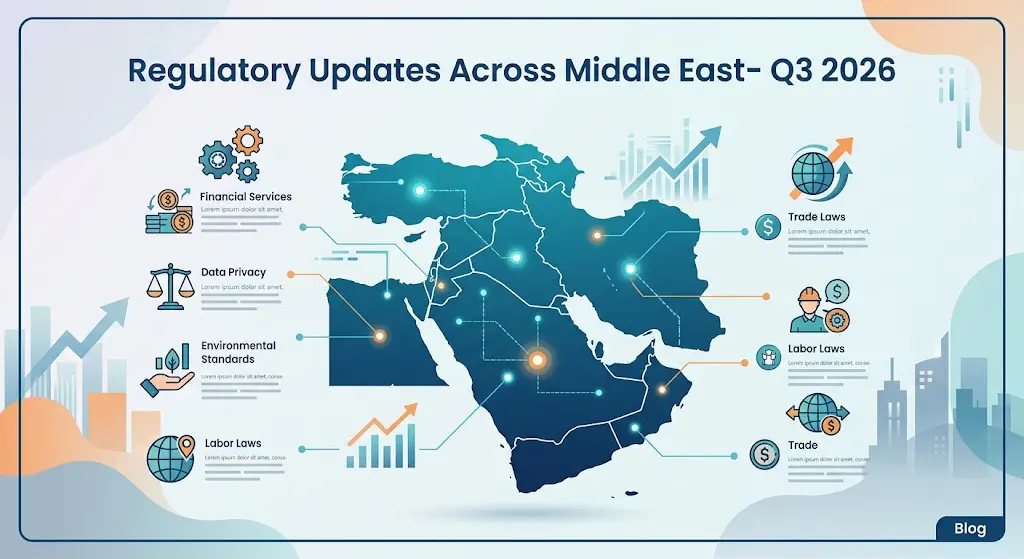
As regional heavyweights scramble to build this digital armor, a flood of brand-new regulations is completely rewriting the rules of the game. Following in the footsteps of global frameworks, Middle Eastern nations are rolling out their own aggressive, forward-thinking legal playbooks.
In this blog, we will examine the sweeping compliance updates, strict reporting timelines, and sandboxes being deployed by the region’s main players to redefine digital defense.
Want to take a deep dive into the new era of Product Cybersecurity? Check out our whitepaper!
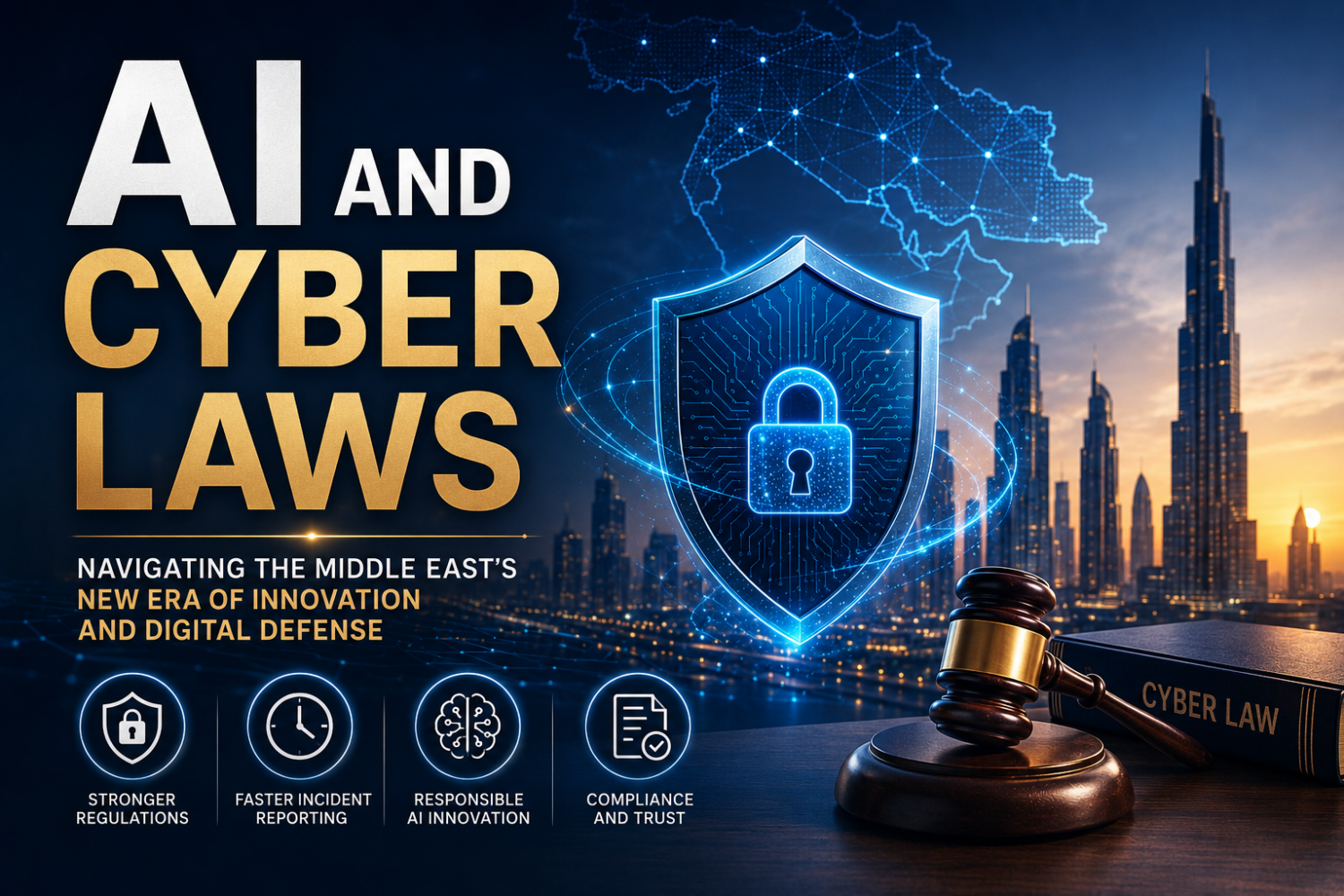
Table of Contents
- Saudi Arabia: Drawing the Lines for AI & Trust
- Israel: Moving Toward an AI-Powered “Cyber Dome”
- Turkey: Fortifying Critical National Infrastructure
- Kuwait & UAE: Securing Smart Trade and Smart Cities
- The New Reality: the Middle East is Rewriting the Global Playbook
Saudi Arabia: Drawing the Lines for AI & Trust
Saudi Arabia is leading the charge with two major regulatory drafts designed to secure the AI lifecycle from initial design all the way to its end-of-cycle retirement.
The AI Cyber Guidelines (July 2026)
The National Cybersecurity Authority (NCA) recently launched a public consultation on its Draft AI Cybersecurity Guidelines, open for public comments until early August 2026. These guidelines apply as recommended best practices for any entity in the Kingdom using or planning to deploy AI—specifically targeting cutting-edge implementations like Generative AI and autonomous Agentic AI (AI capable of acting independently).
While not mandatory yet, they establish a critical blueprint focused on three practical defense areas:
- Human-in-the-Loop: Ensuring strict, continuous human oversight over independent AI agents.
- Data Protection: Heavy encryption and defense for specific inputs like prompts, data embeddings, and underlying training data to prevent corporate espionage and data leaks.
- Incident Resilience: Mandatory rollback protocols, safe shutdowns, and manual operational alternatives if an AI system is compromised.
The Responsible AI Policy (April 2026)
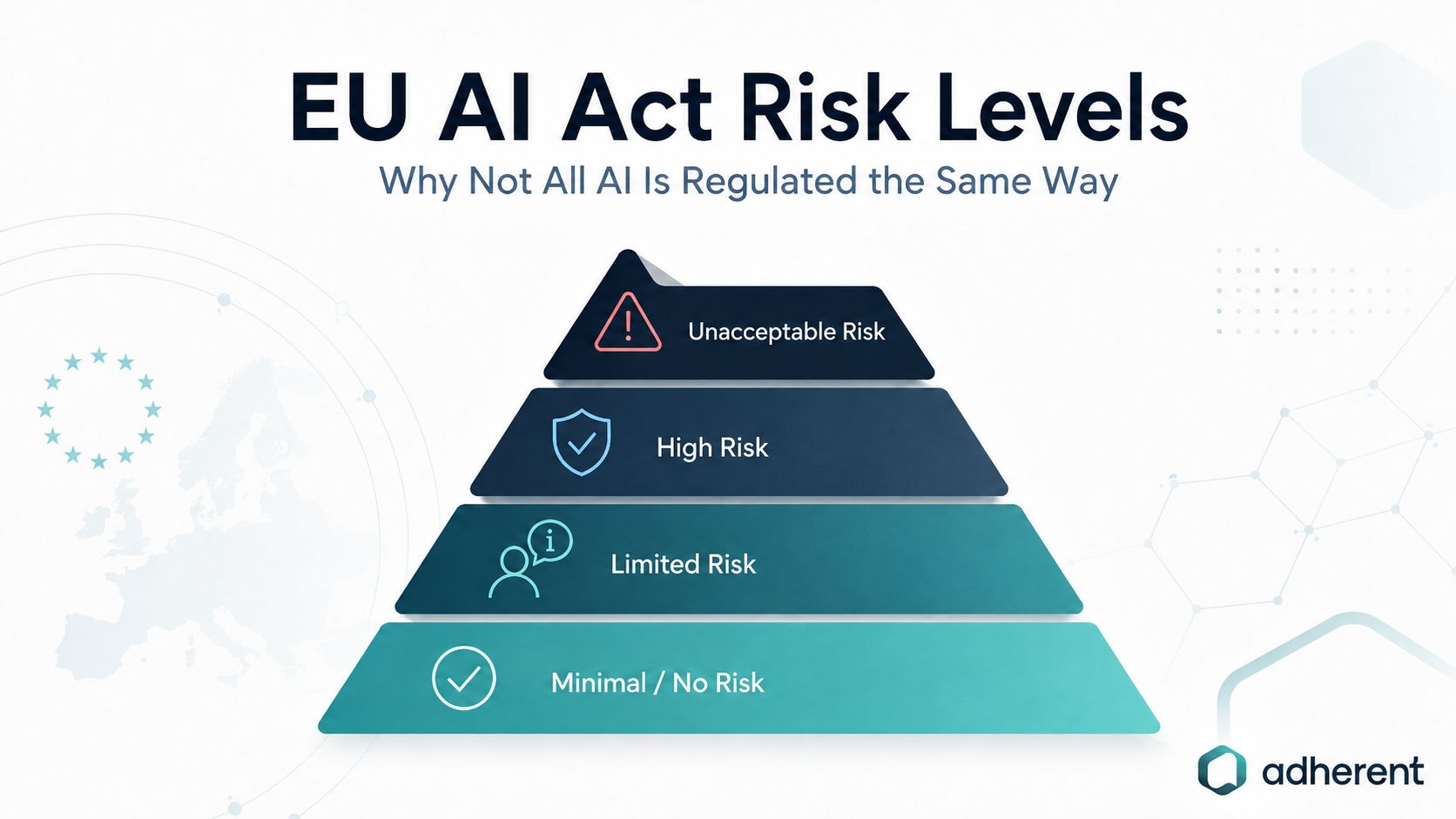
Complementing the cyber guidelines, the Saudi Data and AI Authority (SDAIA) published its Responsible AI Policy. This document introduces a strict, risk-based classification system for all AI applications, complete with compliance “Ethics Labels”:
| Risk Category | What it Means | Core Requirements |
| Critical Risk | Unacceptable threats to safety or rights | Completely Prohibited |
| High-Risk | Severe impact systems (e.g., healthcare, infrastructure) | Strict safety testing, human oversight, and a “Trusted” Ethics Label |
| Limited Risk | Moderate impact applications | Baseline compliance measures and a “Committed” Ethics Label |
| Minimal Risk | Minor or negligible impact | No mandatory restrictions; encouraged to get an “Aware” Label |
To combat digital deception, the policy mandates that creators explicitly disclose any AI-generated content or deepfakes. Furthermore, SDAIA has introduced a regulatory sandbox – a controlled legal environment where developers can safely test high-risk AI models before releasing them to the public market.
Israel: Moving Toward an AI-Powered “Cyber Dome”
Israel is anchoring its reputation as a deep-tech defense incubator by dramatically overhauling its legal frameworks to match modern, automated threats.
The National Cyber Security Draft Law (May 2026)
This sweeping bill specifically targets “Essential Organizations” across critical sectors like energy, telecom, health, and major cloud storage providers. It officially transitions the state’s defense apparatus toward a proactive, national “Cyber Dome”, including these provisions:
- The 24-Hour Clock: Critical companies are legally mandated to report any “Significant Cyber Attack” within 24 hours of discovery, followed by a comprehensive technical breakdown 30 days after the incident is resolved.
- Emergency Intervention Powers: In the event of a severe, unmanaged crisis, regulators have the legal authority to step in, demand immediate log access, and issue binding instructions-including forcing system patches or complete network disconnections.
- Privacy Guardrails: To protect citizens, personal data intercepted during cyber defense operations must be processed using automated tech to minimize human exposure. Furthermore, strict data minimization rules dictate that this data must be permanently deleted within two years.
Upgraded ISO & NIST Standards (Early 2026)
During February and April 2026, the Standards Institution of Israel (SII) officially rolled out updated national standards (including SI 27035 for incident response and SI 27701 for privacy information management). These directly replace outdated versions from 2020 and 2021, aligning domestic corporate tech with the latest international cloud security benchmarks.
Turkey: Fortifying Critical National Infrastructure
Turkey is taking a highly institutional, structural approach to digital defense, shifting from a product-by-product focus to a comprehensive system-wide shield.
The Cybersecurity Law (March 2025)
Enacted by the Grand National Assembly of Turkey (TBMM), this landmark legislation focuses entirely on safeguarding public institutions and critical infrastructure operators.
The law established a centralized Cybersecurity Directorate and enforces three non-negotiable obligations:
- Security-by-Design: Operators must bake robust cybersecurity measures directly into the strategic planning and design phases of any critical infrastructure project.
- Mandatory Certification: Cybersecurity services, systems, and individual technical personnel must go through rigorous, centralized standardization and authorization processes.
- Direct Reporting: Entities must instantly report discovered vulnerabilities and live cyber incidents directly to the Cybersecurity Directorate to maintain national situational awareness.
Kuwait & UAE: Securing Smart Trade and Smart Cities
Other regional leaders are focusing their regulatory pens directly on the places where everyday citizens interact with advanced digital systems: commerce and urbanization.
Kuwait’s Digital Trade Law (2026)
Kuwait enacted Decree-Law No. 10, integrating national cybersecurity standards directly into the e-commerce sector. While giving consumers powerful protections—like a 14-day return window and the right to cancel contracts if deliveries are delayed by more than 14 days—it forces digital storefronts to constantly update their cyber defense systems and use strictly licensed, Central Bank-approved payment systems.
The UAE’s Federal AI Charter & Dubai’s Smart City Strategy
Nationally, the UAE Federal Government is guiding the region with its Charter for the Development and Use of Artificial Intelligence. This charter lays down 12 core ethical principles- including safety, bias mitigation, and data privacy- for any AI deployed across the country. At the emirate level, the Dubai Electronic Security Center (DESC) is actively merging these federal principles with its own localized cybersecurity roadmap. The core objective is defending Dubai’s massive internet-of-things (IoT) web. By enforcing strict security controls on AI cloud connections, they ensure that automating public assets (like traffic management grids and water desalination plants) does not give malicious hackers an open door into the physical city.
The New Reality: the Middle East is Rewriting the Global Playbook
For years, tech companies looked to Western capitals to understand the future of digital regulation. But today, the Middle East is no longer just adopting global technology or waiting for international consensus; it is actively defining how the world regulates, deploys, and defends it.
The region is teaching the global tech sector a vital lesson: when you build an economy entirely on AI, your cybersecurity framework must evolve from a passive IT checkbox into an active, sovereign shield.
We are moving past the era where cybersecurity simply means setting up firewalls and waiting for a human analyst to review a security log. In a world where threat actors use generative AI to write self-mutating malware and launch automated, hyper-targeted phishing campaigns, human-speed defense is an illusion.
Whether you are an international developer deploying a new machine learning model, an e-commerce startup scaling online, or an enterprise managing critical regional infrastructure, the message from Middle Eastern regulators is loud, clear, and non-negotiable: Innovation without immediate, proactive security is an unacceptable liability.
By introducing mandatory regulatory sandboxes, strict risk classification tiers, 24-hour breach disclosure windows, and autonomous agent guardrails, these countries are creating a highly sophisticated legal template for the rest of the world. To thrive in this new digital landscape, businesses must accept that security can no longer be an afterthought. Building an ambitious, AI-native future requires wrapping your innovation in an equally intelligent, legally compliant, and battle-ready cyber shield.
See Adherent in Action
Discover how agentic AI is reshaping product compliance for global enterprises.
Authors


Jumana Ighbaria Hamam
Regulatory Compliance Specialist
Global compliance specialist with expertise in research and regulatory monitoring across multiple Middle Eastern countries, with a particular focus on batteries and ecolabelling standards.


The Ultimate Product Compliance Playbook
What the World’s Leading Product Organizations Have Figured Out About Product Compliance