

Regulatory Focus
Anti Bribery & Corruption

ESG: Anti Bribery & Corruption in C2P
195
Countries Covered
28
Languages Covered
433
Regulatory Sources
Global regulatory requirements addressing anti-bribery and corruption obligations for private organizations and their employees. Coverage includes rules aimed at preventing, detecting, and responding to bribery, improper influence, and other corrupt practices in domestic and cross-border business activities.
Anti-bribery and corruption laws impose legal obligations on companies and employees, creating compliance, governance, and enforcement risks across domestic and cross-border business activities.
Companies may be required to establish, implement, and document measures that prevent, detect, and address bribery and corrupt conduct within their operations. This may include internal policies, training programs, investigation procedures, reporting mechanisms, and, in some cases, public or regulatory disclosures related to incidents and outcomes.
Requirements for this content area may include company disclosure and reporting of the following types of information:
- lack of policies on anti-corruption or anti-bribery and plans for implementing such policies;
- procedures for investigating business incidents of corruption and bribery;
- policies for training with respect to corruption and bribery;
- systems used to prevent and detect, investigate, and respond to allegations or incidents relating to corruption and bribery;
- metrics on incidents of corruption and bribery and outcomes.
ESG: Anti Bribery & Corruption
Coverage Included
We cover legislation, regulations and mandatory standards in this area that address the prevention and criminalization of bribery and corruption in private business activities, including interactions with public officials and other private entities. They also establish expectations for corporate conduct, internal controls, transparency, and, in some cases, disclosure and reporting on business integrity practices.
The following are some examples of our coverage for this content area:
- Australia: Criminal Code Act, 1995 – Amendment – (on combatting foreign bribery) Act No. 5, 2024
- Canada: Corruption of Foreign Public Officials Act (CFPOA)
- EU: Directive (EU) 2026/1021 on Combatting Corruption
- EU: European Sustainability Reporting Standard (ESRS) G1 Business Conduct, Standard, July 2023
- Ireland: Criminal Justice (Corruption Offences) Act, 2018
- UK: Economic Crime and Corporate Transparency Act, 2023
- UN: Convention against Corruption (UNCAC)
- USA: Foreign Corrupt Practices Act (FCPA), 1977
- China: Implementing Anti-Unfair Competition Law, Notice, 2026
- Ukraine: On the extension of the implementation period of the State Anti-Corruption Program for 2023-2025, Resolution No. 1786, 2026



Intelligent Resources


Automate the work of managing regulatory change.
Let AI agents do the heavy lifting of monitoring regulations, mapping requirements to products, extracting obligations, and surfacing the risks that need attention first.
Monitor Product Compliance
Stay Ahead of Regulatory Change
Get early visibility into changes that could affect your products, supply chain, or market access—so you can act proactively, not reactively.
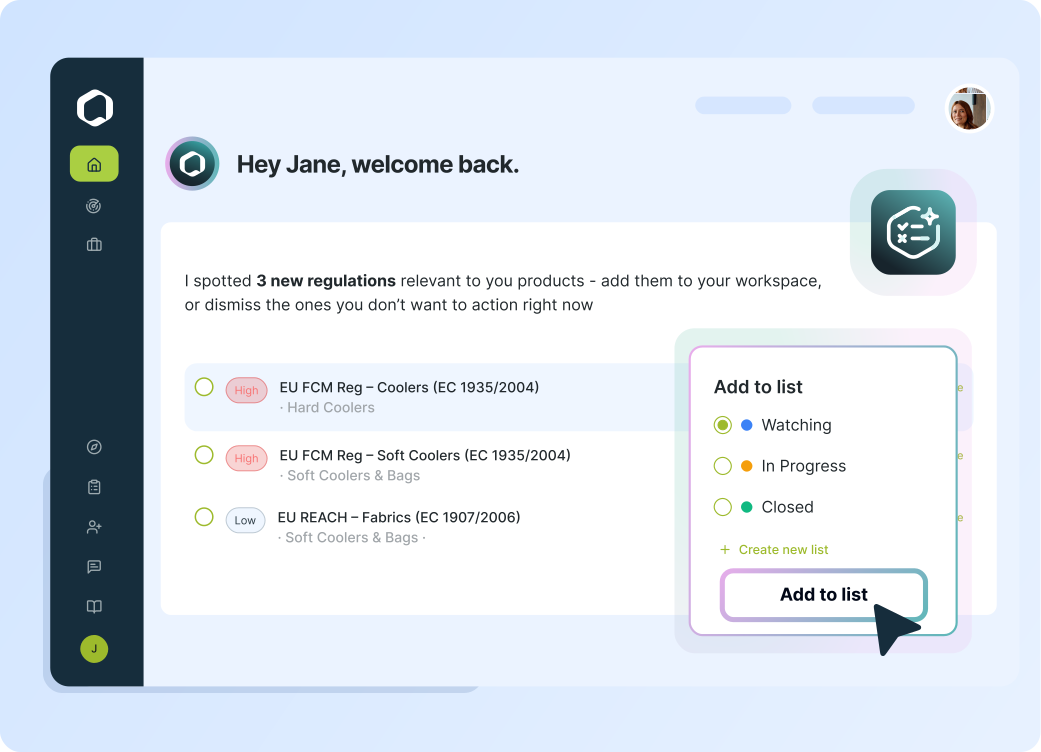
Assess Regulatory Applicability
Map Regulations to Your Products
Eliminate manual research and cut through regulatory noise by surfacing only the requirements relevant to your business, markets, and product categories.
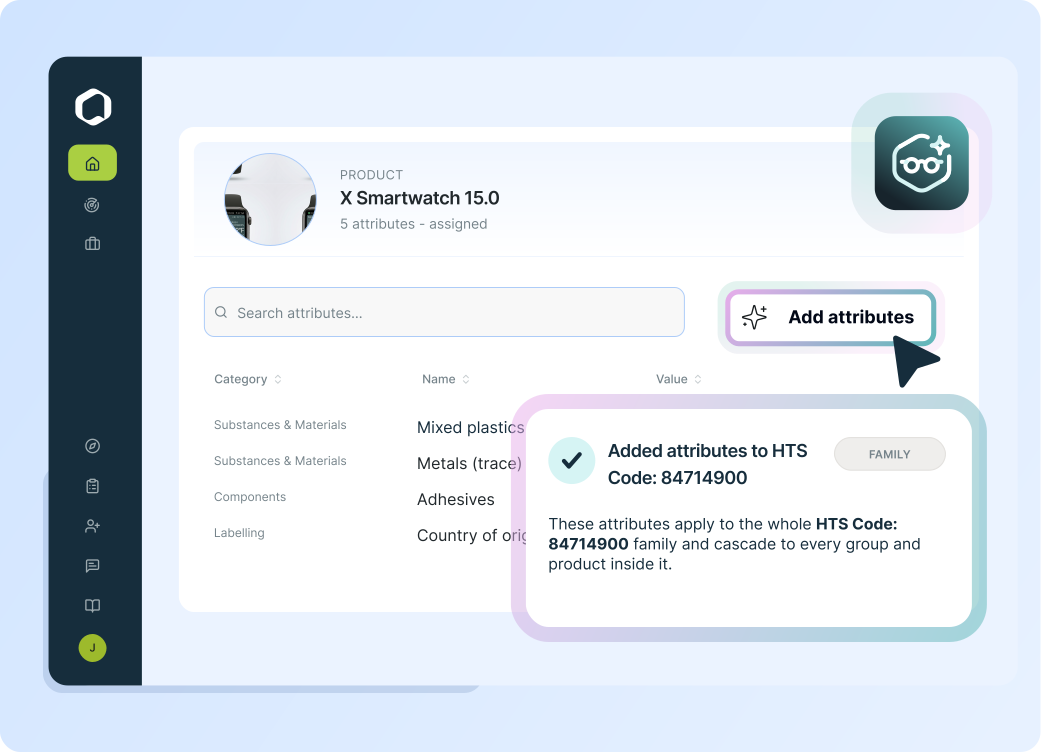
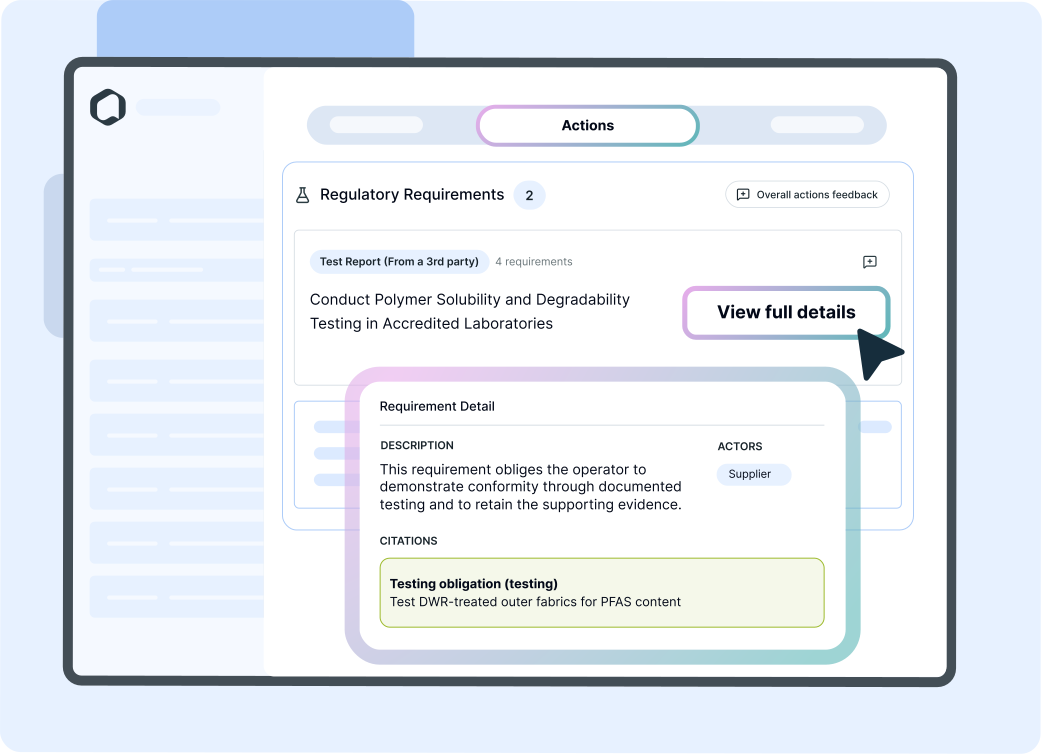
Identify Compliance Requirements
Turn complex regulations into clear, actionable tasks.
Give your teams instant clarity as AI agents transform dense legal and regulatory text into structured, easy-to-understand requirements.
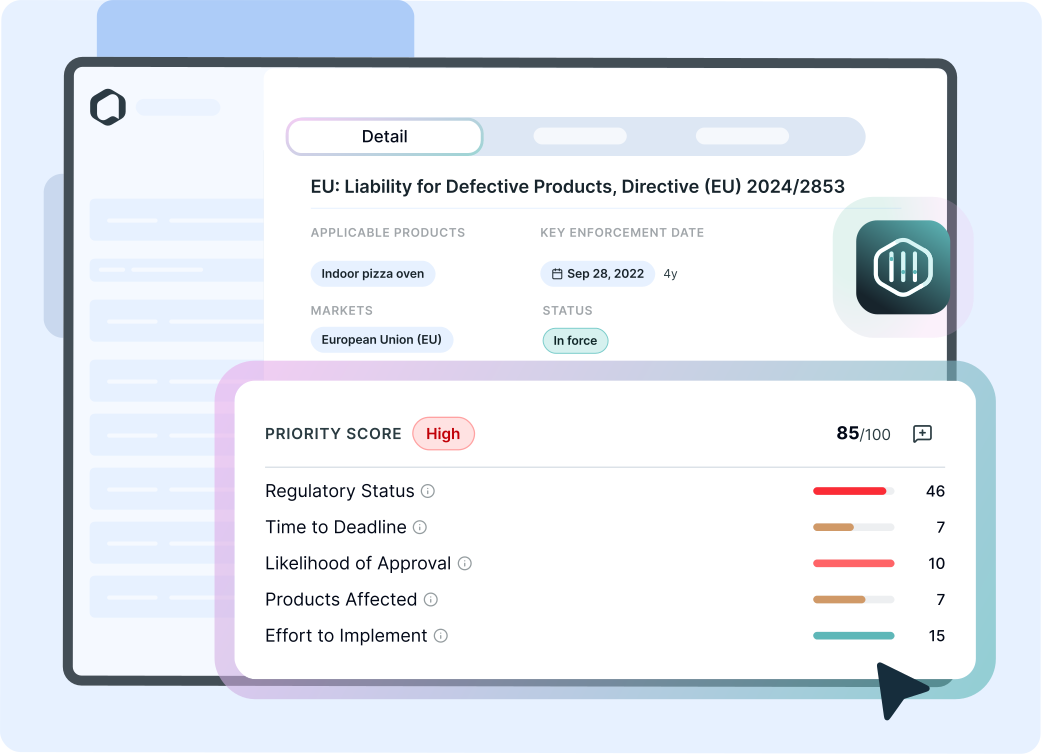
Prioritize Business Risk
Focus Where Risk Is Highest
Make faster, risk-informed decisions with confidence as AI agents automatically rank regulatory changes based on urgency, business impact, compliance deadlines, and product exposure.
Spotlight
Turning Compliance into Value


The State of Product
Compliance 2026
Discover how 500+ global leaders are shifting product compliance from a cost-centre into a strategic driver of growth, with key benchmarks like 69% of teams calling remediation their biggest challenge.
Frequently Asked Questions
-
Anti-bribery and corruption obligations for private companies typically focus on preventing, detecting, and addressing bribery and other corrupt acts by employees or associated persons. These obligations may include requirements to implement internal policies, provide training, establish reporting and investigation procedures, and disclose relevant information as required by law or applicable ESG standards.
-
Yes, this policy area covers situations where a private company or individual offers or attempts to offer a bribe to a public official, whether domestic or foreign, if such conduct is regulated by law. It does not cover obligations that apply only to public officials or government entities accepting bribes, nor does it address money laundering or witness tampering.
-
Corruption is prevalent around the globe and can be engaged in by private individuals, public officials and businesses. There can be domestic bribery in the form of private to public bribery/corruption or private to private bribery/corruption. There can also be bribery that involves attempts to corrupt foreign officials. It can take different guises, from the giving and taking of bribes to conflicts of interest and undue influence.
There are many different definitions of bribery and corruption, but it is generally accepted that, whichever definition is employed, there are common elements: the act of bribery or corruption involves a person in an appointed position or entrusted with power who acts voluntarily in breach or abuse of that trust in exchange for a private gain.
Acting corruptly may include acting with improper purpose personally. Examples of this include making or providing false or misleading statements, withholding information or influencing another person.A bribe is generally regarded as “a gift, consideration or advantage” to a person as an inducement to, or reward for, or otherwise on account of, any person performing an act in relation to his or her office, employment, position or business.
-
The United Nations Convention against Corruption (UNCAC) remains the only global, legally binding anti-corruption instrument. This was drafted and negotiated in Vienna, Austria in 2002-2003 and was then adopted by the United Nations General Assembly on 31 October 2003. The Convention entered into force on 14 December 2005 and currently includes 140 signatories and 192 parties (as of 25 September 2025).
This adoption represented a significant milestone in the shared international commitment to fighting corruption. This Convention takes a comprehensive approach to anti-corruption measures, placing importance on preventive measures, criminalization and law enforcement, international cooperation, as well as asset recovery.
-
Yes, ESRS G1, Business Conduct. In addition, ESRS G2, General Disclosures, would also need to be consulted for disclosure requirements related to anti-bribery and anti-corruption.
The objective of ESRS G1 is to specify disclosure requirements aimed at helping users of the company’s sustainability statements to understand the company’s strategy, approach, processes and procedures in relation to how it conducts its business. As part of this, business ethics and corporate culture, including anti-corruption and anti-bribery and the protection of whistleblowers, is specifically addressed.
Information regarding the existence of, or plans for future implementation of, corporate anti-bribery and anti-corruption policies are to be disclosed. Company policies should address prevention, detection, and response to any corrupt activities. In addition, information is to be provided regarding how a company plans to provide protection to whistleblowers.
More
Regulatory
Topics
Supply Chain Due Diligence
Regulatory Focus ESG: SUPPLY CHAIN DUE DILIGENCE 28 Languages Supported 28 Languages 600 R…
Sustainable Resource Use
Regulatory Focus Sustainable Resource Use 195 Countries Covered 28 Languages 533 Regulator…
Labor & Employment
Regulatory Focus Labor & Employment 195 Countries Covered 28 Languages 5166 Regulatory…
Human Rights – Affected Communities
Regulatory Focus Human Rights – Affected Communities 195 Countries Covered 28 Languages 26…
Climate Disclosures
Regulatory Focus Climate Disclosures 195 Countries Covered 28 Languages 670 Regulatory Sou…
Environmental, Social and Governance (ESG) Reporting
Regulatory Focus ESG Reporting 195 Countries Covered 28 Languages 729 Regulatory Sources W…