Consumer Electronics Regulatory Update: August 2026

This blog was originally posted on 13th August, 2026. Further regulatory developments may have occurred after publication. To keep up-to-date with the latest compliance news, sign up to our newsletter.
AUTHORED BY KELLY BUGIERA, SENIOR REGULATORY COMPLIANCE SPECIALIST & TEAM LEAD, ADHERENT
Global regulatory requirements for consumer electronics continue to expand across major markets, with new obligations affecting product safety, hazardous substances, accessibility, battery design, critical minerals, and market access. Manufacturers, importers, and compliance professionals should closely monitor these developments to prepare for upcoming compliance deadlines and avoid disruptions.
Table of Contents
- EU and US: Strategic Partnership on Critical Minerals Launched
- China: RoHS Restrictions to Apply to Expanded Product List
- US: Key FCC Compliance Dates for Handset Manufacturers
- Vietnam: Mandatory SAR Compliance for Mobile Phones
- EU: Market Surveillance Shows High Failure Rates for Hazardous Substances in Bargain Electric and Electronic Products
- EU: Commission Adds Exemptions to Rules on Portable Battery Removability
- India: Proposal for Rules on Accessibility Standards for ICT Products
- Frequently Asked Questions
As consumer electronics become more complex, so do the global regulations and laws that govern them. Regulatory and legislative bodies across North America, Europe, and Asia are accelerating mandates related to crucial issues such as product safety and circularity, end of life management of products, and environmental sustainability. Whether you are an original equipment manufacturer (OEM), product importer, or compliance manager, tracking these fast-moving global regulations and laws is essential in order to maintain market access and avoid supply chain disruptions.
EU and US: Strategic Partnership on Critical Minerals Launched
In April, the EU and US signed a Memorandum of Understanding (MoU) related to a strategic partnership on critical minerals and agreed to an EU-US Critical Minerals Action Plan. These initiatives reflect the EU’s commitment to deepening their cooperation with the US on critical raw materials. These are vital steps in enhancing the resilience and diversification of supply chains, amid shared geopolitical and economic challenges.
Memorandum of Understanding
The MoU formalises the EU-US strategic partnership to build secure and sustainable critical minerals supply chains. It foresees bilateral cooperation across the full value chain, spanning exploration, extraction, processing, refining, recycling and recovery. At the same time, this MoU supports innovation, investment and geological mapping, as well as supply- and demand-side measures.
Critical Minerals Action Plan
The Action Plan for Critical Minerals Supply Chain Resilience paves the way towards a possible plurilateral trade initiative with global partners. Per this plan, the EU and the US will work together to explore a broad range of trade policies and instruments to reinforce coordinated international action. These may include border-adjusted price floors, standards-based markets, price gap subsidies, as well as offtake agreements. Cooperation is expected to focus on the following key initiatives: development of common standards for mining, processing and recycling; promotion of investment; joint research and innovation; stockpiling strategies; and mechanisms for quick response to supply disruptions.
Both the EU and US continue their work on critical minerals resilience in relevant international settings, including the G7 and the Forum on Resource Geostrategic Engagement (FORGE).
China: RoHS Restrictions to Apply to Expanded Product List
In May, China’s Ministry of Industry and Information Technology (MIIT) published an updated catalogue for the standard compliance administration of the restricted use of hazardous substances (RoHS) in electrical and electronic products and its exemption list.
Per China’s RoHS, products included in the catalogue must comply with both the substance restriction and labelling requirements, and apply the conformity assessment system that was described in Notice No. 23, 2019.
Expanded Product Coverage
The 2026 catalogue has extended the list of products already included in the First Batch. This extended list includes a number of consumer electronics and electrical products.
Some examples are provided below:
- Printers, copiers and fax machines (now combined into one entry)
- Televisions
- Monitors
- Microcomputers
- Mobile communication devices
- Telephones
23 products were newly added to the 2026 catalogue, including the following consumer electronics:
- Laser TVs (included in the television category)
- Projectors
- Image or video acquisition cameras (included in the monitoring equipment category)
- Smart speakers
- Networking exchange equipment
- Power adapters and other applicable accessories of mobile devices (included in the mobile communication handheld devices category)
- Smart watches/bands
- Headphones
- Portable mobile power supplies
The newly-added products are required to comply with restriction and labelling obligations as of 1 August 2027.
Please note that changes to the exemption list for products included in the First Batch were immediately effective in May 2026.
US: Key FCC Compliance Dates for Handset Manufacturers
In June, the US Wireless Telecommunications Bureau (Bureau) issued a reminder to wireless handset manufacturers about the upcoming hearing aid compatibility filing deadlines and the end of the 100% hearing aid compatibility transition period.
FCC Form 655 Filing
Handset manufacturers were required to file their last FCC Form 655 in July. This compliance filing covered the reporting period from July 1, 2025 to June 30, 2026 and demonstrated compliance with the Federal Communication Commission’s (Commission) existing 85% hearing aid compatibility benchmark, along with all other applicable hearing aid compatibility requirements.
100% Hearing Aid Compatibility Requirement
The Bureau is also reminding handset manufacturers that the 100% hearing aid compatibility benchmark and related provisions will take effect starting on December 15, 2026. As of this date, handset manufacturers may no longer offer non-hearing aid compatible handset models.
In addition, 85% of the handset models that handset manufacturers offer must meet acoustic and telecoil coupling requirements. The remaining 15% of handset models that are offered must meet acoustic and Bluetooth coupling requirements; these handset models may also meet telecoil requirements in addition to the acoustic and Bluetooth coupling requirements. It is also currently required that all new handset models must meet either the 2019 ANSI Standard’s volume control requirement or meet the temporary volume control waiver standard which is set to expire on September 29, 2027.
FCC Form 855 Requirements
Handset manufacturers are also reminded that, starting January 2027, they will be required to file their first revised FCC Form 855 which demonstrates compliance with the 100% hearing aid compatibility benchmark and related requirements. This filing will cover the reporting period of December 15 to December 31, 2026. Following that, the filing will cover the previous calendar year of January 1 through December 31. The filing window for the upcoming FCC Form 855 submission will open on January 4, 2027 and close on February 1, 2027.
Starting January 2027, and every January thereafter, handset manufacturers and service providers will both be submitting FCC Form 855 compliance filings during the annual filing window. It is important that both handset manufacturers and service providers file the version of the form that is applicable to them. The hearing aid compatibility requirements apply to all of the handset manufacturers that offer handset models for sale or use in the US that are used to deliver digital mobile services.
Please note that these rules apply regardless of whether the manufacturer is located outside of the US or whether the manufacturer’s handset models are offered by third parties for use in the US or are sold under different brand names for use in the US. If the handset manufacturer is a non-U.S. company, then the company’s US business office address and phone number are required to be included with its certification filings. However, if the filing company does not have a U.S. business office address, then they must use their US agent’s address.
Vietnam: Mandatory SAR Compliance for Mobile Phones
As of 1 July 2026, terrestrial mobile phones are required to comply with national Technical Regulation QCVN 134:2024/BTTTT prior to being placed on the Vietnamese market. The Technical Regulation establishes specific absorption rate (SAR) limits for handheld and body-worn radio equipment. Compliance is to be demonstrated through testing and certification. Manufacturers, importers, and traders of relevant equipment in Vietnam are obligated to ensure their products comply.
A later deadline of 1 July 2027 will apply to other products subject to the regulation such as laptops and tablets.
It is important to note that SAR testing is technically complex and domestic testing capacity may be limited. As a result, companies who are reliant upon Vietnamese laboratories should plan their testing submissions well in advance of these deadlines to ensure compliance.
EU: Market Surveillance Shows High Failure Rates for Hazardous Substances in Bargain Electric and Electronic Products
In June, the 2025 Joint Actions on Compliance of Products (JACOP 2025) was a European Commission market surveillance initiative tasked with testing non-food products that had been placed on the European single market to determine their compliance with EU sectoral legislation.
Market Surveillance Findings
PSA (product-specific activity) 3 on Hazardous Substances in Gadgets was specifically focused on determining the presence of restricted substances in consumer electronics that had been placed on the EU market (in accordance with Directive 2011/65/EU (RoHS)).
Results recently released by the European Commission (DG GROW) revealed a high rate of non-compliance with RoHS, underscoring the need for an ongoing enforcement push for electronic products that are entering the EU.
Out of 173 budget-friendly electric and electronic gadgets that had been tested across 13 countries, 53% (91 products) failed compliance checks due to hazardous substances, missing documentation or improper CE markings.
RoHS substance violations related to heavy metals (primarily lead and cadmium) that were frequently found in solder points (82 failures detected). Plasticisers (phthalates) were quite prevalent in the insulation of USB cables, cords, and plugs (51 failures detected).
Per EU market surveillance rules, covered products exceeding RoHS chemical limits are classified as posing serious chemical risks. Market Surveillance Authorities (MSAs) are empowered to take immediate enforcement measures against distributors, importers, and online marketplaces who are in violation. Enforcement actions may include: ordering the withdrawal of affected products from the market; ban on sales; destruction of the affected products; and compliance discussions with online marketplaces.
Given that solder points and soft PVC insulation accounted for the majority of violations, component-level testing and strict supplier verification for these materials remains critical. Additional violations cited and penalized included basic administrative errors. Therefore, it is essential to also ensure that CE markings are durably applied and that an EU-based economic operator is clearly designated and documented.
EU: Commission Adds Exemptions to Rules on Portable Battery Removability
In July, the European Commission adopted a new delegated act, introducing new rules that exempt additional products from the requirements related to the removability and replaceability of portable batteries.
Per the EU’s Battery Regulation, portable batteries in products that are sold in the EU must generally be removable and replaceable by consumers. The intent of this requirement is to help extend the product’s useful life by allowing battery replacements. Additionally, this removability requirement supports recycling by making it easier to collect used batteries.
However, some products, such as medical devices and “wet appliances” (like electric toothbrushes or water flossers) are already exempt from this requirement, primarily due to safety concerns. In cases such as these, batteries only need to be removable and replaceable by independent professionals.
The EU Commission has recently added new product categories to the existing list of exemptions. Examples include wearable devices such as smartwatches and fitness trackers, and electric toys. The EU Commission is also adopting an update to the current guidelines on the removability and replaceability of portable and LMT batteries, to help assist EU economic operators.
India: Proposal for Rules on Accessibility Standards for ICT Products
In July, the Indian Ministry of Social Justice and Empowerment proposed the Rights of Persons with Disabilities (Amendment) Draft Rules in order to add accessibility standards for Information and Communication Technology (ICT) products, services, documentation and digital content.
Scope of the Draft Rules
These Draft Rules would apply to every entity that manufactures, designs, develops, or makes available (directly or indirectly), specified ICT items to consumers in India (whether the entity is located within India or outside India).
Examples include:
- Websites, mobile applications, tablet applications, other touch-based applications, softwares, including documentation and support services;
- All digital content, formats of such content, and electronic documents including nonweb documents;
- Hardware-based information and communication technology with two-way voice communication capability and hardware-based information and communication technology with video-based communication capability;
- All other information and communication technology-based hardware and electronic goods and equipment intended for everyday use;
- Information and communication technology-based consumer products;
- Information and communication technology-based accessories for general use by persons with disabilities.
Compliance Requirements
Every covered entity would need to ensure that all covered items comply with the following Indian Standards:
- IS 17802 (Part 1): 2021
- IS 17802 (Part 2): 2022
Accessibility Conformance Reports (ACR) would also need to be supplied on product websites/mobile applications so that consumers could make informed choices about accessibility compliance.
The deadline for comments on these Draft Rules is 22 August 2026.
Frequently Asked Questions
What is the main focus of this regulatory update?
This update summarizes recent regulatory and legislative developments affecting consumer electronics across the EU, United States, China, Vietnam, and India, including product safety, hazardous substances, accessibility, battery requirements, and supply chain initiatives.
Which products are affected by China’s updated RoHS catalogue?
The expanded catalogue includes additional consumer electronics and electrical products such as televisions, monitors, projectors, smart speakers, smart watches, headphones, networking equipment, mobile power supplies, and other listed products.
When does the FCC’s 100% hearing aid compatibility requirement take effect?
The 100% hearing aid compatibility benchmark and related provisions take effect on December 15, 2026.
What did the EU market surveillance initiative find?
Testing found a high rate of non-compliance among budget-friendly electronic products, with failures related to hazardous substances, missing documentation, and improper CE markings.
What is the deadline for comments on India’s proposed ICT accessibility rules?
The deadline for comments on the Draft Rules is 22 August 2026.
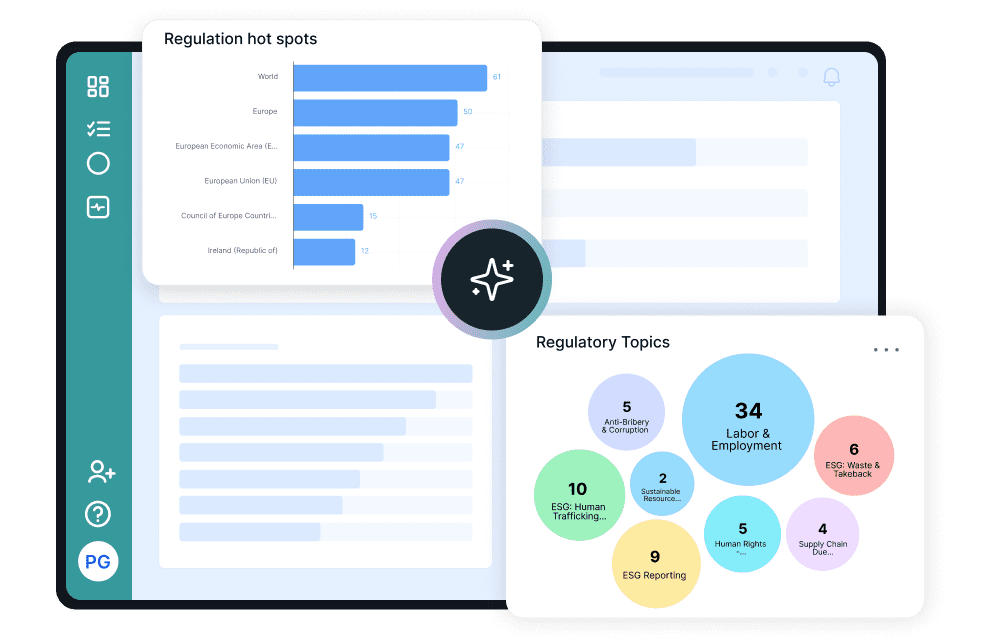
See Adherent in Action
Discover how agentic AI is reshaping product compliance for global enterprises.
Authors


Kelly C. Bugiera
Senior Regulatory Compliance Specialist, Team Lead
Specializing in research and monitoring US state and federal, as well as global, regulatory and legislative developments, with a focus on product safety, chemicals in products, ESG topics, circular economy, and right to repair.

The Ultimate Product Compliance Playbook
What the World’s Leading Product Organizations Have Figured Out About Product Compliance