

Regulatory Focus
PFAS

Chemicals In Products
195
Countries Covered
28
Languages
1259
Regulatory Sources
Our coverage addresses the manufacture, use, and placing on the market of PFAS in products such as food packaging, textiles, electronics, and medical devices, including substance restrictions, bans, reporting and labeling obligations, and environmental and health protection standards across major jurisdictions.
PFAS regulations govern the use of persistent chemicals in products, driving disclosure, restrictions, substitution efforts, and heightened compliance risks across global supply chains.
Companies are typically expected to understand where PFAS are present across their products and supply chains and to monitor evolving restrictions across multiple jurisdictions. Common obligations include limiting or phasing out certain substances or uses, reporting or notifying authorities about PFAS manufacture or use, disclosing PFAS content to regulators, customers, or consumers, and managing emissions, waste, and worker exposure in line with environmental and health standards.
- Product restrictions and bans: Prohibit or limit the manufacture, import, and use of PFAS in specific products or sectors above certain thresholds.
- Reporting and notification requirements: Companies may be required to report the manufacture, import, or use of PFAS above certain thresholds.
- Product labelling and disclosure: Regulations increasingly require that PFAS content be identified on product labels or made publicly available to support informed consumer and supply chain decisions, including alignment with ecolabelling schemes.
We cover a broad range of international conventions, regional frameworks, and national laws that restrict, phase out, or control PFAS across chemicals, products, and environmental media. Our coverage spans substance bans and listings, reporting and recordkeeping obligations, product-specific restrictions, environmental and drinking water standards, and guidance that shapes compliance expectations across global supply chains.
- Stockholm Convention on Persistent Organic Pollutants, 2001
- EU: Proposal for a Restriction on Per- and Polyfluoroalkyl Substances (PFAS) under REACH, Draft Report, February 2023
- EU: Registration, Evaluation, Authorisation and Restriction of Chemicals (REACH), Regulation (EC) 1907/2006 – Amendment – (on adding PFAS restrictions in firefighting foams to Annex XVII) Regulation (EU) 2025/1988
- USA: Toxic Substances Control Act (TSCA), Reporting and Recordkeeping Requirements for Perfluoroalkyl and Polyfluoroalkyl (PFAS) Substances, Final Rule, 88 FR 70516, October 2023
- France: Per- and Polyfluoroalkyl Substances (PFAS) Restrictions, Law No. 2025-188
- California: Prohibition of Perfluoroalkyl and Polyfluoroalkyl substances (PFAS) in Textiles, Assembly Bill 1817 Enacted, 2022
- Maine (USA): Restriction of Products Containing Perfluoroalkyl and Polyfluoroalkyl (PFAS) Substances, House Paper 1113, Legislative Document 1503 Enacted, 2021
- Canada: Requirement to Provide Information on Certain Per- and Polyfluoroalkyl Substances (PFAS), Notice, July 2024
- Canada: State of Per- and Polyfluoroalkyl Substances (PFAS), Report, March 2025
- Japan: Chemical Substances Control Law (CSCL “Kashinho”) Enforcement Ordinance
- China: New Pollutants under Key Control (2023 Edition), Order No. 28, 2022
- South Korea: List of Persistent Organic Pollutants (POPs), Notice No. 2020-191
- New Zealand: Hazardous Substances and New Organisms (HSNO) Act, 1996
- Australia: Industrial Chemicals Environmental Management (Register), Instrument, December 2022
- Singapore: Environmental Protection and Management (Hazardous Substances) Regulations, GN No. S 159/99
- Thailand: Hazardous Substances (PFOA, its salts and PFOA-related compounds) Management, Order No. 42, 2023
- Denmark: Ban on the Import and Sale of Clothing, Footwear and Waterproofing Agents that Contain PFAS, Order BEK No. 464, 2025




Intelligent Resources




Automate the work of managing regulatory change.
Let AI agents do the heavy lifting of monitoring regulations, mapping requirements to products, extracting obligations, and surfacing the risks that need attention first.
Monitor Product Compliance
Stay Ahead of Regulatory Change
Get early visibility into changes that could affect your products, supply chain, or market access—so you can act proactively, not reactively.
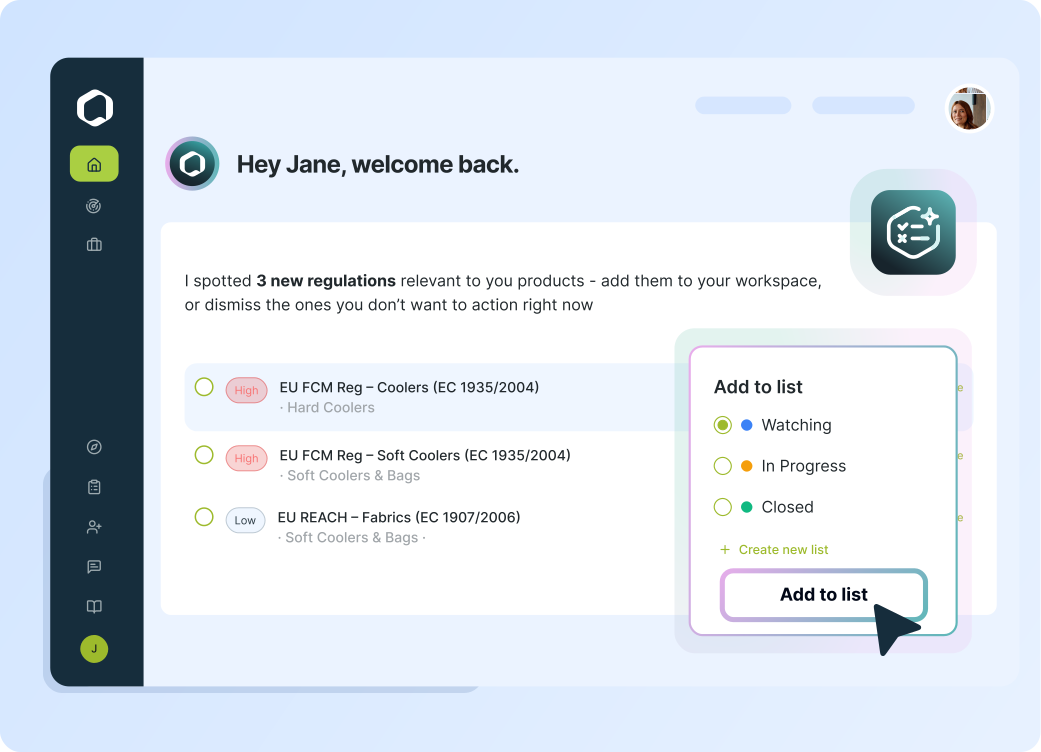
Assess Regulatory Applicability
Map Regulations to Your Products
Eliminate manual research and cut through regulatory noise by surfacing only the requirements relevant to your business, markets, and product categories.
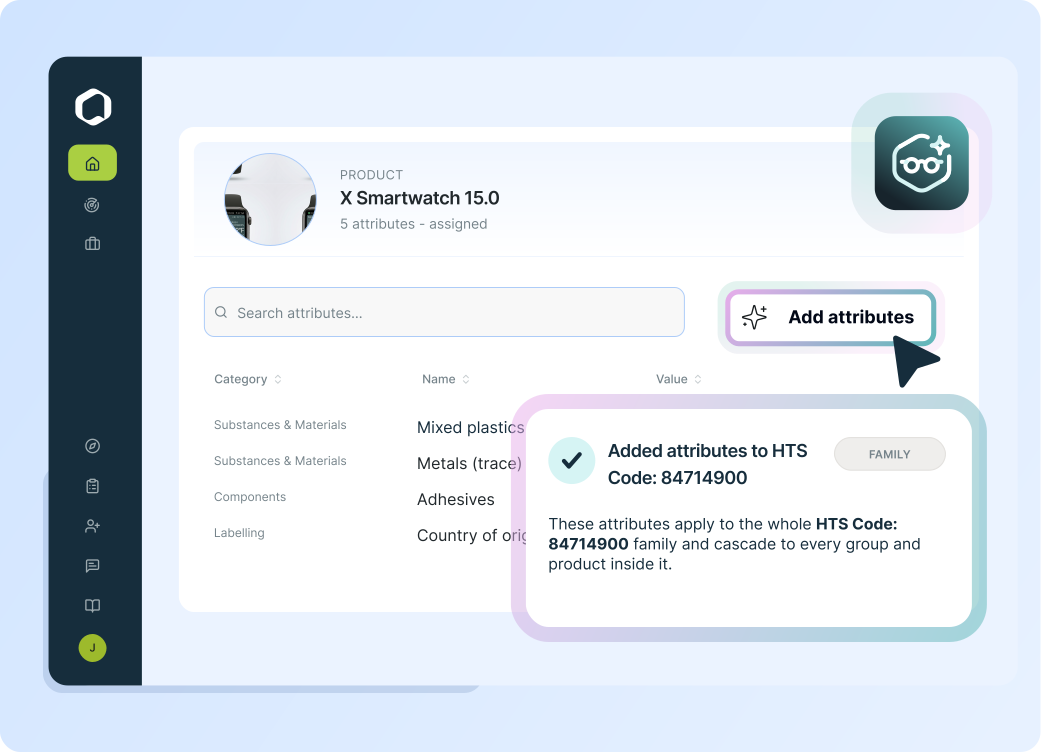
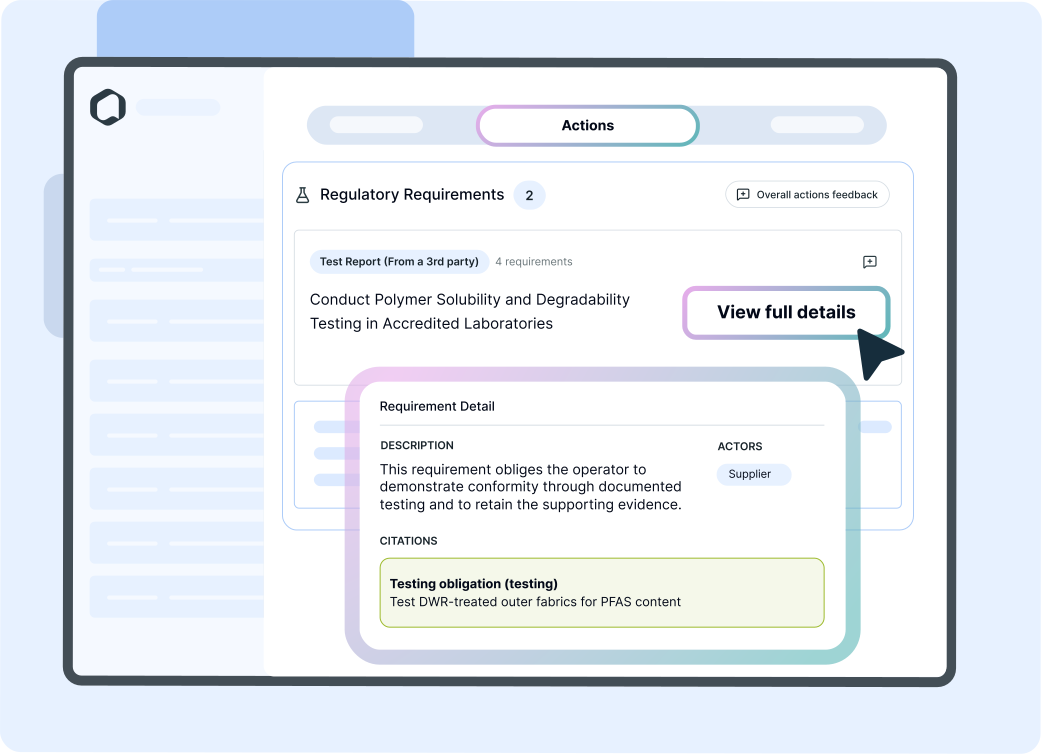
Identify Compliance Requirements
Turn complex regulations into clear, actionable tasks.
Give your teams instant clarity as AI agents transform dense legal and regulatory text into structured, easy-to-understand requirements.
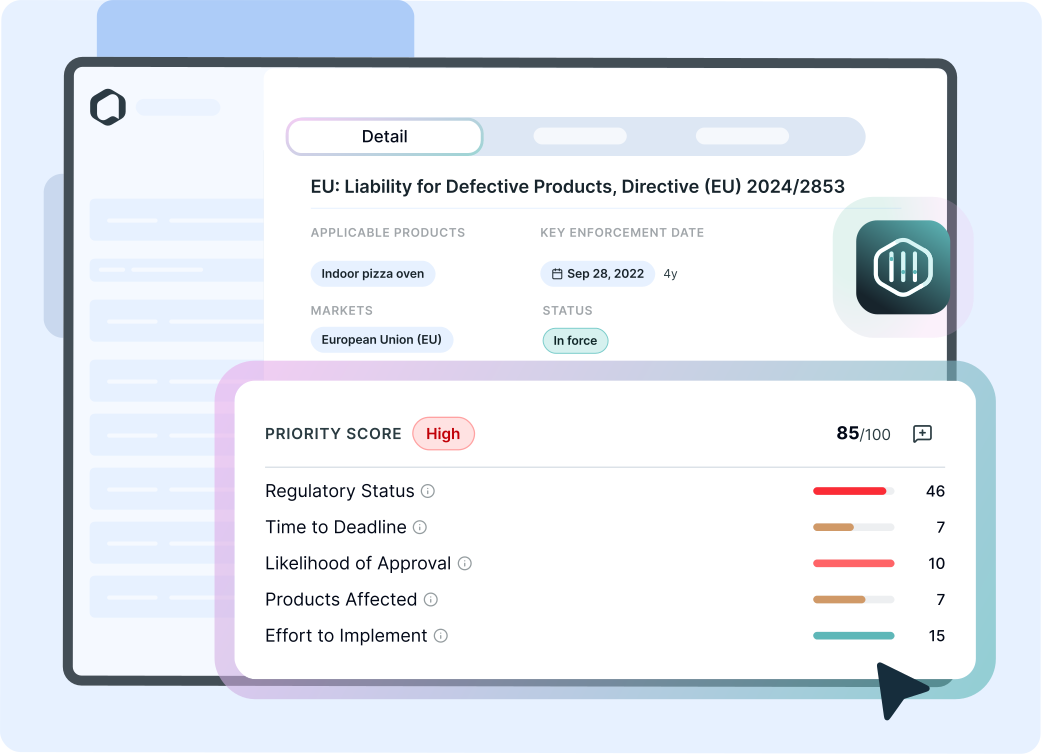
Prioritize Business Risk
Focus Where Risk Is Highest
Make faster, risk-informed decisions with confidence as AI agents automatically rank regulatory changes based on urgency, business impact, compliance deadlines, and product exposure.
Spotlight
Turning Compliance into Value


The State of Product
Compliance 2026
Discover how 500+ global leaders are shifting product compliance from a cost-centre into a strategic driver of growth, with key benchmarks like 69% of teams calling remediation their biggest challenge.
Frequently Asked Questions
-
Reporting obligations most commonly apply to the manufacture, import, or use of PFAS as substances or within articles. Under frameworks such as the US TSCA PFAS reporting rule and EU chemical regulations, companies may need to disclose historical and current PFAS use, quantities, supply chain information, and downstream applications, including PFAS contained in imported products.
-
Regulators are increasingly adopting class-based approaches that restrict groups of PFAS rather than individual substances. This shift, reflected in initiatives such as the proposed EU REACH PFAS restriction and national product bans, aims to reduce substitution risks and create clearer long-term compliance expectations for companies.
-
As of now, the EU has enforced stricter regulations on PFAS in packaging and food contact materials (FCM) due to their environmental persistence and health risks.
Under REACH, certain PFAS, including PFOA, PFHxS, and others, cannot exceed 0.1% by weight in products, including packaging. Additionally, some PFAS are prohibited under REACH Annex XVII, such as PFHxA and C9-C14 PFCAs.
The EU POPs regulation 2019/1021 bans the manufacture and use of certain PFAS like PFOA and PFOS in packaging above trace levels.
Starting 12 August 2026, the new Packaging and Packaging Waste Regulation will require manufacturers to limit PFAS in food packaging to:
– 25 ppb for any individual compound
– 250 ppb for the sum of PFAS
– 50 ppm for total fluorine from non-PFAS sources.
The proposed ‘universal’ PFAS restriction by several EU nations may also affect packaging and FCM if approved.
-
In a Communication published on 23 April 2024, the EU Commission set criteria for what qualifies as an “essential” chemical use. Still, it has not yet provided a definitive list of specific products. For a product or application containing PFAS to be considered essential, it must be indispensable for health, safety, or the functioning of society, and no alternatives must be available.
In August 2025, ECHA updated the proposal to identify certain sectors and product categories as likely candidates for exemption due to their essential nature or lack of alternatives. These include electronics, medical devices, and vehicle components, where certain uses of PFAS may persist beyond the 18-month transition, typically for five or twelve years. The final list of essential uses is still under development, with ECHA and the Commission expected to publish a draft amendment to Annex XVII of the EU REACH Regulation throughout this year 2026, detailing specific substance restrictions and derogations. The final list of essential uses for PFAS is still under development. Throughout 2026, the European Chemicals Agency (ECHA) and the European Commission are anticipated to publish a formal draft amendment to Annex XVII of the EU REACH Regulation. This amendment is expected to detail the specific substance restrictions and derogations.
More
Regulatory
Topics
EU REACH
Regulatory Focus REACH Compliance Solutions 195 Countries Covered 28 Languages 2006 Regula…
Drinking Water
Regulatory Focus Drinking Water 195 Countries Covered 28 Languages 458 Regulatory Sources …
Textiles
Regulatory Focus Textiles 195 Countries Covered 28 Languages 3333 Regulatory Sources Adher…
Battery Regulatory Compliance
Regulatory Focus Batteries 195 Countries Covered 28 Languages 3216 Regulatory Sources Batt…
Chemicals In Products
Regulatory Focus Chemicals In Products 195 Countries Covered 10144 Regulatory …
Packaging
Regulatory Focus Packaging 195 Countries Covered 28 Languages 3888 Regulatory Sources Pack…
Chemicals Management Regulatory Compliance
Regulatory Focus Chemicals Management 195 Countries Covered 28 Languages 5979 Regulatory S…