

Regulatory Focus
Chemicals In Products

Chemicals In Products
195
Countries Covered
10144
Regulatory Sources
28
Languages
Our coverage focuses on chemical substances present in finished products – such as electrical and electronic equipment, batteries, packaging, cosmetics – as well as articles treated with biocides. This includes identifying regulated substances, compliance obligations, and documentation requirements across product supply chains.
Companies must track and comply with global restrictions and bans on hazardous chemicals in finished products, including treated articles, to manage product safety, supply chain risk, and regulatory reporting obligations.
Companies typically need to ensure that their products do not contain prohibited or restricted substances above permitted thresholds; communicate safe-use information and warnings for products containing restricted substances, as well as meet reporting and notification obligations to regulators. In some cases, manufacturers must also obtain authorisation for specific substances and comply with rules for biocidal treated articles, including registration, approval, and labeling.
- Communication of information on the safe use of the products containing restricted substances (e.g, SVHC) to users
- Warnings to inform users about their exposure to such substances when using products containing them
- Reporting and notification to competent authorities (i.e REACH SVHC; SCIP under the Waste Framework Directive)
- Authorization for the manufacture and use during a certain period of a restricted substance in a specific product (REACH Annex XIV)
- Rules applicable to biocidal treated articles (i.e. registration, authorization/approval, labeling), etc.
Our coverage includes major chemical and product safety regulations that restrict or control hazardous substances in finished products, packaging, batteries, cosmetics and treated articles. This spans global frameworks such as REACH and RoHS, PFAS restrictions, and specific national laws on chemical use, waste, and biocidal products.
- EU Registration, Evaluation, Authorisation and Restriction of Chemicals (REACH), Regulation (EC) 1907/2006
- EU Restriction of Hazardous Substances (RoHS) Directive 2011/65/EU
- EU Safety of Toys, Directive 2009/48/EC
- EU Persistent Organic Pollutants (POPs) Regulation (EU) No. 2019/1021
- EU Packaging and Packaging Waste Directive 94/62/EC
- EU Batteries and Accumulators and Waste Batteries and Accumulators Directive 2006/66/EC
- EU Construction Products, Regulation (EU) No 305/2011
- EU Biocidal Products Regulation (EU) No 528/2012
- EU Cosmetics Regulation (EC) 1223/2009
- EU: Proposal for a Restriction on Per- and Polyfluoroalkyl Substances (PFAS) under REACH, February 2023
- US Toxic Substances Control Act (TSCA), 15 USC Section 2601 et seq, June 2016
- US Toxic Substances Control Act (TSCA), Reporting and Recordkeeping Requirements for Perfluoroalkyl and Polyfluoroalkyl (PFAS) Substances, Final Rule, 88 FR 70516, October 2023
- California (USA): Proposition 65, Safe Drinking Water and Toxic Enforcement Act of 1986
- California’s Safer Consumer Products Regulations (SCPR)
- California Electronic Waste Recycling Act
- California: Prohibition of Perfluoroalkyl and Polyfluoroalkyl substances (PFAS) in Textiles, Assembly Bill 1817 Enacted, 2022
- Maine (USA): Restriction of Products Containing Perfluoroalkyl and Polyfluoroalkyl (PFAS) Substances, House Paper 1113, Legislative Document 1503 Enacted, 2021
- Canada Prohibition of Certain Toxic Substances Regulations, SOR/2012-285
- China Administrative Measures for the Restriction of the Use of Hazardous Substances in Electrical and Electronic Products, 2016
- K-REACH
- Stockholm Convention on Persistent Organic Pollutants, 2001
- Montreal Protocol on Substances that Deplete the Ozone Layer, 1987
- India E-Waste (Management) Rules, GSR 801(E), 2022
- Thailand RoHS, Standard TIS 2368-2551, 2008
- Turkey Control of WEEE Regulations, May 2012
- Turkey REACH-like (KKDIK), June 2017
- Vietnam Hazardous Substances in Electrical and Electronic Equipment, Circular No. 30/2011/TT-BCT
- South Korea Consumer Chemical Products and Biocides Safety, Law No. 15511, 2018
- Swiss Reduction of Risks Linked to Use of Dangerous Substances, Preparations and Articles, Ordinance, May 2005
- Swiss Placing on the Market and Use of Biocides, Ordinance, May 2005
- Turkey Goods Processed with Biocidal Product, Communiqué, May 2018
- Canada: Pest Control Products Act, 2006
- USA: Pesticide Regulations, 40 CFR 150-189, 1971







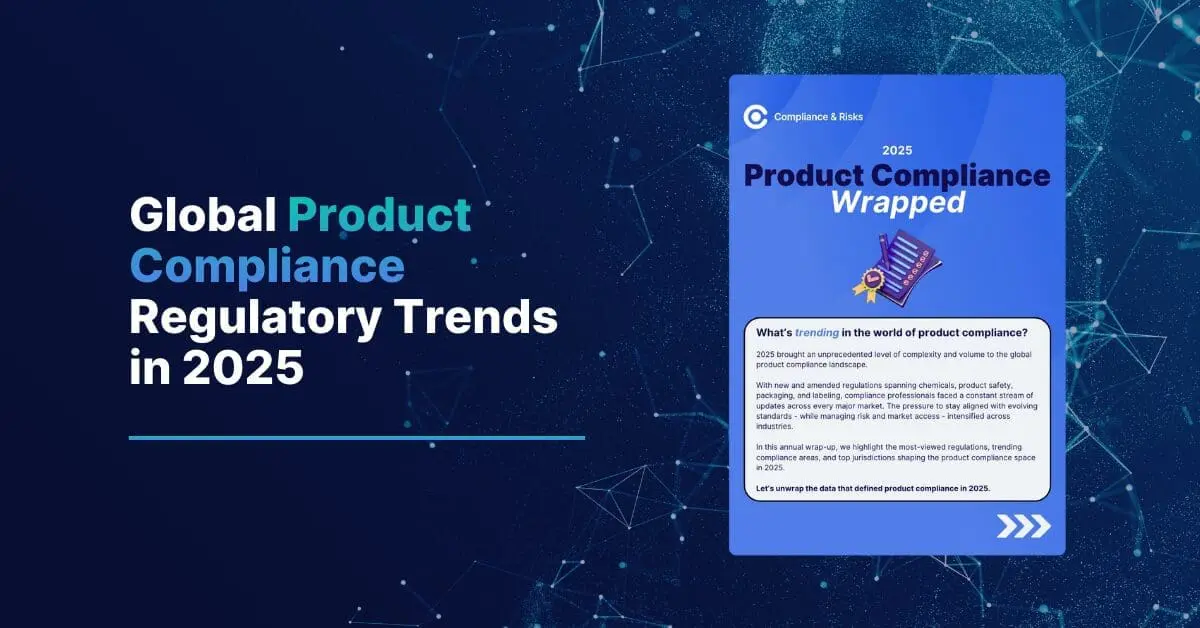
Automate the work of managing regulatory change.
Let AI agents do the heavy lifting of monitoring regulations, mapping requirements to products, extracting obligations, and surfacing the risks that need attention first.
Monitor Product Compliance
Stay Ahead of Regulatory Change
Get early visibility into changes that could affect your products, supply chain, or market access—so you can act proactively, not reactively.
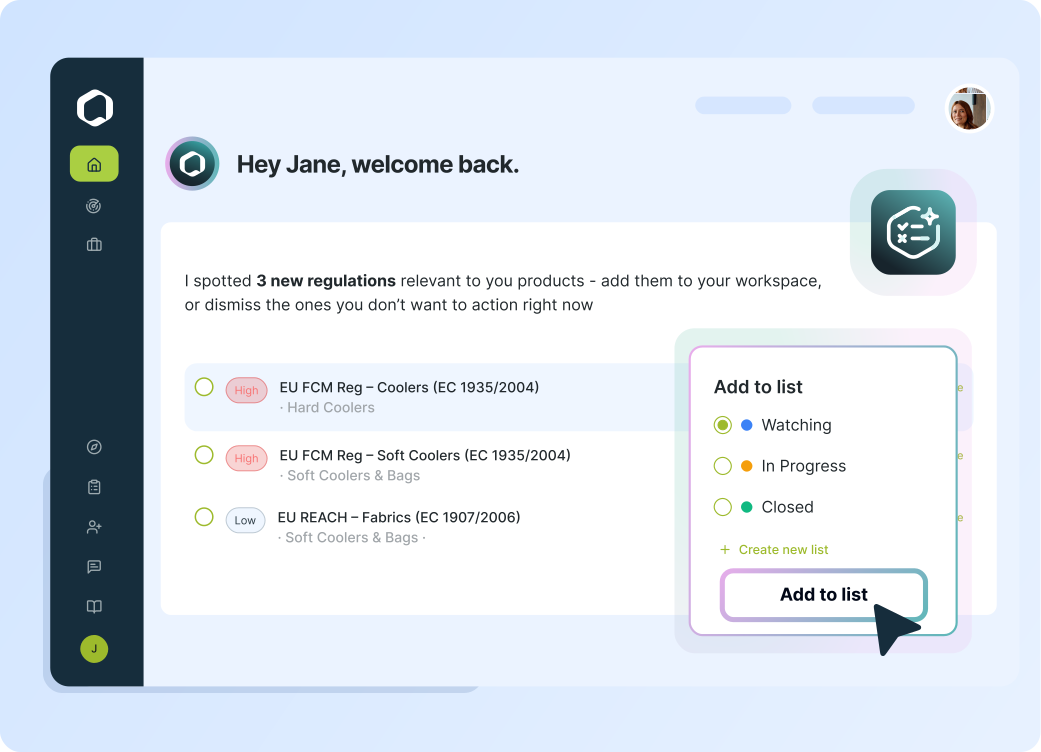
Assess Regulatory Applicability
Map Regulations to Your Products
Eliminate manual research and cut through regulatory noise by surfacing only the requirements relevant to your business, markets, and product categories.
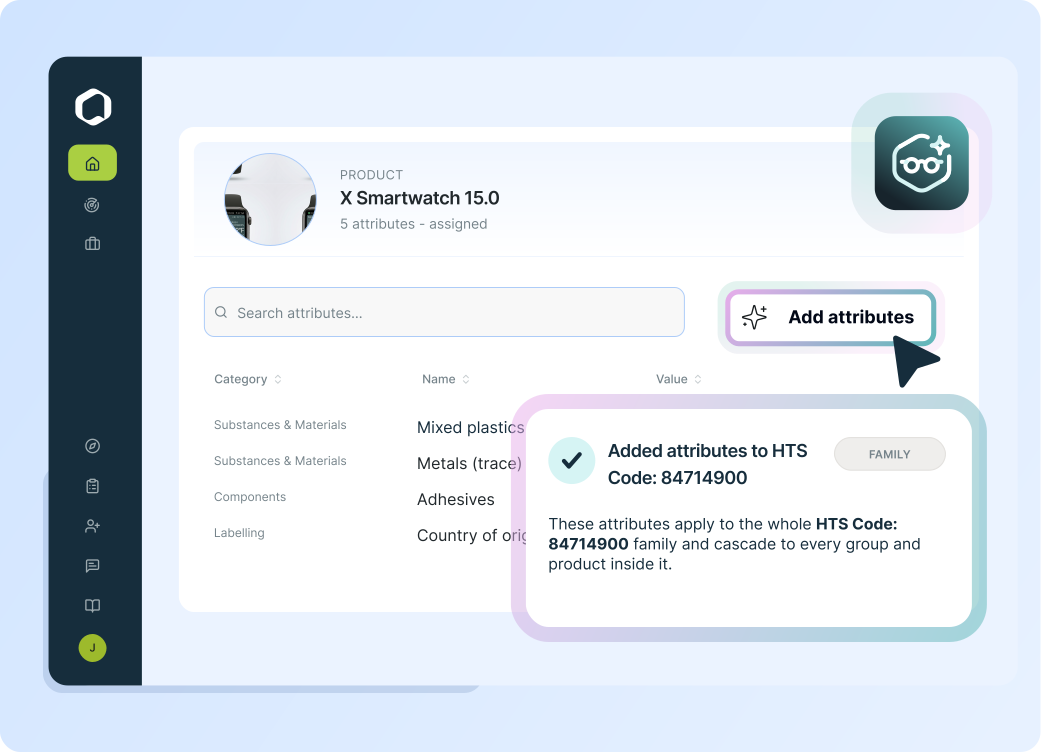
Identify Compliance Requirements
Turn complex regulations into clear, actionable tasks.
Give your teams instant clarity as AI agents transform dense legal and regulatory text into structured, easy-to-understand requirements.
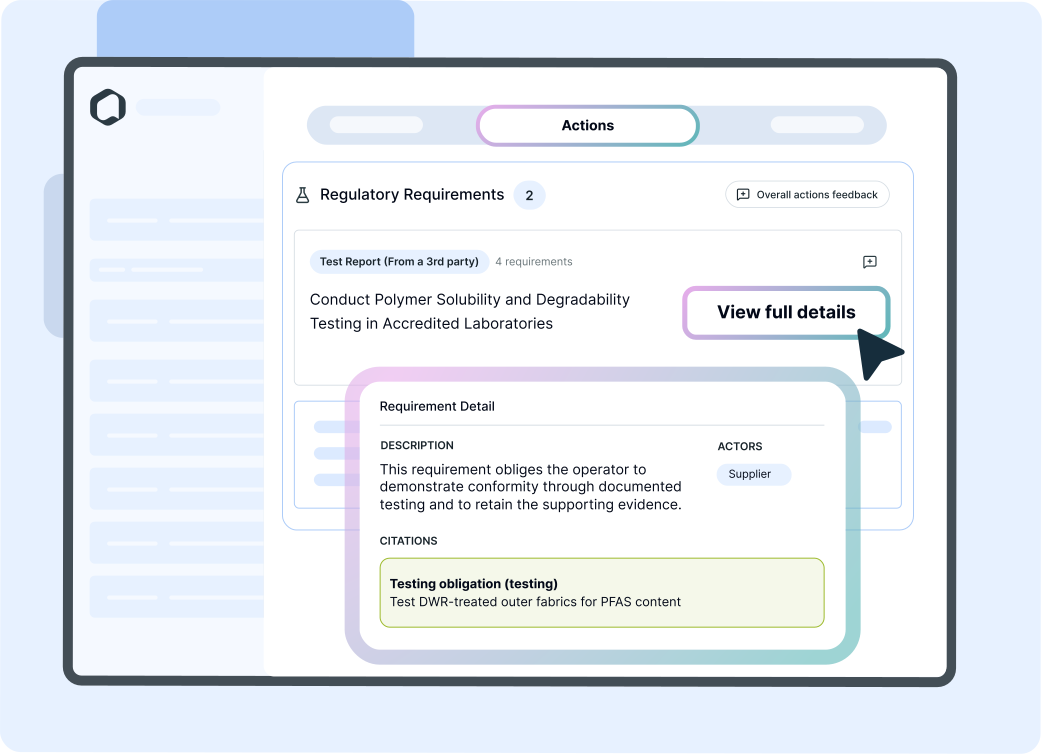
Prioritize Business Risk
Focus Where Risk Is Highest
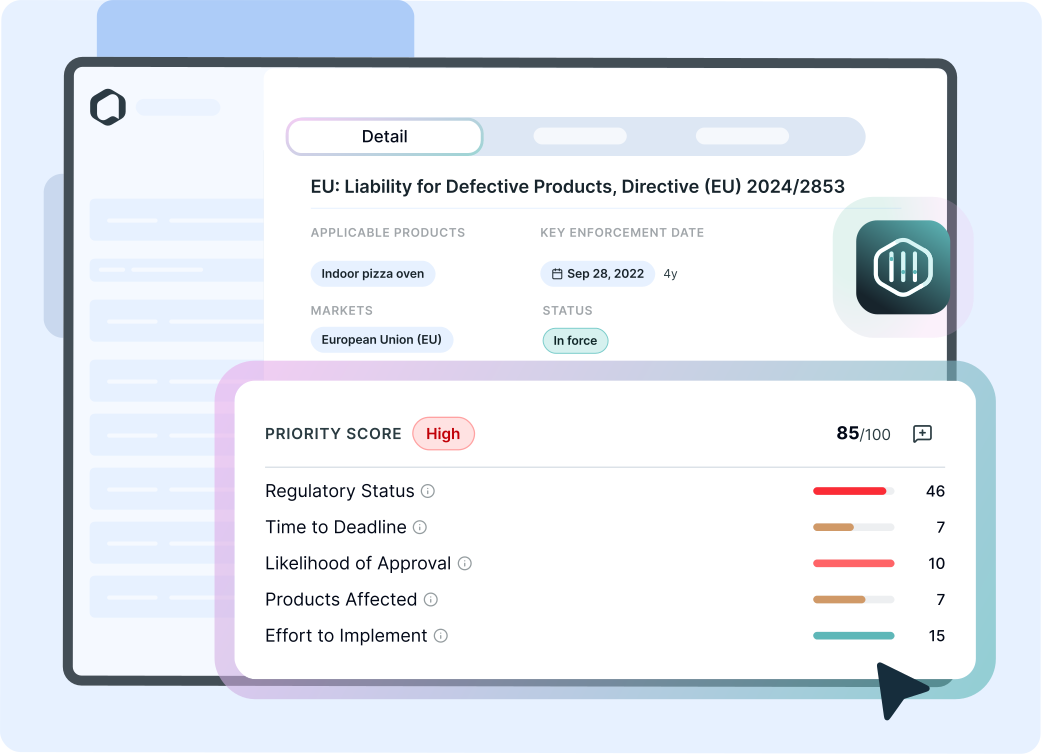
Make faster, risk-informed decisions with confidence as AI agents automatically rank regulatory changes based on urgency, business impact, compliance deadlines, and product exposure.
Spotlight
Turning Compliance into Value


The State of Product
Compliance 2026
Discover how 500+ global leaders are shifting product compliance from a cost-centre into a strategic driver of growth, with key benchmarks like 69% of teams calling remediation their biggest challenge.
Frequently Asked Questions
-
Chemicals-in-products rules commonly require companies to restrict or phase out certain hazardous substances in finished products, packaging, batteries, and treated articles. These regulations may also require reporting or notification to authorities for restricted substances, including obligations like REACH SVHC notifications or SCIP submissions under the EU Waste Framework Directive.
-
Yes. The topic includes regulations that apply to biocidal treated articles, such as requirements for authorization/approval, registration, labeling, and safe use communication. These rules focus on treated products that contain biocidal agents used to protect against pests, mould, bacteria, or other organisms.
-
In the EU, penalties for non-compliance with chemicals-in-products regulations vary significantly by region and are intended to be “effective, proportionate and dissuasive”. They can include substantial fines, sometimes up to €55 million (Belgium); denial of market access; mandatory recalls or the destruction of goods; and, in severe cases, imprisonment for up to 8 years (Belgium).
-
The Norwegian “Priority Substances List” and the EU REACH SVHC candidate list aim to regulate hazardous chemicals for health and environmental protection but differ in scope and legal frameworks.
The EU REACH SVHC list is legally binding and requires companies to notify ECHA if their products contain SVHCs above 0.1% w/w and in quantities over 1 t/y. In contrast, the Norwegian Priority List serves as a national policy tool focused on phasing out chemicals, with less clarity on specific thresholds for articles.
While the REACH list has a clear 0.1% w/w threshold, Norway’s list is directed at national priorities and may not specify similar thresholds. However, Norway’s EEA membership suggests that reporting thresholds may align with the 0.1% REACH requirement.
More
Regulatory
Topics
Circular Economy Solutions
Regulatory Focus Circular Economy 195 Countries Covered 28 Languages 2748 Regulatory Sourc…
RoHS: Restriction of Hazardous Substances
Regulatory Focus RoHS 195 Countries Covered 28 Languages Restrictions on hazardous substan…
PFAS
Regulatory Focus Chemicals In Products 195 Countries Covered 28 Languages 1259 Regulatory …
Climate Change
Regulatory Focus Climate change 195 Countries Covered 28 Languages 5653 Regulatory Sources…
California Proposition 65 Compliance
Regulatory Focus California Proposition 65 195 Countries Covered 28 Languages 117 Regulato…
EU REACH
Regulatory Focus REACH Compliance Solutions 195 Countries Covered 28 Languages 2006 Regula…