

Regulatory Focus
EU REACH

REACH Compliance Solutions
195
Countries Covered
28
Languages
2006
Regulatory Sources
The EU’s REACH Regulation improves protection of human health and the environment from chemical risks while enhancing the competitiveness of the EU chemicals industry. It covers registration, evaluation, authorization, and restriction of chemicals, including obligations for manufacturers, importers, and downstream users.
What is REACH Regulation?
REACH requires companies manufacturing or importing chemicals into the EU to register substances, manage risks, and comply with authorization and restriction rules, with non-compliance risking market bans, fines, and supply chain disruption.
REACH applies to all chemical substances; not only those used in industrial processes but also in consumers’ day-to-day lives, for example in chemical products, such as household cleaning products and paints, as well as in articles, such as apparel, furniture and electrical and electronic equipment (EEE).
Understanding The Risks of REACH Non-Compliance
Companies must identify substances in their products, assess and manage associated risks, and provide evidence of safe use to the European Chemicals Agency (ECHA). They must also communicate risk management measures throughout the supply chain, and be prepared for authorities to restrict substances if risks cannot be controlled.
- Chemicals restriction
- Registration/notification
- Reporting
- Testing
- Records keeping
- Providing product information
- Marking and labelling
Our EU REACH Compliance Solution
Our coverage of EU REACH in C2P has supported clients in proactively planning and responding to the regulation since it was proposed. We track and summarize key requirements and restrictions across REACH, including Annex XVII limitations on specific dangerous substances, mixtures, and articles, as well as updates from the European Chemicals Agency (ECHA) and relevant EU implementing acts. This includes monitoring changes to restriction lists, authorization processes, and ongoing regulatory developments that impact supply chains and product market access.
- Asbestos fibers in articles
- Benzene in toys
- Cadmium in specified synthetic organic polymers
- Chloroethene (vinyl chloride) as propellants in aerosols
- Mercury in fever thermometers and other measuring devices, such as manometers, barometers, sphygmomanometers and thermometers other than fever thermometers
- Polybromobiphenyls; Polybrominatedbiphenyls (PBB) in textile articles intended to come into contact with the skin
- Tris (2,3 dibromopropyl) phosphate in textile articles intended to come into contact with the skin
- Tris (aziridinyl) phosphinoxide in textile articles intended to come into contact with the skin
- PFAS in cosmetics, textiles, packaging, medical devices, FCM



Intelligent Resources



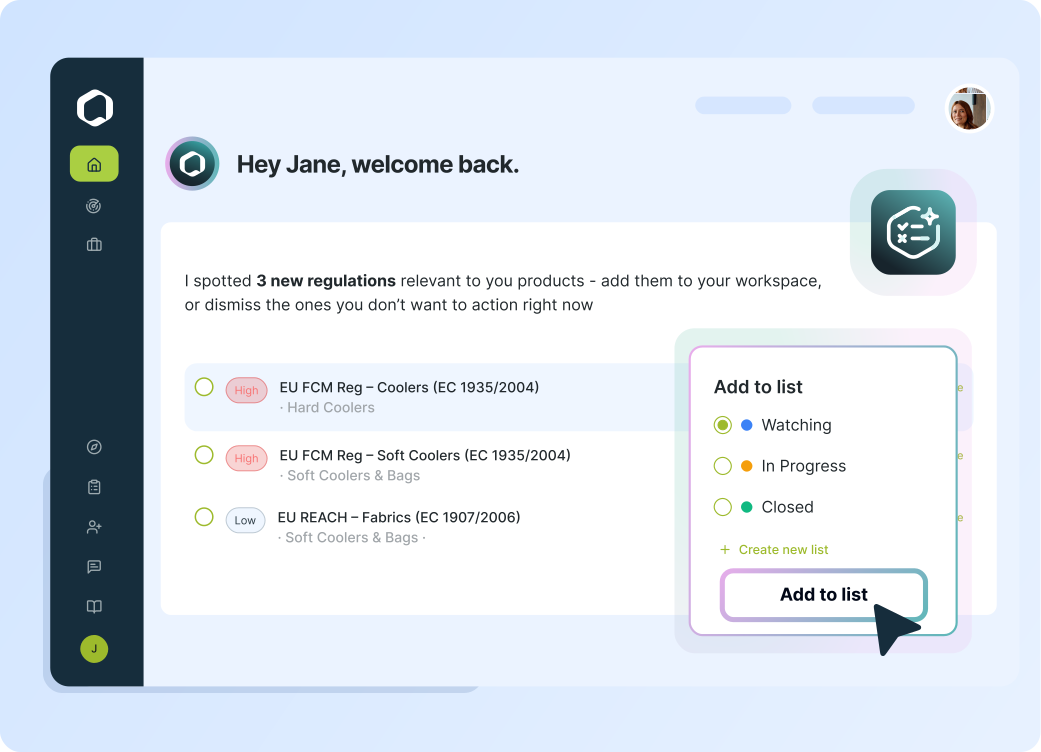
Automate the work of managing regulatory change.
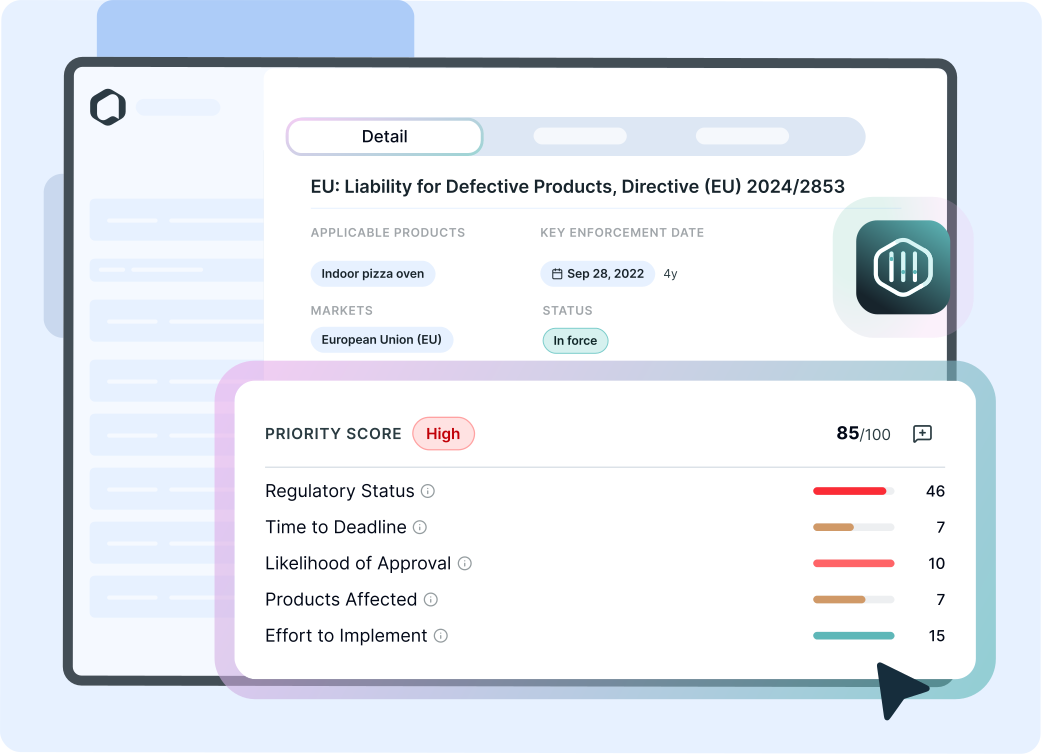
Let AI agents do the heavy lifting of monitoring regulations, mapping requirements to products, extracting obligations, and surfacing the risks that need attention first.
Monitor Product Compliance
Stay Ahead of Regulatory Change
Get early visibility into changes that could affect your products, supply chain, or market access—so you can act proactively, not reactively.
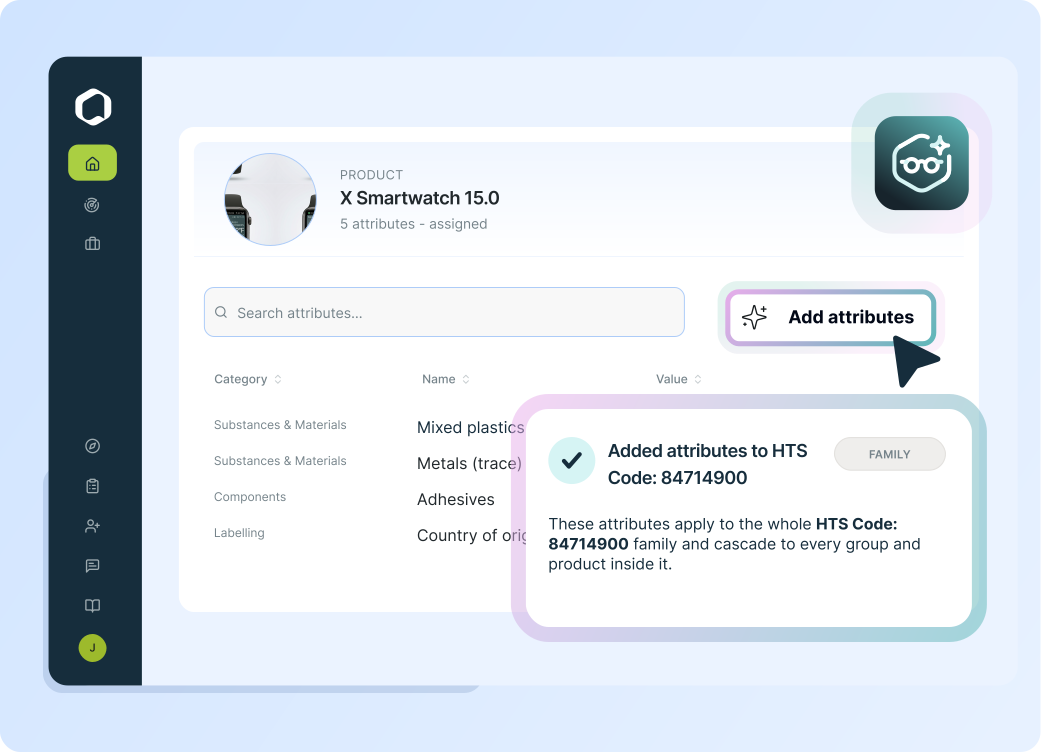
Assess Regulatory Applicability
Map Regulations to Your Products
Eliminate manual research and cut through regulatory noise by surfacing only the requirements relevant to your business, markets, and product categories.
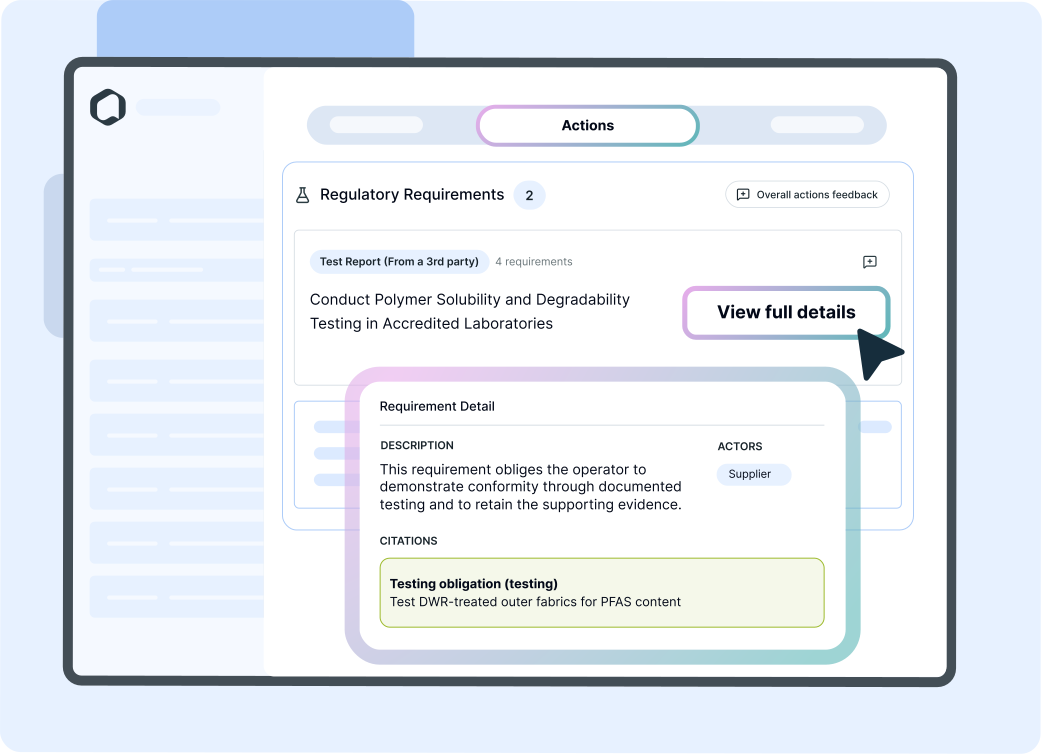
Identify Compliance Requirements
Turn complex regulations into clear, actionable tasks.
Give your teams instant clarity as AI agents transform dense legal and regulatory text into structured, easy-to-understand requirements.
Prioritize Business Risk
Focus Where Risk Is Highest
Make faster, risk-informed decisions with confidence as AI agents automatically rank regulatory changes based on urgency, business impact, compliance deadlines, and product exposure.
Spotlight
Turning Compliance into Value

The State of Product
Compliance 2026
Discover how 500+ global leaders are shifting product compliance from a cost-centre into a strategic driver of growth, with key benchmarks like 69% of teams calling remediation their biggest challenge.
Frequently Asked Questions
-
REACH registration requires companies to submit safety data and risk management information to ECHA for substances manufactured or imported into the EU above specified tonnage thresholds. REACH restriction (Annex XVII) limits or bans certain substances, mixtures, or articles to protect health and the environment. Restrictions apply regardless of tonnage and can include outright bans or conditions of use.
-
Companies must ensure the substance is not used or placed on the EU market in ways that violate the restriction conditions. If the substance is permitted only under specific conditions, companies must confirm compliance with those conditions (e.g., concentration limits, permitted uses, labeling or packaging requirements). Non-compliance can lead to enforcement actions, market withdrawal, or fines.
-
Yes, REACH Annex XVII may include exemptions or derogations for specific uses of restricted substances. These are typically outlined in the restriction entry and can vary depending on the substance and its intended application.
Some restrictions permit certain uses under conditions, like industrial processes or scientific research, while others apply only if concentration limits are exceeded.
Unlike RoHS, there is no mechanism for individual exemption applications. Companies must engage in the restriction process, often through industry associations, to seek relief for specific uses. By monitoring ECHA and Commission work programmes, public calls for evidence, and Annex XV restriction proposals, they can:
– Submit technical data on alternatives, socio-economic impacts, and exposure control to support derogations or higher concentration limits.
– Advocate for clearly defined derogations (e.g., “exclusively industrial use under closed conditions”) or time-limited transitional provisions.
-
Both Annex XIV and Annex XVII are critical components of the EU REACH Regulation, but they serve distinct purposes and have different compliance requirements.
Annex XIV addresses Substances of Very High Concern (SVHCs) that pose serious risks to health or the environment, aiming to phase them out unless companies obtain authorisation to use them post “sunset date.”
In contrast, Annex XVII lists restricted or banned substances due to their hazardous properties, covering a broader range of chemicals.
For compliance, companies under Annex XIV must apply for authorisation from ECHA, demonstrating risk control or socio-economic benefits that outweigh the risks. Those under Annex XVII must comply with the restrictions as outlined in the Annex (e.g., bans, concentration limits, or labelling requirements). No authorisation is required, but they must ensure their products meet the restrictions or reformulate them.
More
Regulatory
Topics
Chemicals Management Regulatory Compliance
Regulatory Focus Chemicals Management 195 Countries Covered 28 Languages 5979 Regulatory S…
Chemicals In Products
Regulatory Focus Chemicals In Products 195 Countries Covered 10144 Regulatory …
Comply with the Globally Harmonized System (GHS)
Regulatory Focus Globally Harmonized System (GHS) 195 Countries Covered 28 Languages 1130 …
PFAS
Regulatory Focus Chemicals In Products 195 Countries Covered 28 Languages 1259 Regulatory …
Nanotechnology
Regulatory Focus Nanotechnology 195 Countries Covered 28 Languages 384 Regulatory Sources …
RoHS: Restriction of Hazardous Substances
Regulatory Focus RoHS 195 Countries Covered 28 Languages Restrictions on hazardous substan…