

Regulatory Focus
Illegal Logging Requirements
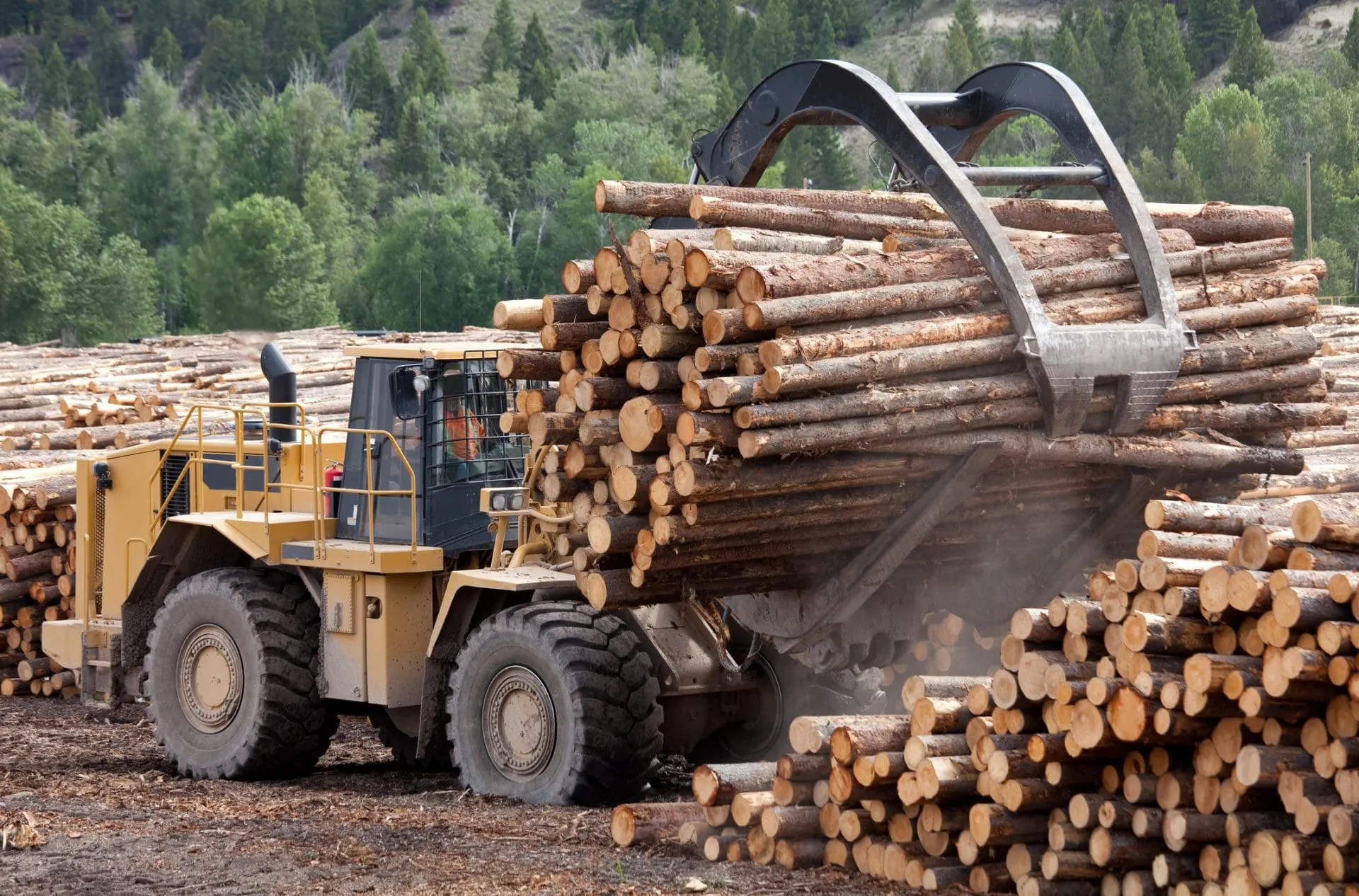
Illegal Logging
195
Countries Covered
28
Languages
313
Regulatory Sources
Illegal logging is the harvesting, processing and trade of timber and timber products in contravention of national and international laws. The environmental effects include deforestation, the loss of biodiversity and the emission of greenhouse gasses. It has also contributed to conflicts with indigenous and local populations, violence, human rights abuses, corruption, funding of armed conflicts and the worsening of poverty.
The sources typically covered as part of our Illegal Logging content are sources that impose obligations on ‘operators’ or ‘traders’ who place timber and other forest products on the market to:
- Provide reports on product suppliers
- Maintain records of this information for a certain specified time frame
- Affix CE Marking and other labels (if products fall within the EU Construction Products regime)
- Exercise ‘due diligence’ to ensure they supply products made of legally harvested timber. To this end, operators must use a due diligence system.
The Illegal Logging content also covers regulations dealing with the import of timber and other forest products, i.e. regulations that require reporting or certification when importing timber or other forest products and regulations that prohibit the import or placing on the market of illegally harvested timber and timber products. Furthermore, we cover laws that regulate the processing of timber and other forest products, i.e. with regard to processing permits.
The content only covers laws and regulations that entail requirements that are directly applicable to those placing timber or other forest products on the market. We do not cover logging permits that only apply to farmers or logging companies. Furthermore, sources on measures only related to forestation systems, forest policies or forest management do not fall under this content. Good examples for sources that cover a wide range of products are the EU Deforestation Regulation (EUDR) and the Implementation Phases of the US Lacey Act.
Products typically covered by these laws are timber and timber products, but also rubber and tyres, textiles and footwear, wood packaging and paper packaging and products that have parts that are made of timber, such as speakers or other electronics with wooden parts.
Adherent’s coverage of illegal logging is historically comprehensive and includes, but is not limited to:
- CITES: International Trade in Endangered Species of Wild Fauna and Flora, Convention, 1973
- Albania: Approving Rules for the Handling, Use, Sale, Export, Import, Administration and Transport of Timber and Non-Timber Forest Products, Decision No. 614, 2025
- Australia: Illegal Logging Prohibition Act, 2012
- Australia: Illegal Logging Prohibition Regulations, SLI 2012 No. 271
- Australia: Illegal Logging Prohibition, Rules, December 2024
- Australia: Illegal Logging Prohibition Act, 2012 – Amendment – (on strengthening measures to
- prevent illegal timber trade) Act, 2024
- China: Ecological and Environmental Code, Presidential Order No. 70, 2026
- Costa Rica: National Wood Products Certification System, Executive Decree No. 44965-MINAE, 2025
- Croatia: Implementation of Regulation (EU) 2023/1115 on the Making Available on the Market and the Export of Certain Goods and Products Associated with Deforestation and Forest Degradation, Law NN 151/2025
- Denmark: Trade in Timber and Timber Products, Order No. 849/2016
- EU: Making Available on the Union Market and Export from the Union of Certain Commodities and Products Associated with Deforestation and Forest Degradation, Regulation 2023/1115
- EU: Deforestation Regulation, FAQ Document, Version 1.5 April 2026
- EU: Guidance Document on Regulation (EU) 2023/1115 on Deforestation-Free Products, Commission Notice, July 2026
- EU: Making Available on the Union Market and Export from the Union of Certain Commodities and Products Associated with Deforestation and Forest Degradation, Regulation (EU) 2023/1115 – Amendment – (on delay and simplified measures for small enterprises) Regulation (EU) 2025/2650
- EU: Making Available on the Union Market and Export from the Union of Certain Commodities and Products Associated with Deforestation and Forest Degradation, Regulation (EU) 2023/1115 – Proposed Amendment – (on clarifying the list of relevant products) Draft Delegated Act, April 2025
- EU: Obligations of Operators Who Place Timber and Timber Products on the Market, Regulation (EU) No 995/2010 (EU Timber Regulation)
- EU: Establishment of a FLEGT Licensing Scheme for Imports of Timber into the European Community, Regulation (EC) No 2173/2005
- Indonesia: Timber Legality Assurance System (SVLK), Regulation No. 38/2009
- Japan: Promoting the Distribution and Use of Legally Harvested Wood, Law No. 48, 2016 (Clean Wood Act), Revised in 2023
- Norway: Implementation of the EU Deforestation Regulation (EU) 2023/1115, Draft Regulation, August 2025
- Peru: Illegal logging and Forest Timber Trafficking, Legislative Decree No. 1220, 2015
- Singapore: Inclusion of Additional Timber Species in the Endangered Species Act due to Updates to CITES, Circular, February 2026
- South Korea: Sustainable Use Of Timber Act, No 20086, 2024
- South Korea: Sustainable Use of Timber, Presidential Enforcement Decree No. 36338, 2026
- Thailand: Permit for Export of Wood and Lumber, Regulation, B.E 2568, February 2025
- Taiwan: Forest Product Traceability Management Operational Standards, Order No. 1142440491, November 2025
- USA: Lacey Act, 16 USC 3371-78, as Amended 2008
- USA: Lacey Act, 16 USC 3371-78, as Amended 2008 – Proposed Amendment – (on ensuring fair enforcement) House Bill 2239, 2025
- USA: Deforestation-Free Products, House Bill 8744, 2026
- UK: Timber and Timber Products (Placing on the Market) Regulations, SI 2013/233
- UK: Timber and Timber Products (Placing on the Market) Regulations, SI 2013/233 – Amendment – (on EU Exit) Regulations, SI 2018/1025
- UK: Environment Act, 2021
- UK: Approach to Deforestation Regulations, Policy Paper, June 2026
- Thailand: Certification of Timber and Wood Products for Trade or Export, Regulation, B.E. 2563, 2020
- Ukraine: Timber Market, Draft Law, April 2025
- Vietnam: Approving Regulations on Forest Product Management – Handling of Forest and Aquatic Products, Circular No. 26/2025/TT-BNNMT, June 2025
We cover standards for our core products that are available from our partner Accuris. These are available through our Product Compliance Solution.
Connection with other content:
Supply Chain Due Diligence
The Illegal logging content covers laws and regulations that focus on certain commodities and product supply chains that require companies to undertake due diligence to ensure the products they supply are not made from illegally harvested timber. These regulations are specifically
designed to reduce the impact of consumption and production on deforestation and forest degradation and typically do not require companies to remedy any harm that they may cause.
The Supply Chain Due Diligence content on the other hand is broader in scope and also includes sources that are not focused on specific products, i.e. sources that require companies to undertake due diligence regarding the human rights, environmental and governance impacts that all of their processes or products may have and to remedy any harm that they may cause.
Sources that contain due diligence requirements relating to the consumption and production of illegally harvested timber and/or wood fall under both Illegal Logging and Supply Chain Due Diligence. Sources that contain due diligence requirements relating to activities that are not covered by regulations on deforestation-free or illegal logging products fall under Supply Chain Due Diligence only.




Intelligent Resources


Automate the work of managing regulatory change.
Let AI agents do the heavy lifting of monitoring regulations, mapping requirements to products, extracting obligations, and surfacing the risks that need attention first.
Monitor Product Compliance
Stay Ahead of Regulatory Change
Get early visibility into changes that could affect your products, supply chain, or market access—so you can act proactively, not reactively.
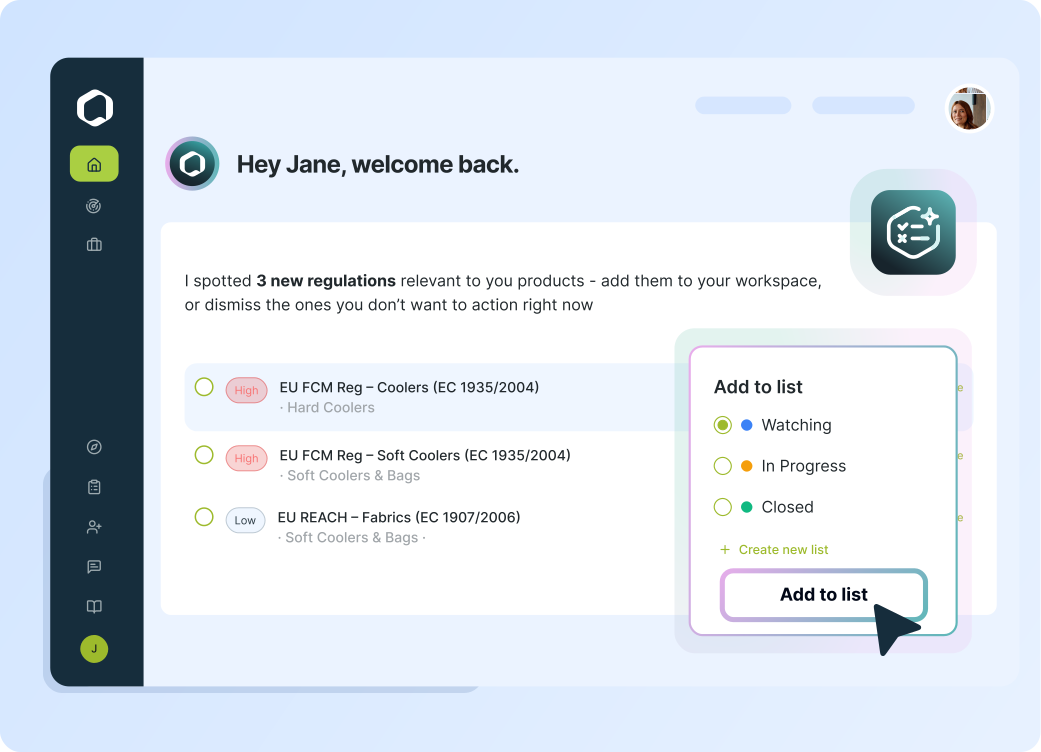
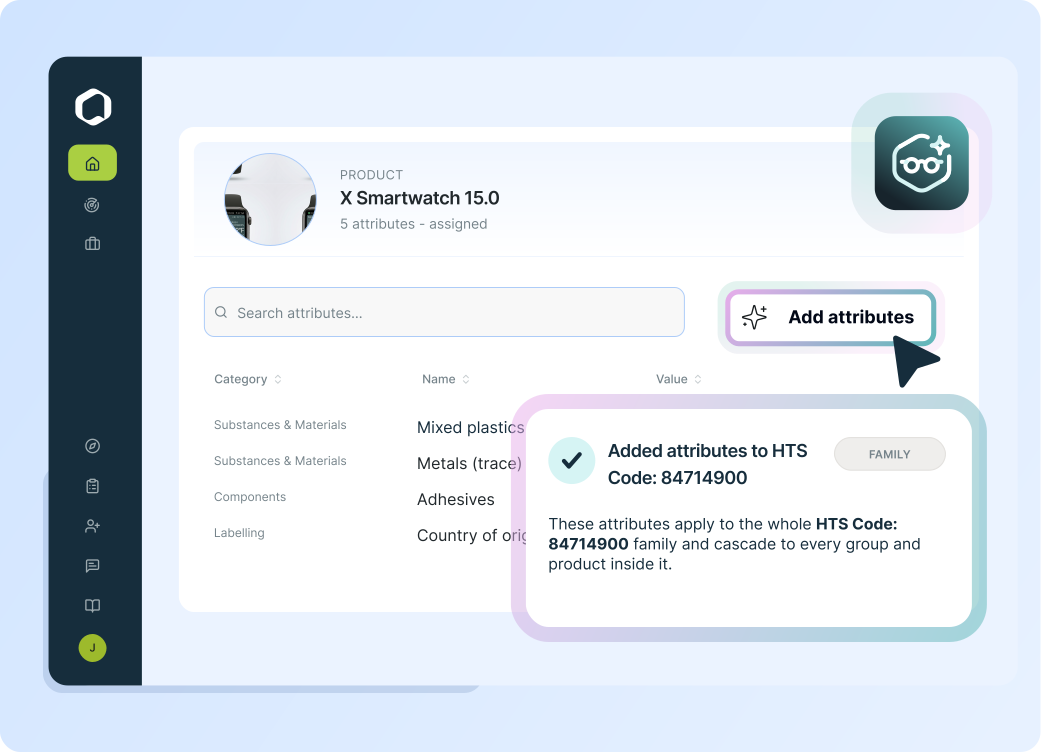
Assess Regulatory Applicability
Map Regulations to Your Products
Eliminate manual research and cut through regulatory noise by surfacing only the requirements relevant to your business, markets, and product categories.
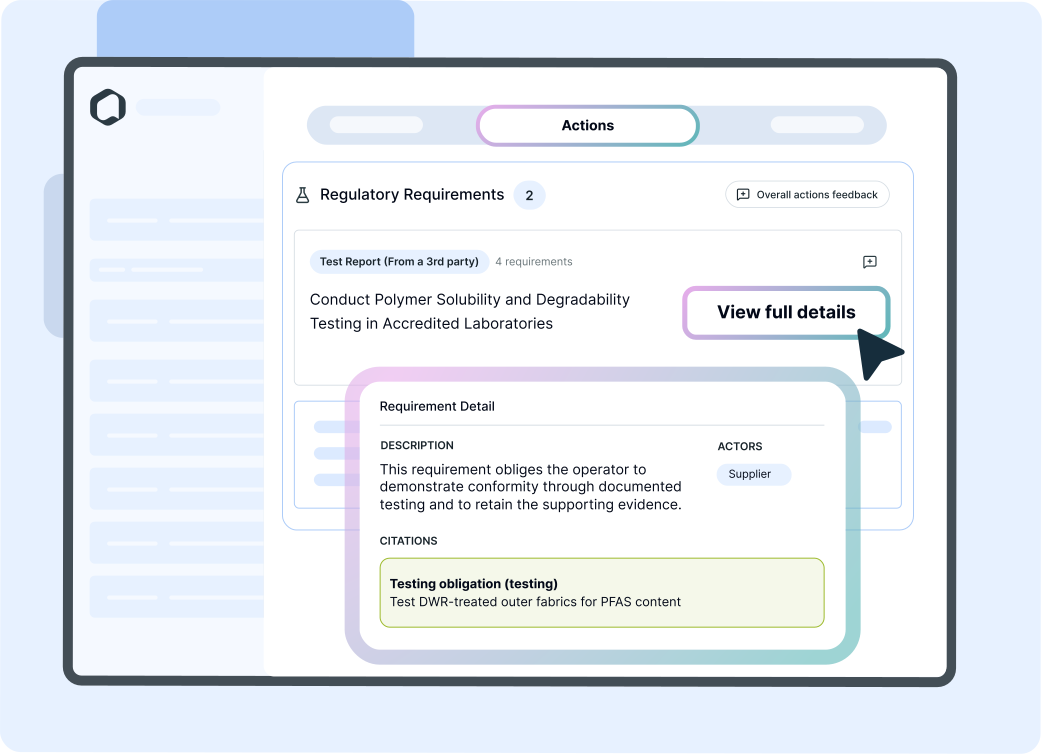
Identify Compliance Requirements
Turn complex regulations into clear, actionable tasks.
Give your teams instant clarity as AI agents transform dense legal and regulatory text into structured, easy-to-understand requirements.
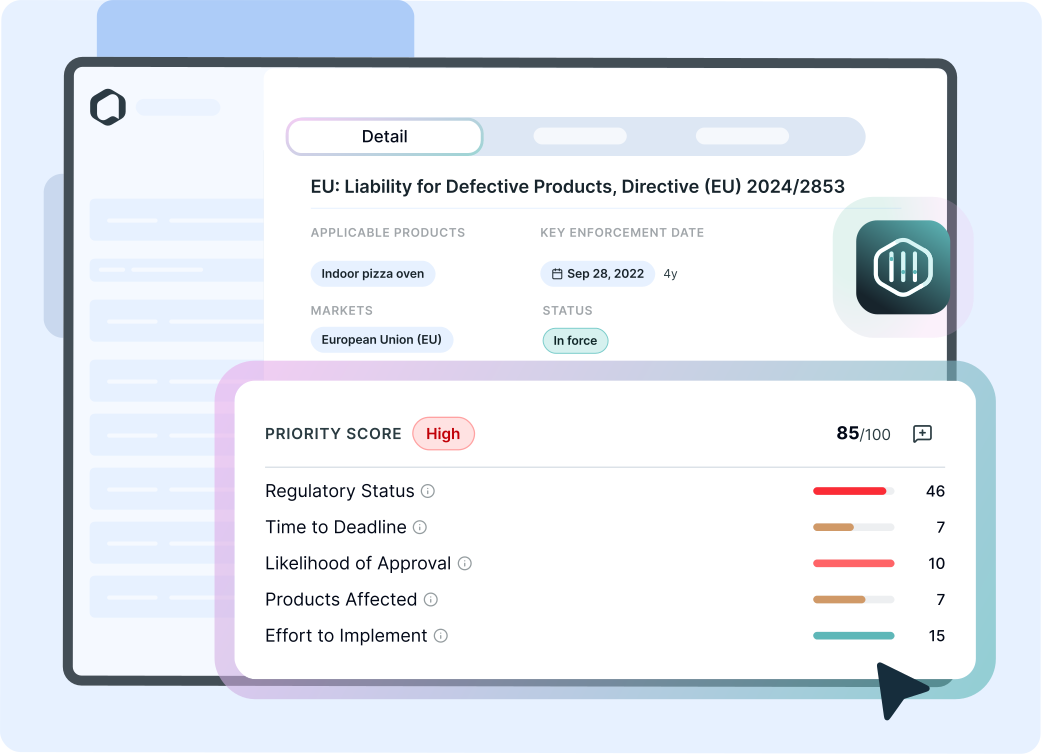
Prioritize Business Risk
Focus Where Risk Is Highest
Make faster, risk-informed decisions with confidence as AI agents automatically rank regulatory changes based on urgency, business impact, compliance deadlines, and product exposure.
Spotlight
Turning Compliance into Value


The State of Product
Compliance 2026
Discover how 500+ global leaders are shifting product compliance from a cost-centre into a strategic driver of growth, with key benchmarks like 69% of teams calling remediation their biggest challenge.
Frequently Asked Questions
-
Key regimes include the EU Deforestation Regulation (EUDR), the (legacy) EU Timber Regulation (EUTR), the US Lacey Act, the UK Environment Act’s forest risk commodity provisions, and Australia’s Illegal Logging Prohibition Act. These laws restrict the placing of illegally harvested timber or deforestation‑linked commodities and products on the market, and require businesses to exercise due diligence.
-
Companies that place timber, timber products, and certain types of other forest-risk products on the market or export them are required to conduct due diligence in many jurisdictions. Operators must assess legality, collect supplier and origin information, and mitigate identified risks before products are made available.
-
Coverage generally includes timber and timber products, but extends to packaging, paper and paper products, rubber, tyres, leather and finished goods containing wood components under newer frameworks such as the EU Deforestation Regulation.
-
The EU has postponed the application of the EUDR several times, citing concerns over the readiness of the central IT system for due diligence statements and the burden on businesses, particularly SMEs. Amendments adopted in late 2025 formally delayed the main application date to 30 December 2026 for most operators, with a later date for small and micro operators set to 30 June 2027. Adjustments have also been made to the product scope and the distribution of obligations between operators, downstream operators and traders. In addition, a new category for micro and small primary operators was introduced.
-
Authorities can inspect operators, request documentation, and impose penalties ranging from administrative fines to seizure of goods, suspension of authorisations, and exclusion from public procurement. Under the Lacey Act, for example, illegally sourced timber can be seized and companies may face criminal or civil penalties, while under the EUDR, Member States must set “effective, proportionate and dissuasive” sanctions. Public disclosure of non‑compliance and cooperation between customs, environmental and enforcement agencies add further reputational and legal pressure.
More
Regulatory
Topics
Supply Chain Due Diligence
Regulatory Focus ESG: SUPPLY CHAIN DUE DILIGENCE 28 Languages Supported 28 Languages 600 R…
Sustainable Resource Use
Regulatory Focus Sustainable Resource Use 195 Countries Covered 28 Languages 533 Regulator…
Human Rights – Affected Communities
Regulatory Focus Human Rights – Affected Communities 195 Countries Covered 28 Languages 26…
Climate Disclosures
Regulatory Focus Climate Disclosures 195 Countries Covered 28 Languages 670 Regulatory Sou…
Human Trafficking & Modern Slavery Compliance
Regulatory Focus Human Trafficking and Slavery (HTS) 195 Countries Covered 28 Languages 40…
Environmental, Social and Governance (ESG) Reporting
Regulatory Focus ESG Reporting 195 Countries Covered 28 Languages 729 Regulatory Sources W…